
Stock Splits and Bonus Shares in the Indian Market: What Investors Should Know
 Feb, 7 2026
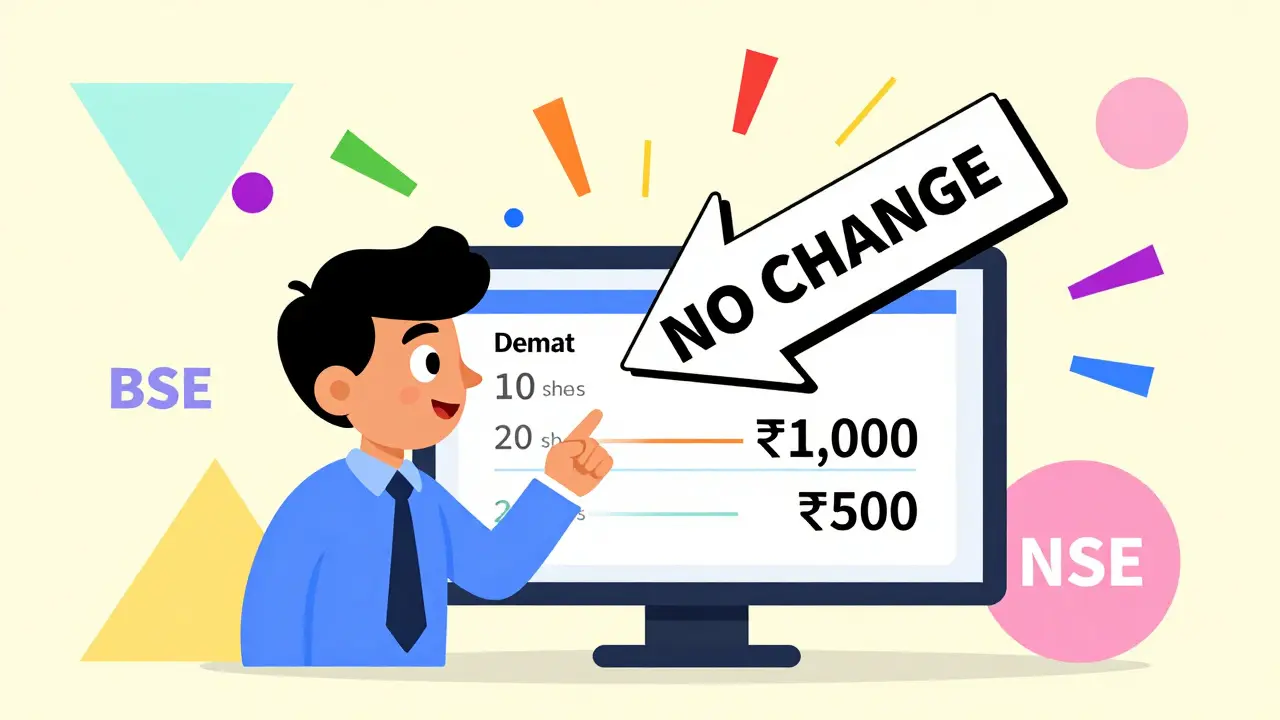
When you own shares in an Indian company, you might suddenly see more shares in your demat account - but the price has dropped. No magic. No windfall. Just a stock split or a bonus share announcement. These moves confuse new investors. They think they’ve gotten rich overnight. But the truth? Your total investment value hasn’t changed one bit.
What Is a Stock Split?
A stock split is when a company divides its existing shares into multiple shares. For example, if you own 10 shares of a company trading at ₹1,000 each, and the company announces a 2-for-1 split, you’ll now own 20 shares at ₹500 each. The total value? Still ₹10,000. Nothing more, nothing less.
Why do companies do this? It’s simple. When a stock price gets too high, it becomes hard for small investors to buy even one share. A ₹50,000 stock might look impressive, but it locks out most retail investors. After a 5-for-1 split, that same stock drops to ₹10,000. Suddenly, more people can afford it. Trading volume goes up. Liquidity improves. The company looks more accessible.
Indian companies like Reliance Industries, TCS, and Infosys have done multiple splits over the years. In 2020, TCS split its shares 5-for-1. Before that, one share cost over ₹3,000. After? ₹600. More retail investors jumped in. The stock didn’t rise because of the split - it rose because the company kept growing.
What Are Bonus Shares?
Bonus shares are free shares given to existing shareholders from the company’s reserves. It’s like a dividend, but instead of cash, you get more shares. If you own 100 shares and the company announces a 1:1 bonus, you’ll get 100 more shares for free.
Here’s how it works behind the scenes. The company takes money from its reserves - that’s money it saved from past profits - and turns it into new shares. The total number of shares outstanding increases. The price per share drops to match the new supply. Again, your total value stays the same.
Bonus shares are common in India. Companies like HDFC Bank, Asian Paints, and Maruti Suzuki have issued bonuses for decades. In 2023, Asian Paints gave a 1:1 bonus. If you owned 50 shares before, you had 100 after. The share price halved. No one got richer. But many investors felt like they did.
Stock Split vs Bonus Share: What’s the Difference?
Both look similar on paper. More shares. Lower price. But they’re not the same.
| Aspect | Stock Split | Bonus Share |
|---|---|---|
| Source of New Shares | Divides existing shares | Creates new shares from reserves |
| Impact on Share Price | Proportional decrease | Proportional decrease |
| Impact on Company’s Equity | No change | Reserves reduce; share capital increases |
| Cost to Company | None | Uses retained earnings |
| Why Companies Do It | Improve liquidity, attract retail investors | Reward shareholders without cash outflow |
Here’s the key difference: a bonus share reduces the company’s cash reserves. A stock split doesn’t touch any money. It’s just a reshuffling of shares. Bonus shares signal that the company has strong profits and wants to reward you. Stock splits signal that the company wants more people to trade its stock.
Why Do Investors Get Excited?
Let’s be honest - most investors don’t care about the math. They see their share count double. They think they’ve doubled their money. That’s psychology. It’s powerful.
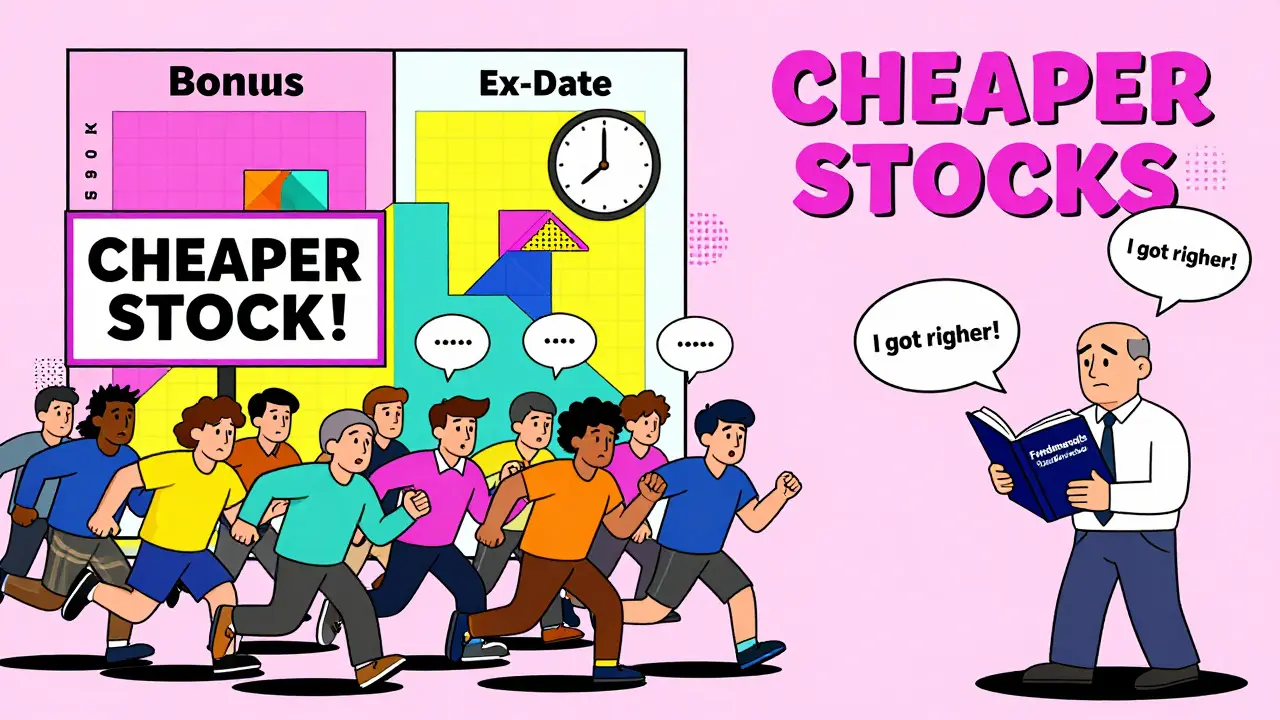
In India, bonus and split announcements often trigger short-term price spikes. Why? Because retail investors rush in, believing the stock is "now affordable" or "a good deal." But history shows: the price usually falls back to where it should be within weeks.
Take the 2022 bonus announcement from Eicher Motors. The share price jumped 8% the day after the announcement. But within 45 days, it fell back to pre-announcement levels. The company didn’t earn more money. It just gave out more shares.
Smart investors don’t buy because of a bonus or split. They buy because the business is growing - strong revenue, rising profits, good management. A split or bonus might make the stock look more attractive, but it doesn’t change the company’s value.

How to Check if a Company Is About to Split or Give Bonus Shares
Indian companies must announce these moves through stock exchanges. You can find them on:
- BSE India (bseindia.com) - under "Corporate Actions"
- NSE India (nseindia.com) - under "Corporate Actions" tab
- Your broker’s app - most platforms like Zerodha, Upstox, or Groww send alerts
Look for keywords: "stock split," "bonus issue," "rights issue," or "capitalization." The announcement will include the ratio (like 2:1 or 1:2), record date, and ex-date. The record date is when you must own the shares to qualify. The ex-date is when the price adjusts.
Set alerts. Don’t wait for news. If you’re holding shares in a company that’s been profitable for years, check its corporate actions page every quarter. Companies often announce bonuses after their annual results.
What Should You Do When a Split or Bonus Happens?
Nothing. Seriously. Don’t panic. Don’t sell. Don’t buy more just because the price dropped.
Here’s what to do instead:
- Check the company’s fundamentals. Is revenue growing? Is debt low? Is management honest?
- Don’t confuse volume with value. More trading doesn’t mean the company is better.
- Ignore the hype. Social media will flood with "BUY NOW!" posts. They’re wrong.
- Hold. If you believe in the company, hold. If you don’t, don’t buy just because it’s "cheaper."
Many investors sell after a bonus because they think the "free" shares are a signal to exit. That’s a mistake. The company isn’t saying, "We’re done growing." It’s saying, "We have extra cash, and we’re giving it back to you in shares."
Common Myths About Stock Splits and Bonus Shares
- Myth: "I’ll make more money after a bonus." Truth: Your total value doesn’t change. You have more shares, but each is worth less.
- Myth: "A split means the stock is going up." Truth: Splits happen after a stock has already risen. They don’t cause the rise.
- Myth: "Bonus shares are better than dividends." Truth: Bonus shares don’t give you cash. Dividends do. If you need income, bonus shares won’t help.
- Myth: "Only big companies do splits." Truth: Small-cap stocks like Polycab, Finolex, and Page Industries have done splits too.
What Happens to Your Tax Bill?
Here’s something most people miss: bonus shares and stock splits don’t trigger taxes. You don’t pay tax just because you got more shares.
But here’s the catch: if you sell those shares later, you’ll pay capital gains tax. The cost of your original shares gets divided among all the new shares.
Example: You bought 10 shares of a company at ₹1,000 each. Total cost: ₹10,000. Later, you get a 1:1 bonus. Now you have 20 shares. Your cost per share becomes ₹500. If you sell 5 shares at ₹800, your profit is ₹1,500 (5 × (800 - 500)). That’s taxable.
Keep records. Always. Use your demat account’s transaction history. Don’t rely on memory.
Bottom Line: Don’t Chase the Hype
Stock splits and bonus shares are tools. Not signals. They change how many shares you hold - not how much you’re worth.
In the Indian market, these moves are common. They’re not rare events. They’re routine corporate actions. Smart investors don’t react. They observe. They focus on what matters: earnings, cash flow, and competitive advantage.
If you’re holding a stock because it’s "cheap" after a split, you’re missing the point. If you’re holding it because the business is strong, you’re on the right path.
Do stock splits increase the value of my investment?
No. A stock split increases the number of shares you own but reduces the price per share proportionally. Your total investment value remains unchanged. For example, if you own ₹50,000 worth of stock and it splits 2-for-1, you now own two shares at ₹25,000 each - still ₹50,000 total.
Are bonus shares the same as dividends?
No. Bonus shares are free shares given from the company’s reserves, while dividends are cash payments. Bonus shares don’t give you cash - they just increase your share count. Dividends provide immediate income. If you need cash, bonus shares won’t help.
Should I buy a stock just because it’s going to split?
No. A split doesn’t make a company more valuable. It only makes shares more affordable. Buying because of a split is like buying a product because it’s now on sale - but the product itself hasn’t improved. Focus on the company’s financial health, not its share price.
How do I know if a company will give bonus shares?
Check the company’s announcements on BSE or NSE websites. Companies usually announce bonuses after their annual results. Look for phrases like "bonus issue" or "capitalization." Your broker’s app may also send alerts. Don’t guess - wait for official notices.
Do bonus shares affect my tax liability?
No, not immediately. You don’t pay tax when you receive bonus shares. But when you sell them, you’ll pay capital gains tax. Your cost basis is adjusted - the original purchase price is divided among all your shares. Keep records of your original purchase price and the bonus ratio to calculate gains correctly.
Next Steps for Investors
If you’re new to the Indian stock market, start here:
- Open a demat account if you haven’t already.
- Set up alerts on your broker’s app for corporate actions.
- Review the financials of companies you own - look at profit growth, not share price.
- Ignore social media hype. Use official sources like BSE/NSE for news.
- Track your cost basis. It matters when you sell.
Stock splits and bonus shares aren’t lottery tickets. They’re accounting moves. The real wealth comes from owning great businesses - not from watching share counts go up.