
Cryptocurrency: A Practical Guide to the Digital Money Landscape
When working with Cryptocurrency, digital assets secured by cryptography that operate without a central bank. Also known as crypto, it enables peer‑to‑peer value transfer across the internet, you’re actually stepping into a broader Blockchain, a distributed ledger that records every transaction in immutable blocks. One of the biggest platforms on this ledger is Ethereum, a programmable blockchain that runs smart contracts. Within Ethereum, MEV (Miner Extractable Value) refers to the profit miners can capture by reordering, inserting, or censoring transactions. In short, Cryptocurrency encompasses blockchain technology, includes Ethereum as a leading network, and is shaped by MEV dynamics that affect transaction ordering.
People jump into cryptocurrency because it promises faster, cheaper payments and new ways to earn online. You’ll hear terms like “smart contracts,” “decentralized finance,” and “token swapping” tossed around, but the core idea stays simple: move value without a middleman. That simplicity is what fuels the rapid growth we see in markets and why “crypto” feels both exciting and a bit confusing at first.
MEV, often called miner extractable value, is more than a technical footnote—it directly impacts the cost you pay when you send a transaction. When miners prioritize certain trades, you might see higher fees or slower confirmations. Understanding how MEV works helps you choose better gas strategies, like setting appropriate fees or using privacy‑preserving tools that hide your transaction details until they’re mined.
Beyond MEV, the Ethereum ecosystem showcases a slate of applications that run on its blockchain. Decentralized finance (DeFi) protocols let you lend, borrow, or earn interest without a bank, while non‑fungible tokens (NFTs) let creators tokenize art, music, or virtual land. All these services rely on the same underlying principles of trust‑less code execution that Ethereum introduced.
Security is a frequent worry, and rightfully so. Your private keys are the only thing that controls your crypto holdings, so using hardware wallets or reputable software wallets is a must. Also, be wary of phishing sites that mimic popular exchanges—once you hand over your seed phrase, the money is gone.
Current trends show a push toward scalability. Layer‑2 solutions like Optimism and Arbitrum bundle many transactions together, cutting fees and speeding up confirmations. Meanwhile, upgrades to Ethereum’s core, such as the shift to proof‑of‑stake, aim to reduce energy consumption and further lower costs.
Below you’ll find a hand‑picked collection of articles that dig deeper into these topics. For instance, our guide on Understanding MEV in Ethereum: A Complete Guide breaks down how front‑running works and what tools you can use to protect yourself. Whether you’re a beginner curious about how crypto works or an experienced user looking for the latest optimization tricks, the posts ahead cover the full spectrum.

How to Evaluate New Altcoin Projects: A Due Diligence Checklist
Learn how to evaluate new altcoin projects by analyzing tokenomics, team credibility, smart contract security, and real-world traction. Avoid common pitfalls.

Blockchain Gaming: How to Play and Earn Cryptocurrency in 2026
Discover how blockchain gaming has evolved in 2026. Learn about play-and-earn models, top games like Axie Infinity, and realistic earning potential.
Monitoring Bitcoin Miners: Best Tools for Hash Rate, Temp & Power
Discover the best tools for monitoring Bitcoin miners. Learn how to track hash rate, temperature, and power usage to maximize profitability and prevent hardware failure.

Stablecoin Depegging: History, Causes, and How to Recover
Discover why stablecoins depeg, from the TerraUSD crash to USDC's SVB scare. Learn the causes, historical context, and practical strategies to protect your crypto portfolio from sudden price deviations.

Sybil Resistance in DAOs: Proof-of-Personhood Options
Discover how Proof-of-Personhood protocols like World ID and BrightID combat Sybil attacks in DAOs. Learn to balance security, privacy, and inclusivity.

Hard Forks vs Soft Forks: Blockchain Upgrades Explained
Learn the key differences between hard forks and soft forks in blockchain. Discover how backward compatibility impacts network unity, real-world examples like Bitcoin Cash, and what these upgrades mean for your crypto holdings.

Rollup-as-a-Service: How to Spin Up Your Own Layer 2 Chain
Discover how Rollup-as-a-Service (RaaS) simplifies launching custom Layer 2 chains. Learn about top providers like Caldera and Conduit, technical workflows, and when to choose RaaS over shared networks.

Day Trading Crypto: Best Technical Indicators and Rules for 24/7 Markets
Master day trading crypto in 24/7 markets. Learn which technical indicators like RSI, EMA, and VWAP work best, plus strict rules for timing, risk management, and avoiding common pitfalls.
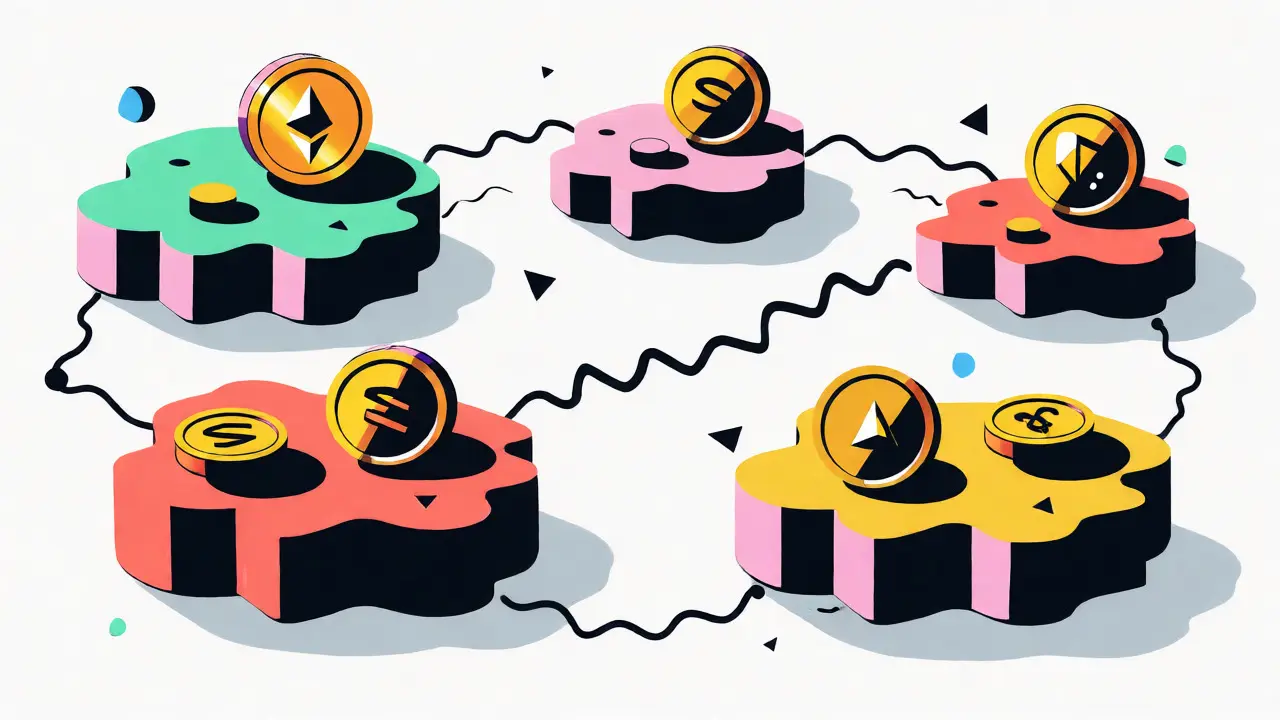
Cross-Chain DeFi: How Bridges Move Liquidity and Where They Break
Discover how cross-chain DeFi bridges connect isolated blockchains, enabling unified liquidity. Learn about the $2.8B in historical hacks, key security risks like validator compromises, and best practices for navigating this high-risk, high-reward sector.

Securities Tokens: When Crypto Becomes a Regulated Security
Discover when a crypto token becomes a regulated security. Learn the legal distinctions, compliance requirements, and real-world applications of securities tokens.

Stealth Addresses and View Keys: How Crypto Privacy Actually Works
Discover how stealth addresses and view keys enhance crypto privacy. Learn why Monero uses them, how ERC-5564 brings them to Ethereum, and the security trade-offs involved.

What Are Stablecoins: Definition and Importance in 2026
Discover what stablecoins are and why they matter in 2026. Learn about USDT, USDC, types, risks, and their role in global finance.
Categories
- Cryptocurrency
- Personal Finance
- Careers & Education
- Technology
- Home & Living
- Home & Lifestyle
- hire domestic help in Mumbai
- hire drivers in mumbai
- Sustainability & Environment
- hire pet care in mumbai