
Analyzing Token Economics: A Practical Guide to Spotting Real Value
 Jun, 21 2026
Most people look at a cryptocurrency chart and see only price action. They miss the engine under the hood that actually determines whether that price is sustainable or just a bubble waiting to pop. That engine is token economics, commonly known as tokenomics. It is the study of how a digital token is created, distributed, used, and valued within its ecosystem. If you want to separate long-term projects from short-lived scams, you need to understand these mechanics.
Tokenomics isn't just about math; it's about human behavior. It asks why someone would hold a token instead of selling it for cash. Does it give them access? Voting power? A share of profits? Without a clear answer, the token has no anchor. In this guide, we will break down exactly what to look for when analyzing any token project, whether it’s a blockchain network or an AI computing resource.
The Core Purpose: Why Does This Token Exist?
Before you care about supply numbers, you must understand the job the token does. Stripe, a leader in payment infrastructure, emphasizes that effective token design starts with clarity. The token must be anchored in real utility. Ask yourself: Is this token necessary for the system to work?
- Utility Tokens: Used to pay for services, such as transaction fees (gas) on a network or accessing premium features.
- Governance Tokens: Give holders the right to vote on protocol changes, like adjusting fee structures or upgrading software.
- Security/Staking Tokens: Locked up to secure the network. Validators risk losing these tokens if they act maliciously.
- Payment Tokens: Act as a medium of exchange, similar to fiat currency but decentralized.
If a project could function perfectly well using dollars or euros, why do they need their own token? Often, teams create tokens simply to raise money during an initial coin offering (ICO). This is a red flag. Look for tokens where the demand is driven by actual usage-people spending the token to use the service-not just speculation on its price going up.
Supply Dynamics: Scarcity vs. Inflation
How many tokens exist, and how many will there be in the future? This is the most critical quantitative metric. You need to distinguish between three types of supply:
- Maximum Supply: The absolute limit. Bitcoin, for example, has a hard cap of 21 million coins. This creates scarcity.
- Total Supply: The number of tokens currently in existence, including those locked in contracts or held by the team.
- Circulating Supply: The tokens actually available for trading on the open market.
A low circulating supply with a high total supply often means a lot of tokens are waiting to enter the market. When they do, prices can crash due to increased selling pressure. Check the emission schedule. Are new tokens minted every block? Is there a predictable rate? Some projects use inflationary models to reward validators, which is fine if the inflation rate decreases over time or is offset by burning mechanisms.
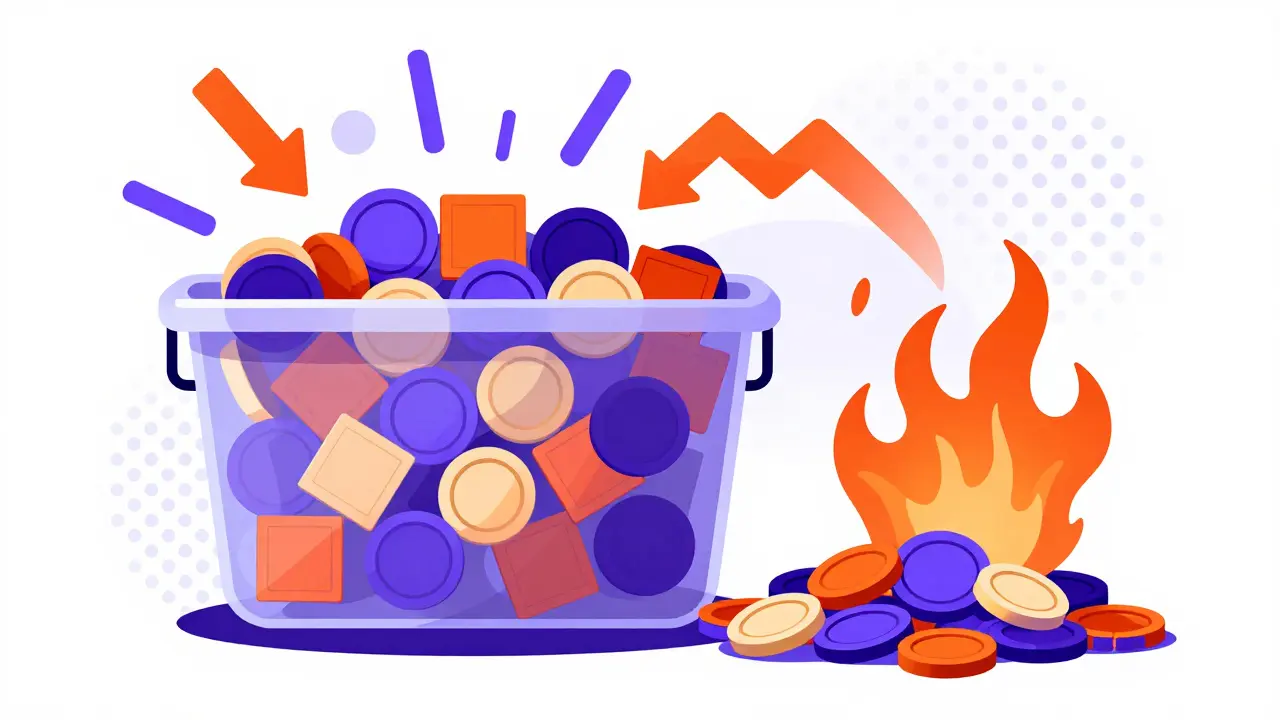
Burning is crucial. Many modern protocols burn a portion of transaction fees, permanently removing tokens from circulation. This reduces supply and can increase value if demand remains steady. Always check if the burn rate outpaces the issuance rate. If more tokens are being created than destroyed, the token is inflationary, which dilutes your holdings.
Distribution and Vesting: Who Holds the Power?
Even if the supply looks good, who owns it matters immensely. A fair distribution builds trust; a concentrated one invites manipulation. Look for the allocation breakdown in the project’s whitepaper or documentation.
| Stakeholder | Typical Allocation Range | Risk Factor |
|---|---|---|
| Team & Founders | 10% - 20% | High if not vested |
| Investors (VCs) | 15% - 25% | Moderate (usually locked) |
| Treasury/Ecosystem Fund | 20% - 30% | Low (used for growth) |
| Community/Public Sale | 30% - 50% | Low (decentralized) |
Pay close attention to vesting schedules. If founders and early investors can sell all their tokens immediately after launch, they have little incentive to build long-term value. Ideal vesting involves long lock-up periods (1-4 years) with gradual releases (cliffs). This aligns their interests with yours: they only get paid if the project succeeds over time.
Check for "whale" concentration. If a few wallets hold more than 10% of the circulating supply, they can manipulate the price or dominate governance votes. Transparency here is key. Projects should publish wallet addresses and vesting smart contracts so anyone can verify the data.
Utility and Value Capture: Where Does the Money Go?
A token might have great supply dynamics, but if no one needs it, it’s worthless. Utility drives demand. But more importantly, you need to look for value capture. Does the protocol generate revenue, and does that revenue benefit token holders?
In traditional stocks, companies buy back shares or pay dividends. In crypto, value capture works differently:
- Fee Burns: The protocol takes a cut of transactions and burns the tokens. This directly links usage to reduced supply.
- Revenue Sharing: Stakers receive a portion of the protocol’s fees. This turns the token into a yield-bearing asset.
- Buybacks: The treasury uses profits to buy tokens from the market, supporting the price.
If the token is purely speculative-with no fees, no burns, and no revenue sharing-it relies entirely on new buyers entering the market. This is a Ponzi-like dynamic that eventually collapses. Look for projects where the token is essential for the core workflow. For example, in a decentralized exchange, you might need the token to list a new pair or reduce trading fees. That creates organic, recurring demand.
Incentives and Governance: Aligning Human Behavior
Token economics is essentially game theory applied to code. The incentives must encourage behaviors that strengthen the network. Who gets rewarded? Validators? Liquidity providers? Developers?
If rewards are too high, you attract "farmers" who dump tokens as soon as they earn them. If rewards are too low, you don’t have enough participants to secure the network. The sweet spot is sustainable alignment. Look for projects that have conducted economic audits. These aren’t just code checks; they simulate user behavior to ensure the system doesn’t break under stress.
Governance is another pillar. Who decides the rules? In a truly decentralized system, token holders vote on changes. However, beware of plutocracy, where the richest holders control everything. Some projects use quadratic voting or delegation systems to mitigate this. Also, check if governance can adjust economic parameters. If the emission rate is hardcoded and unsustainable, the project may fail because it can’t adapt to changing market conditions.
Token Economics Beyond Crypto: The AI Angle
You might think tokenomics only applies to cryptocurrencies, but the concept is expanding. In artificial intelligence, "tokens" refer to units of text processed by large language models. Companies now analyze AI token economics to manage costs.
Just like in crypto, efficiency matters. In AI, it’s about cost per 1,000 tokens. Organizations monitor how much compute power is converted into useful output. They use techniques like prompt optimization to reduce token usage, similar to how blockchain users optimize gas fees. This parallel shows that token economics is becoming a broader framework for managing digital resources where usage is quantified and priced.
For enterprise users, understanding these unit economics helps prevent runaway costs. For crypto investors, it reinforces the idea that any token-based system must have efficient resource allocation to survive. Whether it’s energy for mining or compute for AI, the underlying principle is the same: value must exceed cost.
Practical Checklist for Analysis
When evaluating a new project, run through this quick checklist. Don’t skip steps. Each one reveals a different layer of risk.
- Purpose: Is the token strictly necessary, or just a fundraising tool?
- Supply: Is there a max cap? What is the annual inflation rate?
- Burn Mechanism: Are tokens removed from circulation? At what rate?
- Distribution: Are insiders vested? Is the community allocation significant?
- Utility: Do users need the token for daily operations?
- Value Capture: Does protocol revenue flow back to holders?
- Governance: Can holders vote on critical parameters?
- Audits: Has the economic model been stress-tested?
By focusing on these fundamentals, you move beyond hype and FOMO. You start seeing the structure behind the noise. Tokenomics is complex, but once you know what questions to ask, the answers become clear. Remember, the best projects are those where the economics incentivize everyone involved to contribute to long-term success, not just quick profits.
What is the difference between tokenomics and economics?
Economics is the broad study of how societies allocate resources. Tokenomics is a specialized subset focused specifically on the design and incentives of digital tokens within a specific protocol or ecosystem. It combines cryptography, game theory, and monetary policy.
Why is vesting important in token distribution?
Vesting prevents insiders like founders and investors from dumping all their tokens at once, which would crash the price. It ensures they stay committed to the project’s long-term success, as they only unlock their rewards gradually over time.
How do I find the emission schedule of a token?
You can usually find this in the project’s whitepaper, technical documentation, or on data aggregators like CoinMarketCap or CoinGecko. Look for sections labeled "Token Supply," "Inflation Rate," or "Emission Schedule." Some projects also provide interactive charts showing future unlocks.
Is a fixed supply always better than an inflationary one?
Not necessarily. Fixed supplies like Bitcoin create scarcity but offer no mechanism to reward network participants. Inflationary tokens can fund security and development. The key is whether the inflation is predictable, declining, and offset by demand or burns.
What role does governance play in tokenomics?
Governance allows token holders to vote on changes to the protocol, such as adjusting fees or emission rates. Good governance ensures the system can adapt to new challenges without central control, making the token economy more resilient and democratic.