
Bitcoin Liquidity: Exchange Depth and OTC Markets Explained
 Mar, 27 2026
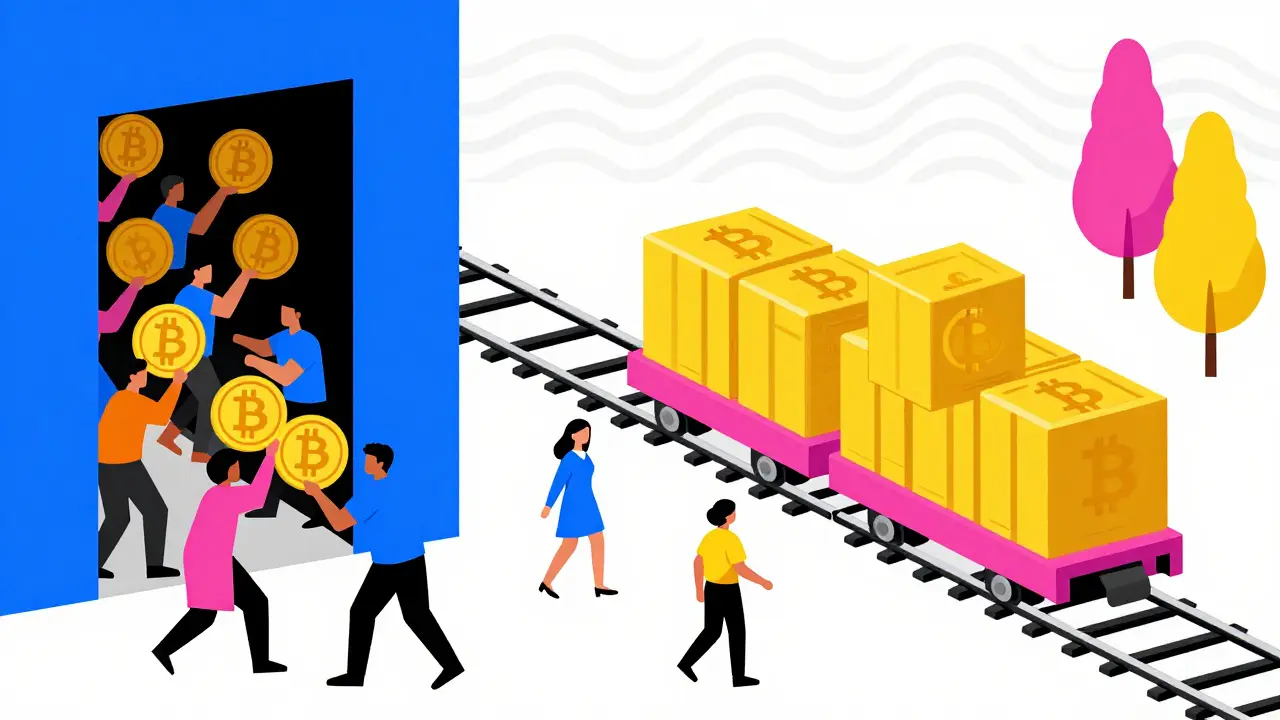
Imagine trying to move a massive shipment of gold through a narrow doorway versus shipping it via a dedicated freight train. That is essentially the difference between buying Bitcoin on a standard exchange and executing a deal over-the-counter. For years, most traders looked at exchange order books to gauge liquidity. But recently, the story has changed entirely.
We are living through a structural shift where the center of gravity for Bitcoin liquidity is moving off public platforms. In 2024, the market saw a record-breaking surge in private trading, with institutional players bypassing public venues to settle deals worth millions. By March 2026, this isn't just a trend; it's the default infrastructure for serious capital movement.
At its core, Bitcoin Liquidity refers to the ability to buy or sell the asset without causing wild price swings. While historically tied to exchange order books, true liquidity today often sits in the shadows of Over-The-Counter (OTC) Desks. These private marketplaces allow buyers and sellers to connect directly, shielding their trades from the public eye.
Why Public Exchanges Aren't Enough Anymore
If you have traded Bitcoin before, you know the drill: you place a limit order, it fills, and it shows up on a ticker tape. On public exchanges, this works great for small amounts. But try to buy $5 million worth of Bitcoin on Coinbase or Binance, and you might find your own buy orders pushing the price up against yourself.
This phenomenon is called slippage, and it eats into profit margins significantly. When large institutional investors enter the market, they can't afford to reveal their hand or impact the price they pay. The data supports this shift. In June 2022, Bitcoin held on exchanges hit a peak of 18% of the total supply. As of late 2024, that number dropped to just 14%. Roughly $65 billion in Bitcoin has been removed from exchange wallets and moved into cold storage or private OTC vaults.
The logic is simple: if you don't need to trade every day, why park your capital in a high-risk environment? Private custody offers better security, while OTC desks provide better execution for bulk moves.
How Over-the-Counter Markets Function
Many people mistake OTC trading for a shadowy, unregulated black market. In reality, modern OTC trading is highly sophisticated infrastructure. It involves established brokers acting as intermediaries between buyers and sellers. Here is how a typical transaction flows:
- The Inquiry: A buyer contacts an OTC desk (like those offered by Kraken or Coinbase Prime) requesting to purchase a specific amount of Bitcoin.
- Pricing: The desk scans multiple liquidity sources to aggregate the best available price without triggering public alerts.
- Negotiation: Parties agree on terms. Unlike spot trading where the price is set by the algorithm, here you negotiate fixed pricing.
- Settlement: Funds are transferred via wire or blockchain transfer, often using escrow services to prevent fraud.
Notice the flexibility? You can settle with stablecoins, traditional fiat currency, or other digital assets. This adaptability is crucial for hedge funds and corporations managing global treasury operations.
| Feature | Public Exchanges | OTC Desks |
|---|---|---|
| Liquidity Source | Public Order Book | Private Dealer Networks |
| Price Impact | High (for large trades) | Minimal |
| Privacy Level | Low (Trades are visible) | High (Confidential settlement) |
| Best For | Retail / Small Volume | Institutional / Large Volume |
| Speed | Instant Execution | Negotiated Speed (Minutes to Days) |

The Surge in Institutional OTC Volume
The numbers tell a compelling story about maturity. In 2024, the overall crypto OTC market volume doubled year-on-year. Specifically, there was a 106% increase in total volume. Even more interesting is the composition of these trades. While Bitcoin remains king, stablecoin transactions surged by 147%. Bitcoin itself accounted for only 22% of OTC volumes that year, signaling that institutions are using these desks to manage positions in diverse crypto assets, not just BTC.
A standout moment occurred in mid-2025 when an OTC desk reportedly absorbed an order of 80,000 Bitcoin in a single transfer. To put that in perspective, that is nearly half a billion dollars depending on the price action at the time. Executing a block trade of that size on a public order book would have caused chaos in the market price. The OTC desk smoothed it out by sourcing liquidity from multiple counterparties.
This capability relies on electronic communication networks (ECNs). Many desks have formed alliances so that if one client wants to buy $100 million in Bitcoin, the request can be distributed across several banks and liquidity providers instantly. This creates a deep pool of capital that mimics the efficiency of a public stock exchange but retains the privacy of a phone call between friends.
Privacy and Security: The Real Edge
For whales and corporations, anonymity is often more valuable than a few basis points of price spread. When a large fund buys publicly on an exchange, competitors see the order flow. They front-run the trade, buying ahead to squeeze the price. Once the large order hits, the fund gets a worse rate.
OTC trading removes this information leak. Transactions happen "off-the-books" relative to the public ledger until settlement is finalised. While the eventual transfer of coins on the blockchain is always public, the negotiation phase remains sealed. Furthermore, many OTC desks now offer custodial solutions linked to their trading services. This reduces the friction of moving assets back and forth, lowering the risk of theft during transit.
Beyond just privacy, OTC trading enables price stability. Large buyers negotiate a fixed price. If volatility spikes immediately after negotiation, it doesn't affect the agreed-upon execution terms. This hedging mechanism provides the certainty that corporate treasuries require for balance sheet accounting.

The Shift Toward Stablecoins and Multi-Asset Trading
While we discuss Bitcoin, OTC desks are no longer solely focused on it. The rise of stablecoins like USDC or Tether means liquidity is being managed in dollars-denominated assets before swapping back to Bitcoin. In Q4 2024 alone, post-election market sentiment drove OTC volumes to jump 177% year-on-year. Much of this was fueled by stablecoin transfers rather than direct Bitcoin purchases.
Why does this matter? Because the exit door for liquidity is changing. In the old days, you bought Bitcoin on an exchange. Today, many large flows involve converting Fiat to Stablecoins in the banking system, moving that capital off-exchange, and settling via OTC protocols. This layering adds safety rails to the financial system. If regulations tighten on exchanges, OTC channels can often operate with greater compliance flexibility due to their Know Your Customer (KYC) structures built for institutions.
Looking Ahead: The Future of Liquidity Layers
As we move further into 2026, the distinction between the two layers of liquidity-exchanges and OTC-is becoming less about the venue and more about the protocol. The Lightning Network represents the retail side of scaling (fast, cheap payments), while OTC represents the institutional side of scaling (high value, secure settlements).
Some forward-thinking desks are integrating Lightning Channels for settlement, meaning an OTC dealer could potentially send thousands of smaller payments through the Lightning Network instead of waiting for a heavy Layer-1 Bitcoin transaction to confirm. This hybrid model combines the confidentiality of OTC dealing with the speed of layer-two networks.
The trend is undeniable. Whether you are a high-net-worth individual looking to move $500,000 or a fund moving $50 million, the question is rarely whether to use OTC anymore. The real decision lies in finding a trusted desk with deep enough connectivity to execute your vision without disrupting the broader market.
What exactly is OTC trading?
OTC (Over-the-Counter) trading is the process of buying or selling assets directly between parties without using a centralized exchange. It involves private negotiations, usually facilitated by a broker, ensuring minimal market impact and higher confidentiality.
Is OTC trading safe?
Reputable OTC desks utilize escrow services and strict KYC (Know Your Customer) procedures. However, risks exist similar to any high-value transaction. Always verify the reputation of the desk and ensure funds settle in known wallets before transferring Bitcoin.
Why do institutions prefer OTC over exchanges?
Institutions avoid slippage (price changes while buying) and protect their strategies from public view. Large trades on exchanges move the price unfavorably; OTC allows locking in a fixed price for large blocks of assets.
Can I access OTC trading as an individual?
Most OTC desks require significant minimum trade sizes, typically starting around $100,000 USD. Some platforms offer premium services to verified high-net-worth individuals, but general retail traders usually stick to public exchanges.
How does OTC settlement work?
Settlement can occur via wire transfer, cryptocurrency wallet transfer, or even third-party escrow. In cleared OTC trades, a clearing house may step in to guarantee the transaction completion, reducing counterparty risk.