
Building Confidence in Trading: Small Wins and Process Over Outcome
 Mar, 12 2026
When you're trading, the market doesn't care how smart you think you are. It only responds to what you actually do. And if you're waiting for that one big win to feel confident, you're setting yourself up for frustration. Real confidence in trading doesn't come from hitting a home run. It comes from showing up every day, doing the work, and noticing the tiny victories along the way.
Why Outcome-Based Thinking Breaks Traders
Most new traders focus on P&L. Did you make $500 today? Good. Did you lose $300? Bad. That’s all they measure. But the market is random. Even the best strategies lose money sometimes. If your confidence depends on profit, you’ll burn out fast. You start second-guessing every setup. You overtrade to make up for losses. You avoid good trades because you’re scared of another loss. This isn’t trading. This is gambling with a spreadsheet.
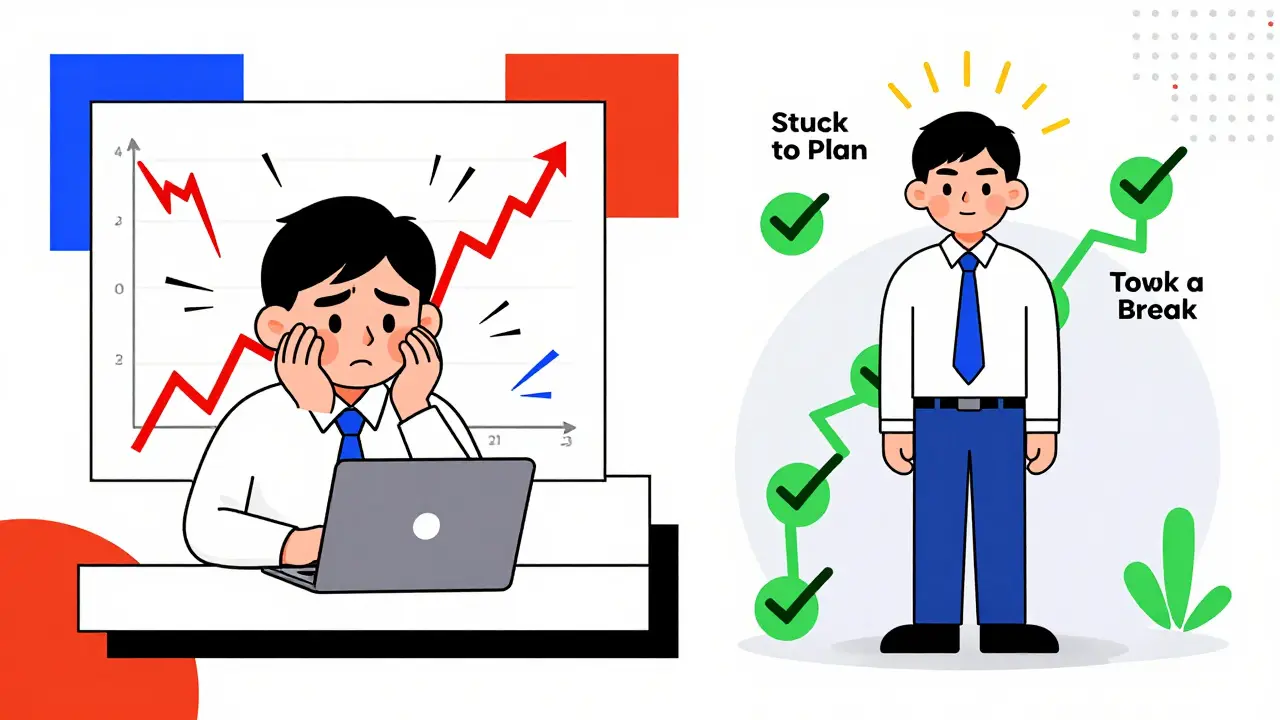
Here’s the truth: your brain is wired to crave big wins. But that’s not how confidence builds. Confidence comes from consistency. From knowing, deep down, that you can stick to your plan-even when the market is messy. And that kind of trust doesn’t come from a single trade. It comes from dozens of small, quiet successes.
The Neuroscience of Small Wins
Every time you follow your trading plan-no matter how small the result-your brain releases dopamine. Not because you made money. But because you did what you said you’d do. That’s the key. Dopamine isn’t just about pleasure. It’s about motivation. It’s the chemical that tells your brain: "Do that again. That felt right."
Think about it: when you hit five consecutive trades that all followed your entry rules, even if they were break-even, your brain registers that as a win. You didn’t win money. You won discipline. And that’s more valuable than any profit. Each of those moments strengthens the neural pathway that says: "I am a trader who follows rules." Over time, that becomes your identity. Not "I’m a trader who makes money." But "I’m a trader who stays consistent."
Studies in sports psychology show that athletes who focus on process goals-like perfecting their form or maintaining focus-outperform those who fixate on winning. The same applies to trading. The goal isn’t to win every trade. The goal is to execute every trade like a professional. And that’s built one small win at a time.
What Counts as a Small Win?
A small win isn’t about profit. It’s about behavior. Here are real examples from actual traders:
- You set a stop loss and stuck to it-even when the market moved against you and then reversed.
- You skipped a trade because the setup didn’t match your criteria, even though everyone on the forum was going long.
- You reviewed your last 10 trades and wrote down what you learned-not what you lost.
- You didn’t check your account balance for 24 hours after a loss.
- You took a break after three losing trades in a row, instead of revenge-trading.
These aren’t flashy. They don’t show up on your P&L. But they’re the foundation of long-term success. Each one is a brick in the wall of your trading identity. Each one tells your brain: "You’re in control. You’re not at the mercy of the market."
How to Track Your Small Wins
Tracking is non-negotiable. If you don’t write it down, your brain will forget it. And if you forget it, you’ll start believing you’re not improving.
Start a simple journal. Every evening, ask yourself:
- Did I follow my trading plan today?
- Did I manage my risk properly?
- Did I avoid emotional decisions?
- What’s one thing I did well, even if the trade didn’t work?
Don’t overcomplicate it. One sentence per item is enough. After a week, look back. You’ll be surprised. Even in a losing week, you probably had 3-5 small wins. And that’s enough to rebuild your confidence.
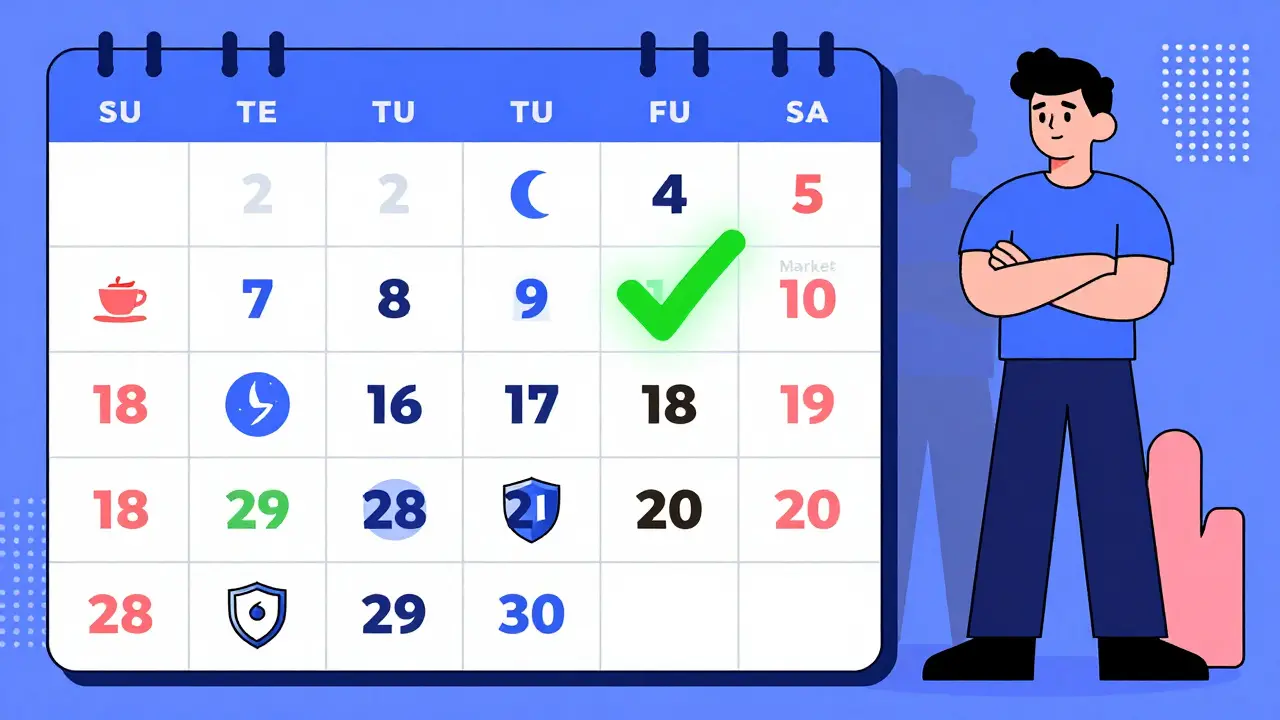
Some traders use a visual tracker-a calendar with green checkmarks for days they followed their plan. Others use voice memos. Pick what feels natural. The point isn’t the tool. It’s the habit. Recognition turns effort into evidence.
Reframing Failure as Data
The biggest confidence killer isn’t losing money. It’s believing you’re bad at trading because you lost. That’s a narrative. And narratives can be rewritten.
When a trade goes wrong, don’t ask: "Why am I such a failure?" Ask: "What did this trade teach me?"
Maybe you entered too early. Maybe you ignored volume. Maybe you let fear make you exit too soon. Each answer is a lesson. Not a verdict. Each lesson makes your next trade better. That’s how confidence grows-not by avoiding mistakes, but by learning from them.
Confident traders don’t fear losses. They expect them. They’ve built their identity around process, not profit. So when a trade fails, they don’t panic. They adjust. They learn. They move on.
Creating a Supportive Environment
You don’t have to do this alone. Talk to someone who understands. A mentor, a trading buddy, even a subreddit. Share your small wins. Say it out loud: "I didn’t revenge-trade today. I’m proud of that."
When you say it, your brain hears it. And hearing it makes it real. Positive feedback-even from yourself-triggers dopamine. It reinforces the behavior. It tells your brain: "This matters. Keep doing this."
And when you’re struggling? Ask for help. Say: "I’m having a hard time sticking to my plan. Can you remind me of the last time I did it right?" That’s not weakness. That’s strategy.
The Long Game
Confidence doesn’t come in a flash. It’s built slowly, like muscle. One disciplined trade. One calm review. One time you walked away instead of forcing a trade. These moments add up. They don’t look like much on paper. But over months, they change who you are.
You’ll start noticing things. You’ll feel calmer before a trade. You’ll stop checking your phone every 30 seconds. You’ll stop comparing your results to others. You’ll stop needing the market to validate you.
That’s when you know you’ve built real confidence. Not because you’re rich. But because you’re steady.
The market will always test you. But if your confidence is built on process-not profit-you’ll never break.
Can small wins really help with trading anxiety?
Yes. Trading anxiety often comes from fear of losing money or making a mistake. Small wins shift your focus from outcome to action. When you celebrate following your plan-even on a losing day-you train your brain to associate trading with control, not chaos. This reduces the panic response. Dopamine released from these small successes also improves mood and lowers cortisol, the stress hormone. Over time, this builds emotional resilience.
What if I don’t have any wins in a week?
If you didn’t make money, but you followed your rules, that’s still a win. If you didn’t overtrade, didn’t revenge-trade, and stuck to your risk limits-that’s a win. If you reviewed your trades honestly, that’s a win. Confidence isn’t built on profit. It’s built on consistency. Even in a bad week, you can find at least one moment where you acted like a professional. Write it down. That’s your win.
How long does it take to build confidence this way?
There’s no fixed timeline. But most traders notice a shift in mindset after 3-4 weeks of daily small win tracking. The real change happens after 3-6 months, when you stop measuring yourself by profit and start measuring yourself by discipline. That’s when confidence becomes automatic. It’s not about how many trades you win. It’s about how steady you stay when you lose.
Should I still aim for profits?
Absolutely. But profit should be a side effect of good process, not the goal. If you focus on execution, risk management, and consistency, profits follow naturally. If you focus only on profit, you’ll start cutting stops, overtrading, and chasing losses. That’s how traders blow up accounts. Process first. Profit second. Always.
Is this approach only for beginners?
No. Even experienced traders lose confidence after a string of losses. The most successful traders I know keep a small win journal. They use it to reset after a rough month. This method isn’t for beginners-it’s for anyone who wants to stay grounded. Confidence isn’t a one-time achievement. It’s a daily practice.