
Byzantine Fault Tolerance: How Blockchains Stop Bad Actors
 Apr, 24 2026
Imagine a group of generals surrounding an enemy city. To win, they must all attack at the exact same time. If only some attack, they'll be wiped out. The catch? They can only communicate via messengers, and some of those generals might be traitors who want the army to fail. How do they agree on a plan when they can't trust each other? This is the Byzantine Fault Tolerance is a property of distributed systems that allows them to reach a consensus even if some nodes fail or act maliciously.
In the world of crypto, this isn't just a thought experiment-it's the only thing keeping your digital wallet safe. Without a central bank to say "yes, this transaction is valid," blockchain networks rely on BFT to ensure that a few bad actors can't just rewrite the history of who owns what. It's the difference between a secure financial system and a digital free-for-all.
The Core Problem: Trusting the Untrustworthy
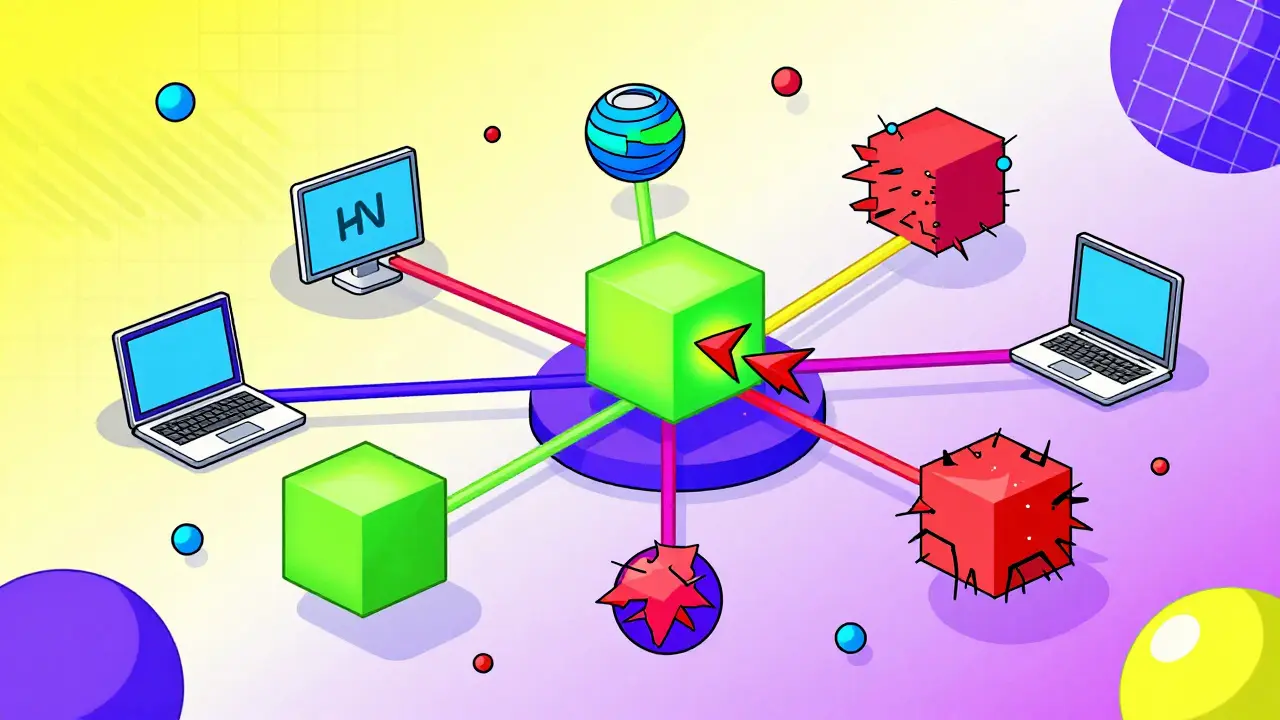
At its heart, Byzantine Fault Tolerance solves the Byzantine Generals Problem. In a decentralized network, there is no "boss" node. Instead, you have thousands of computers (nodes) spread across the globe. Some of these nodes are honest, but others might be hacked, crash, or be run by someone trying to steal money.
A simple crash is easy to handle; the node just stops talking. But a "Byzantine fault" is much nastier. This is when a node stays online but starts lying. It might tell one peer that a transaction is valid and tell another peer that the same transaction is a fake. This kind of coordinated deception is designed to split the network and create chaos, which is why standard crash tolerance isn't enough for a global currency.
How Consensus Protocols Fix the Trust Gap
To survive these lies, blockchains use Consensus Protocols. These are the rulebooks that every node must follow to agree on the state of the ledger. The goal isn't to make it impossible for someone to be malicious-that's impossible in an open network-but to ensure that the honest majority can outvote the liars.
When a transaction happens, nodes compare it against the existing history. If you try to send 5 BTC but only have 2, the honest nodes will see the inconsistency and reject it. The BFT mechanism ensures that even if a small group of nodes tries to push that fake transaction through, the rest of the network will spot the lie and ignore it. This creates a "shared point of truth" that everyone can rely on.
Proof of Work: The Expensive Shield
Proof of Work (PoW), used by Bitcoin, tackles BFT by making it incredibly expensive to lie. Miners have to burn massive amounts of electricity solving complex math puzzles to propose a block. Because this costs real-world money, there is a huge financial penalty for trying to cheat.
However, PoW has a famous weakness: the 51% Attack. If one person or group controls more than half of the network's total computing power, they can potentially manipulate the ledger. While this is mathematically possible, the cost of acquiring that much hardware for a network as large as Bitcoin is practically impossible for most attackers.
Proof of Stake: Financial Skin in the Game
Many newer networks use Proof of Stake (PoS) to achieve BFT. Instead of burning electricity, validators lock up their own coins as collateral. This is called Staking. If a validator tries to approve a fraudulent transaction, the network uses a process called Slashing to take away their staked coins.
This flips the incentive: it's no longer about who has the most electricity, but who has the most to lose. Whether it's standard PoS or Delegated Proof of Stake (DPoS), the economic pressure keeps validators honest. If you cheat, you lose your money. It's a simple, brutal, and effective way to maintain network integrity.
Practical BFT and the Quest for Finality
Some networks use a more direct approach called Practical Byzantine Fault Tolerance (pBFT). Unlike PoW or PoS, which have "probabilistic finality" (meaning a block could theoretically be reverted if a longer chain appears), pBFT offers instant finality. Once a sufficient number of nodes agree, the transaction is set in stone.
| Mechanism | Cost of Malice | Finality | Scalability |
|---|---|---|---|
| Proof of Work | High Electricity/Hardware | Probabilistic | High (Global) |
| Proof of Stake | Loss of Staked Capital | Fast/Probabilistic | Very High |
| pBFT | Loss of Reputation/Node | Instant | Low (Communication Heavy) |
The downside of pBFT is that it requires nodes to talk to every other node constantly. Imagine a group chat with ten people; it's easy. Now imagine a group chat with 10,000 people where everyone must agree on every single sentence. The network overhead becomes a nightmare. This is why pBFT is usually found in smaller, private networks like Hyperledger Fabric rather than massive public ones.
The Trade-off: Security vs. Speed
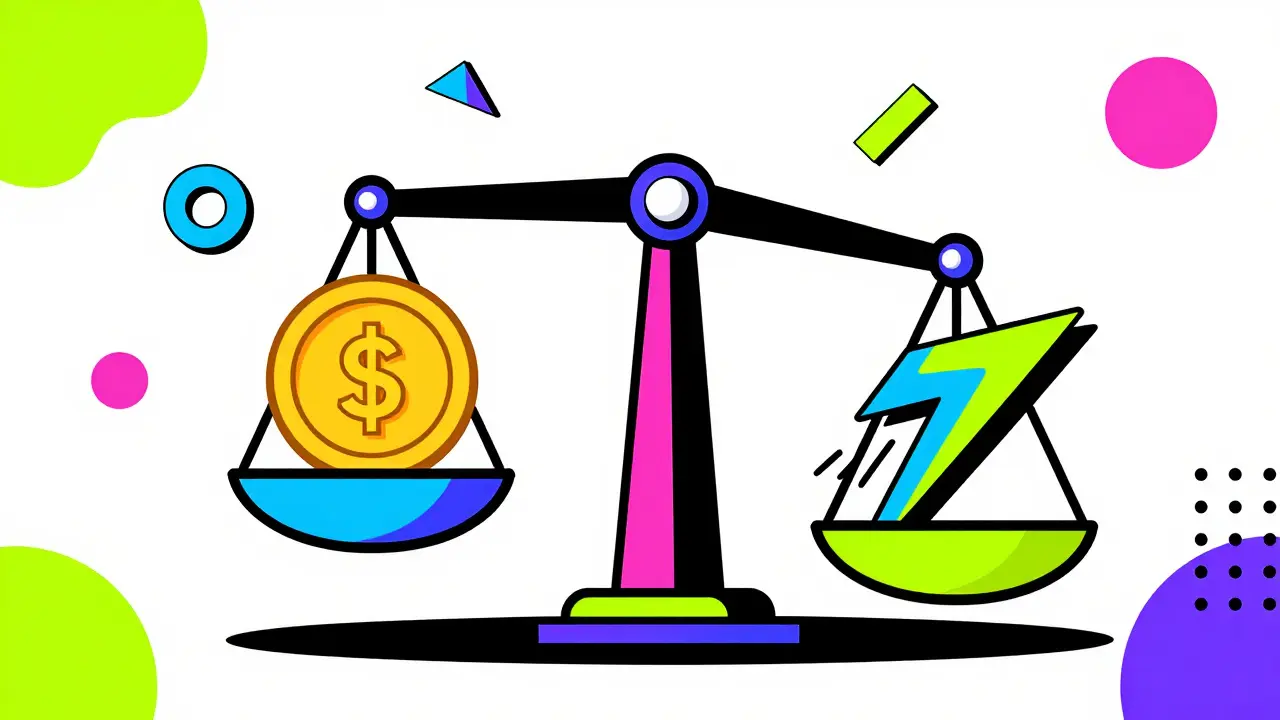
You can't have everything. In blockchain, there's a constant tug-of-war between scalability, security, and decentralization. BFT systems that provide the strongest guarantees usually struggle to scale because the amount of communication needed to reach consensus grows exponentially as you add more nodes.
Networks like Cosmos try to balance this by using Tendermint, a variation of BFT that limits the number of validators to keep the communication manageable while still providing a mathematical guarantee: as long as fewer than one-third of the nodes are malicious, the network stays secure.
What happens if more than 33% of nodes are malicious?
In most BFT-based systems, if the number of malicious actors exceeds one-third of the network, the system can no longer guarantee a correct consensus. This could lead to a "fork" where different parts of the network believe different versions of the truth, or the network could simply halt to prevent incorrect data from being finalized.
Is Proof of Work actually BFT?
Yes, but it's a different implementation. While pBFT uses voting rounds, PoW uses computational work as a proxy for trust. It solves the Byzantine Generals Problem by making the cost of lying higher than the potential reward of cheating.
Why is "slashing" important in Proof of Stake?
Slashing is the primary deterrent against Byzantine behavior in PoS. Since there's no expensive hardware involved, the only way to stop a validator from lying is to make them lose their financial stake. It creates a direct economic penalty for dishonesty.
Which is better: pBFT or PoS?
It depends on the goal. If you need a private, high-speed network for a corporate consortium where you know the participants, pBFT is great because of its instant finality. For a global, permissionless currency where anyone can join, PoS is far superior because it scales to thousands of nodes without crashing the network.
Can a BFT network be completely hacked?
No system is 100% unhackable, but BFT makes it incredibly hard. An attacker would need to compromise a huge percentage of the network simultaneously (usually >33% or >51% depending on the protocol). In a widely distributed network, the coordination and resources required for this are usually prohibitively expensive.
Next Steps for Learning
If you're diving deeper into how these systems work, start by looking into the CAP Theorem, which explains the fundamental trade-offs between Consistency, Availability, and Partition Tolerance in distributed systems. You might also want to explore the specific implementation of the Tendermint Core if you're interested in how modern PoS networks actually handle the voting process under the hood.