
Checklist Before You List: What Every Seller Should Know Before Putting Their Home on the Market
 Dec, 23 2025
Too many sellers make the same mistake: they list their home before it’s truly ready. They think a clean house and a few fresh flowers will do the job. But in today’s market, that’s not enough. Homes that are properly prepared before listing sell 17.5 days faster and for 3-8% more money, according to the 2024 National Association of REALTORS®. The difference isn’t luck-it’s a checklist. And if you skip even a few steps, you’re leaving money on the table.
Start Early-Before You Even Call an Agent
The best time to start preparing your home isn’t when you’re ready to list. It’s when you first think about selling. That’s when you have the most flexibility. Start by walking through every room with a critical eye. What looks lived-in to you might look cluttered to a buyer. Remove personal photos, family memorabilia, and anything that makes it hard for someone to imagine themselves living there. Experts recommend removing 70-80% of personal items. It’s not about making your home look sterile-it’s about helping buyers connect emotionally without distractions.Fix What’s Broken-Before Buyers See It
Minor repairs seem small, but they add up. A dripping faucet, a loose cabinet handle, cracked grout in the bathroom-these aren’t deal-breakers on their own. But when buyers notice multiple small issues, they start wondering what else you’ve ignored. The average cost for these fixes is $1,500-$3,000, according to Veterans United’s 2023 survey of 2,400 sellers. That’s a small price compared to losing an offer because a buyer’s inspector found a leaky roof or outdated wiring. And here’s the key: fixing these things before listing prevents 68% of inspection-related deal cancellations, as mortgage expert Robert Siciliano confirms. Don’t wait for the inspection to reveal problems. Fix them now.Declutter and Deep Clean-The Two Most Powerful Moves
Of all the steps on any pre-listing checklist, decluttering and deep cleaning are the most impactful. Realtor.com calls decluttering the single most effective action sellers can take. Remove everything you don’t need. Clear off countertops. Empty closets until they’re only half full. Buyers need to see storage space, not your old holiday decorations or unused appliances. A 2024 Zillow survey found that 78% of sellers said steam cleaning carpets made the biggest visible difference-for under $200. Professional cleaning costs $200-$400, but it’s worth it. Dirty carpets, dusty baseboards, and grimy kitchen appliances scream neglect. Clean doesn’t mean sterile. It means fresh, cared-for, and ready for new owners.Paint, Light, and Stage-The Invisible Upgrade
A fresh coat of paint costs $1,000-$3,500, depending on size and finish. But it’s one of the highest-return investments you can make. Neutral tones like warm whites, soft grays, and light beiges work best. They make rooms feel bigger and brighter. Avoid bold colors-even if you love them. Buyers don’t buy your taste. They buy the potential of the space. Lighting is the most overlooked element. Turn on every light in the house during showings. Open all curtains, even in the middle of winter. Natural light is the #1 thing buyers notice. If your home feels dark, even with good sunlight, consider adding floor lamps or upgrading fixtures. Professional staging adds $300-$800 per week, but homes that are staged sell for 6-10% more, according to NAR. You don’t need to rent furniture. Just rearrange what you have. Move bulky pieces away from walls. Create clear walkways. Remove excess decor. The goal is to help buyers see the flow of the space.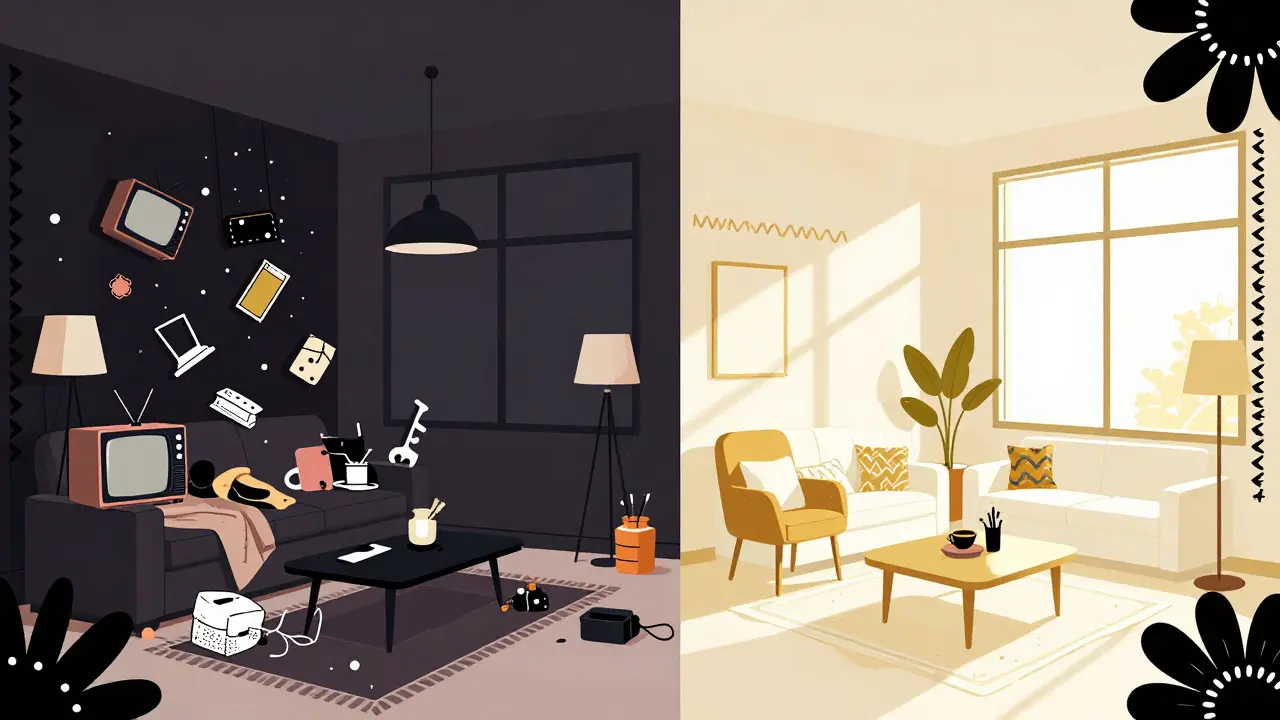
Price It Right-Don’t Guess
Overpricing is the fastest way to kill interest. The National Association of REALTORS® found that 57% of first-time sellers initially overprice by 4-7%. That doesn’t mean you get more offers. It means you get fewer. Buyers skip over homes that seem too expensive. Your home will sit on the market, and then you’ll have to drop the price-sometimes drastically. Use recent sales data from your neighborhood. Zillow’s 2024 data shows 78% of sellers now use online tools alongside agent input. But don’t rely on automated valuations alone. A professional appraisal costs $350-$600 and gives you a clearer picture. Compare your home to three recently sold properties with similar square footage, age, and condition. If your home needs more repairs, price it lower. If it’s updated and move-in ready, you can justify a higher number.Get Ready for Showings-The Final Week
The week before you list, focus on the details. Clean every surface-windowsills, light switches, doorknobs. Wash the inside of cabinets. Vacuum under furniture. Empty the fridge and clean the shelves. Make sure the thermostat is set to 68-72°F. Buyers feel more comfortable in slightly warm homes. Remove pets during showings. Even friendly dogs can make buyers nervous. Take out trash bins. Clear the driveway. Mow the lawn. Trim hedges. Weed flower beds. First impressions happen in the first 10 seconds. If the outside looks neglected, buyers won’t even step inside.Professional Photos and Virtual Tours Are Non-Negotiable
In 2026, your listing won’t get seen without professional photos. Realtor.com analytics show listings with professional photography get 118% more online views. A good photographer knows how to capture space, light, and detail. Don’t try to do it yourself with your phone. The cost is $150-$400, and it’s one of the smartest expenses you’ll make. Virtual staging is also becoming standard. If your home is empty or has minimal furniture, virtual staging can show buyers how it could look. It’s cheaper than renting furniture and works wonders for online viewers. Over 62% of listings now include virtual staging, according to NAR’s 2025 Technology Report.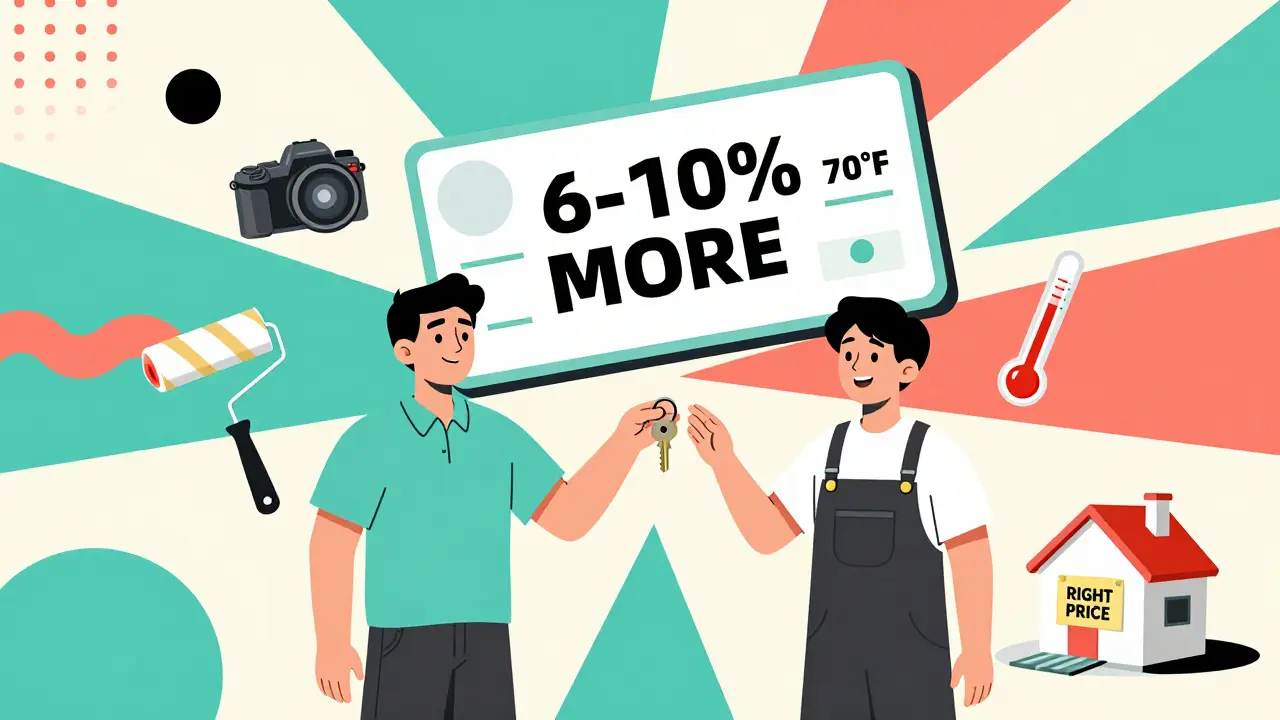
Know What to Disclose
Honesty isn’t just ethical-it’s legal. In 12% of 2023 sales, disputes arose from inaccurate listing descriptions. If your home has a known issue-a leaky basement, an old HVAC system, a history of flooding-disclose it upfront. Don’t hide it. Buyers will find out during inspections. And if you’re caught withholding information, you could face legal trouble. Some states now require disclosures for climate risks like wildfire or flood zones. California’s 2025 law is just the start. Even if your area doesn’t require it, being upfront builds trust. Buyers appreciate transparency.Time and Cost: What to Expect
Preparing your home takes time. Most sellers spend 80-120 hours over 6-8 weeks. The biggest time sink? Decluttering. On average, it takes 25-35 hours. If you’re short on time, consider hiring help. Cleaning, painting, and staging services can cost $2,500-$5,000 total. But if you’re not handy, it’s worth it. You’ll save weeks of stress and get better results. One thing you don’t need to do yourself? Writing the listing description. If you hate writing, or if you’re not sure how to highlight your home’s best features, a product description generator can help you create clear, compelling listings in seconds instead of 10-15 minutes.What Happens If You Skip Steps?
Redfin’s 2024 analysis found that 32% of delayed sales were due to minor repairs discovered during inspections-repairs that could have been fixed before listing. Sellers who skipped decluttering saw fewer offers. Those who didn’t stage their homes got lower bids. And those who overpriced watched their homes sit for months before cutting the price. Preparation isn’t optional. It’s the difference between a quick sale and a long, frustrating wait.Final Thought: It’s Not About Perfection
You don’t need to rebuild your kitchen or install new flooring. You just need to make your home feel move-in ready. Focus on what buyers see first: the front yard, the entryway, the living room. Clean, declutter, fix the obvious, and price it right. That’s it. The rest is noise. And if you’re tired of writing listings, let a tool handle the words while you focus on the real work-getting your home ready to sell.How early should I start preparing my home to sell?
Start as soon as you think about selling-even before you hire an agent. The earlier you begin, the more time you have to make repairs, declutter, and plan without pressure. Most successful sellers begin preparation 6-8 weeks before listing, but starting sooner gives you flexibility and reduces stress.
Is staging really worth the cost?
Yes. According to the National Association of REALTORS®, staged homes sell for 6-10% more on average. Even simple staging-like rearranging furniture, removing clutter, and adding a few neutral decor items-makes a big difference. Buyers can’t imagine how a bare room could work. Staging helps them see the potential.
Should I get a pre-listing inspection?
It’s recommended in most markets, even if it’s not required. A pre-listing inspection costs $300-$500 and reveals hidden issues before buyers find them. Fixing problems upfront prevents last-minute negotiations and deal cancellations. In a seller’s market, some skip it-but it’s still the smartest move for peace of mind.
How much should I spend on repairs before listing?
Focus on repairs with a return on investment (ROI) of at least 150%. That means spending $1,000 to increase your home’s value by $2,500 or more. Common high-ROI fixes: repainting, fixing leaky faucets, replacing broken tiles, and cleaning gutters. Avoid major renovations like kitchen overhauls unless your home is clearly outdated compared to neighbors.
Do I need professional photos?
Absolutely. Listings with professional photos get 118% more online views, according to Realtor.com. Your phone camera won’t capture the space the way a pro can. A good photographer uses wide-angle lenses, proper lighting, and editing to make your home look bigger, brighter, and more appealing. This is one expense you shouldn’t cut.
What’s the biggest mistake sellers make?
Overpricing. Too many sellers base their price on what they paid for the home-or how much they’ve spent on improvements. Buyers don’t care about that. They care about what similar homes are selling for right now. If your home is priced above market, it won’t get shown. And the longer it sits, the more buyers assume something’s wrong with it.