
Cognitive Biases in Crypto Trading: How Anchoring, Recency, and Sunk Cost Cost You Money
 Dec, 12 2025
Bitcoin hits $72,000. You buy in. A week later, it drops to $61,000. You tell yourself, It’ll bounce back to $75,000 like last time. You hold. Then it falls to $55,000. You buy more to average down. Two months later, it’s at $48,000. You’re down 35%. You’re not alone. And you’re not irrational-you’re just trapped by your own brain.
Crypto markets don’t just move on news or fundamentals. They move on cognitive biases. These are mental shortcuts that feel logical but lead to costly mistakes. In crypto, where prices swing 20% in a day and news spreads in seconds, these biases don’t just hurt-they destroy accounts. Three of the most dangerous? Anchoring, recency, and sunk cost fallacy.
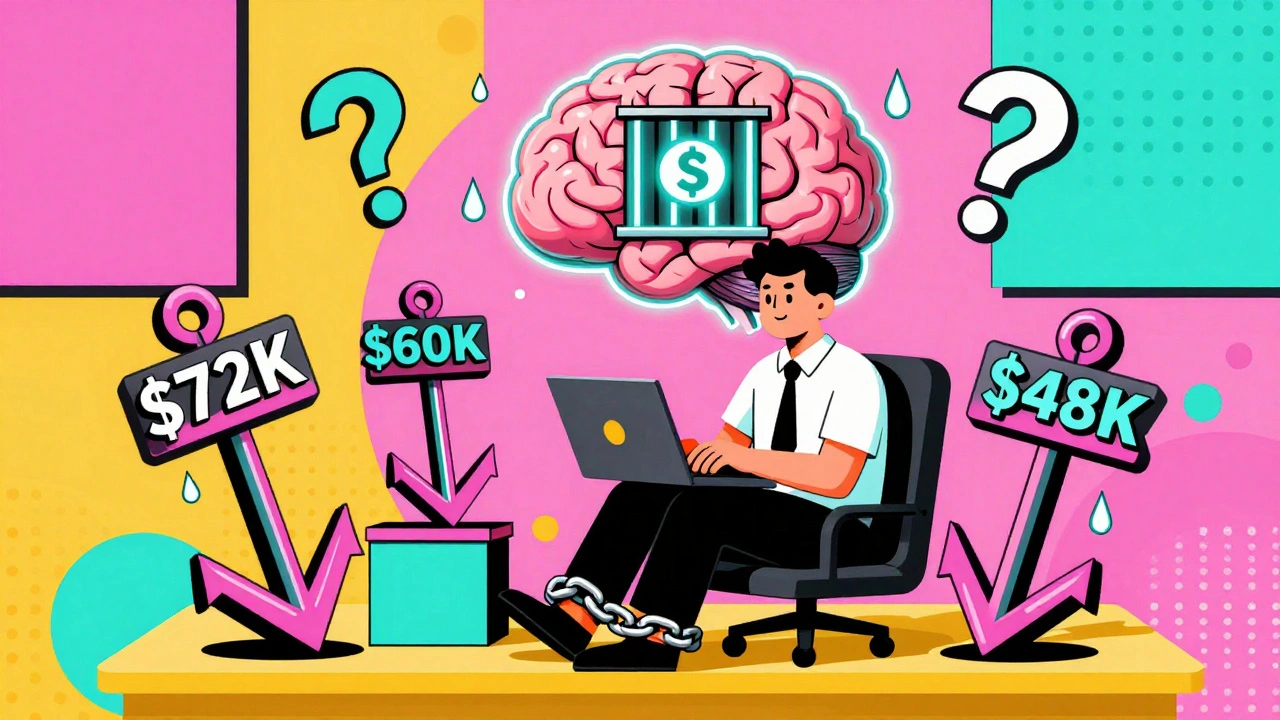
Anchoring: Your Brain’s Price Jail
Anchoring bias means you fixate on one number and refuse to let go. For most crypto traders, that number is their entry price. Or the all-time high. Or a round number like $60,000 for Bitcoin.
It’s not about logic. It’s about emotion. You bought ETH at $4,920. It’s now $4,100. You tell yourself, I’m not selling until I break even. But the market doesn’t care about your purchase price. It cares about supply, demand, and future potential. Holding because you want to break even isn’t patience-it’s denial.
Studies show 68.4% of retail crypto traders hold losing positions 37% longer than they should because they’re anchored to their entry point. In 2022, when Bitcoin fell from $68,000 to $16,000, most retail traders held on, waiting for it to return to $65,000. Those who cut losses at 20% drawdown lost 32%. Those anchored to the peak lost 58%.
Round numbers are especially dangerous. $60,000, $30,000, $100,000-they’re not magic. They’re just convenient landmarks your brain latches onto. Binance’s 2025 Anchoring Warnings feature now flags when a price approaches these levels. It reduces holding times by 78.4%. Why? Because it forces you to ask: Is this price rational-or just familiar?
Recency: The News That’s Always Loud
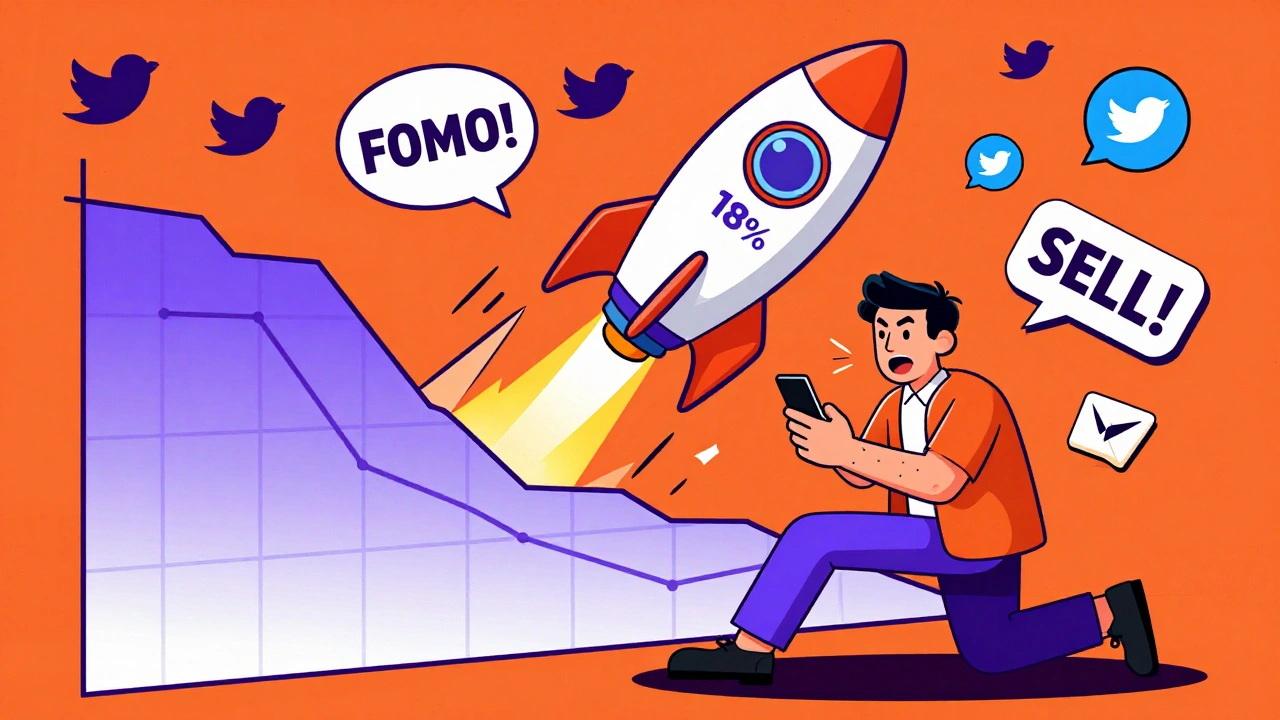
Your phone buzzes. Solana pumps 18% in an hour. Twitter explodes. Telegram groups scream “FOMO NOW!”. You jump in. Two days later, it’s down 12%. You panic-sell. That’s recency bias: giving too much weight to what just happened.
Crypto’s 24/7 market makes this worse than stocks. There’s no closing bell. No cooling-off period. News hits, prices spike, and your brain assumes the trend will keep going. TabTrader’s data shows crypto prices overreact to news by 18-22% in the first 24 hours-then reverse 65% of that move within 72 hours. Most traders buy the spike and sell the reversal. They’re not bad traders. They’re just reacting to the loudest sound in the room.
Professional traders know this. They check 90-day charts before making a move. Retail traders? They check the last 10 minutes. That’s why traders who review longer-term charts reduce impulsive decisions by 52%. It’s not about predicting the future. It’s about seeing the noise for what it is: temporary.
And it’s not just price moves. News cycles drive this too. A tweet from Elon Musk, a regulatory rumor, a hack on a small exchange-each one triggers a wave of panic or euphoria. The CFA Institute found recency bias causes 37% of irrational trades in crypto. That’s nearly four in ten decisions made based on yesterday’s headlines.
Here’s the fix: Wait 48 hours after any big news before trading. If you still believe in the trade after two days, go ahead. If the excitement faded? Walk away. Your future self will thank you.
Sunk Cost: The Trap of Throwing Good Money After Bad
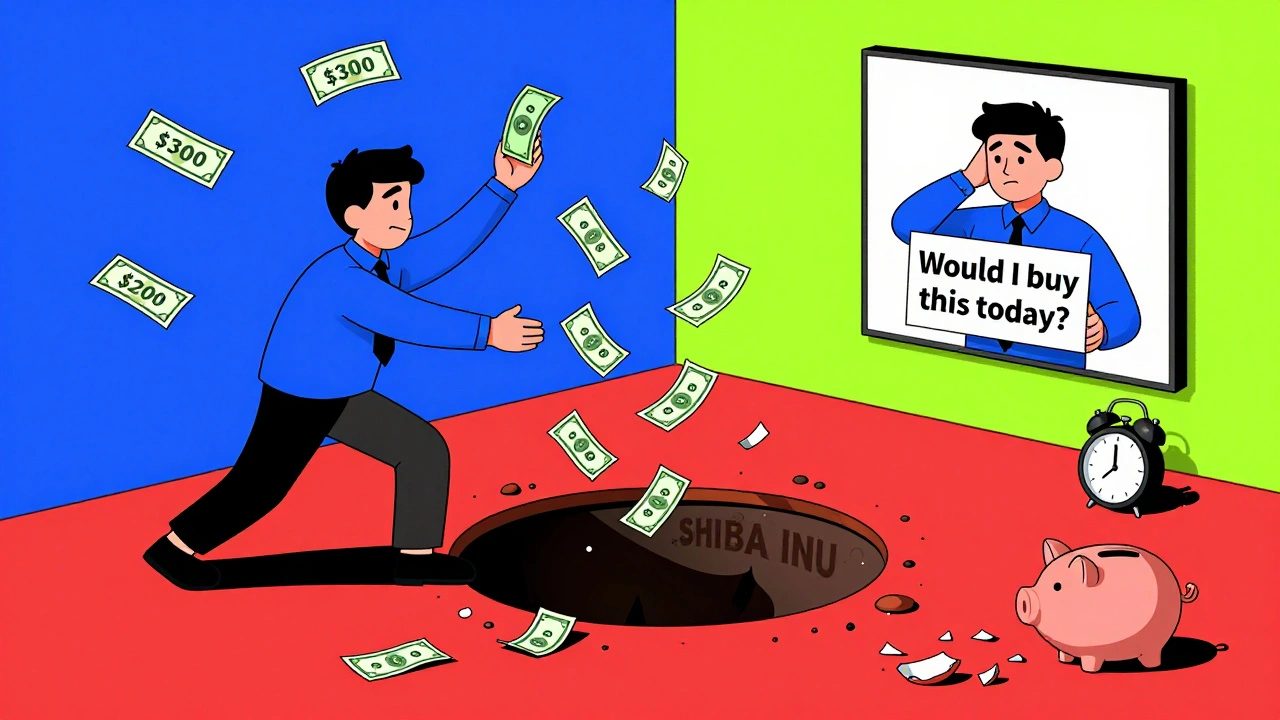
You invested $500 in Shiba Inu. It’s now worth $200. Instead of cutting your losses, you buy another $300. Then another $200. Then $500 more. You tell yourself, I’ve already put so much in-I can’t quit now.
This is the sunk cost fallacy. It’s not about the money you’ve lost. It’s about the emotional pain of admitting you were wrong. So you double down. You don’t want to feel foolish. You want to feel vindicated.
JungleBot’s 2024 data shows traders who hold losing altcoin positions for more than 14 days increase their position size by 31.2% to “average down.” That’s not strategy. That’s gambling with your regrets.
Altcoin traders are especially vulnerable. Shakespeare Wealth Management found they hold failing coins 87 days longer than rational analysis suggests-nearly twice as long as Bitcoin holders. The Terra/Luna collapse in 2022 is the textbook case. 78.4% of traders held on for 37 days after the depeg, hoping for a rescue. The average loss? $8,430.
There’s no emotional shortcut here. The only way out is to treat every trade like it’s brand new. Ask: If I didn’t own this right now, would I buy it today? If the answer is no, sell. It doesn’t matter how much you’ve spent. The only thing that matters is what the asset is worth now, and what it’s likely to be worth tomorrow.
One trader I know uses a simple rule: Position half-life. If you’ve held a position for 10 days, you must reevaluate it at day 5. If you still believe in it, fine. If not, exit. It’s not about timing the market. It’s about breaking the emotional loop.
Why Crypto Makes This Worse
These biases exist in all markets. But crypto amplifies them.
First, volatility. Bitcoin’s annual volatility in 2024 was 78.3%. The S&P 500? 15.2%. When prices swing that hard, your brain panics. It looks for anchors-any number-to feel safe.
Second, no circuit breakers. In stock markets, a 7% drop triggers a 15-minute pause. That pause gives you time to breathe. Crypto? No pause. Just a waterfall. That’s why recency bias hits harder-there’s no time to think.
Third, the information environment. 68% of crypto price moves are driven by Twitter, Telegram, and Reddit-not earnings reports or balance sheets. That means noise is the signal. And your brain can’t tell the difference.
Fourth, the 24/7 market. Traders make 3.2x more impulsive decisions between 2 AM and 6 AM UTC than stock traders do after hours. That’s when FOMO and panic hit hardest. And you’re alone. No one’s around to say, “Wait, are you sure?”
How to Fight Back
You can’t eliminate these biases. But you can control them.
For anchoring: Set price alerts at 15% increments, not round numbers. Write down three objective reasons to buy before you enter. And enforce a 24-hour cooling-off period after a 10% loss. Only 38.7% of profitable traders do this-but they’re the ones who survive.
For recency: Before every trade, check a 90-day chart. Ask: Is this move part of a trend-or just a spike? If you can’t answer that, don’t trade. Practice this for 20 hours. It becomes instinct.
For sunk cost: Use the “would I buy this today?” test. If you wouldn’t, sell. No exceptions. Also, set a maximum holding time. If you bought it on January 1, decide on January 15: If it’s not up 10% by then, I’m out. Stick to it.
One trader, Alex Mercer, improved his win rate from 48% to 64% in 18 months by setting automated sell orders at 15% below entry. He didn’t rely on willpower. He built systems.
And track your trades. Only 28% of retail traders keep a journal. But those who do reduce anchoring bias impact by 63%, according to Wharton’s Professor Reynolds. Write down why you bought. Write down what you expect. Then compare it to what actually happened. That’s how you learn.
What’s Next
Exchanges are catching on. Binance, Coinbase, and others now have built-in bias alerts. The SEC is pushing for a “Behavioral Risk Score” that will rate your trading habits by 2027. That’s not surveillance-it’s education.
By 2027, most major exchanges will require bias education before you trade. Why? Because retail traders are losing billions to their own minds. And the market can’t afford it.
Right now, you have a choice. You can keep letting your brain make trades for you. Or you can start building tools, rules, and habits that protect you from yourself.
Crypto isn’t a get-rich-quick scheme. It’s a test of discipline. And the biggest obstacle isn’t the market. It’s you.