
Cross-Chain DEXs: Trade Any Crypto Pair Across Blockchains Without Intermediaries
 Jan, 23 2026
Imagine swapping Bitcoin for Solana tokens without ever touching a centralized exchange like Binance or Coinbase. No wrapping, no custody, no middleman. Just direct, trustless trades between chains - that’s what cross-chain DEXs deliver today. This isn’t science fiction. It’s real, functional, and growing fast - even if most people still don’t use it.
Why Cross-Chain DEXs Exist
Blockchains were never meant to work alone. Ethereum has DeFi. Bitcoin has security. Solana has speed. Polygon has low fees. But until recently, moving assets between them meant jumping through hoops: sell on one chain, send fiat to a centralized exchange, buy on another chain, withdraw again. Five steps. Three fees. One trusted third party. Cross-chain DEXs fix that. They let you trade native assets across chains in one go. Swap ETH for BTC. Trade AVAX for SOL. Move your Polygon USDC to an Avalanche liquidity pool - all without leaving your wallet. The goal? Break down blockchain silos. Make liquidity flow freely. Reduce reliance on centralized exchanges.How They Actually Work
It’s not magic. It’s math, cryptography, and smart contracts working together. Here’s the simplified version:- You lock your asset (say, 1 BTC) in a smart contract on Bitcoin.
- A cross-chain protocol verifies the lock using oracles and validator nodes.
- It signals the destination chain (like Ethereum) to mint an equivalent amount of native ETH or a token representing your BTC.
- But here’s the key difference from old bridges: you get native tokens. Not wrapped BTC. Not pegged tokens. Real ETH. Real SOL. Real BTC on its own chain.
Top Players Right Now
Not all cross-chain DEXs are equal. Here are the main ones shaping the space:| Platform | Native Asset | Finality Time | TVL (Oct 2023) | Key Strength |
|---|---|---|---|---|
| THORChain | RUNE | 30-120 sec | $842M | Native Bitcoin support without custodians |
| Chainflip | FLIP | 45-90 sec | $318M | High liquidity aggregation across 15+ chains |
| Axelar Network | AXL | <60 sec | $285M | Developer-friendly infrastructure for other DEXs |
| Li.Finance | LI | Varies | $204M | Aggregator - pulls from multiple cross-chain protocols |
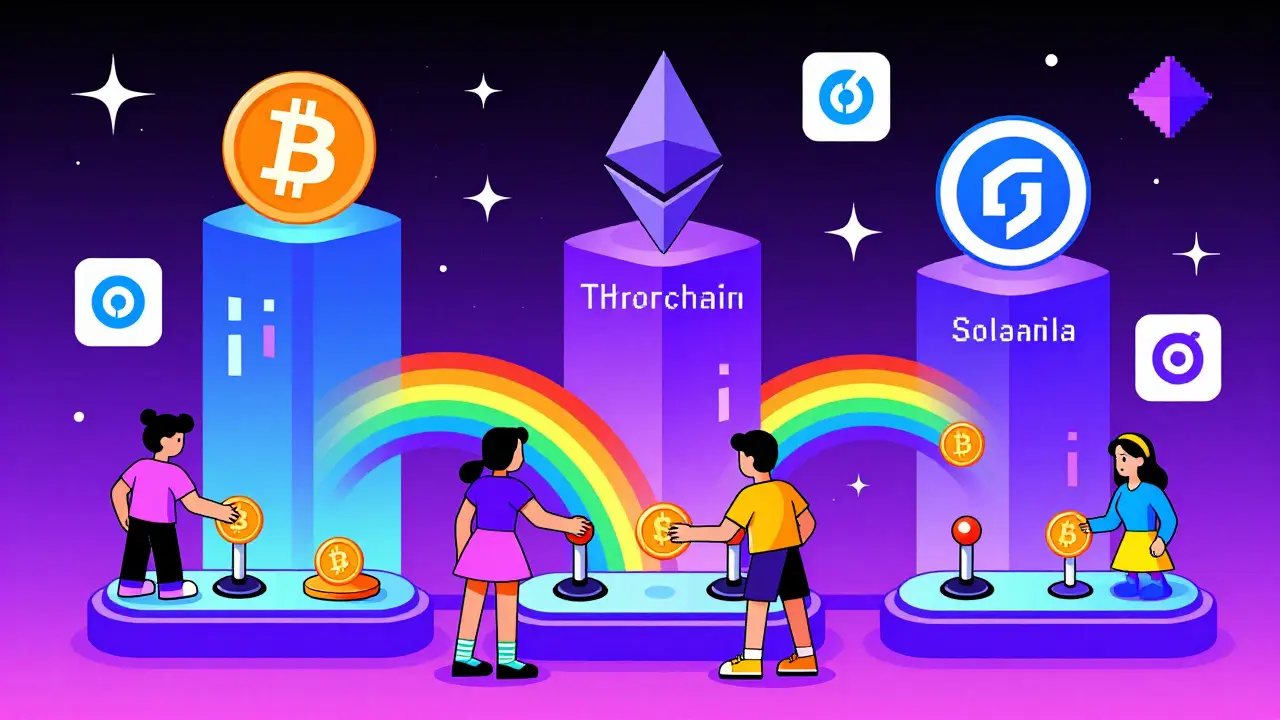
THORChain leads by volume and innovation. It was the first to let users swap Bitcoin directly for Ethereum-based assets without trusting anyone with their BTC. Chainflip is catching up fast, with deep liquidity pools and a strong focus on user experience. Axelar doesn’t run its own DEX - it powers others. Think of it like the plumbing behind the scenes.
Why They’re Better Than Centralized Exchanges
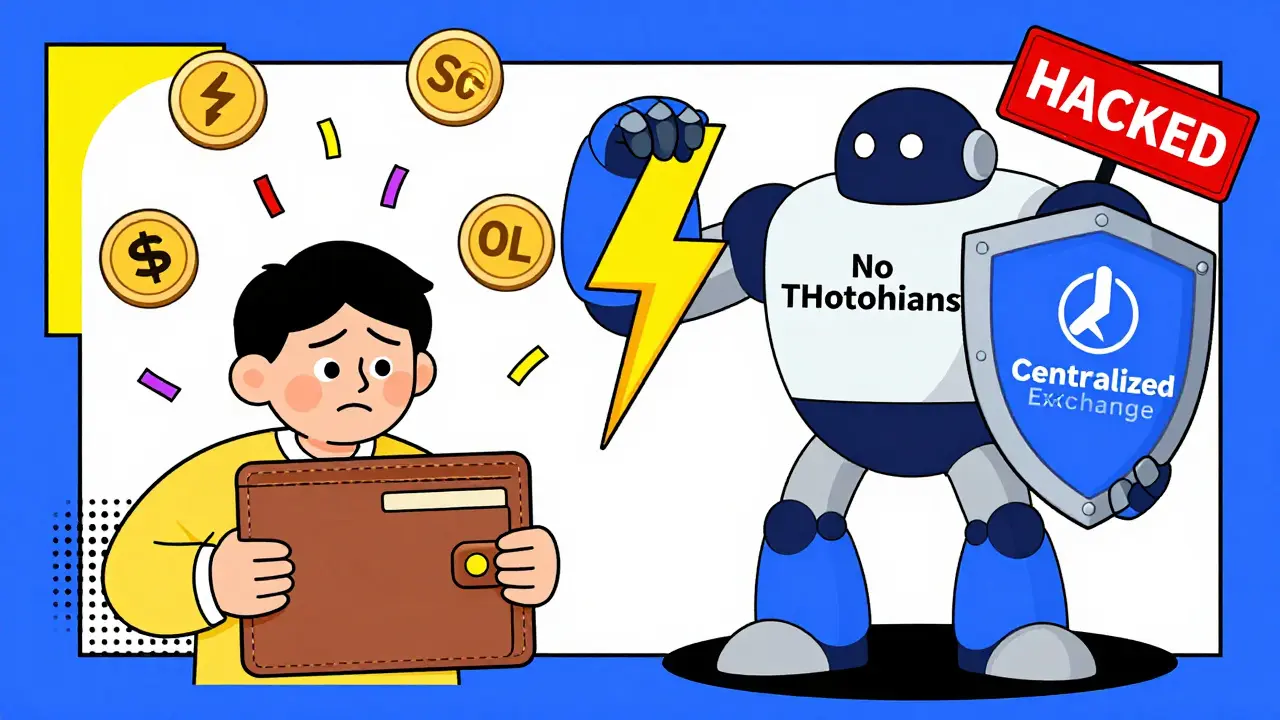
You might wonder: why bother? Binance lets me trade BTC for SOL in 10 seconds. True. But here’s the catch: when you trade on Binance, you don’t own your coins. They’re in Binance’s wallet. You’re trusting them not to freeze your account, not to get hacked, not to disappear during a regulatory crackdown. Cross-chain DEXs give you full control. Your keys. Your coins. Always. Even when you swap, your funds never leave your wallet. That’s the whole point of DeFi. Plus, you get access to tokens that don’t even exist on centralized exchanges. Think Bitcoin-based DeFi tokens like sBTC or WBTC alternatives - or new chains like Sei or Arbitrum that Binance hasn’t listed yet.Where They Fall Short
They’re not perfect. And they’re not for everyone. First, speed. Even the fastest cross-chain DEXs take 30-120 seconds. Binance does it in 10. For day traders, that’s a dealbreaker. Second, complexity. You need gas on both chains. Want to swap ETH for SOL? You need a little ETH for Ethereum fees and a little SOL for Solana fees. Many new users get stuck because they forgot to fund the destination chain. Third, security. Cross-chain bridges were the #1 target for hackers in 2022. $2.1 billion stolen across 14 major attacks. While platforms have improved - audits now cost over $350,000 per update - the risk is still higher than using Uniswap on Ethereum alone. And support? Don’t expect live chat. Most rely on Discord and forums. Response times can be hours. If your transaction times out, you’re on your own.Who Should Use Them?
These tools are ideal for:- Long-term holders who want to move assets between chains without selling
- DeFi power users who need access to liquidity on multiple networks
- Bitcoiners who want to use BTC in Ethereum DeFi without wrapping it
- Investors arbitraging price differences between chains
- Beginners who haven’t used a wallet before
- Traders who need sub-10-second execution
- People who hate managing multiple gas tokens
The Future: What’s Coming Next
The tech is evolving fast. In late 2023, THORChain launched its "Chaos Network" upgrade - finally allowing native Bitcoin swaps without any custodial bridge. That’s huge. Axelar’s "Socket" protocol now connects 15 chains with under-30-second finality. Chainlink is building price feeds directly into cross-chain DEXs to prevent oracle manipulation. The Cosmos ecosystem and Axelar are teaming up to create a unified standard - which could mean fewer fragmented protocols and more reliability. Market data suggests explosive growth. Cross-chain DEX volume is projected to hit $1.2 trillion annually by 2025. Institutional adoption is rising - 22% of enterprise crypto treasury platforms now support them. But skepticism remains. Some Ethereum core developers argue true composability is impossible until all chains share the same finality rules. Others say Layer 2s like Arbitrum and Optimism will make cross-chain swaps obsolete - why move between chains if everything runs on one scalable Ethereum rollup? The truth? Both could be right. Cross-chain DEXs won’t replace Layer 2s. They’ll complement them. For now, they’re the only way to trade native assets across fundamentally different blockchains. And that’s still valuable.How to Get Started
If you’re ready to try one:- Get a non-custodial wallet (MetaMask, Phantom, or Keplr).
- Fund it with small amounts of gas on at least two chains - say, ETH and SOL.
- Go to THORChain or Chainflip (no sign-up needed).
- Connect your wallet.
- Select the asset you want to trade and the chain you want it on.
- Confirm the swap. Wait. You’ll get a notification when it’s done.
Final Thought
Cross-chain DEXs are the quiet revolution in DeFi. They don’t make headlines like NFTs or memecoins. But they’re fixing the core problem: fragmentation. For the first time, crypto isn’t a collection of isolated islands. It’s becoming a connected network. Yes, they’re clunky. Yes, they’re risky. But they’re also the future of open finance - where you own your assets, and they move where you need them to, without asking permission. If you’re tired of jumping through hoops to trade across chains, this is your next step. Just don’t go all-in until you’ve tested it with a small amount. The technology works. But you still need to know how to use it.What’s the difference between a cross-chain DEX and a bridge?
A bridge moves tokens from one chain to another - usually by locking them on the source chain and minting a wrapped version on the destination chain. A cross-chain DEX swaps native assets directly. You trade BTC for ETH without getting wBTC or WBTC. The asset stays native on both sides. That’s the key difference.
Are cross-chain DEXs safe?
They’re safer than centralized exchanges because you keep control of your keys. But they’re riskier than single-chain DEXs like Uniswap. Between 2020 and 2022, over $2 billion was stolen from cross-chain bridges due to smart contract flaws and validator collusion. Platforms like THORChain and Chainflip have improved security dramatically since then, with audits now costing over $350,000. Still, never deposit more than you can afford to lose.
Do I need gas on both chains to use a cross-chain DEX?
Yes. You need a small amount of native gas on the chain you’re sending from and the chain you’re sending to. For example, to swap ETH for SOL, you need ETH for Ethereum transaction fees and SOL for Solana fees. If you don’t have enough on the destination chain, your swap may fail or get stuck.
Can I trade Bitcoin on a cross-chain DEX?
Yes - but only on platforms that support native Bitcoin swaps. THORChain was the first to do this without wrapped tokens. Chainflip and others now support it too. You can trade real BTC for ETH, SOL, or other tokens directly. No custodians. No intermediaries. Just your Bitcoin moving across chains.
How fast are cross-chain DEX transactions?
Typically 30 to 120 seconds, depending on the platform and network congestion. THORChain averages 97 seconds for BTC-to-ETH swaps. Axelar can do it in under 60 seconds. This is slower than centralized exchanges (10 seconds) but faster than traditional multi-step processes involving fiat transfers. Finality times are improving as protocols optimize their consensus layers.