
Custodial vs. Self-Custody in Crypto: Which Gives You Real Security and Control?
 Dec, 15 2025
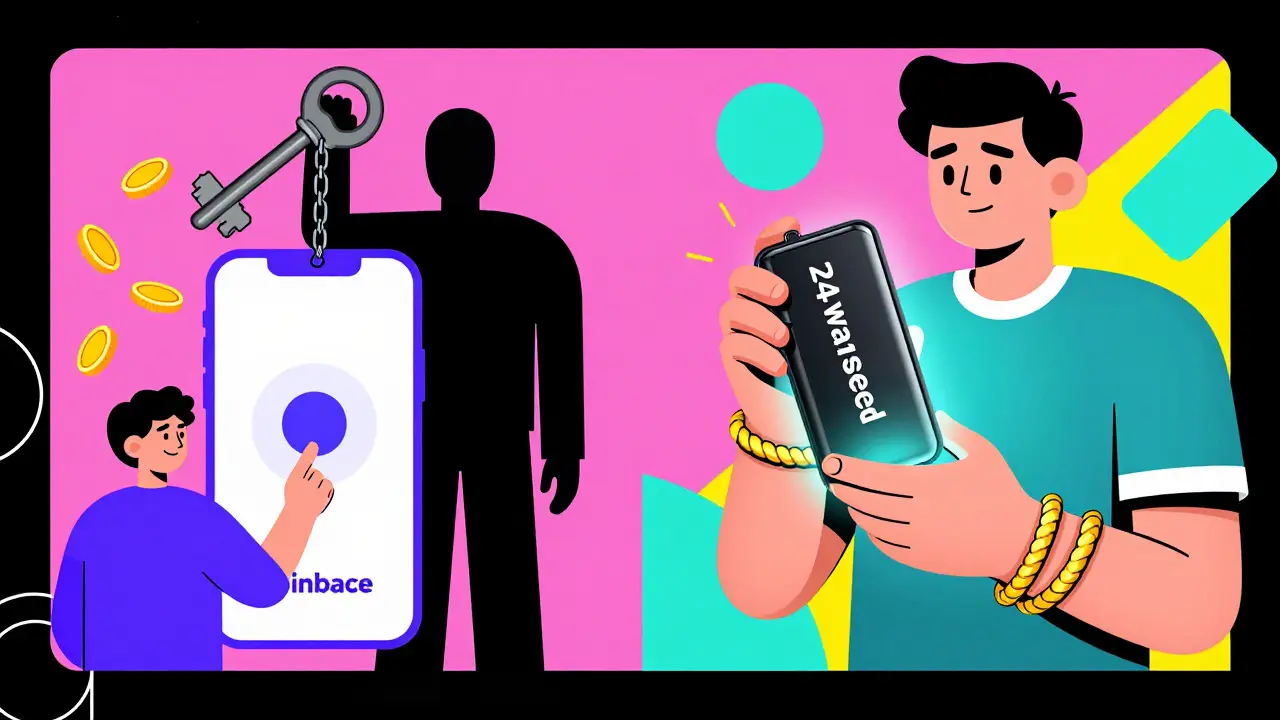
When you buy Bitcoin or Ethereum, you don’t just get a number in an app-you get control over digital assets that can’t be reversed, frozen, or deleted by anyone else. But who actually holds the keys to those assets? That’s the question that separates custodial from self-custody wallets-and it’s the difference between owning your crypto and trusting someone else to hold it for you.
What Does ‘Not Your Keys, Not Your Coins’ Really Mean?
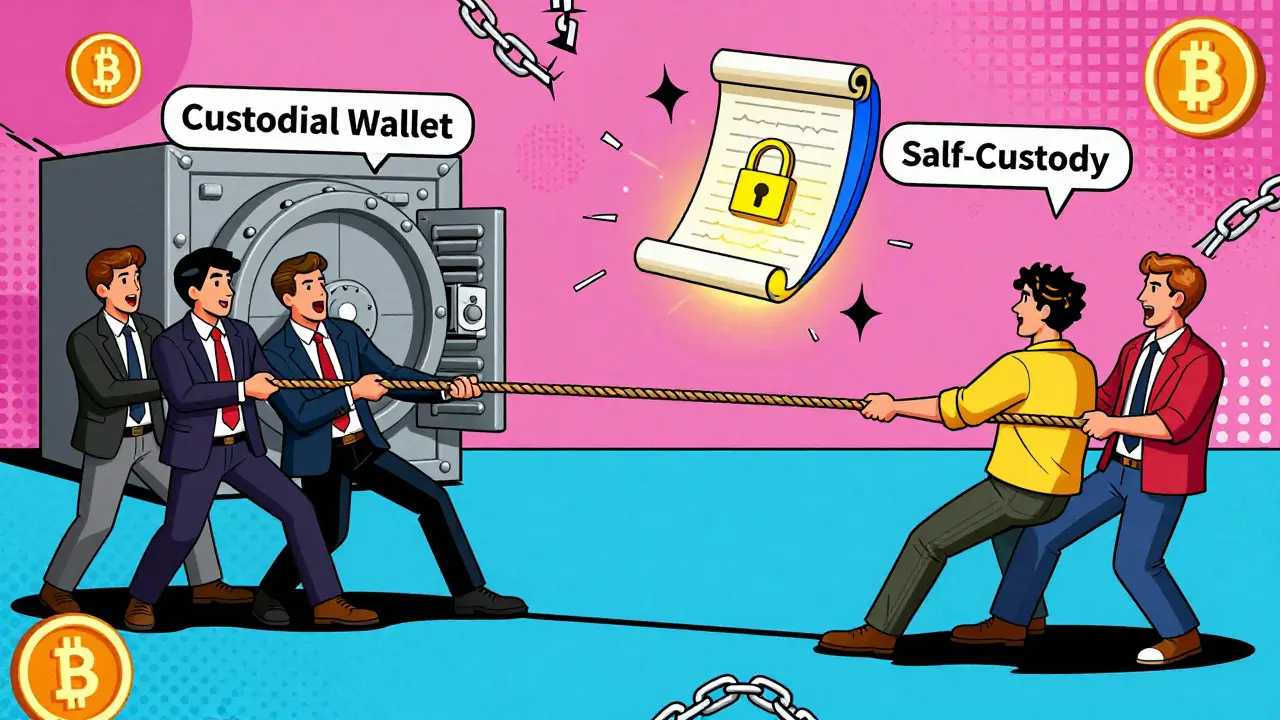
The phrase "not your keys, not your coins" isn’t just a slogan. It’s the foundation of crypto ownership. If you’re using Coinbase, Binance, or any other exchange to store your crypto, they hold the private keys. You can see your balance, send funds, and trade-but you don’t control the actual cryptographic keys that unlock your money. If the exchange gets hacked, goes bankrupt, or decides to freeze your account, you lose access. That’s exactly what happened with Mt. Gox in 2014, where 850,000 BTC vanished-and users had no recourse.
With self-custody, you hold the keys. That means your crypto lives on a hardware wallet like a Ledger Nano X, a software wallet like MetaMask, or even a printed paper backup. No middleman. No third-party permissions. If you lose your seed phrase, your coins are gone forever. But if you protect them well, no one can touch them-not even governments.
Security: Who’s Really Responsible?
Custodial wallets promise security. Coinbase stores 98% of customer assets in offline cold storage with biometric access controls. They carry a $255 million insurance policy. Their systems use multi-signature authentication and advanced encryption. Sounds solid, right?
But here’s the catch: you’re trusting them to do it right. In 2024, Coinbase had 7 separate outages totaling 18.7 hours of downtime. Binance restricted withdrawals to 2 BTC per day during market chaos. Kraken froze 32,000 U.S. accounts under regulatory pressure. When you hand over control, you hand over vulnerability to corporate decisions, legal pressure, or internal failure.
Self-custody shifts the security burden to you. No insurance. No customer service hotline. If your Ledger gets stolen and your seed phrase is written on a sticky note, your crypto is gone. But if you store your 12- or 24-word recovery phrase in a fireproof safe, offline, and never type it into a website, your assets are more secure than 99% of bank accounts.
According to Chainalysis, over $214 billion in Bitcoin is permanently locked away because people lost their keys. That’s not a flaw in the system-it’s a flaw in human behavior. Self-custody doesn’t prevent theft; it prevents *third-party* theft. The real risk? You.
Recovery: One Mistake, Forever Lost
Lost your password to your Coinbase account? Reset it with email verification. Forgot your Binance 2FA? Call support. They’ll verify your ID and restore access.
Lost your seed phrase for your Ledger? Too bad. There’s no "I forgot my keys" button. No recovery email. No customer rep who can help. The blockchain doesn’t care who you are. It only responds to the right cryptographic signature.
A 2025 TastyCrypto study found that 98.7% of users who lose their seed phrase never recover their funds. That’s not a bug-it’s by design. Self-custody wallets are built to be unstoppable. That’s why they’re so secure. But it’s also why they’re so unforgiving.
On the flip side, custodial services have recovery built in. But that also means they can be forced to freeze accounts. In November 2024, the SEC pressured Kraken to lock U.S. user funds. If you’re using a custodial wallet, you’re subject to their compliance rules-and those rules can override your ownership.
Convenience vs. Control: Who Is This For?
Let’s be honest: most people don’t want to learn how to manage private keys. They want to buy Bitcoin like they buy stocks-click, confirm, done. That’s why 85% of crypto users still rely on custodial wallets. Coinbase’s onboarding takes under 10 minutes. You don’t need to know what a seed phrase is. You just need an email and a government ID.
Self-custody? It’s a 3.7-hour learning curve, according to Metana’s 2025 study. You need to understand: how to generate a seed phrase, how to store it securely, how to send transactions without paying too much gas, how to verify addresses before sending, and how to back up your wallet without exposing it to malware. One wrong move-sending ETH to a token contract instead of a wallet address-and you lose thousands.
But here’s what most people don’t realize: you don’t have to choose one forever. The smartest users today use both. They keep 15-20% of their holdings on Binance or Coinbase for quick trading. The rest? Moved to a Ledger or Trezor for long-term storage. That’s called a hybrid model-and it’s becoming the new standard.
Regulation Is Changing the Game
Since June 2024, the EU’s MiCA regulations require all crypto custodians to hold minimum capital reserves of €350,000 and undergo strict audits. That’s good for users-it means exchanges have skin in the game. But it also means they’re now regulated entities. They report to governments. They freeze accounts. They collect KYC data.
Self-custody wallets? They’re still mostly unregulated. That’s why they’re popular with privacy-focused users. But regulators are catching up. The 2025 U.S. Infrastructure Bill proposed mandatory tax reporting for self-custody wallets. Some countries are already banning private key management outright.
So if you care about financial sovereignty, self-custody gives you freedom. But it also makes you a target. If your country starts cracking down on crypto, your hardware wallet might be the only thing keeping your assets safe.
The Rise of Hybrid Solutions
The future isn’t custodial or self-custody-it’s both. Companies like Casa and Unchained Capital now offer "managed self-custody." You hold your own keys, but they’re split across three parties: you, and two professional custodians. To move funds, you need 2 out of 3 signatures. That means even if you lose one key, you can still recover. If a custodian gets hacked, your funds are still safe.
Ethereum’s new ERC-7579 standard, released in March 2025, lets you set up "social recovery" in self-custody wallets. You name trusted friends or family members who can help you regain access if you lose your seed phrase. It’s not perfect-but it’s a huge step toward making self-custody less risky.
And Coinbase’s "Self-Custody Bridge," launched in April 2025, lets you move crypto from your exchange account to your own wallet with one click. No complex transfers. No manual seed phrase entry. Just security, made simple.
What Should You Do?
If you’re new to crypto and holding less than $1,000? Use a custodial wallet. Learn the basics. Get comfortable with buying, selling, and tracking your portfolio.
If you’ve got $10,000 or more? Start moving the bulk of it to self-custody. Use a hardware wallet. Write down your seed phrase. Store it in a safe. Don’t take photos. Don’t email it. Don’t type it into a website.
If you trade daily? Keep a small portion on an exchange. But don’t leave your life savings there.
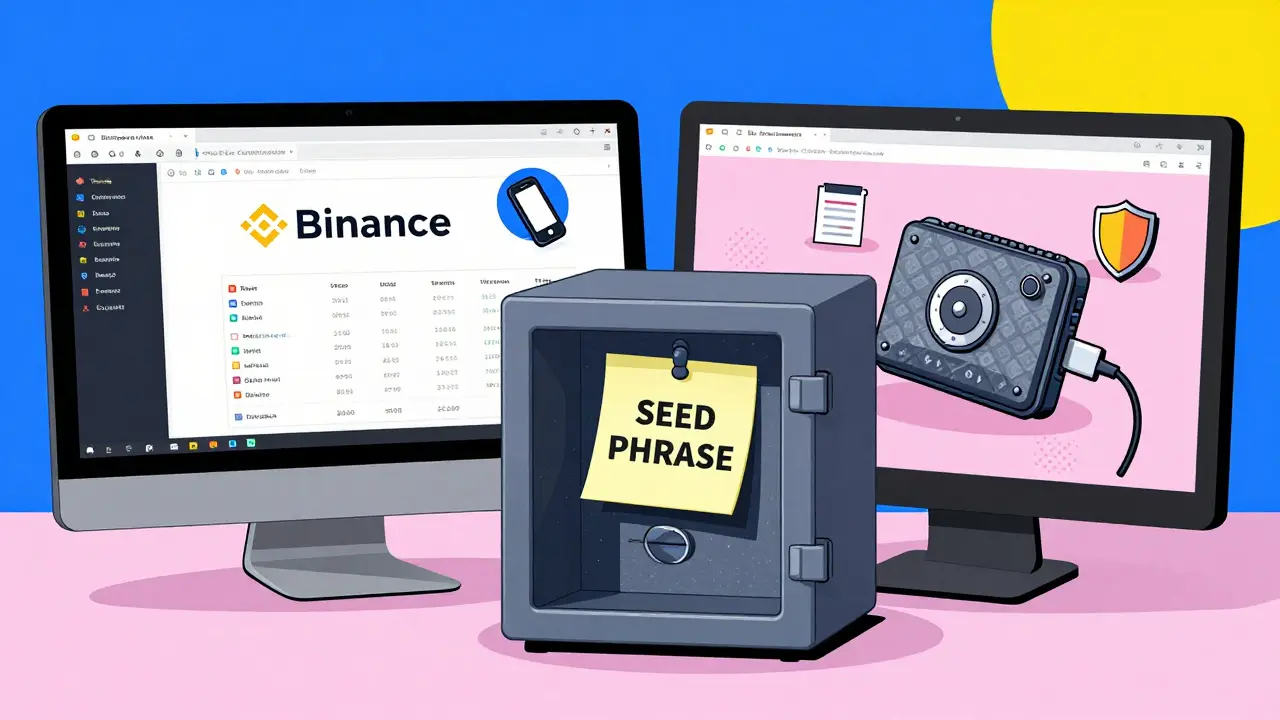
And if you’re unsure? Try a hybrid model. Use Coinbase for trading. Use Ledger for holding. You get the best of both worlds: convenience when you need it, and true ownership when it matters most.
At the end of the day, crypto isn’t about technology. It’s about control. Do you want to be the boss of your money? Or are you okay letting someone else decide when and how you can use it?
Frequently Asked Questions
Are custodial wallets safe?
Custodial wallets are safer than keeping crypto on a personal computer or phone, but they’re not risk-free. Platforms like Coinbase and Binance use enterprise-grade security, insurance, and cold storage. But they’re still centralized targets. If they get hacked, go bankrupt, or are forced by regulators to freeze accounts, you lose access. Your safety depends on their stability-not your control.
Can I get my crypto back if I lose my seed phrase?
No. If you lose your 12- or 24-word seed phrase for a self-custody wallet, your crypto is permanently gone. There is no customer service, no password reset, no recovery option. The blockchain has no memory of who you are-it only responds to the correct private key. That’s why proper storage is non-negotiable. Write it down. Store it offline. Keep multiple copies in separate secure locations.
Is it better to use a hardware wallet or a software wallet?
Hardware wallets like Ledger and Trezor are the most secure option for long-term storage because they keep your private keys offline and isolated from internet-connected devices. Software wallets like MetaMask are convenient for frequent transactions and DeFi use, but they’re vulnerable to malware and phishing if used on compromised devices. For maximum security, use a hardware wallet for your main holdings and a software wallet only for small, active amounts.
Why do most people still use custodial wallets?
Because they’re easier. Custodial wallets feel like a bank app-simple sign-up, instant trades, customer support, and no technical steps. Most users don’t want to learn how to manage private keys or seed phrases. Over 85% of crypto users rely on exchanges for storage because they prioritize convenience over control. But as holdings grow, many eventually move to self-custody for better security.
What’s the biggest risk with self-custody?
The biggest risk is user error. According to Trail of Bits, 68% of crypto losses from self-custody happen because of mistakes-sending funds to the wrong address, deleting a wallet without backing up, writing the seed phrase on a phone, or falling for a phishing scam. It’s not the technology that fails. It’s the person using it. That’s why education and discipline are more important than the wallet itself.
Will regulations ban self-custody?
Some governments are trying. As of December 2024, 27 countries have proposed laws restricting private key management or requiring users to report self-custody wallets. But outright bans are unlikely because self-custody is technically decentralized-there’s no central server to shut down. Instead, regulators are pushing for mandatory reporting, higher taxes, or forcing exchanges to limit transfers to self-custody wallets. The fight over control is just beginning.