
DAO Compensation Frameworks: Tokens, Stablecoins, and Vesting
 Jul, 3 2026
Imagine working for a company where your paycheck isn't just cash. You get a mix of steady income to pay rent and ownership stakes that might skyrocket-or crash-overnight. This is the reality for thousands of contributors in Decentralized Autonomous Organizations, or DAOs. As we move through mid-2026, paying people fairly in this borderless world has become one of the biggest headaches for these groups. How do you balance rewarding loyalty with keeping costs manageable? The answer lies in a three-part framework: native tokens, stablecoins, and strict vesting schedules.
The Core Components of DAO Pay
Most DAO compensation structures try to solve two problems at once: immediate liquidity for workers and long-term alignment for the project. If you only pay in volatile tokens, your team might starve during a market dip. If you only pay in cash, you lose the benefit of shared ownership. The standard solution is a hybrid model.
Native Governance Tokens represent equity. They give holders voting power and potential upside if the protocol succeeds. However, their value fluctuates wildly. Stablecoins like USDC or DAI act as the salary portion. Pegged to the US dollar, they provide predictability. Finally, Vesting acts as the lock. It ensures contributors stay engaged over time rather than dumping their tokens immediately after joining.
This structure mirrors traditional startup equity but adds the complexity of blockchain technology. Instead of paper stock options, everything happens on-chain via smart contracts. This brings transparency but also introduces new risks around price volatility and tax compliance.
Why Stablecoins Are Essential for Payroll
Paying someone entirely in a native token is risky for both parties. Let's say you hire a developer for 10,000 DAI per month. If you pay them in a governance token trading at $10, you send 1,000 tokens. By the time they withdraw to an exchange, the token drops to $5. Their paycheck just lost half its value. That’s a bad look for an employer.
To fix this, mature DAOs use stablecoins for the base salary. A primer by Toku published in late 2025 highlights that using USDC removes the headache of calculating Fair Market Value (FMV) every single day. When pay is denominated in a stable unit, it simplifies minimum wage compliance and tax withholdings. You can load a payroll wallet with USDC, calculate taxes based on local laws, remit fiat to government agencies, and send the net amount to the contributor’s wallet. It merges Web3 rails with Web2 accounting standards.
GitcoinDAO pioneered a specific version of this. In their 2022 compensation proposal, they mandated that all core contributor pay be denominated in DAI. However, actual payments could be made in their native GTC token, calculated using a moving average price. For example, if the rate was 1 GTC = 5 DAI, a $5,000 salary became 1,000 GTC. Using a 20-day or 30-day moving average smooths out daily spikes, protecting the worker from sudden crashes while still giving them exposure to the token's growth.
Vesting Schedules: Keeping People Aligned
If stablecoins handle the monthly bills, vesting handles the loyalty. Vesting schedules define when granted tokens actually become yours. Without vesting, a contributor could join a DAO, grab a large token grant, sell it instantly, and leave. This hurts the community and devalues the token supply.
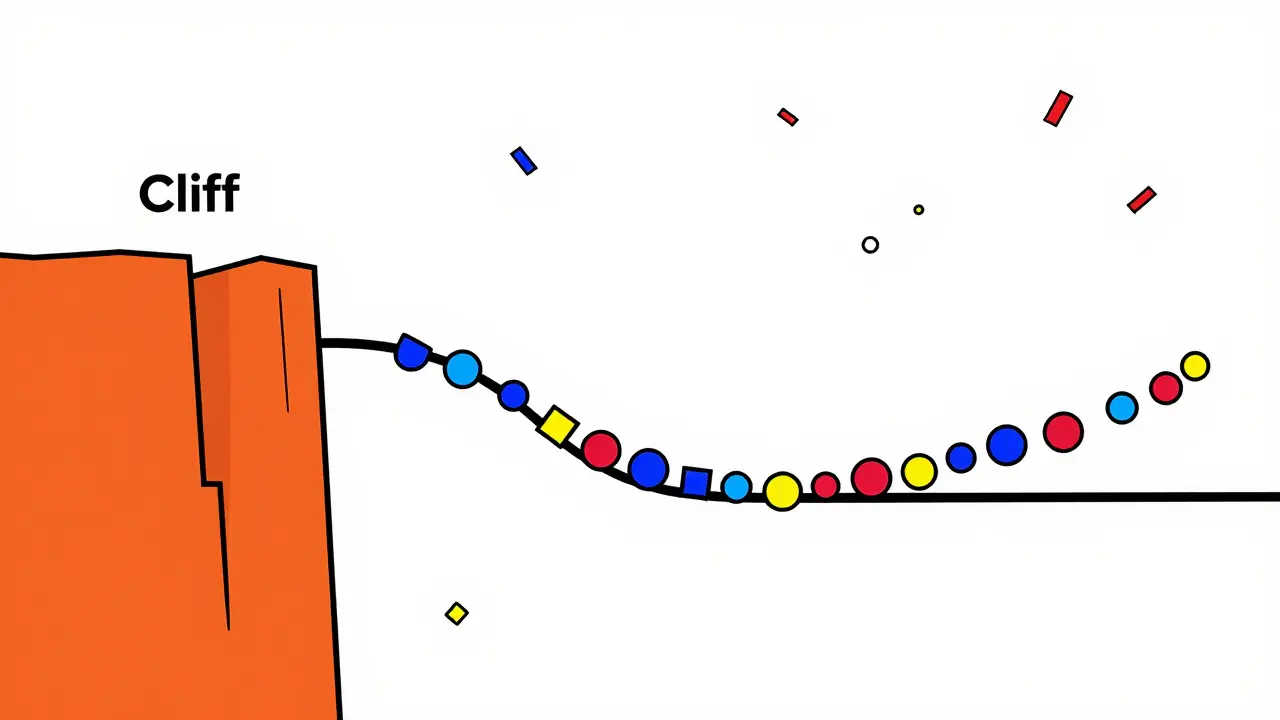
The industry standard in Web3 now closely mimics Silicon Valley startups: four-year total vesting with a one-year cliff. Here is how that works:
- The Cliff: For the first 12 months, you get zero tokens. If you quit or are let go before year one, you walk away with nothing. This filters out tire-kickers.
- The Drop: On the first anniversary, 25% of your total grant vests all at once.
- Linear Vesting: The remaining 75% vests gradually, usually monthly or quarterly, over the next three years.
Not everyone follows this exact formula. Audius, a decentralized audio streaming protocol, uses a shorter timeline: three-year linear vesting with quarterly unlocks and a six-month cliff. Aptos used a stepped schedule tied to its mainnet launch, accelerating unlocks in the second year to reward early adopters who stuck through the initial chaos. These variations show that projects tweak parameters to match their specific growth phase and risk tolerance.
| Project / Standard | Total Duration | Cliff Period | Vesting Style |
|---|---|---|---|
| Industry Standard | 4 Years | 1 Year | Monthly/Quarterly Linear |
| Audius | 3 Years | 6 Months | Quarterly Linear |
| Aptos (Historical) | 4 Years | None (Stepped) | Accelerated Phase 2 |
Tools Automating the Process
Managing these complex payouts manually is a nightmare. Relying on multisig wallets to approve individual transfers creates bottlenecks and human error. Fortunately, specialized tools have emerged to automate this.
Furo, launched by Sushi in 2022, is a decentralized payment-streaming platform. Instead of lump-sum payments, Furo allows DAOs to stream tokens or stablecoins continuously to contributors. It embeds the vesting logic directly into smart contracts. This means the money flows automatically, reducing administrative overhead and making cash flow predictable for the recipient. You don’t need to deploy custom code for every employee; you just configure the interface.
For expense management and collaborative payroll, Utopia Labs has gained traction among communities like Friends With Benefits and PleasrDAO. It bridges on-chain treasuries with off-chain accounting, handling invoices and payouts in a way that feels familiar to traditional finance teams.
Peer-Allocation: The Coordinape Model
Some DAOs reject top-down salaries entirely. They prefer peer-allocation, where colleagues decide who gets paid based on perceived value. The leading tool for this is Coordinape.
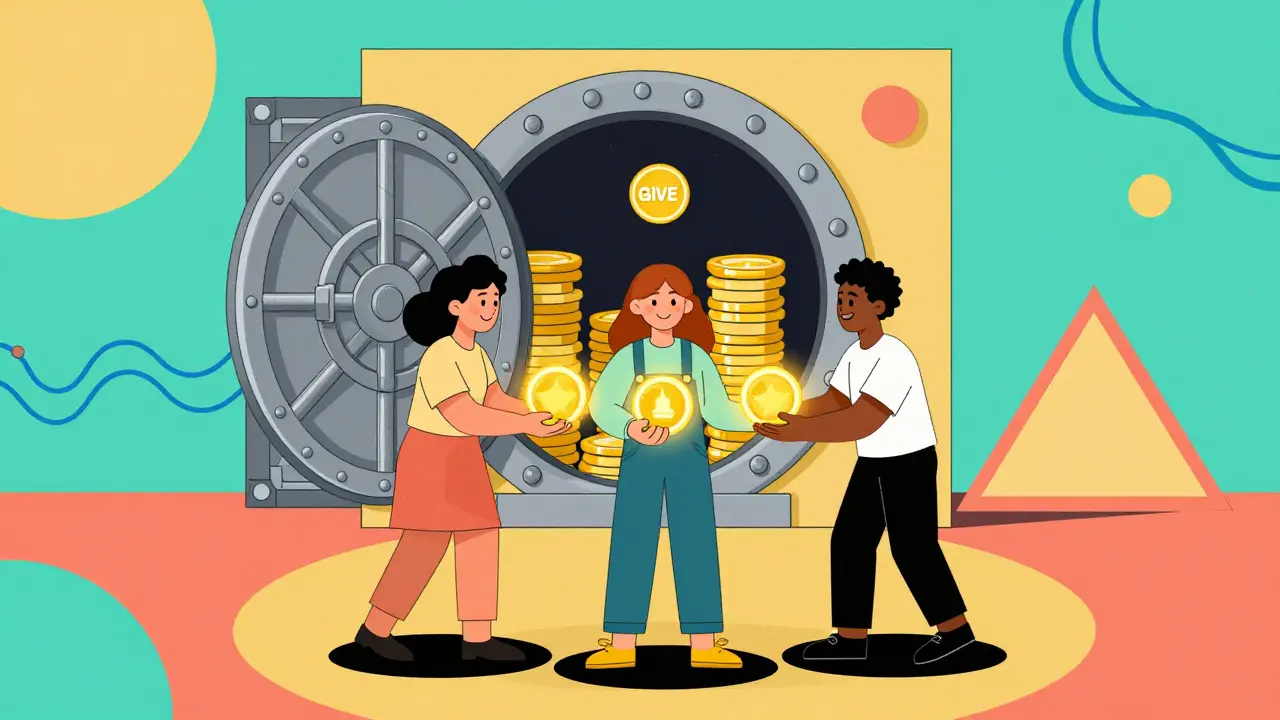
Here is how it works. Contributors form "Circles"-groups focused on specific workstreams. During an "Epoch" (a set period, like a month), each member receives a fixed amount of non-transferable GIVE tokens (usually 100). Members distribute these GIVE tokens to peers they believe added the most value. At the end of the epoch, the DAO treasury converts the GIVE ratios into actual currency. If you received 20% of the GIVE in your circle, you get 20% of that circle’s budget allocation.
This system shines in grassroots organizations without formal HR departments. It makes invisible contributions visible. However, it’s not perfect. Critics point out that social dynamics can skew results. Popular members might get more GIVE than hardworking introverts. To mitigate this, many DAOs use Coordinape for bonuses or discretionary funds while keeping base salaries fixed via stablecoins.
Treasury Management and Risks
A compensation framework is only as good as the treasury backing it. If a DAO holds 100% of its funds in its own volatile token, a market crash can wipe out its ability to pay staff. Expert advice from 2023 and reinforced in 2026 suggests holding enough stablecoins to cover one to two years of operating expenses. This buffer insulates payroll from token drawdowns of 50-90%, which are common in crypto cycles.
Diversification is key. Protocols often swap a portion of native tokens into non-volatile assets like stablecoins or highly liquid stores of value like ETH and WBTC. Smart contracts then automatically release funds when predefined conditions are met. This separation of concerns-using stablecoins for payroll and native tokens for governance/upside-is becoming the gold standard for sustainable DAO operations.
Transparency Challenges
Despite the tech, transparency remains uneven. A mid-2026 survey revealed that only 38% of DAOs had any public compensation framework. While 45% of DeFi contributors have on-chain verifiable vesting schedules, that doesn't mean there is a clear, human-readable document explaining role tiers or experience multipliers. Many projects still operate with ad-hoc pay practices, leading to internal friction and unfairness. Leading examples like GitcoinDAO and BanklessDAO publish full salary tables, setting a benchmark others should follow. For contributors, always ask to see the vesting contract address and the stablecoin reserve ratio before accepting an offer.
What is a standard vesting schedule in a DAO?
The most common structure is four-year total vesting with a one-year cliff. This means no tokens vest during the first 12 months. After the cliff, 25% of the grant vests immediately, and the remaining 75% vests linearly (monthly or quarterly) over the next three years.
Why do DAOs use stablecoins for payroll?
Stablecoins like USDC or DAI protect against token price volatility. They simplify Fair Market Value calculations, ensure minimum wage compliance, and make tax withholding easier since the value doesn't fluctuate wildly between payday and withdrawal.
How does peer-allocation with Coordinape work?
In Coordinape, team members in a "Circle" distribute non-transferable GIVE tokens to each other based on perceived contribution during a specific period (Epoch). The amount of GIVE received determines the percentage of the circle's budget that person receives as compensation.
What is the purpose of a vesting cliff?
A cliff period, typically one year, ensures commitment. If a contributor leaves or is terminated before the cliff ends, they receive no vested tokens. This prevents individuals from joining solely to capture token value and exit quickly.
Is it safe to accept compensation entirely in native tokens?
It carries significant risk due to price volatility. Your real income could drop by 50% or more if the token price falls. Most experts recommend a hybrid model where base salary is paid in stablecoins to cover living expenses, while native tokens serve as long-term equity incentives.