
DAO Failures: Why Decentralized Organizations Collapse and How to Fix Them
 Sep, 20 2026
You built a DAO. You wrote the code, minted the tokens, and launched the community. Then, overnight, your treasury drained by $182 million, or worse, nothing happened because nobody voted. It’s not just bad luck; it’s a pattern. From The DAO hack in 2016 to recent governance exploits on Solana, Decentralized Autonomous Organizations are failing at an alarming rate, often due to flaws that were visible from day one but ignored in the hype.
The promise of DAOs was simple: remove middlemen, automate trust, and let the community rule. But the reality is messy. Code has bugs, voters are lazy, and whales buy influence. If you’re running a DAO or planning to join one, understanding why they break is the only way to keep yours alive. This isn’t about theory; it’s about the hard lessons learned from billions of dollars in losses.
Quick Summary / Key Takeaways
- Code is not law: Smart contracts execute logic, not intent. A reentrancy bug can drain funds even if the "rules" weren't broken.
- Governance is the new attack surface: Flash loans allow attackers to buy temporary voting power and steal treasuries without long-term risk.
- Voter apathy kills protocols: Median participation rates hover around 4%, meaning a tiny minority makes decisions for everyone.
- Token-weighted voting is plutocracy: Wealth equals vote weight, leading to centralization disguised as decentralization.
- Prevention requires layers: Audits, timelocks, snapshot voting, and off-chain security hygiene are non-negotiable.
The Technical Trap: When Code Betrays Intent
Let’s start with the most famous failure: The DAO hack of June 2016. It wasn’t a complex exploit. An attacker found a reentrancy vulnerability in the `splitDAO` function. The contract sent ETH to an external address before updating its internal balance. The attacker’s fallback function called `splitDAO` repeatedly, withdrawing funds multiple times against a single token balance. Result? 3.6 million ETH drained, worth roughly $60 million at the time.
This incident taught us a brutal lesson: smart contracts do what you say, not what you mean. Legal scholars later described the attack as "legal by the code but clearly contrary to the intentions of participants." Ethereum had to hard fork to recover funds, splitting the chain into Ethereum and Ethereum Classic. That split still exists today.
Since then, technical failures have evolved. They aren’t just about coding errors; they’re about design choices. For instance, unbounded loops in smart contracts can cause gas exhaustion, freezing operations. Missing access controls let unauthorized users trigger critical functions. And unsafe upgrade patterns in proxy contracts can leave backdoors open. The Blockchain Council’s 2026 security checklist emphasizes using audited frameworks like OpenZeppelin Governor and Aragon OSx, which include built-in safeguards like reentrancy guards and checks-effects-interactions patterns.
Governance Attacks: Buying Power with Borrowed Money
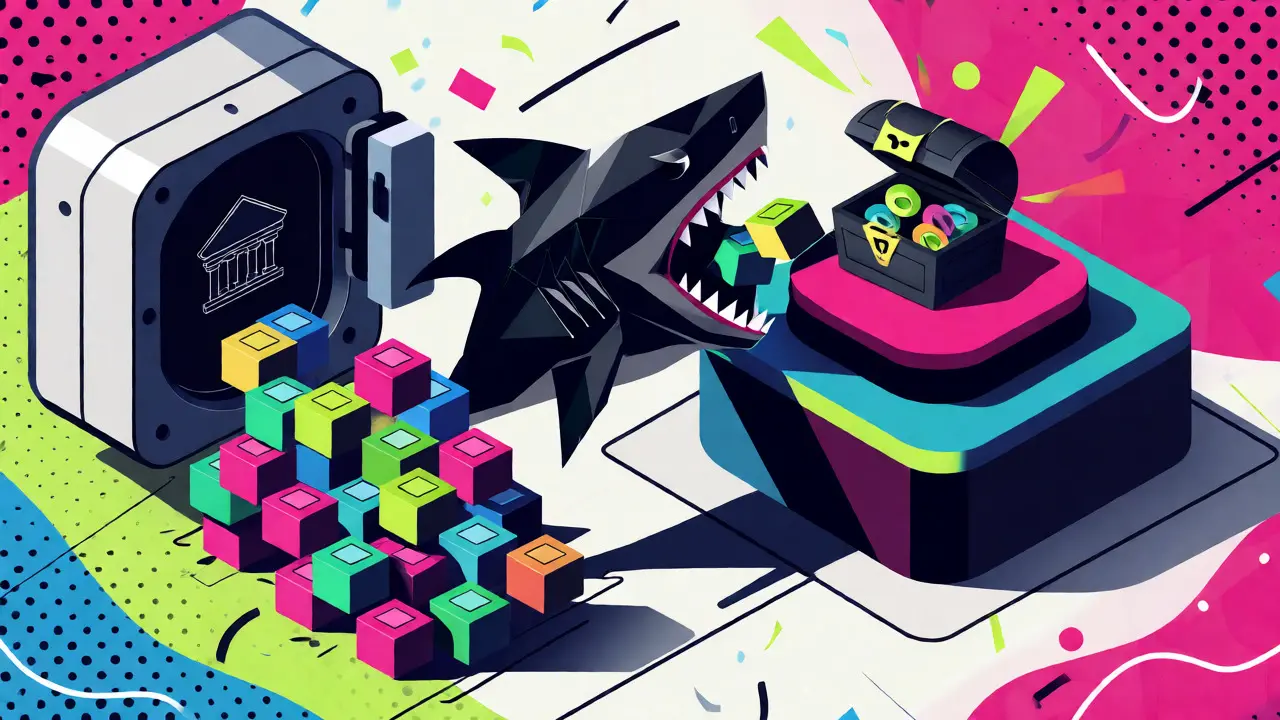
If technical bugs are the old enemy, governance manipulation is the modern threat. Consider Beanstalk Farms in April 2022. An attacker didn’t find a bug in the stablecoin protocol. Instead, they used flash loans from Aave, Uniswap, and SushiSwap to borrow $1 billion in stablecoins. In a single atomic transaction, they converted these assets into governance "Stalk" tokens, gaining a supermajority of voting power.
With two-thirds of the votes under their control, they passed a malicious proposal that transferred $182 million of protocol assets to their own address. Because Beanstalk allowed immediate execution of proposals and measured voting power at the current block, the attacker never needed to hold those tokens long-term. They borrowed, voted, stole, and repaid-all in one block.
| Incident | Date | Loss (USD) | Root Cause | Attack Vector |
|---|---|---|---|---|
| The DAO | June 2016 | ~$60M | Reentrancy Bug | Recursive function calls |
| Beanstalk Farms | April 2022 | $182M | Governance Design Flaw | Flash loan voting capture |
| Mango Markets | Oct 2022 | ~$114M | Oracle Manipulation | Liquidity depth exploitation |
| BonkDAO | 2025 | ~$20M | Voter Apathy | Low turnout harmful proposal |
Mango Markets faced a different issue. A trader manipulated the price oracle for MNGO by opening large leveraged positions. With low market depth, this artificially inflated the token’s price. The attacker used this high valuation as collateral to borrow $116 million in assets. Here, the failure wasn’t in the voting mechanism but in the price feed safeguards. Oracles need sanity checks and circuit breakers to prevent such distortions.
The Human Factor: Apathy and Plutocracy
Even with perfect code, DAOs fail when humans don’t show up. A 2025 study across 50 DAOs found a median voter participation rate of just 4.16%. In some large protocols, individual holder participation drops below 2%. This means decisions affecting millions of dollars are made by a handful of active wallets.
Why so low? Decision fatigue. Many DAOs try to decentralize everything, from buying office milk to changing core parameters. Voters tune out. Then, when a critical proposal passes during a quiet period, the damage is done. BonkDAO lost $20 million because a harmful proposal passed largely unopposed due to insufficient attention.
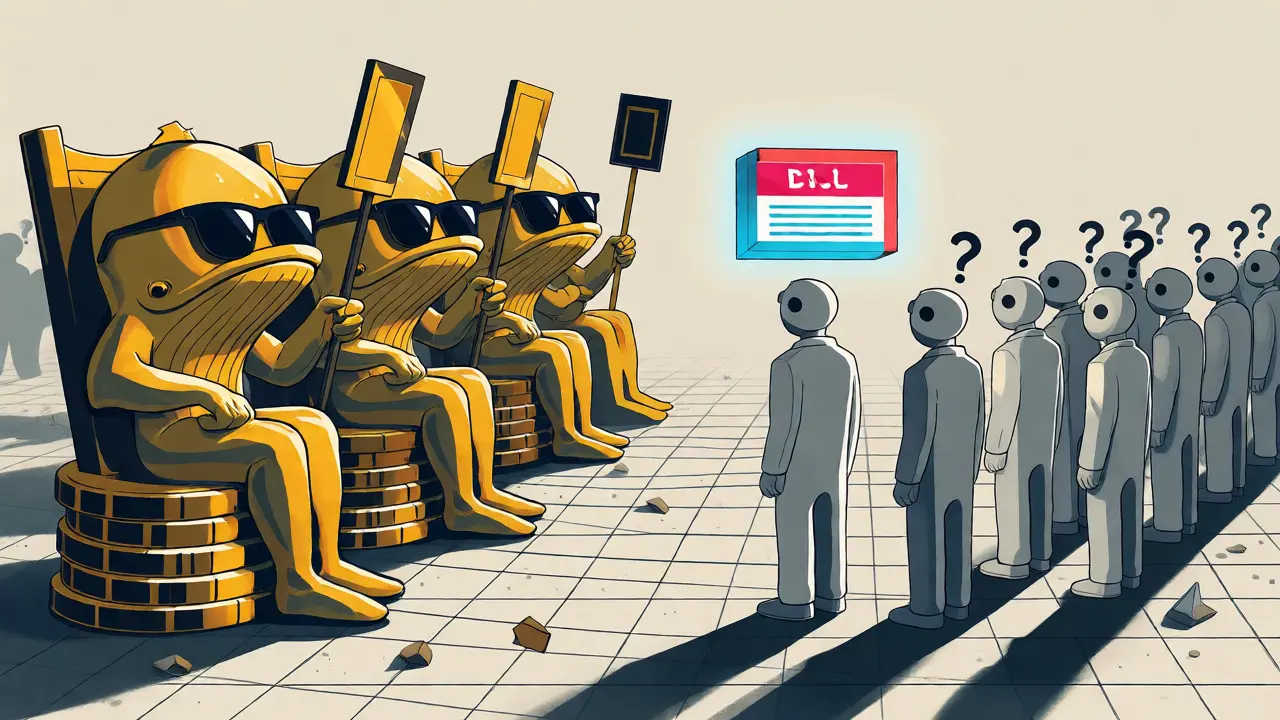
Worse, token-weighted voting creates a plutocracy. Your wealth determines your vote. Early investors and whales dominate. A 2026 analysis showed the top decile of voters controls 76.2% of total voting power in many DAOs. This isn’t democracy; it’s shareholder meeting dynamics with extra steps. As noted in a Frontiers in Communication article, this reproduces elite capture, undermining the legitimacy of the system.
Off-Chain Vulnerabilities and Regulatory Risks
Your DAO lives on-chain, but your community lives off-chain. Discord servers, GitHub repositories, and websites are attack vectors. Phishing scams target multisig signers. Misinformation spreads faster than truth. The DAOstar Security Report highlights that inadequate security training for key stakeholders is a recurring issue. If your lead developer gets phished, your treasury is gone, regardless of how secure your smart contracts are.
Regulatory uncertainty adds another layer of risk. Are your governance tokens securities? If yes, you might face penalties. The SEC hasn’t given clear guidelines, creating a chilling effect on innovation. Plus, cross-chain complexity introduces bridge risks. If your DAO operates on Ethereum and Arbitrum, a bridge hack can sever your governance connection.
How to Prevent DAO Failures: A Practical Checklist
So, how do you build a resilient DAO? Start with technical hygiene.
- Audit everything: Use reputable firms like OpenZeppelin or Trail of Bits. Publish the reports. Don’t skip audits for "small" upgrades.
- Implement Timelocks: Delay proposal execution by 24-72 hours. This gives the community time to react to malicious proposals.
- Use Snapshot Voting: Measure voting power at a specific block height, not the current state. This prevents flash loan attacks where attackers borrow tokens just to vote.
- Limit Proposal Scope: One proposal, one change. Avoid omnibus bills that bundle unrelated changes, making scrutiny harder.
Next, fix governance design.
- Experiment with Voting Schemes: Move beyond simple token-weighting. Try quadratic voting to reduce whale dominance or reputation-based systems to reward expertise.
- Incentivize Participation: Reward voters with small amounts of native tokens or NFTs. Make voting valuable, not just obligatory.
- Define Roles Clearly: Separate proposal creation, execution, and adjudication. Don’t let the same group do all three.
Finally, secure the human element.
- Hardware Wallets: Require multisig signers to use isolated hardware wallets. No hot wallets for treasury management.
- Security Training: Regularly train community leaders on phishing and social engineering tactics.
- Transparency: Keep asset holdings and privileged roles public. If people know who holds the keys, they’ll watch them closer.
Frequently Asked Questions
What is the most common cause of DAO failure?
While smart contract bugs are famous, governance design flaws and voter apathy are increasingly common causes. Low participation rates allow malicious actors to pass harmful proposals with minimal opposition, effectively hijacking the organization.
Can flash loans be prevented in DAO governance?
You can't stop flash loans themselves, but you can mitigate their impact. Using snapshot voting, where voting power is determined at a past block, prevents attackers from borrowing tokens just to vote in the current block. Timelocks also give honest voters time to react.
Is token-weighted voting always bad?
It's not inherently bad, but it tends toward plutocracy. Large holders have disproportionate power. To balance this, many DAOs combine token voting with other mechanisms, such as quadratic voting or delegate systems, to ensure broader representation.
How important are smart contract audits?
Critical. Audits identify vulnerabilities before launch. However, they are not a silver bullet. Continuous monitoring, bug bounties, and formal verification are also recommended for high-value DAOs. Always choose auditors with a track record in DeFi.
What happens if a DAO fails completely?
If a DAO fails, its treasury may be frozen or drained. Token holders might lose value. In some cases, communities fork the project or migrate to a new governance structure. Recovery depends on the severity of the failure and the resilience of the community.
Next Steps for DAO Builders
If you’re launching a DAO, don’t rush. Spend months modeling governance scenarios. Simulate flash loan attacks. Test low-turnout conditions. Start with progressive decentralization-keep more control centralized initially, then gradually release power as safeguards mature.
For existing DAOs, conduct a governance audit. Check your participation rates. If they’re below 10%, investigate why. Is your UI confusing? Are incentives misaligned? Look at your voting power concentration. If the top 10 wallets control 80% of votes, you’re not decentralized; you’re a club.
The future of DAOs lies in "DAO 3.0," which incorporates identity-aware participation and regenerative capital flows. But until then, stick to the basics: secure code, fair governance, and engaged humans. The blockchain remembers every mistake, so make sure yours are teachable moments, not tombstones.