
Decentralized Sequencers: How to Fix the Censorship Problem in L2 Scaling
 Apr, 13 2026
The Hidden Danger of the Single Sequencer
Most popular L2s like Arbitrum, Optimism, and Base rely on a single, permissioned sequencer. Think of a sequencer as the traffic cop of the network. They decide which transactions get into a block and, more importantly, in what order they appear. If you have one cop, they have absolute power to delay your transaction, reorder it to steal profit, or exclude it entirely. This becomes a massive issue when we talk about Account Abstraction and the ERC-4337 standard. In these systems, "bundlers" gather user operations to send them to the sequencer. You might have a decentralized set of bundlers, but if they all feed into one centralized sequencer, the decentralization at the start is meaningless. It's like having ten different doors into a building, but only one security guard who decides if you're actually allowed inside.Why Sequencers Are Tempted to Censor
Censorship isn't always about politics or banning specific users; often, it's about money. This is where MEV (Maximum Extractable Value) comes into play. Because sequencers control the order of transactions, they can see a pending trade and jump in front of it (front-running) or move a liquidation transaction to their own advantage. When a sequencer's own arbitrage strategy conflicts with a user's transaction, the financial incentive is to censor or delay that user. In a centralized setup, there is no one to stop this. The sequencer is essentially the house, and the house always wins. This creates a systemic risk where user sovereignty is sacrificed for the sake of the operator's profit margins.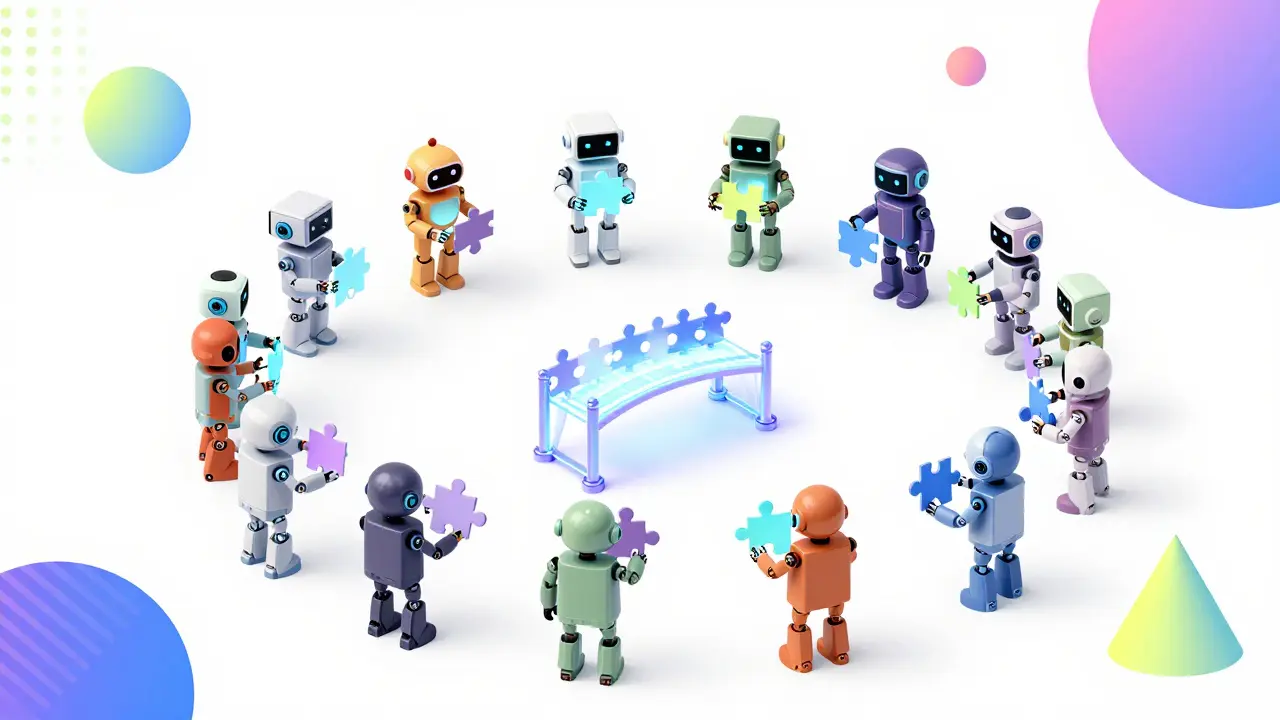
How Decentralized Sequencing Actually Works
To fix this, we need to move the "traffic cop" role from one person to a committee. A decentralized sequencer network uses consensus mechanisms to agree on the order of transactions. Instead of trusting one entity, the network trusts a distributed set of nodes. One way this is happening is through "shared sequencing." Projects like Espresso Systems and Astria decouple the sequencing process from the actual execution of the rollup. This creates a competitive market where sequencing is a service provided by a network, rather than a proprietary tool owned by the L2 creator. Another approach is using EigenLayer for restaking. By engaging Ethereum's existing validator set, L2s can borrow the economic security of the main chain. If a sequencer in this system tries to cheat or censor, they risk losing their staked ETH, making the cost of censorship higher than the potential MEV reward.| Model | Who Controls Order? | Censorship Risk | Force-Inclusion Time |
|---|---|---|---|
| Single Sequencer | One operator | High (Single point of failure) | 1 to 7 days (via L1) |
| Decentralized Set | Multiple independent nodes | Low (Requires collusion) | Less than 1 hour |
| Based Sequencing | L1 Validators | Very Low (Inherits L1 neutrality) | Less than 1 block |
Solving the Builder's Dilemma
Developers face a tough choice called the "Builder's Dilemma": do you optimize for a lightning-fast user experience (which usually requires centralization) or for absolute censorship resistance (which is slower)? To bridge this gap, we're seeing the rise of "preconfirmations." This is essentially a promise from a sequencer that a transaction will be included. It gives the user that instant "ping-latency" feeling of a centralized system, but the underlying architecture remains compatible with a permissionless, decentralized setup. If a sequencer still decides to censor a user, "Force-Inclusion" mechanisms act as a safety valve. This allows a user to send their transaction directly to the Ethereum Layer 1. While this is slower and more expensive, it guarantees that your funds cannot be frozen by an L2 operator. The goal of decentralized sequencing is to make this safety valve almost unnecessary by making the L2 itself as neutral as the L1.
The Road to Real Liveness
When a single sequencer goes down, the L2 effectively stops processing new transactions. While you can eventually get your money out via L1, the network's "liveness" is compromised. Decentralized sequencers solve this by mirroring the design philosophy of Bitcoin: as long as a sufficient number of nodes are running, the network stays alive. We are also seeing the integration of Trusted Execution Environments (TEEs). These are secure areas of a processor that ensure the sequencer follows a transparent, pre-defined policy for ordering transactions. This removes the "human element" from the equation, preventing operators from manually picking and choosing which transactions to ignore.Moving Toward a Neutral Future
We are currently in a transition period. Most L2 operators pledge they won't censor, but a pledge isn't a technical guarantee. The existence of the capability to censor is a risk in itself, especially as these networks face increasing legal and regulatory pressures. By moving toward based rollups or shared sequencing, the industry is removing the temptation and the ability to censor. The end goal is a world where the infrastructure of our digital finance is as neutral and unstoppable as the internet itself. When the power to order transactions is distributed, the risk of a single entity controlling your access to your own wealth disappears.What happens if a centralized sequencer decides to block my transaction?
If a centralized sequencer censors you, you can typically use a "force-inclusion" mechanism. This involves sending your transaction directly to the Ethereum Layer 1 (L1) blockchain. While this ensures you can eventually access your funds, it is significantly slower-sometimes taking several days-and more expensive than a normal L2 transaction.
How do decentralized sequencers prevent MEV theft?
They distribute the power of transaction ordering. By using consensus mechanisms or rotating validators (validator shuffling), no single person can consistently predict and manipulate the order of blocks. Some also use TEEs (Trusted Execution Environments) to enforce a strict, transparent ordering policy that prevents manual interference.
Will decentralized sequencers make L2s slower?
Potentially, but the gap is closing. While a single server is faster than a network of nodes, technologies like preconfirmations provide near-instant feedback to users. This allows the network to maintain a high-speed feel while the actual settlement happens via a more secure, decentralized process.
What is a "Based Rollup"?
A Based Rollup is a type of L2 where the Layer 1 (Ethereum) validators act as the sequencers. Instead of having a separate set of nodes, it uses the most neutral actors already securing the main chain, which almost entirely eliminates the risk of a centralized operator censoring users.
Is EigenLayer related to sequencer decentralization?
Yes. EigenLayer allows L2 sequencers to use "restaking." This means the people running the sequencers must put up ETH as collateral. If they act maliciously or censor transactions, their stake can be slashed (taken away), providing a strong economic deterrent against censorship.