
Direct Mutual Fund Platforms in India: A Guide to Buying Without Distributors
 Apr, 15 2026
To get started, you need to understand that Direct Mutual Funds is a category of mutual fund schemes where the investor buys units directly from the fund house without using a broker or distributor. Because there's no commission to pay, the expense ratio is lower, meaning more of your money stays invested and grows.
Quick Takeaways for Smart Investors
- Higher Returns: Lower expense ratios lead to higher NAV (Net Asset Value) over time.
- Full Control: You decide where your money goes without being pushed toward high-commission products.
- Zero Cost: Most direct platforms don't charge you a subscription fee to invest.
- Digital Access: Everything from KYC to redemption happens on your smartphone.
The Real Difference: Direct Plans vs. Regular Plans
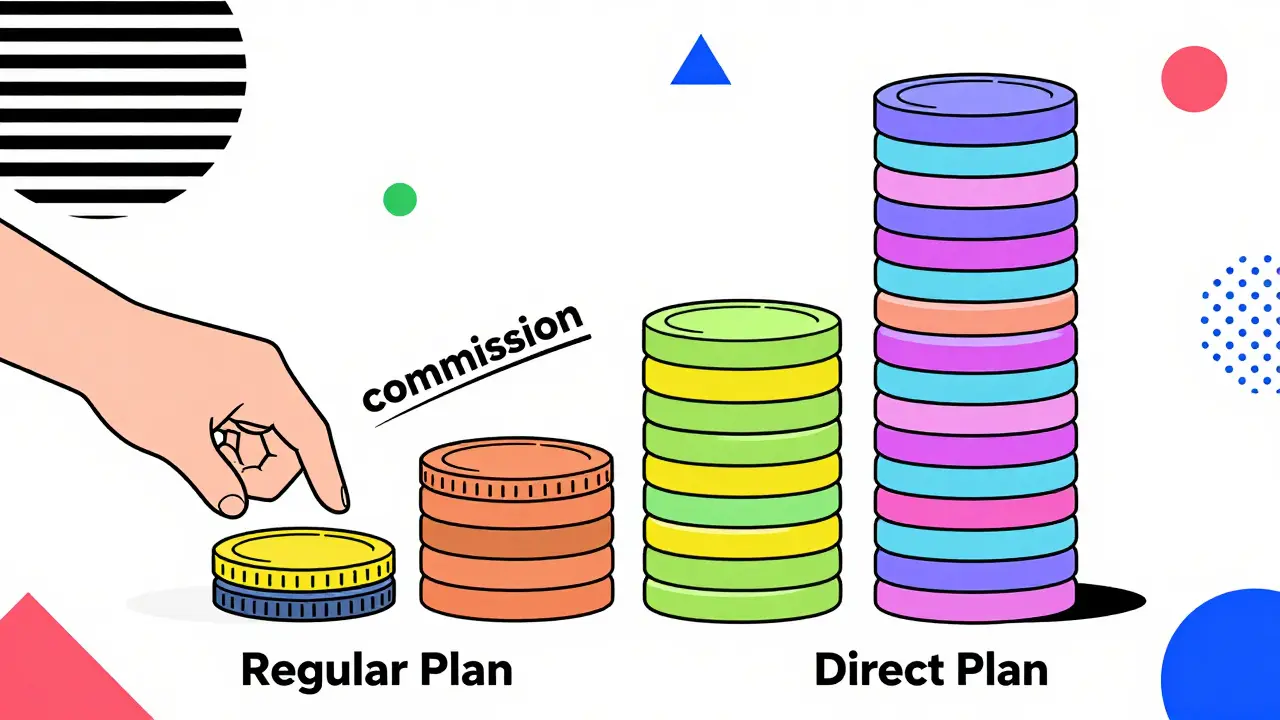
When you look at a fund's details, you'll see two versions: Direct and Regular. The underlying portfolio-the stocks and bonds the manager buys-is exactly the same for both. The only difference is the cost of management.
In a Regular plan, the Asset Management Company (or AMC) is the firm that manages the mutual fund's portfolio and handles the investment operations pays a trail commission to the distributor. This commission is baked into the expense ratio. In a Direct plan, that commission is removed. This might seem like a small fraction, but over 20 years, it can result in a difference of several lakhs in your final corpus due to the power of compounding.
| Feature | Direct Plan | Regular Plan |
|---|---|---|
| Expense Ratio | Lower | Higher |
| NAV (Net Asset Value) | Higher | Lower |
| Returns | Slightly Higher | Slightly Lower |
| Intermediary | None | Banker/Broker/Agent |
| Cost to Investor | No commission | Implicit commission |
Where to Buy: Direct Investment Platforms
You have two main paths to buy direct funds. You can go straight to the source or use a third-party aggregator.
The first path is via the AMC Website The official digital portal of the fund house that allows investors to purchase units directly. For example, if you want to invest in a specific SBI or HDFC fund, you can create an account on their official website. This is the purest form of direct investing.
The second path is through Direct Mutual Fund Apps Digital platforms that provide a unified interface to invest in direct plans across multiple different AMCs. These platforms act like a dashboard. Instead of opening ten different accounts with ten different fund houses, you manage everything in one app. Most of these apps use a "Zero Commission" model, meaning they don't take money from the fund house or you.
Step-by-Step: How to Switch from Regular to Direct
If you already have investments in regular plans, you don't need to sell everything and book profits (which might trigger taxes). Instead, you can perform a "switch." Here is how you do it:
- Audit Your Portfolio: List all your current funds and check if they are "Regular" or "Direct."
- KYC Verification: Ensure your KYC Know Your Customer process used to verify the identity and address of an investor is updated. Most platforms let you do this digitally via Aadhaar-based eKYC.
- Open a Direct Account: Sign up for a direct platform or the specific AMC website.
- Initiate a Switch: Request a switch from the Regular plan to the Direct plan of the same fund. This tells the AMC to move your units from the commission-paying version to the commission-free version.
- Verify the NAV: After the switch, check that your units are now under the "Direct" category.
Common Pitfalls to Avoid
Cutting out the distributor means you are now your own financial advisor. This brings a few risks if you aren't careful. The most common mistake is "chasing last year's winner." Just because a fund gave 40% returns last year doesn't mean it will do it again. Look at the 5-year or 10-year average to understand the fund's actual consistency.
Another trap is neglecting the Exit Load A fee charged by the mutual fund house if an investor sells their units before a specified period. If you switch your funds too early, the AMC might charge you a penalty (usually 1%) if you've held the units for less than a year. Always check the exit load period before moving your money.
Finally, be mindful of Capital Gains Tax The tax paid on the profit made from selling an investment asset. In some cases, switching from a regular to a direct plan is treated as a "redemption" (sale). If your profit exceeds 1.25 lakh in a financial year for equity funds, you might owe Long Term Capital Gains (LTCG) tax. Plan your switches to stay within the tax-free limit.
Comparing Investment Styles: DIY vs. Managed
Is the direct route always better? Not for everyone. If you are someone who gets overwhelmed by spreadsheets and market news, a professional advisor can provide behavioral coaching-stopping you from panic-selling during a market crash. However, if you can handle the emotional side of investing, the math always favors the direct route.
Think of it like flying. A regular plan is like a chartered flight where someone handles the navigation, luggage, and timing, but you pay a premium. A direct plan is like flying the plane yourself. You save a lot of money, but you're the one responsible for checking the weather and landing safely.
Are direct mutual funds riskier than regular funds?
No, the risk is identical. Both plans invest in the same stocks and bonds. The only difference is the expense ratio. If the market goes down, both the direct and regular plans of the same fund will drop by the same percentage (excluding the tiny difference in costs).
Do I need a Demat account to buy direct mutual funds?
No, you don't. While you can hold mutual funds in a Demat account, most direct platforms allow you to invest via the "Statement of Account" (SoA) route, which is simpler and doesn't require a brokerage account.
Can I start a SIP in a direct plan?
Absolutely. Systematic Investment Plans (SIPs) work exactly the same way in direct plans. You set a date and an amount, and the money is automatically debited from your bank account into the direct plan of your chosen fund.
How long does it take to switch from regular to direct?
A typical switch takes 2 to 5 business days. The AMC first sells (redeems) your units in the regular plan and then buys (allots) units in the direct plan. You'll see the updated units in your portfolio once the process is complete.
Will my agent be notified if I switch to direct?
Yes, because the agent will stop receiving their trail commission. If you are using an agent's portal to manage your funds, they will see the units disappear from their tracking dashboard.
Next Steps for Your Portfolio
If you're feeling overwhelmed, start small. Don't switch your entire life savings in one day. Start by directing your new SIPs into direct plans. This allows you to get comfortable with the new platform without disrupting your existing holdings.
For those with large portfolios, it's a good idea to consult a tax professional before switching to ensure you aren't accidentally triggering a massive tax bill. Once you've cleared that, the path to lower costs and higher returns is wide open. Just remember: the best day to switch was yesterday; the second best day is today.