
Ethereum Oracles Explained: How Chainlink Powers Decentralized Data
 Apr, 26 2026
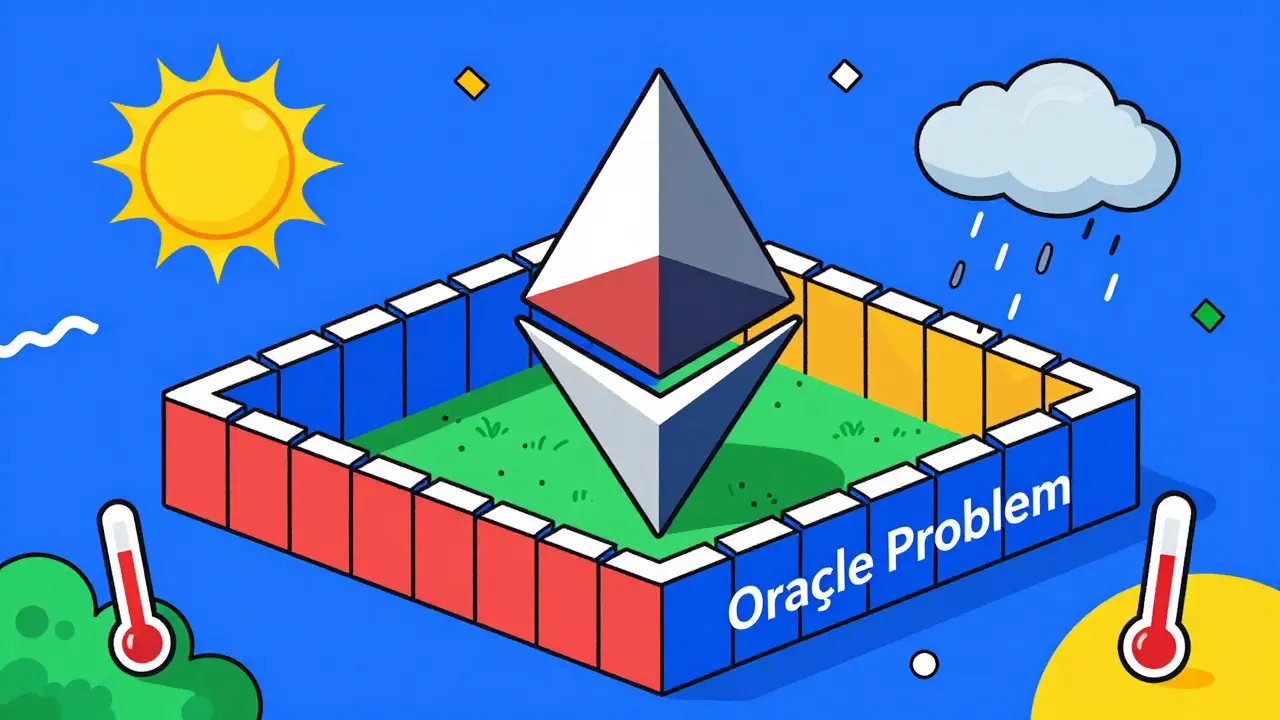
Imagine you've built a smart contract on Ethereum that automatically pays out insurance to a farmer if there is a drought. The contract is perfectly coded, but there is one massive problem: the blockchain is a closed system. It has no idea if it rained in Kansas or if the temperature in London hit 40 degrees. It cannot "look out the window" to see the real world. This is the Chainlink dilemma, often called the "Oracle Problem." Without a secure way to bring outside data inside, smart contracts are essentially blind, limited only to the information already on the ledger.
To fix this, we use oracles. But if you rely on a single source for that weather data and that source gets hacked or lies, your smart contract executes a wrong payment. That is why decentralized oracle networks are a game-changer. They don't just fetch data; they verify it through a crowd of independent players, ensuring that no single point of failure can crash a multi-million dollar DeFi protocol.
Key Takeaways for Quick Reading
- The Oracle Problem: Blockchains can't natively access off-chain data.
- Decentralization: Chainlink uses a network of independent nodes to prevent data manipulation.
- Push vs. Pull: Data can be delivered on a schedule (Push) or requested on-demand (Pull).
- Beyond Data: CCIP allows blockchains to talk to each other and move tokens securely.
- Incentives: The LINK token ensures node operators stay honest and performant.
How Chainlink Solves the Oracle Problem
At its heart, Chainlink is a decentralized oracle network that bridges the gap between blockchains and off-chain data. Instead of one server telling Ethereum the price of Bitcoin, Chainlink uses a distributed network of independent node operators. These nodes act as the "middlemen" who gather data from various sources, filter it, and then pass it to the smart contract.
But how do we know these nodes aren't just making things up? The system uses a reputation-based model. Node operators must stake LINK, an ERC677 token that supports efficient data bundles during transfers. If a node provides bad data, they risk their reputation and their stake. This creates a financial incentive to be accurate. When a contract needs data, the Chainlink Order-Matching Contract manages the requests and bids from nodes, ensuring the most qualified operators handle the job.
Push vs. Pull: How Data Actually Moves
Not every smart contract needs data the same way. Some need a constant stream, while others only need a value at the exact moment a transaction happens. Chainlink handles this through two different delivery styles.
Push-Based Oracles are the backbone of Data Feeds. These are like a subscription service. The network pushes data onto the blockchain on a set schedule or when a price moves by a certain percentage (a "deviation threshold"). For example, if the price of ETH drops by 1%, the oracle immediately updates the on-chain price. This is critical for lending platforms like Aave or Lido, where an outdated price could lead to unfair liquidations of user collateral.
Pull-Based Oracles work more like a request. Instead of paying for constant updates that might not be used, the user "pulls" a signed piece of data off-chain and submits it with their transaction. This drastically lowers the cost of maintaining the feed and allows the application to decide exactly when the data is needed.
| Feature | Push-Based (Data Feeds) | Pull-Based Oracles |
|---|---|---|
| Delivery | Automatic/Scheduled | On-demand by user |
| Cost | Higher (continuous on-chain updates) | Lower (paid per request) |
| Use Case | Liquidation engines, Price tracking | Gaming, Rare events, Low-frequency triggers |
| Freshness | Heartbeat-driven | User-defined timestamp |
Ensuring Data Truth with OCR2 and Aggregation
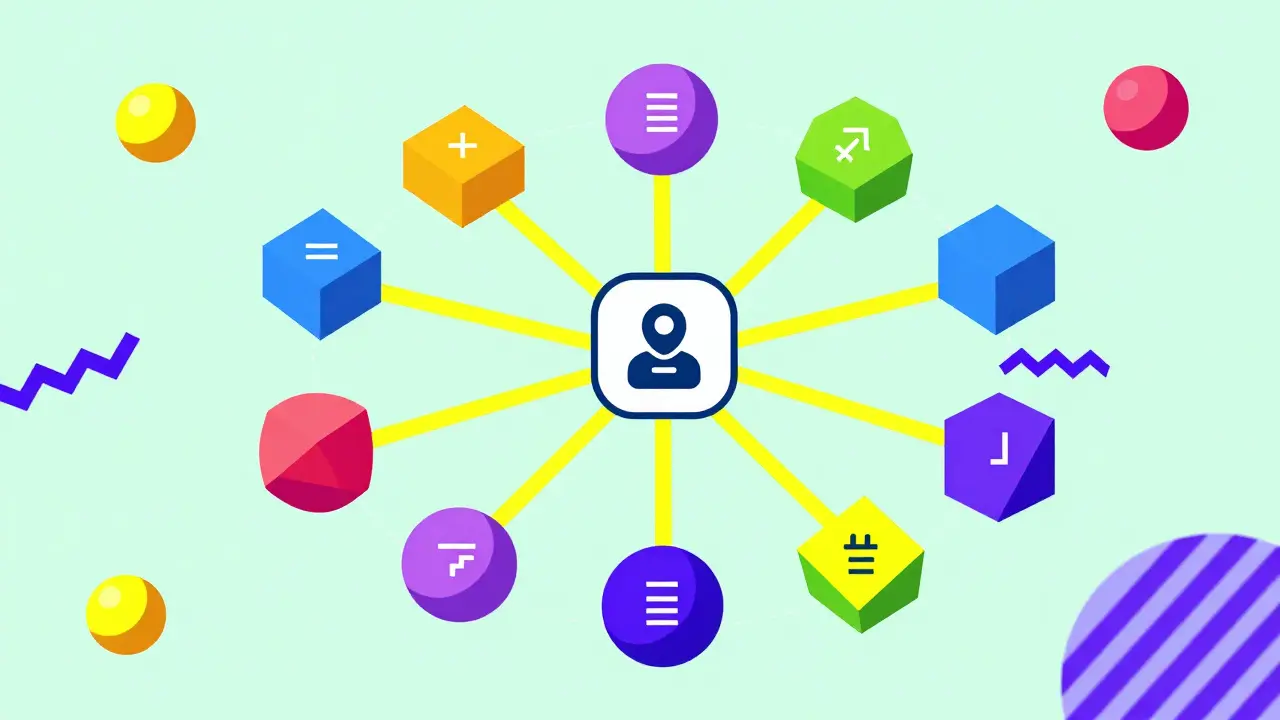
Bringing data on-chain is easy; bringing accurate data is hard. Chainlink uses a process called Off-chain Reporting (OCR2). In the old days, every node would write its data to the blockchain, which was incredibly expensive in gas fees. With OCR2, nodes talk to each other off-chain first. They agree on a single, aggregated value and sign it cryptographically.
Once they reach a consensus, a single "transmitter" posts the final result on-chain. If that transmitter goes offline, another node instantly takes over. This means the blockchain only pays for one transaction, but it gets the security of a whole group's agreement. The Chainlink Aggregating Contract then takes this result and validates it one last time before the smart contract ever sees it. This multi-layer approach-collection, off-chain aggregation, and on-chain verification-is what makes the system institutional-grade.
CCIP: The "Internet of Blockchains"
While price feeds are great, the next big hurdle is interoperability. Most blockchains are like islands; they can't talk to each other. Traditionally, people used "bridges," but bridges are notorious for being hacked because they often rely on a small group of people (multisigs) to move funds. Enter the Cross-Chain Interoperability Protocol (or CCIP), a standardized way for different chains to send messages and tokens.
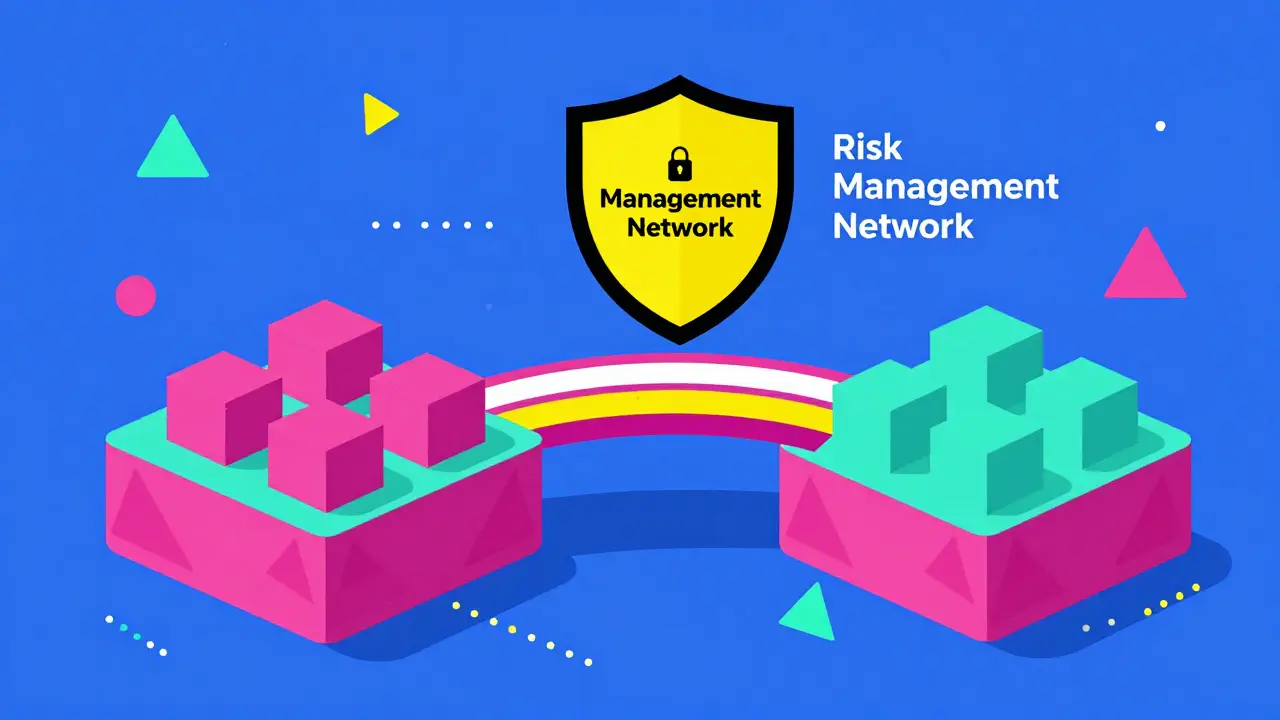
CCIP doesn't just move data; it adds a security layer called the Risk Management Network. This is a separate set of nodes that watch for anomalies. If they see a weird spike in traffic or a potential exploit, they can trigger a "circuit breaker" to pause the route. This is a massive upgrade over traditional bridges. It allows an organization to move a token from Ethereum to an L2 or another chain with the confidence that an independent security network is double-checking the transaction.
Comparing CCIP to other solutions like LayerZero highlights a key difference in philosophy. While LayerZero offers a flexible "endpoint" model where developers can customize their own security assumptions, CCIP provides a standardized, protocol-level security model. One is about flexibility; the other is about a verifiable, consistent security standard.
Real-World Applications and Future Outlook
We are seeing a shift where Chainlink isn't just for crypto-natives. Large financial institutions are exploring "tokenization"-putting real-world assets like real estate or bonds on the blockchain. For these assets to have value, they need accurate, real-time pricing from the outside world. This is where the Chainlink Core software comes in, translating complex off-chain data into a language Ethereum smart contracts can understand.
Looking forward, Chainlink 2.0 is introducing "Hybrid Smart Contracts." These allow a developer to keep sensitive data off-chain (for privacy) while still using the blockchain to verify that the computation was done correctly. This opens the door for things like private credit scoring or healthcare data triggers that don't expose private info to the whole world.
What exactly is the "Oracle Problem"?
The Oracle Problem refers to the inability of a blockchain to access data from the outside world on its own. Since blockchains are deterministic and closed, they cannot make an API call to a website or a database. An "oracle" acts as the bridge, but a centralized oracle creates a single point of failure, which is why decentralized networks like Chainlink are necessary.
How does the LINK token actually help secure the network?
LINK serves as an incentive and a penalty. Node operators are paid in LINK for providing accurate data. More importantly, by staking LINK, operators put their own capital at risk. If they provide fraudulent data or experience excessive downtime, their stake can be slashed, ensuring that only honest and reliable operators stay in the network.
Is CCIP the same as a blockchain bridge?
Not exactly. While it performs the same function (moving value and data between chains), CCIP is a protocol. Traditional bridges often rely on a single set of validators or a multisig wallet. CCIP uses a decentralized oracle network for verification and a separate Risk Management Network to monitor for attacks, making it significantly more secure than a standard bridge.
What is a "heartbeat" in a Chainlink data feed?
A heartbeat is a time-based trigger. Even if the price of an asset hasn't moved enough to hit the "deviation threshold," the oracle will still update the price once the heartbeat period (e.g., every 24 hours) expires. This ensures that the data isn't "stale" during periods of very low market volatility.
Can Chainlink provide data other than price feeds?
Yes. While price feeds are the most common, Chainlink can fetch any verifiable data. This includes weather reports for crop insurance, sports results for betting markets, random number generation (VRF) for gaming, and even API data from traditional banking systems.
Next Steps and Troubleshooting
If you are a developer looking to integrate these tools, your first step should be exploring the Chainlink Documentation for your specific chain. If you notice that a price feed is "stale" (the timestamp is too old), check the network congestion on Ethereum; sometimes high gas fees can delay the transmitter node, though OCR2 is designed to mitigate this.
For those moving assets across chains, always verify if the project you are using utilizes a standardized protocol like CCIP or a custom-built bridge. If you're using a custom bridge, the risk of a "rug pull" or a smart contract exploit is significantly higher than using a protocol with an independent Risk Management Network.