
Ethereum Transaction Life Cycle: From Mempool to Confirmation
 Aug, 4 2026
Ever hit 'send' on a crypto transaction and then watched the status bar spin for what feels like an eternity? You aren't alone. That spinning wheel represents one of the most complex processes in decentralized finance: the journey of your data from your wallet to permanent record on the blockchain.
Understanding this process isn't just for developers building dApps. If you are trading NFTs, swapping tokens on Uniswap, or simply sending ETH to a friend, knowing how the Ethereum transaction life cycle works can save you money on fees and prevent costly errors. We will break down exactly what happens behind the scenes, from the moment you sign a message to the final confirmation that makes your transfer irreversible.
The Starting Line: Signing and Broadcasting
It all begins with you. When you initiate a transfer in MetaMask, Coinbase Wallet, or any other interface, you are creating a digital instruction. This instruction contains specific details: who is sending, who is receiving, how much value is moving, and crucially, how much gas fee you are willing to pay for the privilege.
Your wallet uses your private key to cryptographically sign this transaction. Think of this signature as a digital wax seal that proves you authorized the move without revealing your secret key to the world. Once signed, the transaction is not yet on the blockchain. It is merely a packet of data ready to be sent out into the wild.
Your wallet broadcasts this signed transaction to Ethereum nodes via RPC endpoints like Infura or Alchemy. These nodes act as gatekeepers. They perform three critical validation checks immediately:
- Signature Verification: Does the math prove the sender owns the funds?
- Balance Check: Does the sender have enough ETH to cover both the transfer amount and the estimated gas costs?
- Nonce Validation: Is this the correct sequence number for this account's next transaction? (This prevents replay attacks where someone tries to resend an old transaction).
If any of these checks fail, the node rejects the transaction instantly. If they pass, the transaction enters the waiting room known as the mempool.
The Waiting Room: Inside the Mempool
The mempool (short for memory pool) is often misunderstood. It is not a single database sitting on a server somewhere. Instead, it is a distributed data structure maintained independently by every full node running on the Ethereum network.
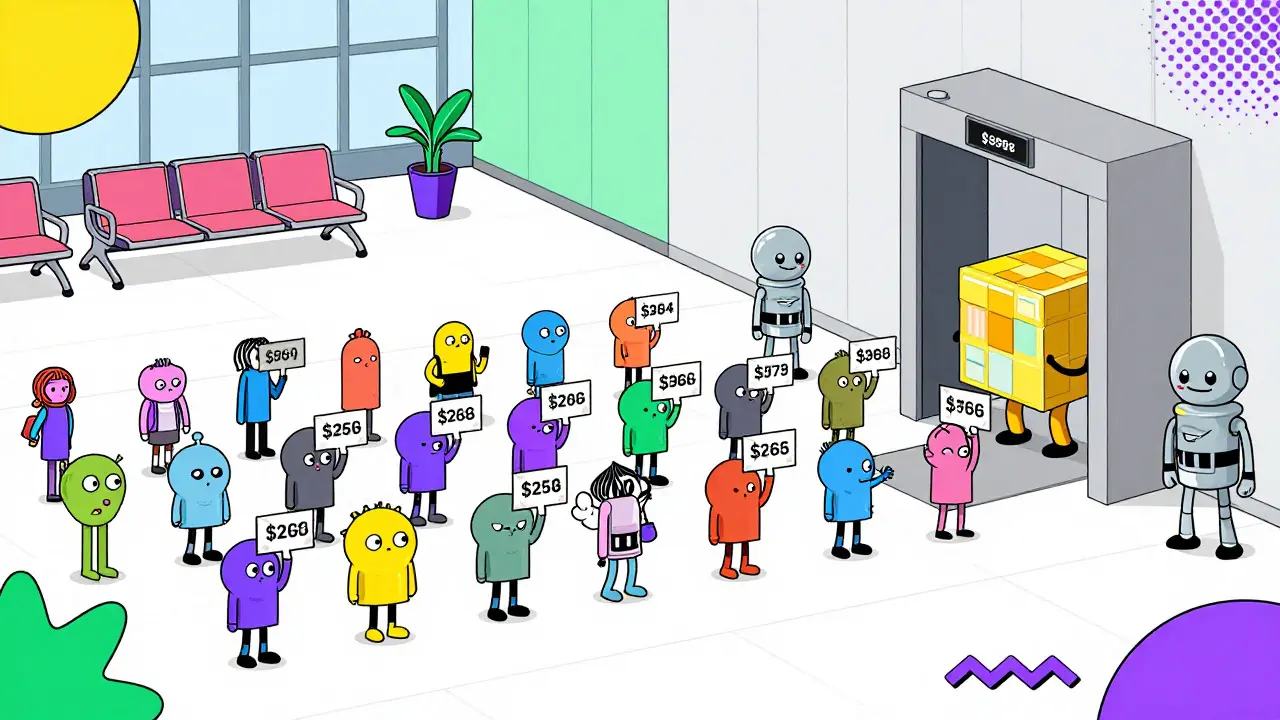
Imagine a crowded airport terminal where thousands of people are trying to board planes. The mempool is the line at security. Everyone is waiting, but not everyone gets on the next plane. Why? Because there is limited space.
Post-Merge, Ethereum produces a new block roughly every 12 seconds. Each block has a maximum size limit, typically accommodating around 200 transactions. However, during peak times-like a popular NFT mint or a DeFi crisis-thousands of transactions might be broadcast simultaneously. This creates a backlog.
Transactions in the mempool exist in a few states:
- Pending: Valid and waiting to be picked up by a validator.
- Stuck: Valid, but paying too low a gas fee to be competitive against newer, higher-paying transactions.
- Dropped: Removed after being unconfirmed for too long (usually 3-7 days) or replaced by a new transaction with the same nonce but higher fees.
Each node maintains its own view of the mempool. This means your transaction might appear pending on one explorer but not another, depending on which node that explorer is connected to. Eventually, consensus rules ensure consistency across the network.
The Selection Process: Validators and Gas Auctions
So, how does a transaction get chosen from the chaotic mempool to enter a block? This is where economics meets cryptography. Since Ethereum transitioned to Proof of Stake in September 2022, validators (rather than miners) are responsible for proposing blocks.
Validators are randomly selected to propose the next block. When their turn comes, they look at their local mempool and ask: "Which transactions should I include to maximize my reward?" The answer is almost always: those paying the highest fees.
This creates an auction-like environment. Users bid for block space using gas. Under the EIP-1559 model introduced in August 2021, this bid consists of two parts:
- Base Fee: A minimum price set by the protocol based on current network congestion. This fee is burned (destroyed), making ETH deflationary during busy periods.
- Priority Fee (Tip): An optional extra payment directly to the validator to incentivize them to pick your transaction over others.
If you set your priority fee too low during high congestion, your transaction will sit in the mempool while faster-payers jump ahead of you. This is why you sometimes see transactions confirmed in seconds and others stuck for hours. It’s purely a function of supply and demand for block space.
| State | Description | Action Required |
|---|---|---|
| Pending | Valid transaction awaiting inclusion in a block. | None; wait for validator selection. |
| Stuck | Gas fee is lower than current market rate. | Replace with higher fee (Speed Up) or Cancel. |
| Dropped | Removed due to age or replacement. | Resubmit new transaction if still needed. |
Execution: The EVM Takes Over
Once a validator includes your transaction in a proposed block, the real work begins. The block is broadcast to the rest of the network, and other validators verify its validity. Part of this verification involves executing the transactions within the Ethereum Virtual Machine (EVM).
The EVM is the global computer that runs Ethereum. It doesn't just move money; it executes code. If your transaction interacts with a smart contract (like swapping tokens on Uniswap or minting an NFT), the EVM runs that code step-by-step.
This execution changes the state of the blockchain. Balances are updated, tokens are transferred, and logs are generated. Crucially, this happens *before* the block is finalized. If the code encounters an error-say, you tried to spend more tokens than you owned-the transaction reverts. The state changes are undone, but you still pay the gas fee for the computation used.
About 8.5% of all Ethereum transactions revert for various reasons. This is a common pain point for users. Always check your slippage tolerance and ensure you have approved sufficient allowances before interacting with complex contracts.
Confirmation and Finality: Is It Safe Yet?
After the block is proposed and validated by the network, your transaction receives its first confirmation. At this point, it appears on explorers like Etherscan with a green checkmark. For many small transfers, this is considered "done."
However, in Proof of Stake, finality is probabilistic until a checkpoint is reached. A single confirmation means a validator included it, but there is a tiny chance the chain could reorganize (revert) if another validator proposes a competing block that gains more support.
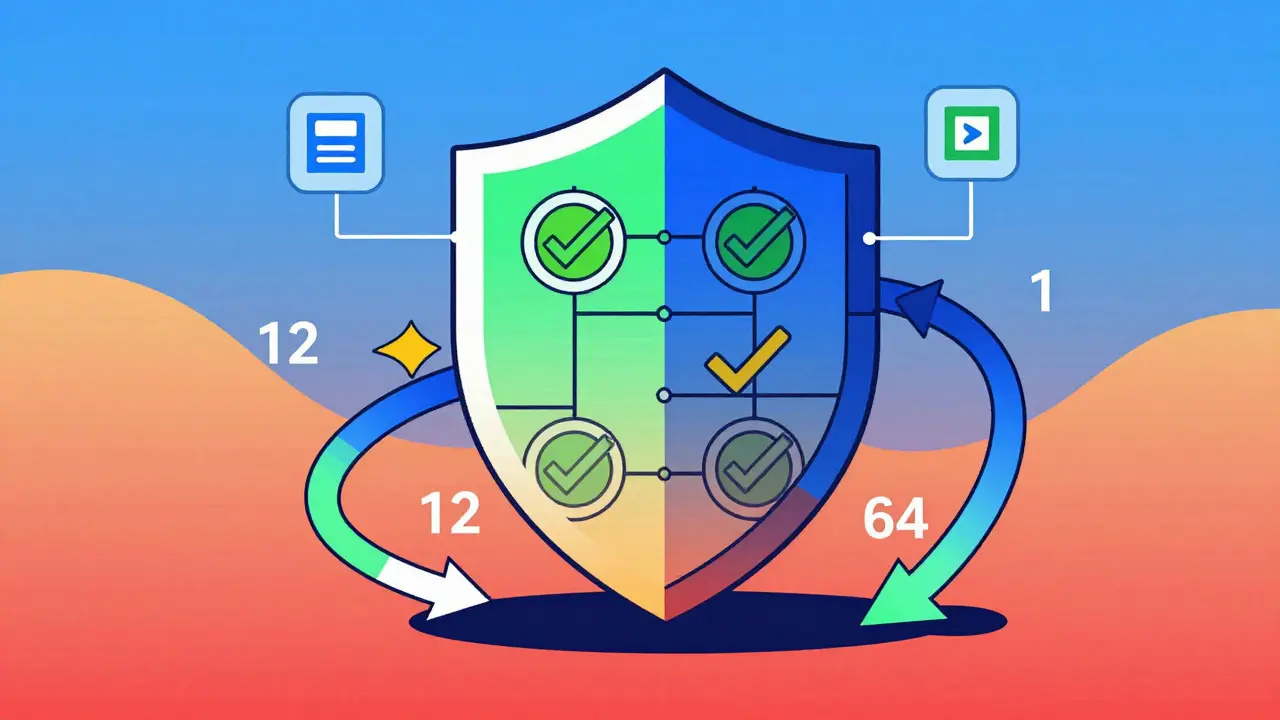
To mitigate this risk, different levels of security require different numbers of confirmations:
- 1 Confirmation: Suitable for small, low-value transfers between trusted parties.
- 12 Confirmations (~2.5 minutes): Standard for most exchanges and wallets to consider a deposit safe.
- 64 Confirmations (~13 minutes): Recommended for high-value institutional transfers to make reorganization statistically impossible.
The Ethereum Foundation suggests aiming for 64 confirmations for significant assets. This depth ensures that even if a malicious actor tried to rewrite history, the computational and economic cost would outweigh the reward.
Navigating Common Issues and Optimizations
Understanding the lifecycle helps you troubleshoot when things go wrong. Here are practical strategies for managing your transactions effectively.
Dealing with Stuck Transactions: If your transaction is stuck because gas prices spiked after you sent it, you have two options. Most wallets offer a "Speed Up" feature. This sends a new transaction with the same nonce (sequence number) but a higher gas fee, replacing the old one in the mempool. Alternatively, you can "Cancel" the transaction by sending a zero-value transaction to your own address with a higher fee, freeing up your nonce for a fresh attempt.
Avoiding Peak Congestion: Gas fees fluctuate wildly based on network usage. Data from 2021 showed fees spiking to 1,500 gwei during major events. While average fees have stabilized since the Dencun upgrade in March 2024, spikes still occur. Try scheduling non-urgent transactions for weekends or off-peak hours in UTC time zones, when network activity tends to dip.
Using Layer 2 Solutions: The Dencun upgrade significantly reduced costs on Layer 2 networks like Arbitrum and Optimism by introducing proto-danksharding (EIP-4844). By batching transactions off-chain and posting compressed data to Ethereum mainnet, L2s reduce mempool pressure on the base layer. For frequent traders, using an L2 bridge can cut costs by up to 90% compared to direct mainnet interactions.
Future Developments: What’s Next for the Mempool?
The Ethereum roadmap continues to evolve to improve user experience and security. One major focus is reducing the visibility of transactions in the mempool to prevent front-running.
Research by Flashbots highlighted that approximately 5% of transactions are vulnerable to Maximal Extractable Value (MEV) extraction, where bots detect pending trades and buy/sell ahead of them. To combat this, the industry is moving toward private transaction channels and encrypted mempools. These innovations aim to hide your transaction intent until it is securely included in a block, leveling the playing field for regular users.
Additionally, upcoming upgrades like Prague-Electra (targeted for late 2025) promise further optimizations to block processing and account abstraction (EIP-4337). Account abstraction will allow for sponsored transactions, where a dApp pays the gas fee for you, simplifying the onboarding process for newcomers who don't need to hold ETH just to interact with a service.
As Ethereum scales, the mempool remains a critical component of its architecture. It balances decentralization with efficiency, ensuring that every transaction, whether a simple send or a complex contract interaction, finds its place in the ledger. By understanding this lifecycle, you gain control over your digital assets, turning uncertainty into strategy.
How long does it take for an Ethereum transaction to confirm?
Under normal conditions, an Ethereum transaction confirms within 12-15 seconds after being included in a block. However, reaching full finality (12-64 confirmations) takes between 2.5 minutes and 13 minutes, depending on the security level required.
Why is my transaction stuck in the mempool?
Your transaction is likely stuck because the gas fee you paid is lower than the current market rate. Validators prioritize higher-fee transactions. You can resolve this by using your wallet's "Speed Up" feature to increase the fee or canceling the transaction to resubmit it.
What is the difference between the base fee and priority fee?
The base fee is a minimum price set by the network algorithm based on congestion, and it is burned (destroyed). The priority fee (or tip) is an extra amount paid directly to the validator to incentivize them to include your transaction sooner. Together, they form your total gas cost.
Can I cancel a pending Ethereum transaction?
Yes, you can cancel a pending transaction by sending a new transaction to your own address with the same nonce (sequence number) but a higher gas fee. This replaces the original transaction in the mempool, effectively voiding it.
How does the EVM affect transaction success?
The Ethereum Virtual Machine (EVM) executes the code within your transaction. If the code fails (e.g., insufficient balance or invalid logic), the transaction reverts. State changes are undone, but you still pay the gas fee for the computational effort used during the failed execution.
What is MEV and how does it relate to the mempool?
MEV (Maximal Extractable Value) refers to profits made by reordering, inserting, or delaying transactions in the mempool. Bots monitor the mempool for profitable opportunities, such as front-running large trades. Private transaction channels are being developed to hide transactions from these bots.
Does the Dencun upgrade affect transaction speeds?
The Dencun upgrade (March 2024) primarily reduced costs on Layer 2 networks by 90% through proto-danksharding. While it didn't directly increase mainnet block speed, it alleviated overall network congestion by shifting more activity to cheaper, efficient L2 solutions.