
Growth vs IDCW Mutual Fund Payout Options in India: Which One Fits Your Goals?
 Mar, 7 2026
When you invest in mutual funds in India, you’re not just picking a fund-you’re choosing how you want your money to work for you. Two main options exist: growth and IDCW (Income Distribution Cum Capital Withdrawal). They sound simple, but the difference can change how much you end up with over time-and how you feel about your investments every month or quarter.
Let’s cut through the jargon. If you’re someone who wants your money to keep growing without touching it, growth is your path. If you need regular cash flow-maybe to cover rent, bills, or extra spending-IDCW might seem like the better fit. But here’s the catch: what looks like free money isn’t always free.
What Growth Option Really Means
The growth option reinvests every single rupee of profit back into the fund. No cash comes out. No dividends get paid. Instead, your units increase in value. If you invested ₹1 lakh in a fund that grows 12% a year, after five years, your investment becomes ₹1.76 lakh. That’s compound growth doing its job.
This is the default choice for most long-term investors-people saving for retirement, a child’s education, or a house down payment. It’s simple: you buy, you hold, you watch the value climb. No decisions. No cashing out. Just letting the market work.
One big advantage? You don’t pay taxes until you sell. That’s huge. In India, long-term capital gains on equity mutual funds are taxed at 10% only after you exceed ₹1 lakh in profits. With growth, you control when that tax hits. You decide when to cash in.
What IDCW Actually Does
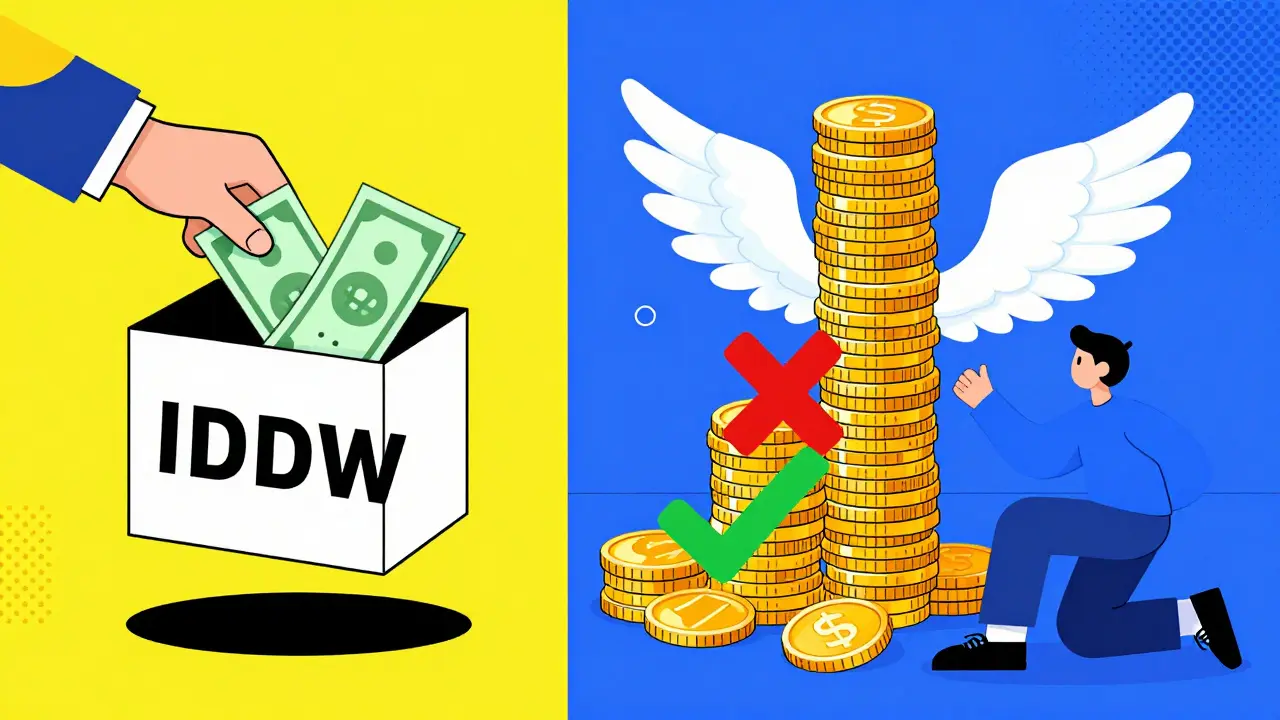
IDCW stands for Income Distribution Cum Capital Withdrawal. Sounds fancy, right? Here’s what it really means: the fund pays you cash-either monthly, quarterly, or annually. It looks like a dividend. But it’s not a dividend from profits. It’s money taken from your own investment.
Let’s say you own ₹1 lakh worth of a mutual fund. The fund declares an IDCW payout of ₹5,000. You get ₹5,000 in your bank account. Sounds great. But your fund’s NAV (Net Asset Value) drops by ₹5,000. Your investment is now worth ₹95,000. You didn’t earn extra money. You just got some of your own money back.
This isn’t magic. It’s accounting. The fund doesn’t magically generate extra cash. It just redistributes what’s already yours. Think of it like taking money out of your savings account to pay yourself a monthly allowance. You’re not earning more-you’re just moving money around.
Why do funds offer this? Because it feels good. Seeing ₹3,000 hit your account every month makes you feel like you’re getting paid. But if you’re not reinvesting that cash, you’re missing out on compounding. And if you’re withdrawing more than the fund earns, you’re eating into your principal.
Why IDCW Isn’t a Free Lunch
Many investors think IDCW is “passive income.” That’s a myth. In reality, most equity mutual funds don’t earn enough in dividends to sustain regular payouts. So when they pay you, they’re dipping into the capital you put in. That’s not income-that’s a return of your own money.
Here’s a real example: A fund with a 10% annual return pays ₹8,000 in IDCW per year on a ₹1 lakh investment. Sounds good? But if the fund only earned ₹5,000 in actual dividends, the other ₹3,000 came from selling part of your holdings. Your investment shrinks. Your future growth potential drops.
And then there’s the tax hit. IDCW payouts are taxed at your income tax slab rate. So if you’re in the 30% bracket, you lose ₹1,500 on every ₹5,000 payout. Growth? No tax until you sell. And even then, you can time it to stay under the ₹1 lakh exemption.
Who Should Choose Growth?
Growth is the smart pick if you’re:
- Investing for goals 5+ years away
- Still building wealth, not spending it
- Wanting to maximize compounding
- Looking to defer taxes
- Planning to withdraw only when you need to
Most people fall into this group. Even if you’re retired, you can set up a Systematic Withdrawal Plan (SWP) to take out fixed amounts monthly-without hurting your compounding engine. SWP lets you control timing, tax, and amount. It’s more flexible than IDCW.
Who Might Benefit from IDCW?
IDCW only makes sense in rare cases:
- You’re retired and need predictable monthly cash, and you’ve already built enough wealth to afford giving up compounding
- You’re using the fund as a forced savings discipline tool (but you could do that with SWP too)
- You’re in a low tax bracket and the payout helps you avoid large lump-sum withdrawals
Even then, SWP is almost always better. With SWP, you decide how much to withdraw. You can adjust it yearly. You can pause it. You can reinvest the rest. IDCW? It’s fixed. And it’s taxable every time.
The Hidden Cost of IDCW: Lost Compounding
Let’s say you invest ₹10,000 a month for 20 years in a fund that returns 12% annually.
If you choose growth? You end up with ₹1.1 crore.
If you choose IDCW and withdraw ₹500 every month? You end up with ₹78 lakh. That’s ₹32 lakh less. Why? Because every ₹500 you took out could’ve been reinvested. And over 20 years, that lost compounding adds up like snowfall.
Even small withdrawals hurt. Taking ₹200/month? Still loses you ₹11 lakh. The math doesn’t lie.

What About Debt Funds and IDCW?
Debt funds are different. They earn interest, not capital gains. So when they pay IDCW, it’s often from actual income-interest from bonds or fixed deposits. That’s more legitimate.
Still, the same rule applies: if you don’t need the cash, growth is better. Debt funds are often used for short-term goals (1-3 years). If you’re using them for regular income, IDCW might make sense. But again, SWP gives you control. You can take ₹10,000 one month and ₹5,000 the next. IDCW? You get what the fund decides.
SWP: The Real Alternative to IDCW
Systematic Withdrawal Plan (SWP) lets you withdraw a fixed amount from your growth option fund every month or quarter. It’s not a dividend. It’s a structured sale of units. And it’s way better than IDCW.
Here’s why:
- You control the amount
- You control the timing
- You can increase or stop withdrawals anytime
- You pay capital gains tax only on the profit portion
- You keep the rest compounding
Example: You have ₹50 lakh in a growth fund. Set up an SWP for ₹25,000/month. Each month, the fund sells enough units to give you that amount. The rest keeps growing. You get cash. You keep growth. You pay less tax than with IDCW.
SWP is the tool professionals use. IDCW? It’s a marketing gimmick.
Final Decision: Growth or IDCW?
Here’s your simple rule:
- If you’re still working, saving, or planning for future goals → growth option
- If you’re retired and need cash flow → SWP on growth option
- If you’re tempted by “free” monthly cash → avoid IDCW
Don’t fall for the illusion of income. IDCW doesn’t create money. It just moves it around. And it costs you in taxes and lost growth.
The best mutual fund strategy isn’t about picking the fund with the highest dividend. It’s about picking the one that lets your money work the hardest. And that’s always growth.
Is IDCW the same as dividend in mutual funds?
No. Before 2021, mutual funds paid dividends, which were tax-free in investors’ hands. But SEBI changed the rules. Now, IDCW is not a dividend-it’s a return of your own capital. The fund reduces its NAV by the amount paid out. You don’t earn extra; you just get some of your money back.
Can I switch from IDCW to growth later?
Yes, you can switch from IDCW to growth at any time. But it’s treated as a redemption and purchase. That means capital gains tax applies if you’ve made profits. If you’ve held the fund for more than a year, long-term capital gains tax (10% above ₹1 lakh) kicks in. Plan your switch carefully.
Why do mutual fund houses push IDCW so hard?
Because it feels good. Seeing cash in your bank account makes you think you’re doing well. It’s psychological. Fund houses know this. They market IDCW as “regular income,” even though it’s not true income. Growth doesn’t have that emotional pull. So they sell the illusion.
Does IDCW make sense for retirees?
Only if you’re already wealthy enough to afford losing compounding. For most retirees, a Systematic Withdrawal Plan (SWP) from a growth fund is better. You get the same cash flow, with more control, lower taxes, and better long-term results. IDCW is a trap for those who don’t understand the mechanics.
What’s the tax impact of IDCW vs. growth?
IDCW payouts are taxed at your income tax slab rate-up to 30%. Growth options only trigger tax when you sell, and only on profits above ₹1 lakh. For equity funds, long-term capital gains are taxed at 10%. For debt funds, growth still wins: LTCG at 20% with indexation vs. IDCW taxed as income. Growth is almost always tax-efficient.