
Home Loan Tax Benefits in India: Deductions on Interest and Principal
 Jul, 22 2026
Buying a home is one of the biggest financial moves you’ll make. In India, it’s also one of the most tax-efficient ones-if you know where to look. The government doesn’t just let you buy property; it actively encourages homeownership through specific deductions under the Income Tax Act. But here’s the catch: these benefits aren’t automatic. You have to claim them correctly, within strict limits, and with the right documentation.
If you’re taking a home loan, you’re not just paying for bricks and mortar. You’re unlocking a suite of tax breaks that can save you thousands every year. This guide cuts through the noise. We’ll walk you through exactly what you can deduct, how much you can save, and the common mistakes that cost people money. No fluff, just the facts you need to file your returns confidently.
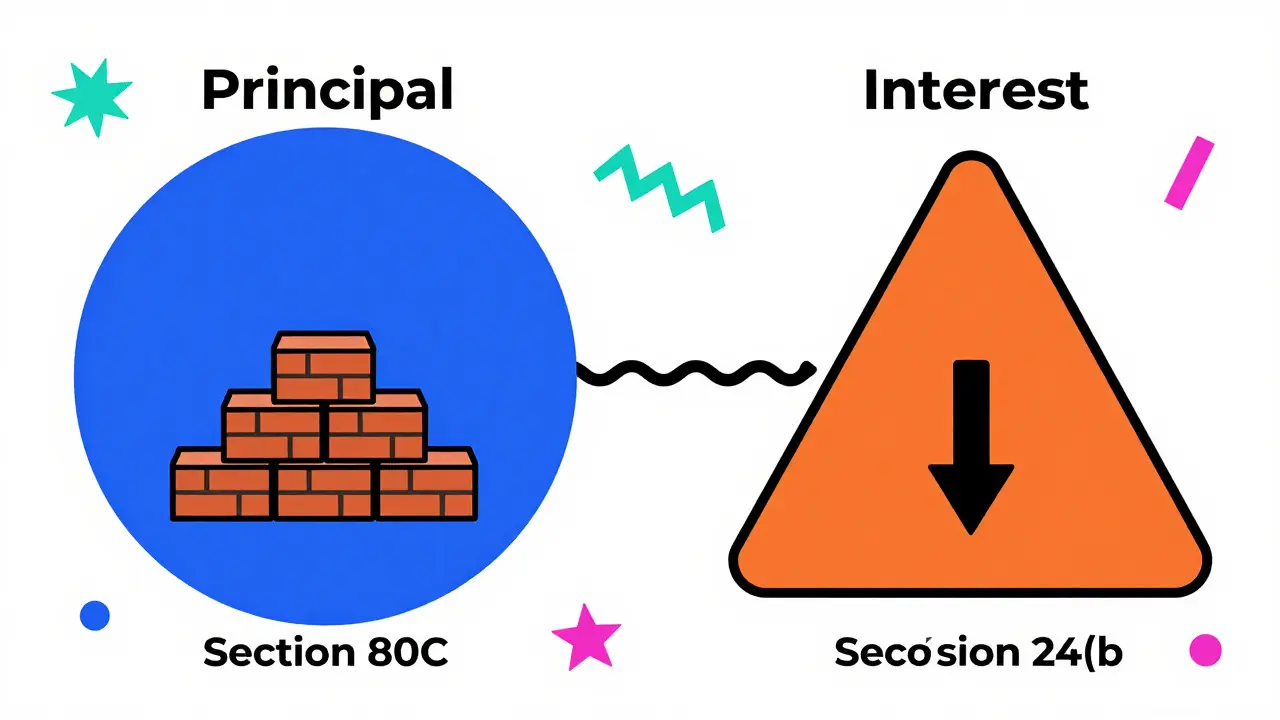
The Core Benefit: Principal Repayment Under Section 80C
Let’s start with the principal-the actual amount you borrowed to buy the house. Every year, when you pay back part of this principal, you can claim a deduction under Section 80C of the Income Tax Act. This isn’t a separate bucket; it’s part of your overall 80C limit.
Here’s how it works: Your total deduction under Section 80C is capped at ₹1.5 lakh per financial year. This includes contributions to Public Provident Fund (PPF), Employee Provident Fund (EPF), National Pension System (NPS) up to a limit, life insurance premiums, and yes, the principal component of your home loan EMI. If you’ve already maxed out your 80C with other investments, there’s no extra room for home loan principal. But if you haven’t, this is a powerful way to utilize that space.
Important nuance: The deduction applies only if the construction of the house is completed within five years from the end of the financial year in which the loan was taken. If you’re buying an under-construction property, keep track of those dates. Delay completion beyond five years, and you lose this benefit entirely.
- Maximum deduction: ₹1.5 lakh (shared with all other 80C instruments)
- Eligible amounts: Only the principal portion of your EMI
- Documentation needed: Form 16B from your lender, bank statements showing principal payments
- Time limit: Construction must be complete within 5 years of loan sanction
Interest Relief: Section 24(b) vs. Section 80EEA
While principal repayment falls under 80C, the interest you pay on your home loan gets its own treatment. This is governed by Section 24(b). For a self-occupied property, you can deduct up to ₹2 lakh per year as interest expense. That’s a flat cap, regardless of how much interest you actually paid.
But wait-there’s more. If you meet certain conditions, you might qualify for additional relief under Section 80EEA. Introduced to boost affordable housing, this section allows an extra deduction of up to ₹1.5 lakh on home loan interest. To qualify, your loan must be sanctioned between April 1, 2019, and March 31, 2025 (note: check current extensions), the property value must not exceed ₹45 lakh, and you shouldn’t own any other residential house on the date of loan sanction.
So, in the best-case scenario, you could potentially deduct ₹3.5 lakh total on interest (₹2 lakh under Section 24 + ₹1.5 lakh under Section 80EEA). However, this upper limit applies only if you fall into the lower or middle-income tax brackets where the marginal relief makes sense. For high earners, the standard ₹2 lakh deduction often suffices.
| Feature | Section 24(b) | Section 80EEA |
|---|---|---|
| Max Deduction | ₹2 lakh/year | ₹1.5 lakh/year (additional) |
| Property Type | Self-occupied | Affordable housing (value ≤ ₹45L) |
| Loan Sanction Window | Any time | Apr 1, 2019 - Mar 31, 2025 |
| Ownership Condition | None | No other residential house owned |
Rental Income Properties: Different Rules Apply
What if you don’t live in the house? If you rent it out, the tax treatment changes significantly. Here, the entire interest paid on the home loan is deductible against rental income, with no ₹2 lakh cap. Yes, you read that right. If you paid ₹4 lakh in interest last year, you can deduct the full ₹4 lakh from your rental income.
This creates a unique arbitrage opportunity. Some investors buy properties specifically to generate rental income while maximizing interest deductions. Even if the rental income barely covers the EMI, the tax savings can make the investment viable. Just remember: losses from house property can be set off against other income sources up to ₹2 lakh per year. Beyond that, unadjusted losses carry forward for eight years.
Housing Rent Allowance (HRA): The Dual Benefit
Here’s a lesser-known strategy: You can claim both home loan benefits AND HRA exemptions simultaneously. How? By renting out your primary residence and living elsewhere in rented accommodation. It sounds circular, but it’s legal and widely used.
When you rent out your home, it becomes a “let-out” property for tax purposes. You report the rental income, deduct municipal taxes, and then subtract the full home loan interest. Meanwhile, since you’re living in a rented place, you can claim HRA exemption based on your salary structure. This dual approach maximizes deductions but requires careful bookkeeping. Ensure your landlord issues proper receipts and registers the lease if required by local laws.
First-Time Home Buyers: Extra Perks
If you’re buying your first home, the government offers additional incentives beyond standard deductions. Section 80EE provides an extra ₹50,000 deduction on interest, but it has stricter eligibility criteria than 80EEA. The loan amount must not exceed ₹35 lakh, and the property value must be under ₹50 lakh. Plus, you must not have claimed this benefit before.
Note: Section 80EE and 80EEA are mutually exclusive. Choose the one that gives you greater savings. Generally, 80EEA is more beneficial due to higher deduction limits and broader applicability, but always calculate based on your specific loan terms.

Common Pitfalls That Cost You Money
Even with clear rules, many taxpayers miss out on benefits due to simple errors. Avoid these traps:
- Mixing up principal and interest: Banks provide annual statements breaking down EMI components. Use only the principal part for 80C and interest part for 24(b). Never combine them.
- Ignoring pre-construction interest: Interest accrued before construction completion isn’t deductible immediately. It’s spread over five equal installments starting from the year construction finishes. Track this carefully.
- Missing documentation: Without Form 16B from your lender, claiming deductions becomes risky during scrutiny. Keep digital copies safe.
- Assuming joint loans double benefits: They don’t. Each co-borrower can claim deductions proportionally, but the total cannot exceed statutory limits. Coordinate with your spouse or partner to optimize claims.
How to Claim These Benefits Correctly
Filing your ITR involves selecting the correct schedule. Go to Schedule HP (House Property) and enter details about your property type, location, and valuation. Then move to Chapter VI-A for deductions under Sections 80C, 80EE, and 80EEA. Double-check figures against your bank’s annual statement.
If you’re using tax filing software, input data precisely. Errors here trigger notices from the Income Tax Department. When in doubt, consult a Chartered Accountant-they’ll ensure compliance and maximize refunds. Remember, tax planning should happen annually, not just at filing time. Adjust your EMI structure or investment mix mid-year if needed.
Can I claim home loan tax benefits if I bought my house without a loan?
No. All major home loan tax deductions-Sections 80C, 24(b), 80EE, and 80EEA-are tied to borrowing money. If you paid cash upfront, you won’t get interest or principal repayments to deduct. However, you may still claim stamp duty and registration fees under Section 80C if purchased within specified timelines.
What happens if I sell my house before completing the loan tenure?
You can continue claiming deductions until the property is transferred. After sale, stop reporting it under House Property. Any capital gains from the sale may be exempt if reinvested in another residential property under Section 54, subject to conditions.
Do home loan tax benefits apply to agricultural land purchases?
Generally no. Agricultural land is not considered immovable property for income tax purposes unless located within urban areas defined by local authorities. Residential or commercial properties built on such land may qualify, but bare agri-land does not attract home loan deductions.
Is there a minimum lock-in period for claiming these benefits?
Not explicitly for deductions themselves. However, if you sell the property within three years of purchase, long-term capital gains exemptions under Section 54 lapse. Also, premature closure of loan affects future deduction availability since no further EMIs are made.
Can NRIs claim home loan tax benefits in India?
Yes, but only if they file Indian income tax returns and have taxable income in India. Rental income earned in India is taxable, so corresponding deductions like interest and maintenance apply. Principal repayment under 80C is available only if the NRI opts to be taxed as resident or meets specific treaty conditions.