
How to Exit a Mutual Fund in India: Redemption vs Switch vs SWP Explained
 Jul, 7 2026
You have money sitting in mutual funds. Maybe you put it there three years ago for retirement, or maybe you started a Systematic Investment Plan (SIP) last year. Now, life happens. You need cash for a down payment on a house, you want to rebalance your portfolio, or you simply feel the market is overheating and want to lock in profits. The question isn't just "how do I get my money out?" It is "what is the smartest way to get it out without triggering a massive tax bill or hurting my long-term goals?"
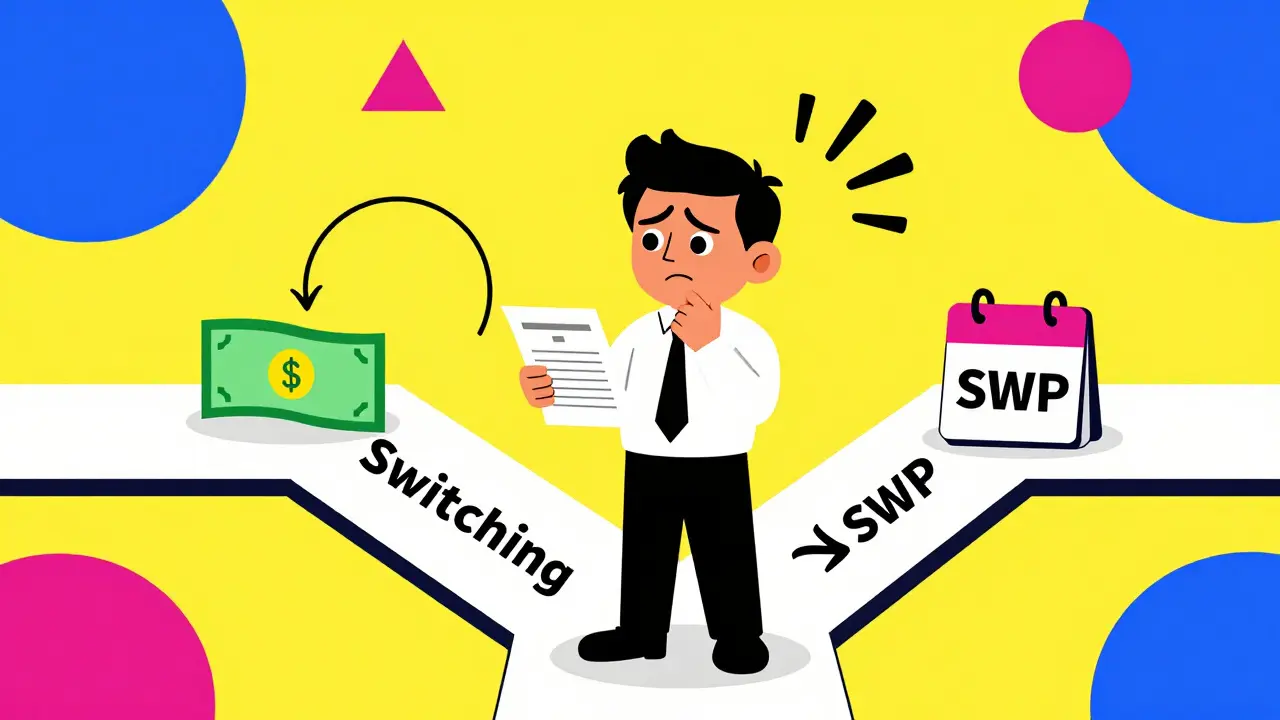
In India, exiting a mutual fund investment is not a one-size-fits-all process. You generally have three main paths: redemption, switching, or setting up a Systematic Withdrawal Plan (SWP). Each option has different implications for your taxes, your liquidity, and your future returns. Choosing the wrong method can cost you thousands of rupees in unnecessary capital gains tax.
The Three Ways to Exit a Mutual Fund
Before you click any buttons on your broker’s app or log into your AMC (Asset Management Company) portal, you need to understand what each action actually does to your money.
Redemption is the complete or partial sale of your mutual fund units back to the fund house, resulting in cash being credited to your bank account. This is the standard "exit." You sell the units, and you receive money. The transaction is final. If you redeem fully, you no longer hold that asset.
Switching is moving your investment from one mutual fund scheme to another within the same Asset Management Company (AMC) without withdrawing the cash first. Think of it as swapping one stock for another, but done automatically by the fund house. You don't see the cash hit your bank account; it goes straight from Scheme A to Scheme B.
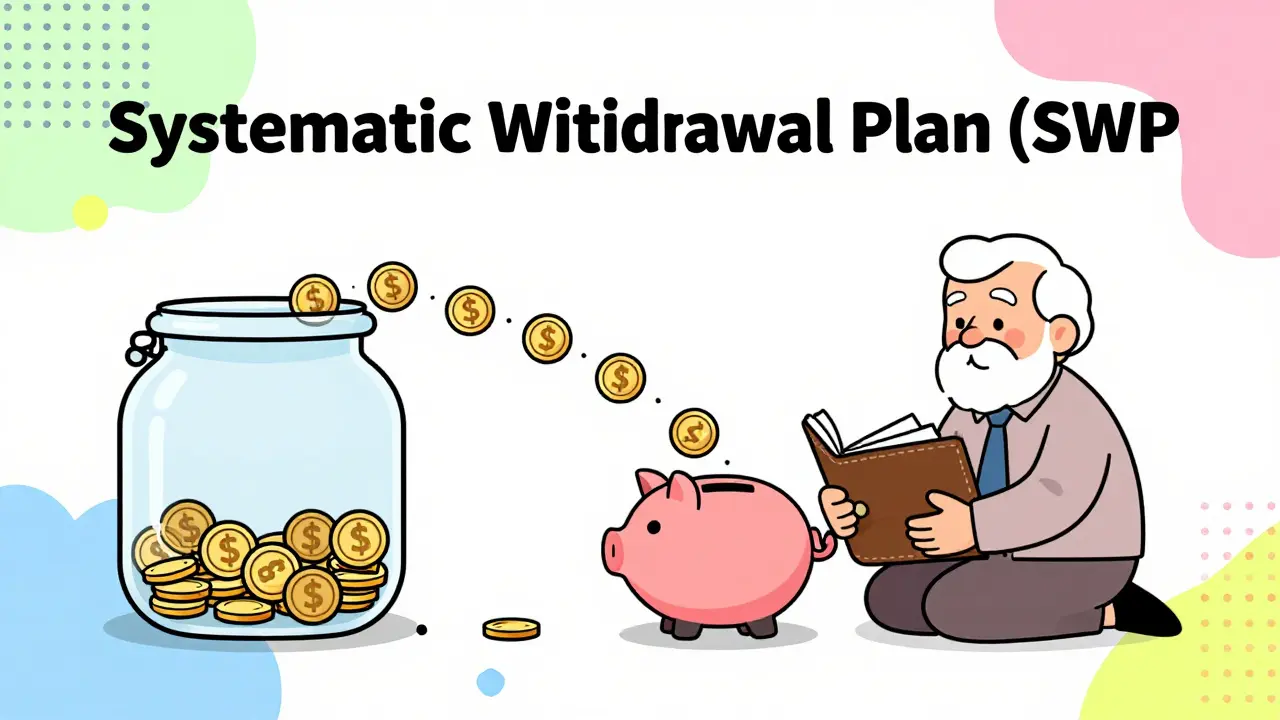
Systematic Withdrawal Plan (SWP) is a mechanism where a fixed amount is withdrawn from your mutual fund investment at regular intervals, similar to receiving a salary or pension. Unlike a Systematic Investment Plan (SIP), which puts money in, an SWP takes money out. You keep the remaining balance invested.
| Feature | Redemption | Switching | SWP |
|---|---|---|---|
| Cash Flow | Cash to Bank | Fund to Fund | Partial Cash to Bank |
| Tax Trigger | Immediate Capital Gains Tax | Deemed Sale (Tax Applies) | Periodic Capital Gains Tax |
| Best For | Liquidity needs, full exit | Rebalancing, changing strategy | Regular income, gradual exit |
| Market Timing | Single point in time | Single point in time | Averaged over time |
When to Choose Redemption
Redemption is the most straightforward exit. You log in, select the number of units you want to sell, and confirm. The money usually hits your bank account within T+2 to T+3 working days for open-ended funds.
You should choose redemption when:
- You need immediate liquidity: You are buying a car, paying for a wedding, or covering a medical emergency. You need cash in hand, not more paper assets.
- You are closing the position entirely: You believe the sector (e.g., IT or Pharma) has peaked, or the fund manager has changed and you no longer trust their strategy.
- You want to realize gains for other investments: Perhaps you want to move money into real estate or gold. You cannot "switch" into gold directly; you must redeem the equity fund and buy the gold ETF separately.
The catch with redemption is the tax impact. In India, if you redeem equity mutual funds held for less than one year, you pay Short-Term Capital Gains (STCG) tax at 20%. If you hold them for more than one year, you pay Long-Term Capital Gains (LTCG) tax at 12.5% on gains exceeding ₹1.25 lakh per financial year. For debt funds, the rules flipped in the 2023 budget: all debt fund gains are now taxed as per your income slab rate, regardless of holding period, though indexation benefits were removed. This makes timing your redemption critical.
When to Choose Switching
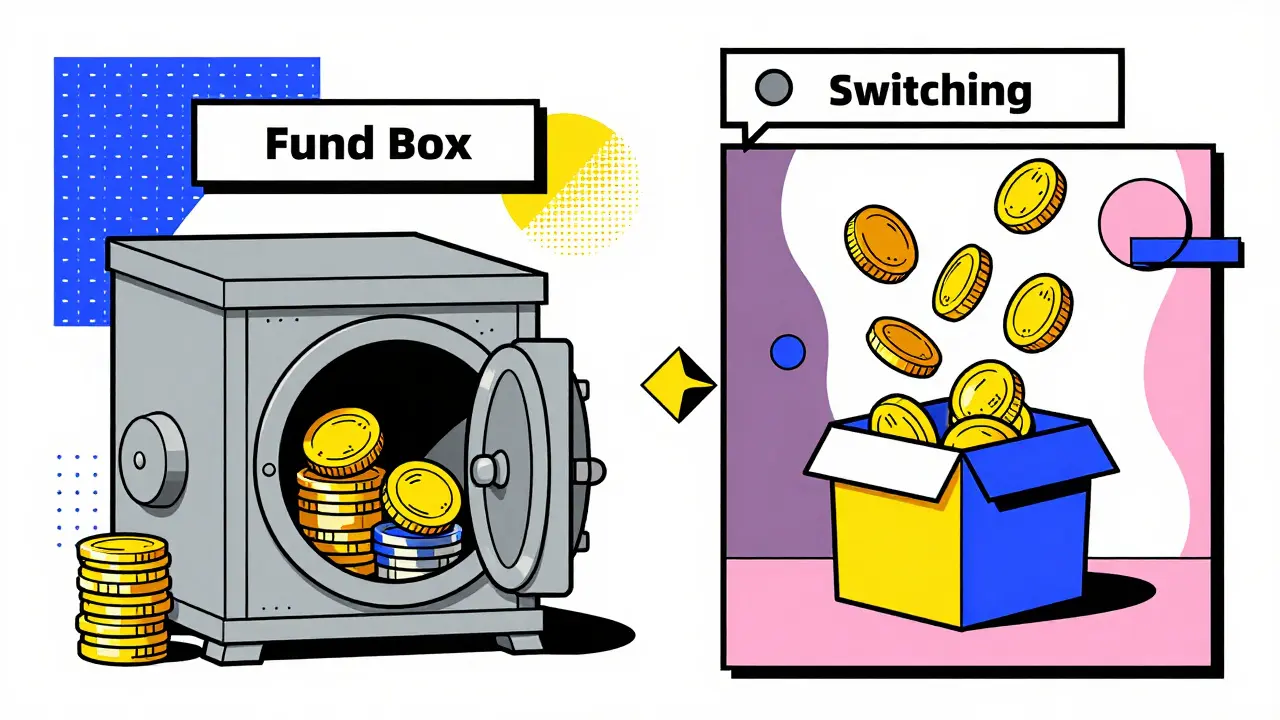
Many investors think switching is a tax-free way to move money. It is not. The Income Tax Department treats a switch as two separate transactions: a redemption from the old scheme and a fresh purchase in the new scheme. Therefore, capital gains tax is calculated at the moment of the switch.
So why would you ever switch?
- Avoiding idle cash: When you redeem, cash sits in your bank account earning minimal interest while you decide what to buy next. Switching keeps your money invested immediately, avoiding the "cash drag" during volatile markets.
- Convenience within the same AMC: If you want to move from an aggressive small-cap fund to a safer large-cap fund within HDFC or SBI Funds, switching is faster and often cheaper than redeeming and re-investing. Some AMCs waive redemption charges for switches.
- Rebalancing: If your equity allocation has grown too large due to market rallies, you might switch a portion to a hybrid or debt fund to maintain your risk profile.
However, be careful. If you switch from an equity fund to a debt fund, the clock resets for the new fund's holding period. More importantly, you still owe taxes on the profit made in the original equity fund. Do not use switching to hide profits from the taxman; they will see it in your Form 26AS and AIS (Annual Information Statement).
When to Choose Systematic Withdrawal Plan (SWP)
SWP is the unsung hero of mutual fund exits. It is particularly useful if you are retiring or if you want to take profits gradually without timing the market perfectly.
Here is how it works: You instruct the AMC to withdraw a fixed amount (say, ₹10,000) every month. The AMC sells enough units to generate that ₹10,000 plus any applicable taxes and charges. The rest of your corpus remains invested and continues to grow.
Why is this better than lump-sum redemption?
- Averages out market volatility: If you redeem everything today and the market crashes tomorrow, you panic. With SWP, you only sell a small portion each month. If the market drops, your subsequent withdrawals buy fewer units, preserving more of your principal for later.
- Tax efficiency: By spreading withdrawals over several years, you may stay within the LTCG exemption limit (₹1.25 lakh for equity) in each financial year, potentially reducing your overall tax burden compared to a single large redemption.
- Discipline: It prevents emotional spending. You know exactly how much cash you will receive, helping you budget better.
SWP is ideal for retirees looking for a steady income stream or investors who want to slowly reduce exposure to equities before a major life event.
Tax Implications: What You Need to Know in 2026
Tax laws in India change frequently. As of July 2026, here is what you need to keep in mind when exiting your mutual funds.
Equity Mutual Funds:
- Short-Term (Held < 1 Year): Gains are taxed at 20% as STCG. No indexation benefit.
- Long-Term (Held ≥ 1 Year): Gains up to ₹1.25 lakh per FY are exempt. Gains above this threshold are taxed at 12.5% as LTCG. No indexation benefit.
Debt Mutual Funds:
- All gains (short-term and long-term) are added to your total income and taxed according to your individual income tax slab rate. The previous rule of 20% with indexation for holdings over 3 years was abolished.
Hybrid/Balanced Funds:
- If the fund invests more than 65% in equity/equity-related instruments, it is treated as an equity fund for tax purposes. Otherwise, it follows debt fund tax rules.
Always check the latest CBDT (Central Board of Direct Taxes) notifications before making large exits. Tax liability is your responsibility, not the AMC's.
Step-by-Step Guide to Exiting Your Fund
Whether you choose redemption, switch, or SWP, the process is largely digital today. Here is how to execute it smoothly.
- Log in to your platform: Access your CAMS/KFintech folio statement or your broker’s app (Zerodha, Groww, ET Money, etc.). Ensure your KYC is updated and your bank account details are current.
- Select the scheme: Navigate to the specific mutual fund scheme you wish to exit. Check the NAV (Net Asset Value) date. Transactions placed before 3 PM IST typically get that day’s NAV.
- Choose the transaction type:
- For Redemption: Select "Redeem" and enter the number of units or the amount you want to withdraw.
- For Switch: Select "Switch," choose the target scheme within the same AMC, and enter the units to move.
- For SWP: Select "Create SWP," enter the withdrawal amount, frequency (monthly/quarterly), and start date.
- Confirm and authorize: Review the details carefully. Most platforms require a password or OTP confirmation. Note that some AMCs charge an exit load if you redeem within a short period (e.g., 1% if redeemed within 1 year). Check the scheme information document (SID) for these fees.
- Track the status: You will receive a confirmation email. Monitor your folio statement to ensure the transaction is processed. For redemptions, wait for the credit in your bank account. For switches, verify the new units are allotted.
Common Pitfalls to Avoid
Exiting a mutual fund seems simple, but small mistakes can lead to big headaches.
Ignoring Exit Loads: Many equity funds charge an exit load if you redeem within 12 months. This fee is deducted from your redemption amount. Always calculate whether the potential gain outweighs the exit load.
Tax Harvesting Errors: Don't assume all gains are taxable. If you have losses in other equity funds, you can offset them against your gains (Set-off and Carry Forward). Consult a CA to optimize this.
Emotional Timing: Trying to "top" the market by redeeming everything because news says it's peaking often leads to regret. Markets are forward-looking. Unless you have a specific financial need, stick to your asset allocation plan.
Forgetting About Debt Fund Tax Changes: Since debt fund gains are now taxed at slab rates, high-income earners should reconsider heavy allocations to debt mutual funds versus fixed deposits or bonds, depending on their tax bracket.
Final Thoughts on Exiting Smartly
Exiting a mutual fund is not a failure; it is a strategic decision. Whether you need cash, want to rebalance, or seek regular income, the method you choose matters. Redemption gives you liquidity, switching offers convenience within the same family, and SWP provides discipline and stability.
Before you act, ask yourself: Do I need the money now? Am I trying to avoid taxes or manage them? Is this decision based on emotion or logic? Write down your reasons. Then, execute the transaction with clarity. Your future self will thank you for keeping your finances organized and tax-efficient.
Is switching between mutual funds tax-free?
No, switching is not tax-free. The Income Tax Department treats a switch as a redemption followed by a fresh purchase. You must pay capital gains tax on the profit realized from the original fund at the time of switching, just as if you had redeemed it for cash.
What is the difference between SWP and STP?
SWP (Systematic Withdrawal Plan) takes money out of your mutual fund investment regularly. STP (Systematic Transfer Plan) moves money from one fund (usually debt) to another (usually equity) in regular installments. SWP is for generating income; STP is for investing systematically.
How long does it take for redemption money to reach my bank account?
For most open-ended equity and hybrid mutual funds, redemption proceeds are credited to your bank account within 2 to 3 working days (T+2 or T+3). Liquid funds may take 1 day. Closed-ended funds or ELSS funds under lock-in periods cannot be redeemed until the maturity or lock-in ends.
Can I switch mutual funds between different AMCs?
No, you cannot directly switch between different Asset Management Companies (AMCs). To move money from HDFC to ICICI Prudential, you must first redeem the units from HDFC, wait for the cash to hit your bank account, and then make a fresh investment in ICICI Prudential.
Do I have to pay tax on SWP withdrawals?
Yes, each SWP withdrawal is treated as a partial redemption. Capital gains tax applies to the profit portion of each withdrawal. However, since withdrawals are spread out, you may stay within annual tax exemption limits (like the ₹1.25 lakh LTCG exemption for equity funds) more effectively than with a lump-sum exit.