
How to Lower Ethereum Gas Fees: EIP-1559, Rollups, and Bundling Guide
 Apr, 12 2026
Ever felt like you're paying more in gas fees than the actual value of the token you're swapping? You aren't alone. For years, the Ethereum network felt like a digital highway where the toll prices changed every second without warning. If you didn't bid high enough, your transaction would just sit there, pending, while you watched the clock tick. But the way we handle these costs has changed significantly. By understanding how the current fee structure works and leveraging secondary layers, you can stop overpaying for your on-chain activity.
The Fast Track to Lower Fees
- Use Layer 2s: The single biggest drop in cost comes from moving off the mainnet to rollups.
- Check the Base Fee: Use a gas tracker to time your transactions when the network is quiet.
- Set Realistic Tips: Use a small priority fee to ensure inclusion without overpaying.
- Bundle Actions: Use smart contracts or platforms that group multiple operations into one transaction.
Understanding the Magic of EIP-1559
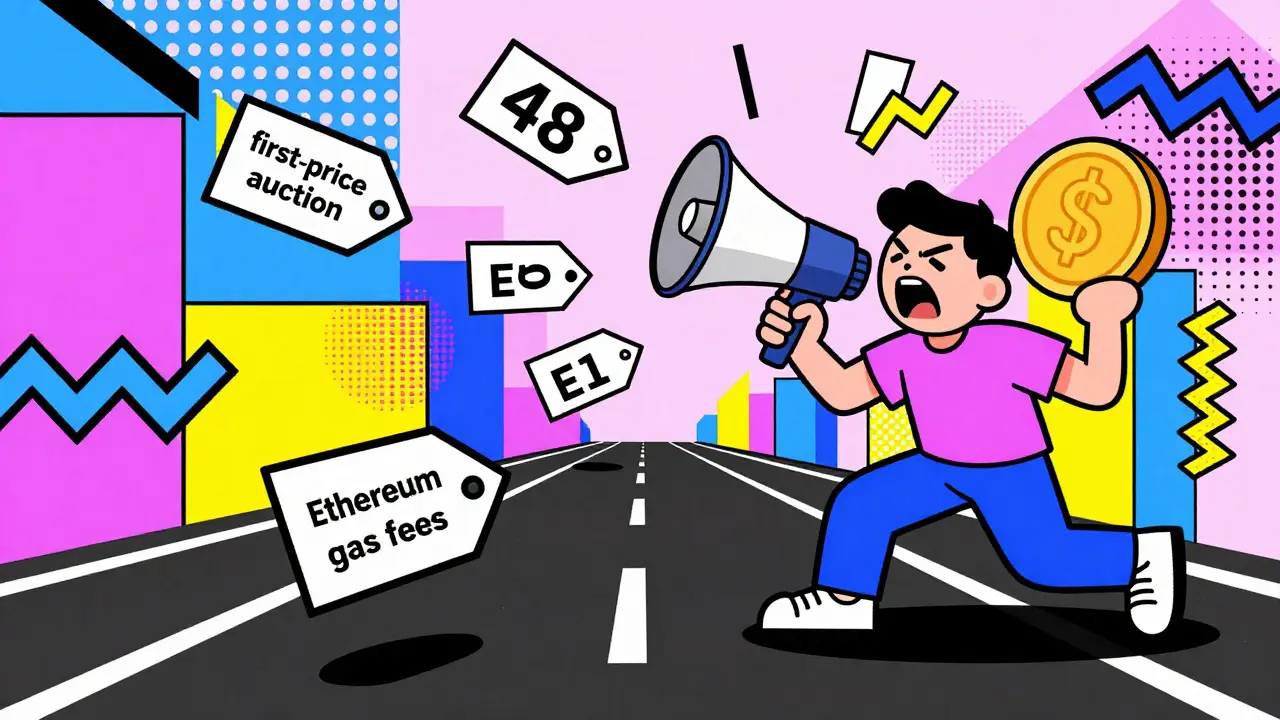
Before 2021, Ethereum used a "first-price auction." It was basically a shouting match: whoever offered the most money to the miners got their transaction processed first. It was chaotic and unpredictable. Then came EIP-1559 is a fundamental upgrade to Ethereum's fee mechanism that replaced the blind auction with a predictable base fee and a tip. This change, introduced during the London hardfork, turned the fee process into something more like a retail price tag rather than a blind bid.
Here is how it actually works in your wallet: there is now a Base Fee, which is the minimum price required to get into the next block. This fee is set by the network itself based on demand. If the network is slammed, the base fee goes up by 12.5%; if it's empty, it drops. The wild part? The base fee isn't given to validators-it's burned, meaning it's removed from the total supply of ETH forever.
To get your transaction through, you provide two other numbers: the Fee Cap (the absolute most you're willing to pay) and the Priority Fee (the "tip" for the validator). If the base fee is 20 gwei and you set a fee cap of 50 gwei and a tip of 2 gwei, you'll only actually pay 22 gwei. You don't lose the extra 28 gwei you were willing to spend; it stays in your wallet.
Scaling Up with Layer 2 Rollups
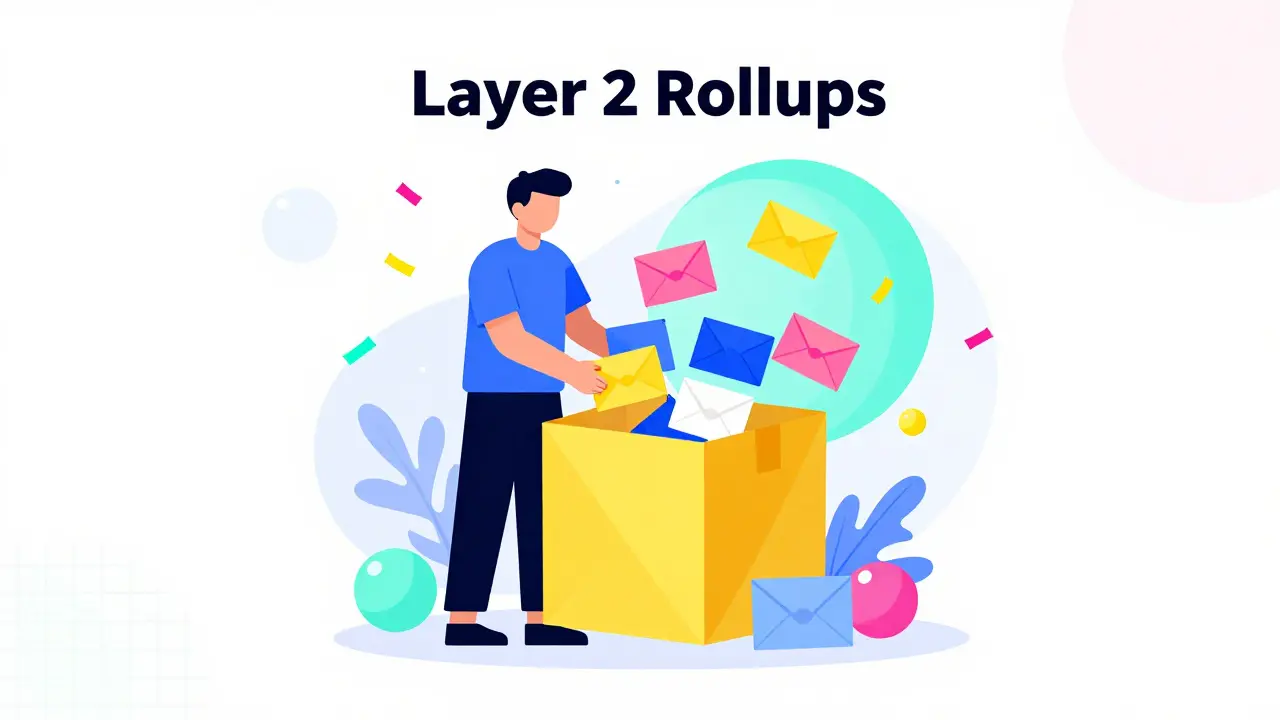
If EIP-1559 made the fees more predictable, Rollups are scaling solutions that execute transactions outside the Ethereum mainnet and then "roll up" the data into a single batch to post back to the main chain the costs. Think of the Ethereum mainnet as a high-priced lawyer who charges by the minute. Instead of every single person in a group paying that lawyer individually, a rollup acts like a coordinator. They gather 1,000 transactions, bundle them into one neat package, and pay the lawyer once to record the final result.
There are two main types you'll encounter. Optimistic Rollups (like Arbitrum or Optimism) assume transactions are valid unless someone proves otherwise. They are great for general-purpose apps but have a delay when withdrawing funds back to the mainnet. On the other hand, ZK-Rollups (Zero-Knowledge Rollups) use complex math to prove validity instantly. They are faster for withdrawals and generally more private, though they were harder to build initially.
| Feature | Ethereum Mainnet (L1) | Rollups (L2) |
|---|---|---|
| Cost | High (Base Fee + Tip) | Very Low (Amortized) |
| Speed | Limited by Block Time | Near-Instant |
| Security | Native L1 Security | Inherits L1 Security |
| Best For | High-Value Settlement | Daily Trading, NFTs, Gaming |
The Art of Transaction Bundling
For the average user, bundling isn't something you do manually in a wallet, but it's something the apps you use do behind the scenes. Instead of sending five separate transactions to approve a token, swap it, and stake it, some modern platforms group these into a single atomic operation. This means you only pay the base transaction fee once, rather than five times.
In the professional space, bundling is closely tied to MEV (Maximal Extractable Value). Searchers and bots use tools like Flashbots to bundle transactions together to guarantee they happen in a specific order, preventing their trades from being "sandwiched" by other bots. While this is advanced stuff, the core idea is the same: grouping actions to increase efficiency and reduce the relative cost per operation.
Practical Tips for Every Day
If you're still using the mainnet, stop guessing your gas. Most modern wallets have a "low, medium, high" setting. Because EIP-1559 makes the base fee predictable, "low" is actually safe now-it just means you're waiting for a slight dip in traffic. If you're not in a rush, setting your priority fee (the tip) to the minimum-around 1 gwei-is usually enough for most validators to pick up your trade.
Another pro move is to watch the 24-hour cycle. Network congestion often spikes during US and European waking hours. If you're in the UK or US, trying your heavy on-chain moves during the late-night or early-morning window can often save you a significant chunk of change on gas.
Which Strategy Should You Use?
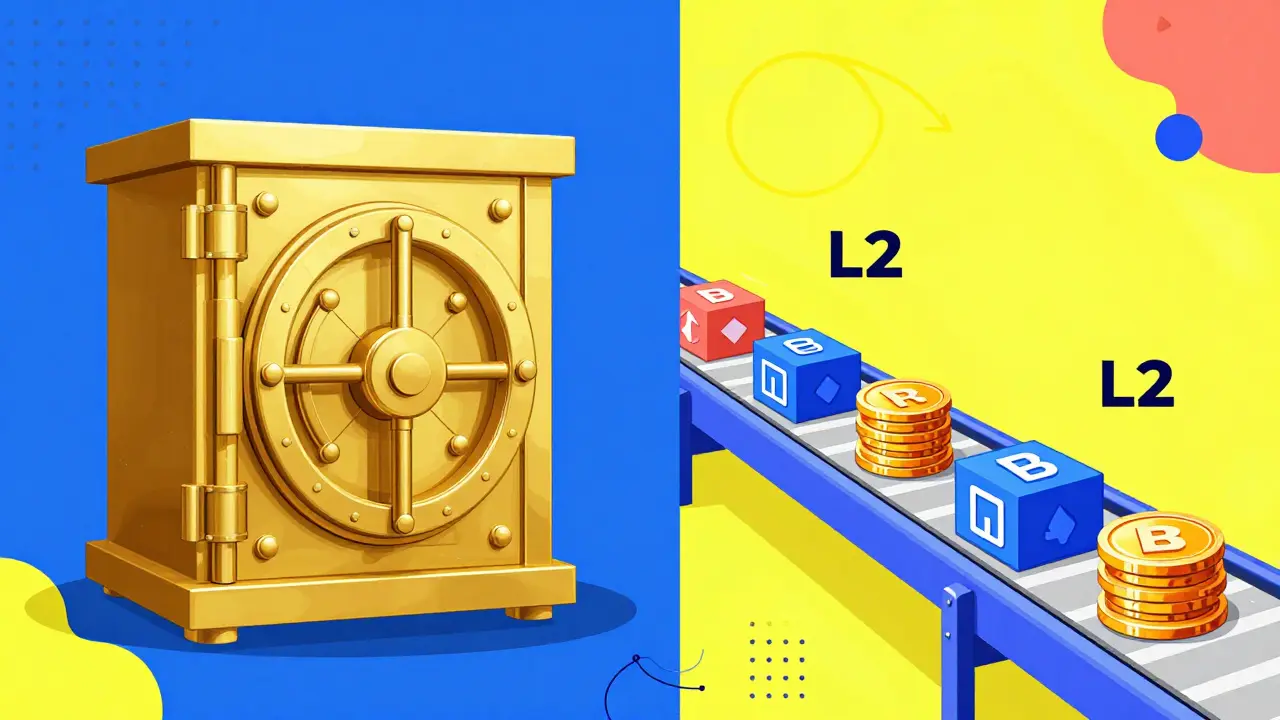
Deciding where to put your assets depends on what you're actually doing. If you're moving $50,000 into cold storage for five years, the high cost of the Ethereum mainnet is a rounding error-stick to L1 for maximum security. But if you're trading a few hundred dollars in NFTs or swapping small amounts of DeFi tokens, the mainnet is a money pit. In those cases, moving your funds to a rollup is the only logical choice.
Why are gas fees still high even with EIP-1559?
EIP-1559 didn't actually lower the cost of gas; it just made the pricing more transparent and predictable. Fees are still driven by demand. When too many people try to use the network at once, the base fee automatically rises to discourage spam and manage the block size.
Do I lose money if I set my Fee Cap too high?
No. The Fee Cap is just a ceiling. You only pay the current Base Fee plus your Priority Fee (tip). If the actual cost is lower than your cap, the remaining ETH stays in your wallet.
What is the difference between an Optimistic Rollup and a ZK-Rollup?
Optimistic Rollups assume transactions are honest and only check them if someone challenges the result, which leads to a waiting period for withdrawals. ZK-Rollups use mathematical proofs (Zero-Knowledge proofs) to verify transactions instantly, allowing for faster exits and higher privacy.
Is bundling safe for beginners?
Yes, as long as you use reputable platforms. When an app bundles transactions, it's usually doing so via a smart contract to save you money. The risk is the same as any other smart contract interaction-you are trusting the code of the platform you're using.
How does burning the base fee help me?
It doesn't lower your immediate fee, but it removes ETH from the supply. This makes ETH potentially more scarce, which can drive up the value of the tokens you hold in the long run.
What to Do Next
If you're tired of the gas battle, start by bridging a small amount of ETH to a Layer 2 like Arbitrum or Optimism. Once you see the difference in cost-often a 90% reduction-you'll never want to do a simple swap on the mainnet again. For those who must stay on L1, install a reliable gas tracker and set your transactions for the "quiet hours" of the global clock.