
How to Plan Down Payment for a Home in India: Savings and Investment Strategy
 Nov, 17 2026
You've found the perfect apartment in Bangalore or a modest house in Pune. The location is right, the price seems fair, but then reality hits: you need to pay 10% to 20% upfront. For many Indian buyers, this down payment is the single biggest financial hurdle, often more difficult to clear than the monthly EMI itself. It’s not just about saving money; it’s about strategic asset allocation while keeping your liquidity intact.
Most people make the mistake of parking their entire savings in a low-interest savings account, losing out on inflation-adjusted returns, or worse, locking everything into illiquid assets that can't be accessed when the builder demands the cheque. This guide breaks down exactly how to structure your finances to hit that target without sacrificing your future security.
The Real Cost of Waiting: Why Timing Matters More Than Price
Let's look at the math. If you are targeting a property worth ₹50 lakhs, a 10% down payment means ₹5 lakhs. Sounds manageable? Now add registration charges, stamp duty (which varies from 4% to 8% depending on the state), brokerage fees, and GST under-construction norms. Your actual cash outflow might jump to ₹6.5-₹7 lakhs. If you delay buying by two years because you're waiting for prices to drop, and they don't-or if interest rates rise-your effective cost increases significantly.
In 2026, with repo rate fluctuations stabilizing, banks are stricter about Loan-to-Value (LTV) ratios. You cannot rely on getting a 90% loan anymore. Most public sector banks cap LTV at 80% for properties above ₹30 lakhs. This means your savings strategy must cover the gap between the bank's limit and the total transaction cost. Ignoring this buffer leads to last-minute borrowing from relatives at high informal interest rates, which kills the wealth-building potential of homeownership.
Step 1: Reverse Engineer Your Target Amount
Don't start saving blindly. Start with the end goal. Work backward from the property price you want. Here is a quick framework to calculate your true requirement:
- Property Base Price: The listed price of the home.
- Statutory Costs: Stamp duty + Registration charges (calculate based on current state rates).
- Taxes & Fees: GST (if under construction), Floor Rise Charges, Club Membership, Parking.
- Interiors Buffer: At least 5% of the property value for basic flooring and painting.
- Emergency Fund: Keep 6 months of EMIs separate; do not use this for the down payment.
For example, if you want a ₹60 lakh flat in Hyderabad, assume 6% stamp duty and registration (₹3.6 lakhs), plus 5% GST and other charges (₹3 lakhs). Your total upfront cash needed isn't just the 10% down payment (₹6 lakhs); it's closer to ₹12-13 lakhs. Knowing this number changes your monthly savings target from "save what I can" to "I need to save ₹X per month."
Step 2: Where to Park Your Money (The Safety vs. Return Trade-off)
This is where most Indians go wrong. They either keep money in idle savings accounts earning 3% or put it all in equity mutual funds expecting 15%. Neither is ideal for a 3-5 year horizon. You need capital preservation with moderate growth.
| Instrument | Risk Profile | Expected Return (2026 Est.) | Liquidity | Best For |
|---|---|---|---|---|
| Liquid Funds | Very Low | 6.5% - 7.2% | T+1 Day | Money needed in < 6 months |
| Short Duration Debt Funds | Low | 7.0% - 8.0% | T+2 Days | Core down payment corpus |
| Fixed Deposits (FDs) | Zero Risk | 6.8% - 7.5% | Penalty on Break | Risk-averse investors |
| Balanced Advantage Funds | Moderate | 8.5% - 10% | T+3 Days | Horizon > 4 years |
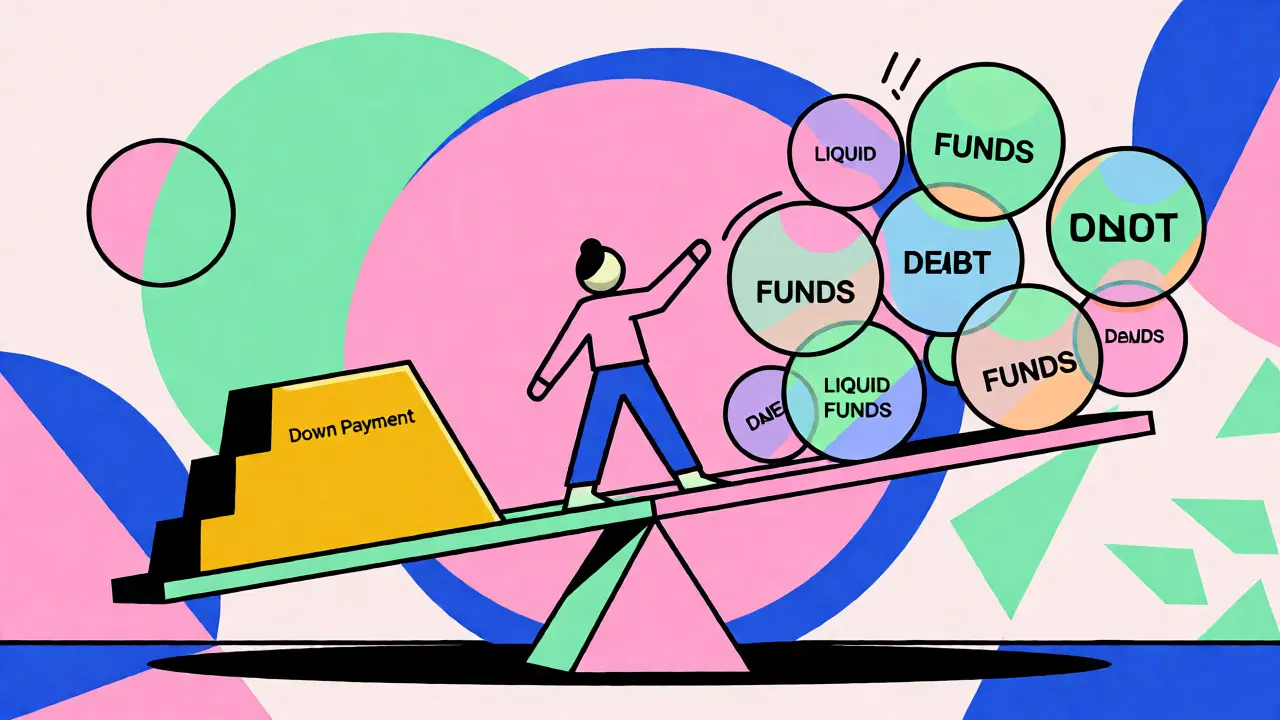
Why avoid pure equity? If the market crashes 20% six months before you plan to buy, your down payment shrinks drastically. Debt instruments like Short Duration Debt Funds offer better post-tax returns than FDs for individuals in the 30% tax bracket, provided you hold them for over a year. However, always keep the final 10% of your target amount in a liquid fund so you can write the cheque immediately when you finalize the deal.
Step 3: Leveraging Government Schemes (NPS and EPF)
India offers unique tools that aren't available in many other countries. If you are salaried, you likely have an Employee Provident Fund (EPF) account. Many people forget that you can withdraw up to 90% of your accumulated EPF balance for the purchase or construction of a first home, subject to certain conditions (like having contributed for at least 5 years). This isn't "new" money, but it frees up your salary income for other investments.
Then there is the National Pension System (NPS). Under Section 80CCD(1B), you get an additional ₹50,000 tax deduction. But beyond tax benefits, NPS allows premature withdrawal for specific purposes. While NPS is primarily for retirement, recent regulatory updates allow partial withdrawals for critical needs, though home purchase rules are stricter than EPF. Check with your fund manager if your specific scheme permits a withdrawal for property acquisition without heavy penalties. Often, using NPS for tax efficiency and EPF for direct funding is a powerful combo.
Step 4: Managing the Loan Eligibility Trap
Saving the down payment is only half the battle. You also need to qualify for the mortgage. Banks in India typically use the FOIR (Fixed Obligation to Income Ratio) method. They usually won't let your existing EMIs plus the new home loan EMI exceed 50-60% of your net monthly income.
Here is a pro tip: Clear any consumer durable loans, personal loans, or credit card debt before applying for a home loan. A small personal loan of ₹2 lakhs might seem insignificant, but it reduces your eligible home loan amount by nearly ₹15-20 lakhs due to the EMI calculation. If you have excess cash after building your down payment corpus, consider pre-paying these small debts instead of investing them. The return on eliminating high-interest consumer debt (often 14-18%) beats almost any safe investment yield.
Common Pitfalls to Avoid
First, don't ignore the "hidden" costs. Builders often quote a base price, but you will pay for common area maintenance deposits, floor rise charges, and car parking separately. Budget an extra 5-7% for these surprises.
Second, don't chase the lowest interest rate blindly. A private bank might offer 8.4% versus a public bank's 8.6%, but the processing fees and hidden charges might negate the difference. Also, check the reset clause. In a floating rate regime, ensure the spread over the Repo Rate doesn't increase arbitrarily.
Third, avoid buying solely for tax benefits. The deductions under Section 24(b) (interest) and 80C (principal) are capped. If you stretch your budget too thin just to claim higher deductions, you lose liquidity. Financial flexibility is worth more than a marginal tax save in the early years of a loan.
Next Steps: Your Action Plan
Ready to start? Here is your checklist for the next 30 days:
- Audit your current savings: List every rupee you have in banks, FDs, and mutual funds.
- Calculate your exact target: Use the formula in Step 1 to find your true upfront cost.
- Rebalance your portfolio: Move short-term goals (under 3 years) out of equity and into debt funds or FDs.
- Check your CIBIL score: Ensure it is above 750. Dispute any errors now.
- Set up an auto-debit: Automate transfers to a dedicated "Home Fund" account on payday. Treat it as a non-negotiable expense.
Buying a home in India is a marathon, not a sprint. By separating your down payment strategy from your long-term wealth creation, you protect yourself from market volatility while ensuring you have the cash ready when the right property appears.
Can I use my PF balance for the down payment?
Yes, you can withdraw up to 90% of your accumulated EPF balance for the purchase or construction of a first home. However, you must have completed 5 years of service, and the withdrawal may attract tax if the service period is less than 5 years. It is advisable to take a loan against PF rather than a full withdrawal if possible, to keep the compounding benefits intact.
What is the minimum down payment required in India?
For properties valued up to ₹30 lakhs, RBI guidelines allow an LTV of up to 90%, meaning a 10% down payment. For properties between ₹30 lakhs and ₹75 lakhs, the maximum LTV is 80%, requiring a 20% down payment. For properties above ₹75 lakhs, the LTV drops to 75%, requiring a 25% down payment. Note that banks may have stricter internal policies.
Should I invest in equity for my down payment?
Generally, no. Equity markets are volatile in the short term. If you need the money in less than 3-5 years, stick to debt instruments like Liquid Funds, Short Duration Debt Funds, or Fixed Deposits. Equity should be reserved for long-term wealth creation (7+ years), not for imminent large expenses like a home purchase.
Are registration charges included in the down payment?
No, registration and stamp duty are separate from the down payment paid to the builder or seller. These are statutory payments made to the government at the time of property transfer. You must arrange these funds separately, as they cannot be financed through a standard home loan in most cases.
How does GST affect under-construction properties?
Under-construction properties attract GST (currently 5% for affordable housing and 12% for others, without input tax credit). This cost is usually added to the agreement value and paid in installments along with the construction-linked plan. Ensure you factor this into your cash flow planning, as it adds significantly to the upfront burden compared to ready-to-move-in homes.