
How to Screen Real Estate Developers in India: Track Record, Deliveries, and Financial Health
 Jul, 25 2026
You’ve found the perfect plot of land or a promising project brochure. The location is prime, the amenities look fantastic, and the price seems just right. But before you hand over your life savings, there is one critical question that can make or break your investment: Who is actually building this? In the Indian real estate market, the builder is everything. A strong developer turns a piece of land into a valuable asset; a weak one turns it into a legal nightmare.
Investing in real estate in India is not like buying stocks where you can exit with a click. It is a long-term commitment involving massive capital. If the developer runs out of money, faces litigation, or delays delivery by years, your money gets stuck. This guide breaks down exactly how to screen developers in India, focusing on their track record, delivery history, and financial stability.
The Regulatory Baseline: RERA Compliance
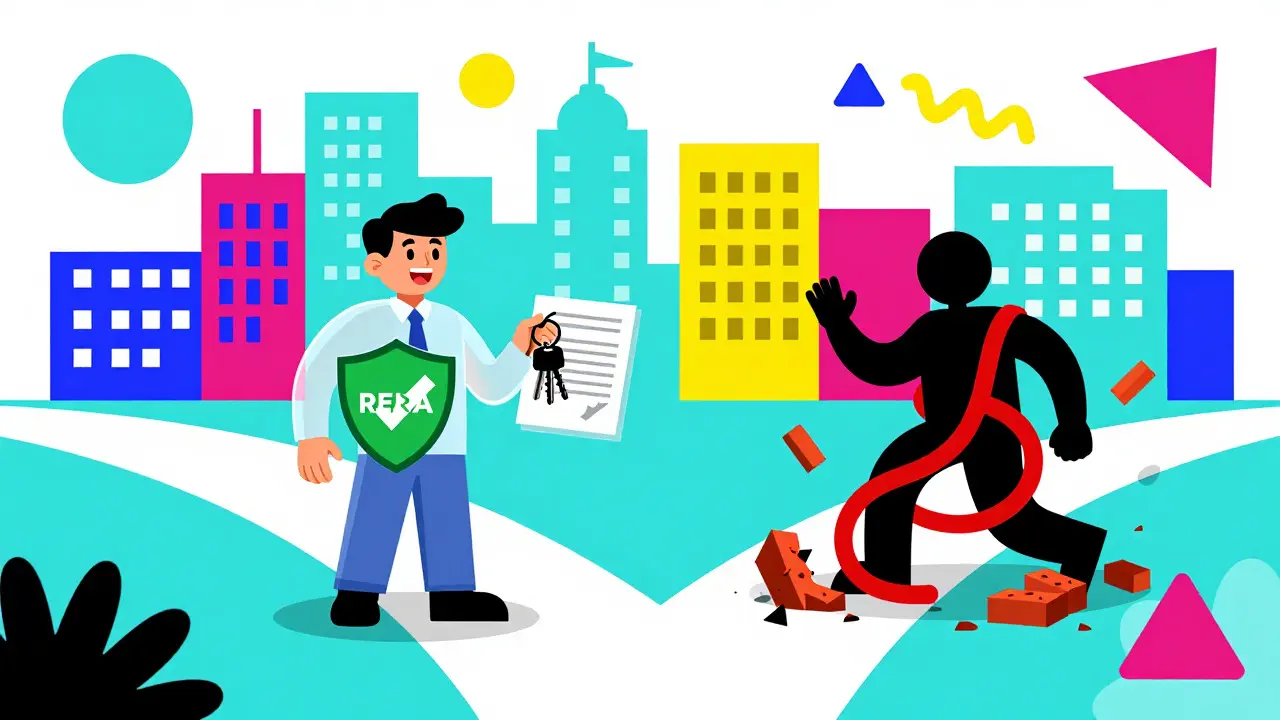
Before digging into deep financials, start with the most basic filter: RERA (Real Estate Regulatory Authority). Launched in 2016, RERA was designed to bring transparency to the housing sector. If a developer is not registered under RERA for the specific project you are looking at, walk away immediately. There are very few legitimate exceptions, and they are usually for small residential structures (less than 500 sq meters or fewer than 8 apartments), which are rarely worth institutional or serious individual investment anyway.
Being registered is the bare minimum. You need to dig deeper. Go to the state-specific RERA website (like MahaRERA for Maharashtra or DCRERA for Delhi). Look up the project. Check if the developer has uploaded all mandatory documents: approved plans, title deeds, and bank statements. More importantly, check for complaints. Does the developer have a history of pending disputes? A clean RERA profile is your first green flag.
Analyzing the Track Record: Past Projects and Reputation
A developer’s past behavior is the strongest predictor of future performance. You need to verify their execution capability. Start by listing the last three to five projects they have completed. Do not rely on the glossy brochures. Visit these sites physically. Talk to the residents. Ask them about construction quality, maintenance issues, and whether the possession date matched the promised date.
- Quality Check: Look for water seepage, cracking walls, or poor finishing in older buildings. These are signs of cost-cutting during construction.
- Maintenance Management: How well is the society maintained? Is the common area clean? Are lifts working? Poor maintenance often reflects poor management practices from the developer side.
- Legal Cleanliness: Use platforms like Tatva or similar property tech firms to check if the land titles are clear. Litigation-free land is non-negotiable.
If a developer has a pattern of delivering late, assume they will deliver late again. In India, a delay of 1-2 years is unfortunately common, but delays exceeding 3-4 years indicate severe structural or financial problems.
Delivery History: On-Time vs. Delayed Possession
Time is money, especially in real estate. When screening developers, create a simple spreadsheet. List their recent projects alongside the "Promised Possession Date" and the "Actual Possession Date." Calculate the variance.
| Project Name | Launch Year | Promised Delivery | Actual Delivery | Delay (Months) | Reason Cited |
|---|---|---|---|---|---|
| Sunrise Heights | 2019 | Dec 2022 | Jun 2023 | 6 | Supply Chain Issues |
| Green Valley | 2020 | Aug 2024 | Feb 2026 | 18 | Funding Gap |
| Ocean View | 2018 | Mar 2021 | Mar 2021 | 0 | N/A |
Look for patterns. Was the delay due to external factors like the pandemic or government policy changes? Or was it due to internal mismanagement? A developer who consistently cites "funding gaps" or "labor strikes" without resolution is a red flag. They likely lack the operational discipline to manage cash flow effectively.

Financial Health: Debt, Liquidity, and Promoter Skin in the Game
This is where most buyers fail. They ignore the balance sheet. For listed developers, this data is public. For unlisted ones, you need to use proxies and third-party reports. Focus on three key metrics:
- Debt-to-Equity Ratio: A ratio above 2.0 is risky. It means the developer is heavily leveraged. In a high-interest-rate environment, servicing this debt becomes difficult, leading to stalled projects.
- Liquidity Position: Do they have enough cash to cover short-term liabilities? Check their current ratio (Current Assets / Current Liabilities). A ratio below 1.0 suggests they might struggle to pay vendors and contractors on time.
- Promoter Holding: Do the founders own a significant stake in the company? High promoter holding indicates confidence in the business. If promoters are selling off their shares aggressively, be cautious.
Use credit rating agencies like CRISIL, ICRA, or CARE Ratings. These agencies publish annual reports on major Indian developers. Look for ratings like 'AA' or 'A'. Avoid developers with 'BBB' or lower unless you understand the specific risk premium involved. These reports provide an independent view of the developer's ability to repay debts and complete projects.
Land Bank and Pipeline Quality
A healthy developer needs a pipeline of future projects. Check their land bank. Are they acquiring land in emerging corridors with good infrastructure potential? Or are they sitting on old inventory in saturated markets? Acquiring land at reasonable prices is a sign of smart negotiation and market timing. Overpaying for land erodes margins and increases risk.
Also, assess the diversity of their portfolio. A developer relying solely on luxury homes in one city is vulnerable to market downturns in that segment. Diversified players with exposure to mid-income housing, commercial spaces, and different geographic regions tend to be more resilient.
Red Flags to Watch Out For
During your screening process, keep an eye out for these warning signs:
- Frequent Change of Architects or Contractors: This suggests dissatisfaction with quality or payment disputes.
- Aggressive Marketing with Unrealistic Promises: If the sales pitch sounds too good to be true, it probably is.
- Lack of Transparency: Hesitation to share title documents, RERA registration details, or financial summaries.
- Negative Social Media Sentiment: While online reviews can be manipulated, a consistent wave of angry posts from existing customers is a strong signal.
Conclusion: Building Your Due Diligence Checklist
Screening developers in India requires patience and rigor. It is not a quick task. Create a checklist based on the points above: RERA status, physical verification of past projects, analysis of delivery timelines, review of financial health via credit ratings, and assessment of land bank quality. Spend as much time researching the builder as you do choosing the apartment. Your peace of mind depends on it.
How can I check the financial health of an unlisted real estate developer in India?
Since unlisted companies do not publish audited financials publicly, rely on credit rating reports from agencies like CRISIL, ICRA, or CARE. These agencies assess the developer's repayment capacity and assign a rating. Additionally, talk to their banks and suppliers informally to gauge liquidity. Look for consistency in project completions as a proxy for financial stability.
What does a 'AAA' credit rating mean for a real estate developer?
A 'AAA' rating indicates the highest degree of safety regarding timely service of financial commitments. It means the developer has strong financial resources, low leverage, and a robust business model. Investing in projects by AAA-rated developers carries minimal default risk.
Is RERA registration enough to trust a developer?
No, RERA registration is only the baseline requirement. It ensures legal compliance but does not guarantee financial health or construction quality. You must still conduct due diligence on their track record, delivery history, and financial stability to make an informed decision.
How important is the promoter's background in real estate investing?
Very important. Promoters with a long history in real estate, construction, or related industries bring experience and networks that help navigate challenges. Check their professional history and reputation in the industry. First-time developers may lack the expertise to handle complex regulatory and construction hurdles.
What are the signs of a stalled project before it happens?
Signs include delayed payments to vendors, frequent change of laborers, lack of visible construction progress over several months, negative news about funding issues, and poor communication from the sales team. Monitoring construction site activity regularly can help detect early warnings.