
Lightning Network Basics: How Bitcoin Layer 2 Enables Fast, Low-Cost Crypto Payments
 Oct, 22 2026
Imagine buying a coffee with Bitcoin. On the main blockchain, you’d wait ten minutes for confirmation and pay a fee that might cost more than the latte itself. That’s not exactly how we want to spend our money. Enter the Lightning Network, a second-layer solution designed to fix this exact problem. It lets you send Bitcoin instantly and for fractions of a cent, while still keeping the security of the original blockchain. If you’ve ever wondered how people actually use Bitcoin for daily purchases without going broke on fees or waiting around, this is the tech making it happen.
What Exactly Is the Lightning Network?
The Lightning Network isn’t a new cryptocurrency; it’s a protocol built on top of Bitcoin. Think of it as an express lane added to a busy highway. The main Bitcoin blockchain (Layer 1) handles heavy traffic slowly but securely. The Lightning Network (Layer 2) handles smaller, frequent transactions off-chain, meaning they don’t clutter up the main road until they’re finished. This architecture allows for near-instant settlements and massive scalability, theoretically supporting millions of transactions per second compared to Bitcoin’s base layer limit of about seven.
Why does this matter? Because Bitcoin was designed to be digital gold-secure, immutable, and decentralized-not necessarily a high-speed payment processor. By moving most transactions off the main chain, Lightning preserves Bitcoin’s core values while unlocking its potential as everyday cash. You keep control of your keys, and the network remains trustless, but you get the speed of a credit card swipe at the price of a digital penny.
How Payment Channels Work
The magic behind Lightning lies in payment channels. Here’s the simple version: two people open a channel by locking some Bitcoin into a shared address on the main blockchain. This opening transaction is the only one recorded on-chain initially. Once the channel is open, Alice and Bob can trade back and forth as many times as they like, updating their balances privately between themselves. No blockchain fees, no waiting for blocks.
- Open: Two parties deposit funds into a 2-of-2 multi-signature address on the Bitcoin blockchain.
- Transact: They exchange signed updates off-chain, adjusting who owns what share of the locked funds.
- Close: When they’re done, they broadcast the final balance to the blockchain, distributing the funds accordingly.
This model turns the blockchain into a settlement layer rather than a transaction layer. Instead of recording every single coffee purchase, the network records just the start and end points of these private ledgers. This batching effect is why fees drop so dramatically-you’re paying for the setup and teardown, not every intermediate step.
Speed and Cost: The Real World Impact
Let’s talk numbers, because they’re stark. A standard on-chain Bitcoin transaction takes about 10 minutes to confirm and can cost anywhere from $1 to over $50 depending on network congestion. In contrast, a Lightning transaction settles in milliseconds and typically costs less than a cent. For micropayments-like tipping a content creator $0.05 or buying a news article-this difference is the difference between viable and impossible.
| Feature | Bitcoin Layer 1 | Lightning Network |
|---|---|---|
| Settlement Time | 10-60 minutes | Under 1 second |
| Average Fee | $1 - $50+ | Fractions of a cent |
| Throughput | ~7 TPS | Millions TPS (theoretical) |
| Best Use Case | Large transfers, storage | Micropayments, daily purchases |
This speed enables real-time cross-border transfers. Sending money to family abroad used to involve wire fees and days of waiting. With Lightning, the recipient gets the funds almost instantly, regardless of geography. It’s not just faster; it’s fundamentally cheaper for small amounts.

Liquidity and Routing: The Hidden Mechanics
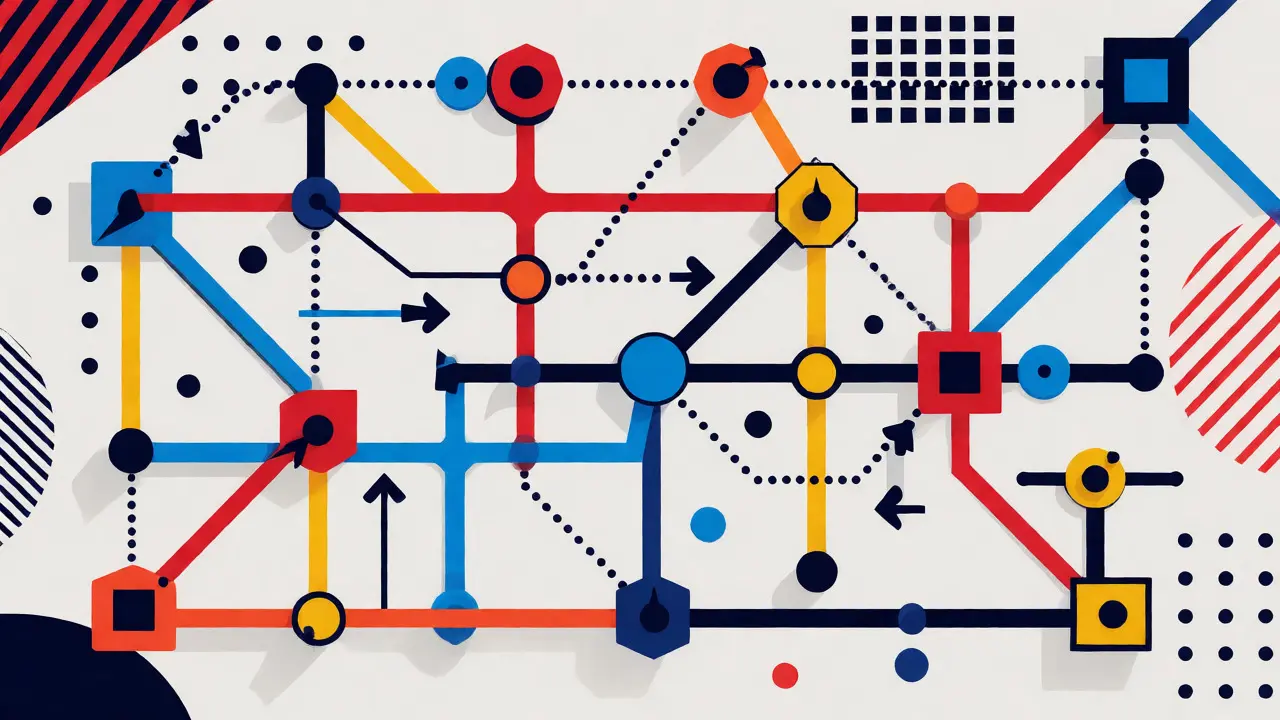
Here’s where it gets slightly tricky but fascinating. You don’t need a direct channel with everyone you pay. If Alice wants to pay Carol, but they don’t have a channel, the network routes the payment through intermediaries like Bob, who has channels with both. This is called multi-hop routing. Each intermediary charges a tiny fee for helping move the value along.
However, this requires liquidity. A channel must have enough funds on the sender’s side to route a payment. If Alice tries to send $100 but her channel with Bob only holds $50, the payment fails unless rebalanced. As of early 2026, the network hosts over 60,000 public channels with roughly 5,000 BTC in visible capacity. While growing, managing liquidity remains a practical hurdle for users who want seamless experiences.
Security: Trustless and Decentralized
Some worry that moving off-chain compromises security. It doesn’t. Lightning inherits Bitcoin’s security guarantees. If a partner tries to cheat by broadcasting an old state of the channel, you can prove them wrong using the latest signed update. Watchtowers-third-party services that monitor channels-can even do this for you if you go offline. Your funds remain yours, protected by cryptographic proofs enforced by the Bitcoin blockchain.
You retain self-custody. Unlike centralized exchanges where you hold an IOU, Lightning keeps you in control of your private keys. The decentralization ethos stays intact; there’s no central authority approving your transactions. It’s peer-to-peer, just faster.
When to Use Lightning (And When Not To)
Lightning shines for frequent, low-value interactions. Buying coffee, streaming subscriptions, or paying for online games are perfect fits. It’s also great for merchants who want to accept Bitcoin without worrying about volatile price swings during confirmation times.
But it’s not always the best tool. For large transfers-say, moving $10,000 worth of Bitcoin to cold storage-on-chain transactions might still be preferable due to simplicity and established infrastructure. Also, both parties generally need to be online to transact directly, though watchtowers mitigate this. If you need absolute offline capability or are moving massive sums rarely, stick to Layer 1.
Getting Started with Lightning
Using Lightning today is easier than ever. Most major wallets now support it natively. Look for apps that offer "non-custodial" Lightning wallets, ensuring you hold your own keys. Start small: open a channel with a service provider or a friend, send a few cents, and see how instant it feels. Rebalancing tools help manage channel capacity, preventing stuck funds. As adoption grows, merchant acceptance expands, making Lightning increasingly useful for daily life.
Is the Lightning Network safe?
Yes. Lightning uses smart contracts and cryptographic proofs secured by the Bitcoin blockchain. If a counterparty acts dishonestly, you can penalize them on-chain. Your funds remain under your control via private keys.
Do I need to buy Lightning coins?
No. There is no separate "Lightning coin." You use regular Bitcoin. The Lightning Network is a protocol for transferring Bitcoin faster and cheaper, not a different currency.
What happens if my internet goes down?
You can’t receive new payments while offline, but existing channels remain secure. Services called "watchtowers" can monitor your channels for you, ensuring you don’t lose funds if someone tries to close a channel unfairly while you’re away.
Are Lightning fees really free?
Not entirely. Opening and closing channels costs on-chain fees. Inside channels, routing fees are paid to intermediaries, but they are extremely low-often fractions of a cent. For most users, sending small amounts costs virtually nothing.
Can I send large amounts on Lightning?
Yes, but it depends on channel liquidity. Large transfers require sufficient funds in the routing path. For very large sums, users often prefer on-chain transactions to avoid liquidity constraints and routing complexities.