
Loss Aversion in Trading: Why Losing Hurts Twice as Much
 Oct, 26 2026
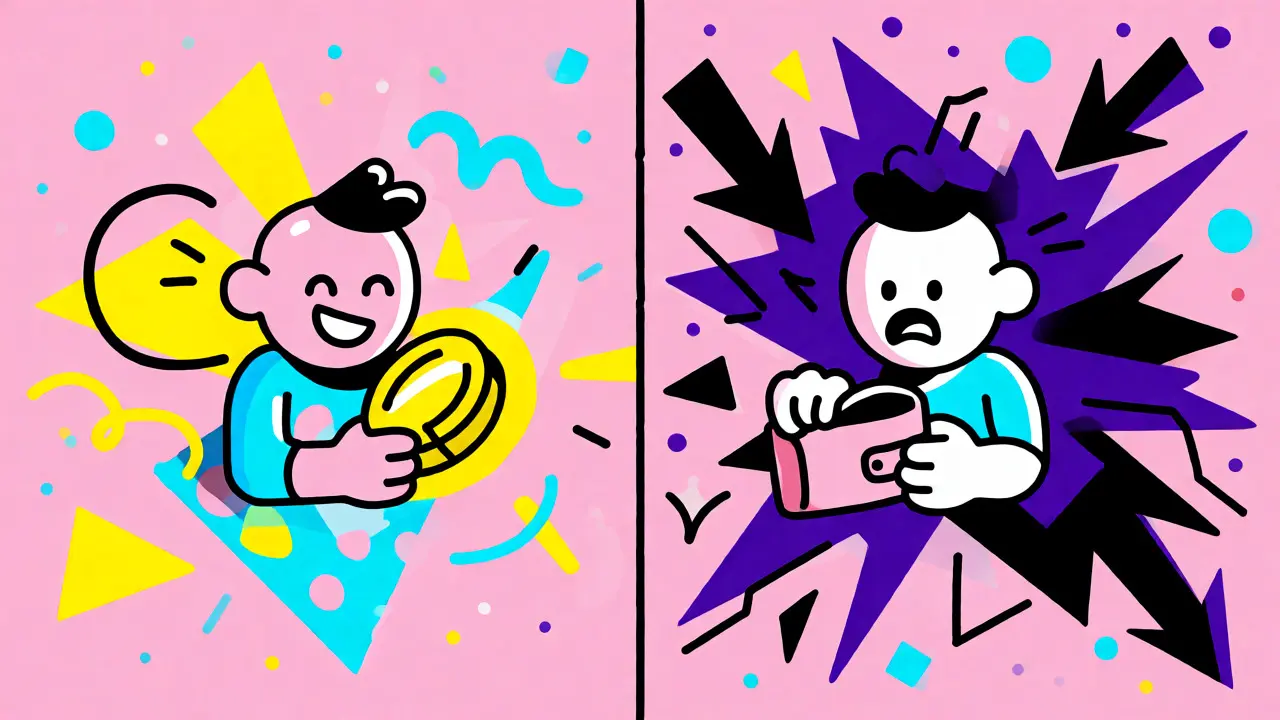
Imagine you find a crisp $100 bill on the sidewalk. Your heart skips a beat, you smile, and maybe you buy yourself a nice dinner. Now imagine you reach into your pocket, realize your wallet is gone, and discover you’ve lost exactly that same $100. The gut-wrenching panic, the anger, the replay of every moment leading up to the loss-does it feel like just the opposite of finding money? If you’re like most humans, the pain of losing that $100 hits about twice as hard as the joy of finding it. This isn’t just drama; it’s a fundamental wiring issue called Loss Aversion. It’s the invisible hand guiding your trades, often steering you straight into financial cliffs while you think you’re playing it safe.
This bias explains why traders hold onto losing stocks for months, praying they’ll bounce back, while selling winning positions after a tiny profit to "lock it in." You’re not bad at math. You’re fighting millions of years of evolution that prioritized survival over profit. Understanding this mechanism is the first step to stopping your brain from sabotaging your portfolio.
The Math Doesn't Add Up (But Your Brain Does)
Standard economic theory assumes we are rational actors who weigh gains and losses equally. If I offer you a coin flip where heads wins $100 and tails loses $100, a rational person should take the bet because the expected value is zero, but the upside feels exciting. But ask ten people, and eight will refuse. Why? Because the psychological weight of losing $100 is heavier than the pleasure of gaining $100.
Daniel Kahneman and Amos Tversky formalized this in their 1979 work on Prospect Theory. They discovered that people evaluate potential outcomes relative to a reference point (usually what they currently have), not in absolute terms. The curve of this evaluation is steeper for losses than for gains. In simple terms, a loss is felt roughly 2 to 2.5 times more intensely than an equivalent gain. So, if you lose $1,000 in the market, you need to gain $2,000 or even $2,500 to feel the same level of happiness you had before the loss. This asymmetry creates a massive hurdle for recovery.
| Financial Event | Rational Value | Perceived Emotional Impact |
|---|---|---|
| Finding $100 | +$100 | +1 Unit of Joy |
| Losing $100 | -$100 | -2.5 Units of Pain |
| Gaining $250 | +$250 | ~+2.5 Units of Joy (Offsetting Loss) |
Why Your Ancestors Made You Bad at Trading
You might wonder why our brains didn't evolve to be better at managing risk. The answer lies in the harsh realities of the prehistoric world. For our ancestors, operating close to the edge of survival meant that losing a day’s food could result in death. Gaining an extra day’s food, however, rarely extended life unless it could be stored effectively. The stakes were asymmetric: one side was fatal, the other was merely comfortable.
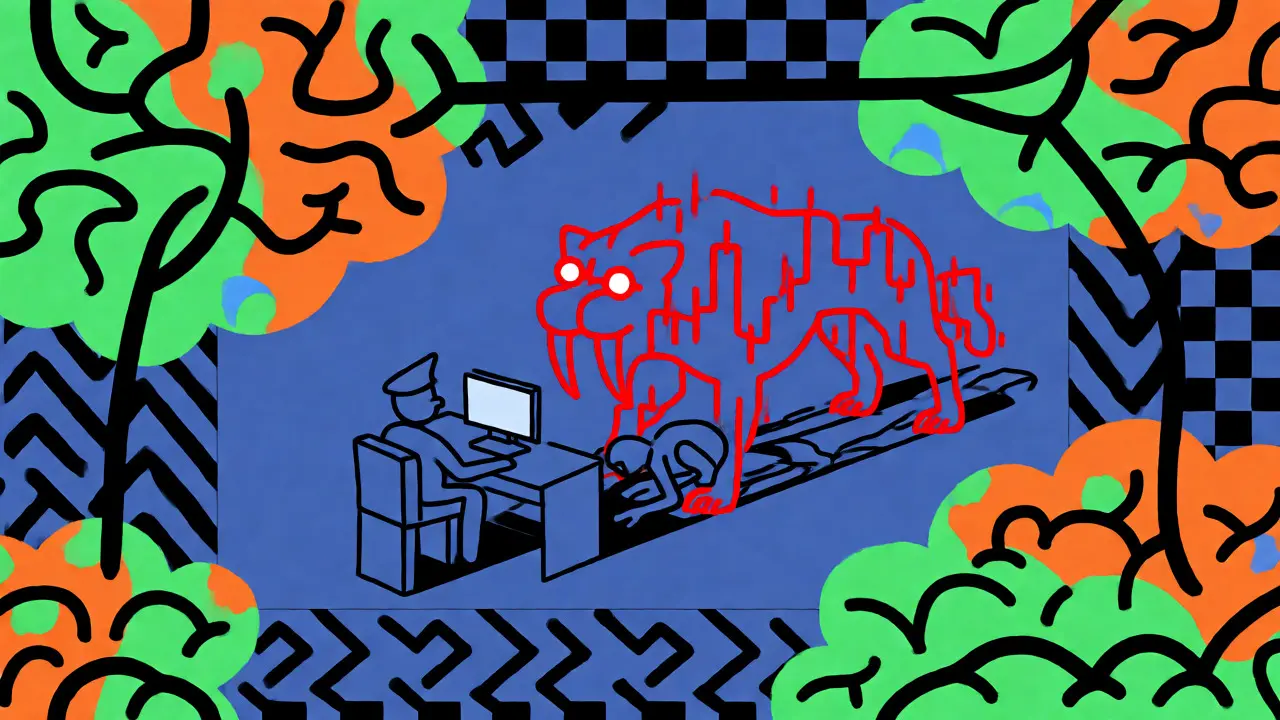
Evolution favored individuals who treated threats as more urgent than opportunities. Those who ignored a potential predator to chase a shiny object died out. Those who flinched at shadows survived to pass on their genes. Today, you aren’t dodging lions, but your amygdala-the brain’s fear center-still reacts to a red candle on a chart as if it’s a saber-toothed tiger. This Evolutionary Pressure created a cognitive shortcut: avoid loss at all costs, even if it means missing out on significant gains.
The Neurobiology of Panic Selling
This isn't just a metaphor. When you stare at a screen watching your equity drop, specific parts of your brain light up in ways that defy logic. Neuroimaging studies show that Loss Aversion triggers increased activity in the striatum and the amygdala. These regions are deeply involved in processing reward and fear. Interestingly, physiological markers like pupil dilation and heart rate spike significantly more when you lose money compared to when you win the same amount.
Even when no decision is required, your body reacts. Midfrontal cortical networks activate within 200 to 400 milliseconds of seeing a loss. This rapid response suggests that loss aversion isn't a calculated choice; it's a reflex. It’s baked into your limbic system. When you try to use pure logic to override this, you’re essentially trying to talk down a hijacked nervous system. This explains why "just stick to the plan" is so hard to do during a crash. Your biology is screaming at you to run.
Myopic Loss Aversion: The Day-Trader's Trap
In the trading world, this bias gets a specific name: Myopic Loss Aversion (MLA). MLA occurs when investors check their portfolios too frequently. By looking at daily fluctuations, you expose yourself to short-term noise. Since losses hurt more than gains please, frequent checking amplifies the pain of volatility without providing enough time for the long-term upward trend of markets to offset those dips.
Benartzi and Thaler, researchers who coined the term, showed that investors who checked their accounts daily perceived their investments as much riskier than those who checked annually. The solution? Stop looking. If you trade less frequently, you reduce the number of times you trigger the loss-aversion pain response. This doesn't mean ignoring your investments entirely, but it does mean resisting the urge to refresh the ticker every five minutes. Distance gives you perspective; frequency gives you anxiety.
Framing: How Marketers Hack Your Fear
Because we hate losing, how information is presented changes our decisions entirely. This is known as the Framing Effect. Consider two scenarios:
- Scenario A: You can save 9 out of 10 lives.
- Scenario B: You can lose 1 out of 10 lives.
Mathematically, these are identical. Yet, most people prefer Scenario A because it frames the outcome as a gain (saving lives). When framed as a loss, people become risk-seeking to avoid the loss, or risk-averse depending on the context. Traders fall for this constantly. A broker saying "You're already in profit, let's secure it" exploits your desire to avoid turning a gain into a loss. A headline saying "Market Crash!" triggers panic selling, whereas "Market Correction" might encourage buying the dip. Recognizing the frame helps you strip away the emotional packaging and see the raw data.
Practical Strategies to Outsmart Your Brain
You can’t delete the code, but you can patch it. Here is how to manage loss aversion in your trading routine:
- Automate Your Stops: Decide your exit price before you enter the trade. Let the software execute the stop-loss. This removes the emotional decision-making process from the heat of the moment.
- Think in Percentages, Not Dollars: Losing $500 on a $10,000 account feels different than losing $500 on a $1,000 account. Focus on percentage drawdowns to keep the pain proportional to your capital.
- Reframe Losses as Business Costs: Treat losses like inventory shrinkage in a retail store. It’s not a personal failure; it’s the cost of doing business. Accepting this mentally reduces the sting.
- Limit Portfolio Checks: Set a schedule. Check weekly or monthly, not daily. Reduce the frequency of pain signals sent to your brain.
- Visualize the Win Rate: Remind yourself that a strategy with a 40% win rate can still be profitable if winners are larger than losers. One loss doesn't define the system.
Related Concepts That Feed the Bias
Loss aversion doesn't operate in a vacuum. It teams up with other biases to mess with your head. The Endowment Effect makes you value things more simply because you own them. This is why you refuse to sell a stock you bought at a high price, thinking it "should" be worth more, despite market evidence to the contrary.
Similarly, the Status Quo Bias makes you prefer things to stay the same. Changing a losing position feels like admitting defeat, so you do nothing. Doing nothing feels safer than making a move that might lock in a loss. Combining these three biases creates a perfect storm for holding dead-weight assets forever.
Is loss aversion always bad for trading?
Not necessarily. It keeps you cautious and prevents reckless gambling. However, when unchecked, it causes excessive risk-aversion, leading to missed opportunities and poor exit strategies. The goal is balance, not elimination.
Can professional traders overcome loss aversion?
Studies suggest professionals experience it too, but training and experience modify its intensity. They develop systems and rules that bypass the emotional reaction, effectively automating the response to loss.
How is loss aversion different from risk aversion?
Risk aversion is a preference for certainty over uncertainty, even if the uncertain option has a higher expected value. Loss aversion is specifically about the disproportionate pain of losing versus the pleasure of gaining. You can be risk-neutral but still loss-averse.
Does checking my account less really help?
Yes. Research on Myopic Loss Aversion shows that frequent monitoring increases the perception of risk and the emotional impact of short-term volatility, leading to suboptimal investment decisions.
What is the ratio of pain to pleasure in loss aversion?
While it varies by individual, the general consensus in behavioral economics, based on Kahneman and Tversky’s work, is that losses loom larger than gains by a factor of approximately 2 to 2.5.