
News and Social Media Diet: Avoiding Emotional Whiplash in Trading
 Jul, 6 2026
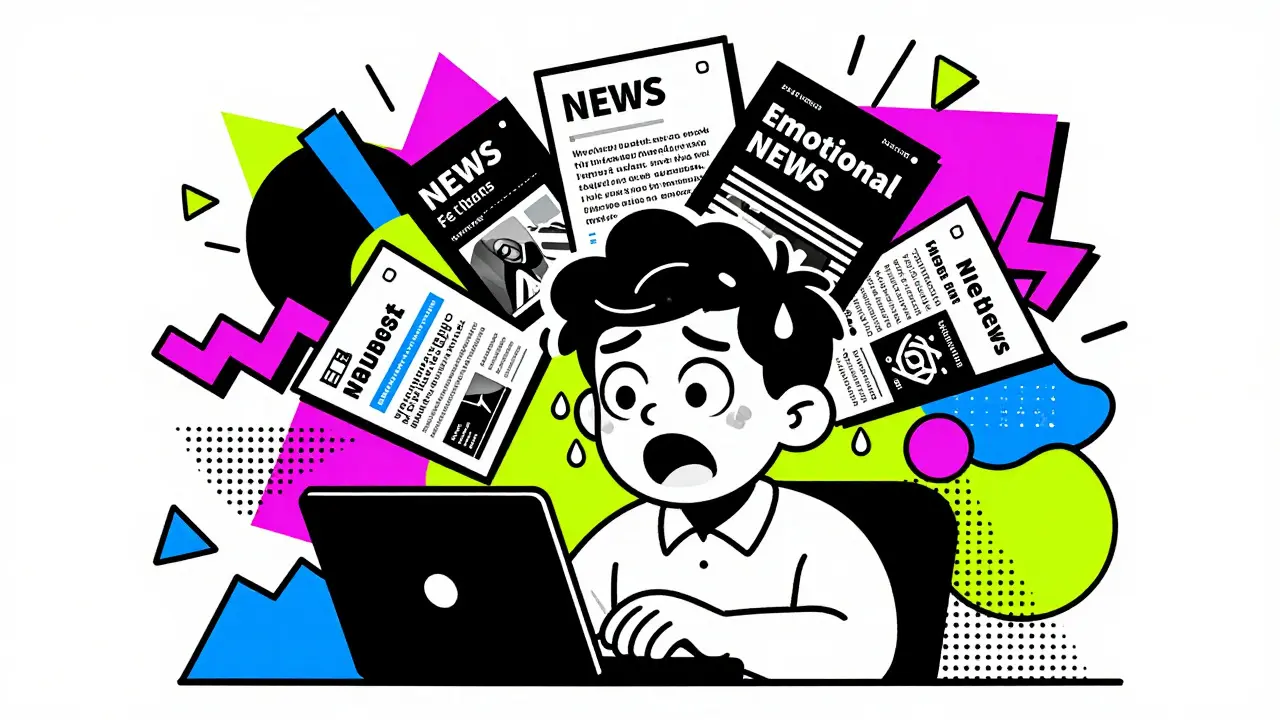
You wake up, grab your phone, and within three minutes you’ve seen a meme about a crypto crash, a headline about a geopolitical conflict, and a post from a friend celebrating a promotion. Your heart rate spikes, then drops, then spikes again. You feel dizzy, anxious, and strangely exhausted before you’ve even had coffee. This isn’t just stress; it’s emotional whiplash, and for traders, it is the silent killer of profitability.
In trading, emotional stability is your edge. When your nervous system is constantly toggling between high-alert panic and artificial euphoria due to fragmented information streams, your ability to execute trades with discipline evaporates. The American Psychological Association documented in 2022 that social media exposure correlates more strongly with negative mental health outcomes than traditional news. For a trader sitting at a chart, this translates directly into impulsive entries, revenge trading, and blown accounts.
The Anatomy of Digital Emotional Whiplash
To fix the problem, you first need to understand the mechanism. Emotional whiplash is not a character flaw; it is a physiological response to platform architecture. Modern social media feeds are designed to maximize engagement by prioritizing content that triggers strong emotional reactions-fear, outrage, or envy. Meta’s internal research revealed that negative content receives 23% more engagement than neutral content. Algorithms feed you a stream of trauma followed by dopamine hits, creating a cycle of instability.
For traders, this is catastrophic. A study published in PubMed in 2024 found that users exposed to traumatic headlines experienced intensified negative emotions even without reading full articles. If you scroll through Twitter/X while monitoring markets, you are subjecting your brain to rapid context switches. One minute you are analyzing a support level on Bitcoin; the next, you are reacting to a viral video about a natural disaster. Your prefrontal cortex-the part of your brain responsible for decision-making and impulse control-loses activity by approximately 19% during these states, according to clinical psychologist Dr. Kolzet’s 2024 analysis.
The result is what researchers call "mental dizziness." You lose track of time, your risk management rules feel irrelevant, and you start trading based on how the last five minutes of scrolling made you feel rather than what the data says. This is why so many traders report feeling "wired but tired" after a session of doomscrolling. Your body is stuck in a state of chronic hypervigilance, flooding your system with cortisol, which averages 28% above baseline during heavy social media use.
Platform Impact: Where the Damage Happens
Not all platforms create equal damage. Understanding where your attention leaks helps you build a targeted defense. A 2024 University of Michigan study measured emotional shifts per minute across major platforms, revealing stark differences:
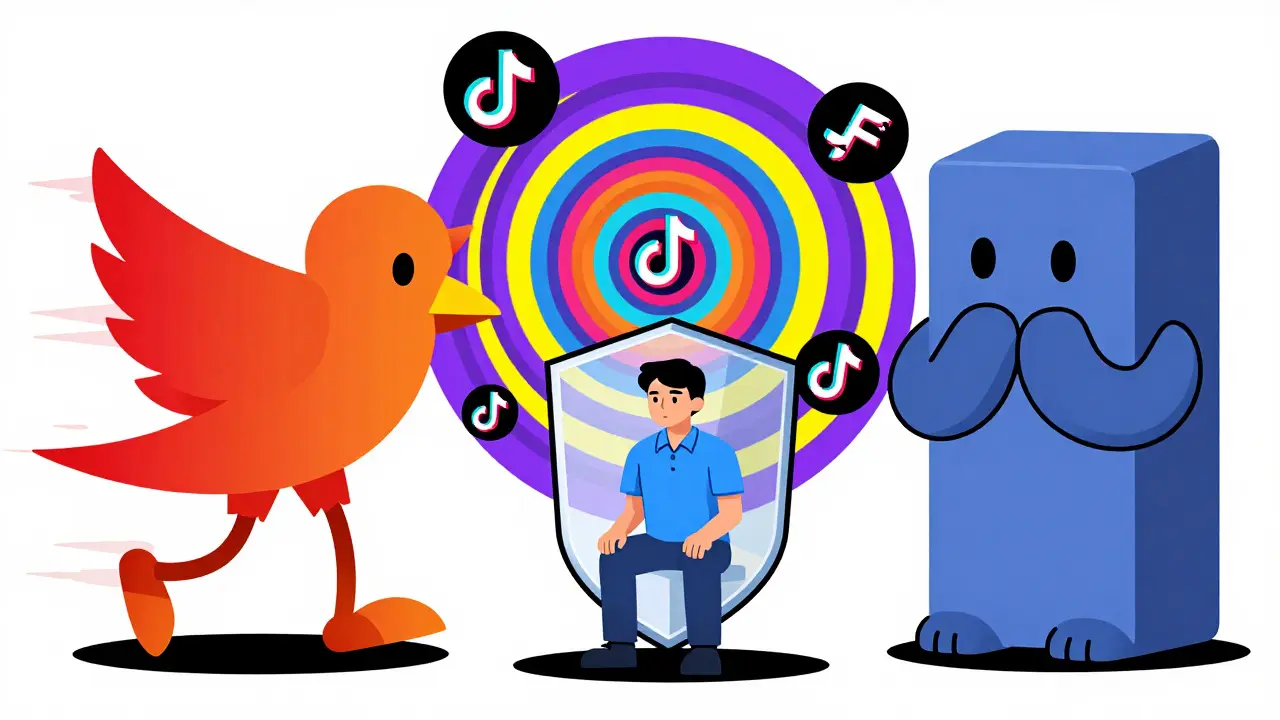
- X (formerly Twitter) generates the most rapid emotional transitions, averaging 8.2 shifts per minute. Its real-time nature makes it particularly dangerous for traders seeking breaking news, as it often lacks context and amplifies rumors.
- TikTok and Instagram Reels produce 37% more emotional whiplash symptoms than traditional news. The infinite scroll and short-form video format provide zero processing time between disparate topics, keeping your brain in a constant state of novelty-seeking.
- Facebook causes fewer rapid shifts (4.3 per minute) but fosters deeper rumination and comparison, leading to slower-burning anxiety and compassion fatigue.
Traditional news sources like the BBC or Reuters produce significantly less whiplash, with only 1.2 emotional shifts per minute. However, they lack the immediacy traders crave. The tension lies here: you need timely information, but the fastest sources are the most psychologically destructive. The solution is not to ignore news, but to curate it aggressively.
| Platform | Emotional Shifts/Min | Primary Risk for Traders | Processing Time Gap |
|---|---|---|---|
| X (Twitter) | 8.2 | FOMO & Panic Selling | Negligible |
| TikTok/Reels | High Intensity | Dopamine Dysregulation | None |
| Traditional News | 1.2 | Delayed Reaction | Adequate |
The Cost of Ignoring the Problem
If you think you can "tough it out," consider the data. Dr. Alison Holman’s longitudinal research tracking 3,500 participants showed that individuals consuming more than 30 minutes of news daily had a 42% higher incidence of anxiety disorders compared to those limiting intake to 15 minutes. Crucially, there was no significant difference in negative impact between traditional news and social media-it was the volume and lack of boundaries that mattered.
For traders, this anxiety manifests as poor execution. You might hesitate to take a valid setup because a recent tweet made you fear a black swan event. Or you might over-leverage because a viral post convinced you the market is going vertical. Reddit user u/SocialMediaBurnout described going from laughing at memes to having a panic attack about climate change within five videos, with their heart rate spiking from 68 to 112 BPM. Imagine trying to manage a position size calculation with a heart rate of 112 BPM. It is nearly impossible.
The global cost of media-induced mental health issues reached $142 billion annually by 2025, with productivity losses accounting for two-thirds of that figure. In trading, the cost is measured in drawdowns. Every emotional spike erodes your capital reserve and your confidence. You are not just losing money; you are degrading the cognitive hardware required to make money.
Building Your News and Social Media Diet
A "diet" does not mean starvation; it means intentionality. You do not need to quit social media entirely, but you must treat your attention span like a finite resource, much like your trading capital. Here is a practical framework to implement immediately.
- Establish Temporal Boundaries: Limit consumption to 15-minute intervals. After every 15 minutes of news or social media, enforce a mandatory 45-minute period of emotional processing. Boston University researchers found this specific ratio reduced vicarious trauma symptoms by 63%. During the 45 minutes, engage in non-screen activities: walk, stretch, or review your trade journal manually.
- Disable Non-Essential Notifications: Push notifications trigger dopamine responses an average of 14.7 times per day, with 68% containing urgent or negative framing. Turn them off. Check your apps on your terms, not theirs. This single step reduces emotional spikes by 78%.
- Curate Your Feed Ruthlessly: Unfollow accounts that prioritize sensationalism over substance. If an account’s primary goal is to generate outrage or FOMO, it belongs in your trash. Replace them with sources that offer analysis, context, and calm reporting. Aim to reduce negative emotional triggers by at least 42 per day.
- Implement a Morning Blackout: Do not consume any news or social media before 10 AM. Start your day with your own agenda, not the world’s chaos. Reddit’s r/DigitalDetox community reports that 83% of success stories involve avoiding news before mid-morning. This protects your morning routine, which should be focused on preparation and mindset, not reaction.
- Create Physical Processing Spaces: Designate areas in your home or office as "news-free zones." When you leave your trading desk, leave the digital noise behind. Engage in embodied activities like a 27-minute walk, which has been shown to reduce anxiety markers by 58%. Physical movement helps metabolize the stress hormones accumulated during screen time.

Advanced Strategies for Long-Term Stability
As you become more disciplined, you can layer in advanced techniques. The concept of "slow news" is gaining traction. Platforms like The Correspondent and Tortoise Media deliberately space content delivery to prevent emotional overload. Consider shifting your primary news consumption to these types of sources, or using newsletters that summarize key events once a day rather than live-tweeting every tick.
Also, leverage technology to fight technology. New tools are emerging, such as MIT’s patented "Emotional Buffering Algorithm," which analyzes content valence and inserts transitional content between extreme emotional shifts. While not yet widely available, similar principles can be applied manually. Use browser extensions that block specific sites during trading hours. Set up filters that hide keywords associated with panic-inducing narratives.
Finally, debrief with trusted individuals. Dr. Sandage’s research emphasizes the importance of social connection in mitigating trauma responses. Share your observations with a mentor or peer group, but keep the conversation focused on strategy and perspective, not gossip or speculation. This turns isolation into community support, reinforcing your resilience.
Next Steps and Troubleshooting
If you find yourself slipping back into old habits, remember that retraining notification response habits takes 7-10 days. Be patient with yourself. Track your progress. Note changes in your sleep quality, stress levels, and trading performance. Most users report improved sleep, including an average increase of 47 minutes of REM sleep, after implementing a strict no-screens-before-bed policy.
If you experience withdrawal symptoms-irritability, boredom, or anxiety-recognize them as signs of healing, not failure. Your brain is recalibrating its dopamine baseline. Stick to the plan. The initial discomfort will fade, replaced by clarity, focus, and a steadier hand on the mouse.
How long does it take to recover from emotional whiplash?
Most traders report measurable improvements in emotional regulation within 14 days of implementing a structured news diet. Full neurological recalibration, including stabilized cortisol levels and improved prefrontal cortex function, typically takes 30-60 days of consistent practice.
Should I delete all social media apps?
Deletion is not necessary if you can maintain strict boundaries. However, if you find yourself unable to stick to time limits, deleting apps for 30 days can reset your habits. Focus on disabling notifications and curating feeds first, as these are less drastic but highly effective measures.
What is the best time of day to check news?
Avoid checking news before 10 AM. Ideal times are mid-afternoon or early evening, when market sessions are closed or winding down. This prevents reactive trading and allows you to process information without immediate pressure to act.
Does traditional news cause emotional whiplash?
Yes, but to a lesser degree. Traditional news produces fewer emotional shifts per minute (1.2 vs 8.2 on X). However, excessive consumption (over 30 minutes daily) still increases anxiety risk by 42%. The key is moderation and source quality, regardless of platform.
How does emotional whiplash affect trading performance?
It impairs decision-making by reducing prefrontal cortex activity by 19%, leading to impulsive entries, poor risk management, and revenge trading. Elevated cortisol levels also cause physical stress, making it difficult to remain objective during volatile market conditions.