
NFT Utility Beyond Art: Tickets, Gaming Assets, and Web3 Membership
 Oct, 24 2026
Most people hear "NFT" and picture a pixelated monkey selling for millions. But that’s just the surface. The real power of non-fungible tokens isn’t in their art value; it’s in their ability to prove you own something specific without needing a middleman to check a database. Think of an NFT as a digital key or ticket stub that lives on a public ledger. It can be a concert seat, a sword in a game, or a badge proving you attended a conference. This shift from "digital collectibles" to "functional tools" is where the technology actually delivers value.
The Core Mechanism: Why Ownership Matters More Than Images
At its heart, an NFT is a unique identifier recorded on a blockchain. Unlike Bitcoin, where every coin is interchangeable, each NFT has distinct data attached to it. This allows smart contracts-self-executing code-to verify ownership instantly. When you hold a token, you don’t just have a JPEG; you have cryptographic proof of a right. This could be the right to enter a venue, use an item in a game, or access a private community. The Ethereum network formalized this with standards like ERC-721, which creates unique tokens, and ERC-1155, which handles batches of mixed assets efficiently. These standards are the plumbing that makes utility possible.
But here’s the catch: owning the token doesn’t automatically mean you own the copyright or the physical object. It means you own the *claim* defined by the issuer. If the issuer says the token grants entry to a club, it does. If they say it grants nothing but bragging rights, that’s all you get. Clarity in terms is everything.
NFT Ticketing: Killing the Scalper and the Counterfeit
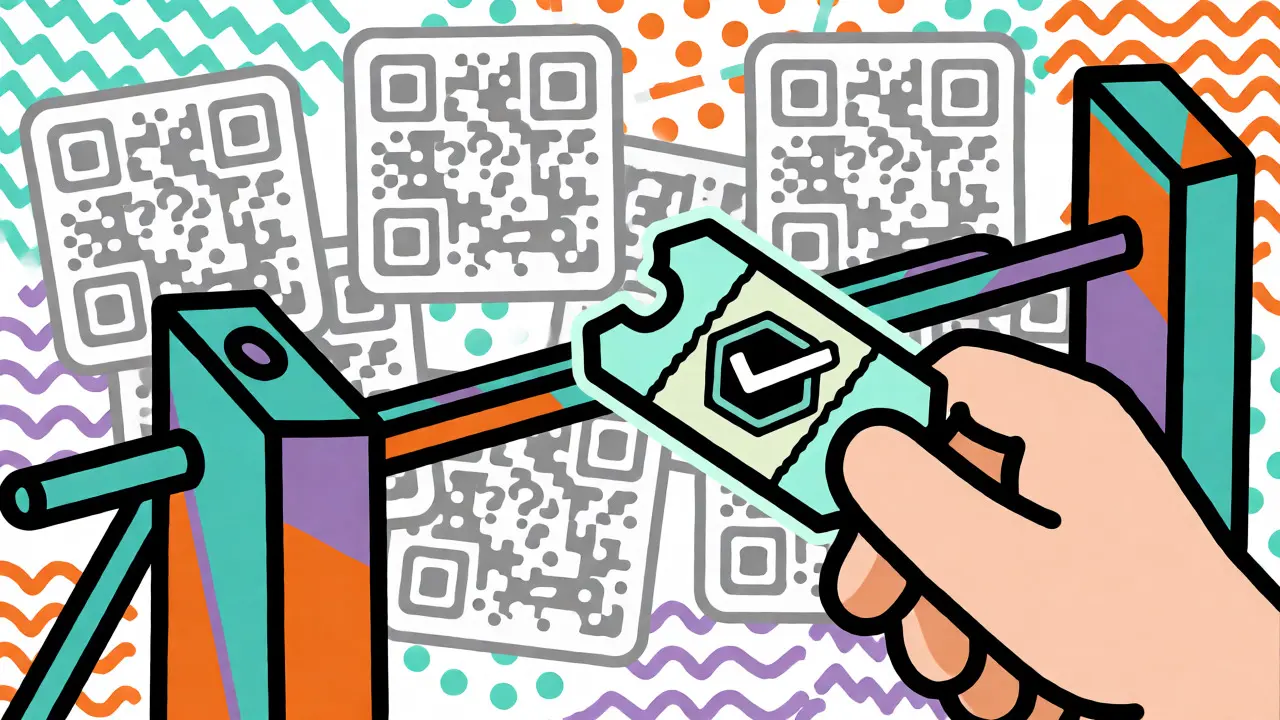
Remember the chaos of the 2022 UEFA Champions League final? Thousands of fake tickets flooded the market, leaving fans stranded outside the stadium. Traditional QR codes are easy to copy. An NFT ticket is different. It’s a unique token that changes state when scanned. Once used, it’s marked as redeemed on the blockchain, making double-spending impossible. This solves two massive problems: counterfeiting and uncontrolled resale.
Ticketmaster launched token-gated sales in 2023, allowing artists to require fans to hold a specific NFT before buying tickets. This isn’t just about hype; it’s about control. Organizers can set rules directly into the token. For example, they can limit how many times a ticket can be resold or cap the price at face value plus a small fee. They can even program royalties so that if a fan sells their ticket last minute, a portion of the profit goes back to the artist or the event organizer.
| Feature | Traditional QR Ticket | NFT Ticket |
|---|---|---|
| Counterfeit Risk | High (easy to screenshot/copy) | Low (unique blockchain ID) |
| Resale Control | Low (open market, scalpers dominate) | High (programmable limits/royalties) |
| Post-Event Value | None (disposable) | High (collectible/memory proof) |
| Transferability | Manual email forwarding | Instant wallet-to-wallet transfer |
After the event, the ticket doesn’t disappear. It becomes a permanent memory token, often called a POAP (Proof of Attendance Protocol). These badges can unlock future perks, like early access to next year’s sale or exclusive merchandise drops. It turns a one-time transaction into an ongoing relationship between the fan and the brand.
Gaming Assets: From Locked Inventory to True Ownership
In traditional games, your inventory lives on a company server. If the game shuts down, your items vanish. You never truly owned them; you licensed them. Blockchain games change this dynamic. In titles like Axie Infinity, creatures and items are NFTs stored in your personal wallet. You can sell them on open markets, trade them with other players, or move them to compatible platforms.
This creates what economists call "economization of play." Players aren’t just having fun; they’re managing assets. However, this comes with risks. If the game loses popularity, the demand for those assets crashes. Also, interoperability is still limited. Just because you own a sword in Game A doesn’t mean you can use it in Game B unless the developers built a bridge between them. Major publishers like Ubisoft are experimenting with this, offering NFTs for cosmetics, but they retain strict control over how these assets function within their ecosystems.
The technical side matters here too. Games need speed and low costs. Standard Ethereum transactions can be slow and expensive. That’s why many gaming projects use Layer-2 solutions like Immutable X. These networks batch thousands of transactions together, making transfers nearly instant and gas-free for users. Without this infrastructure, buying a $5 potion would cost more in fees than the potion itself.
Web3 Membership: Access as a Social Credential
Membership clubs have always existed, but Web3 makes them portable and verifiable. Instead of paying a monthly fee to a centralized platform, you buy a token that acts as your membership card. Bored Ape Yacht Club pioneered this model. Holding an Ape wasn’t just about owning art; it was a key to a private Discord channel, exclusive parties, and commercial rights to use the character image.
Other communities, like Friends With Benefits, take it further. They combine token holdings with social curation. You need both the token and approval from existing members to join. This hybrid approach filters out bots and scammers, creating higher-quality interactions. The token proves financial commitment, while the human review ensures cultural fit.
- Token-Gating: Websites can restrict content based on wallet balance. No login required; just connect your wallet.
- Airdrops: Communities reward active members with free tokens or NFTs, incentivizing participation.
- Governance: Members vote on community decisions, such as how to spend shared funds or which events to host.
The downside? Financial exclusion. If a membership token costs $10,000, only the wealthy can join, regardless of their passion or expertise. Some projects mitigate this by renting out membership seats or using tiered token structures.
Real-World Challenges and Best Practices
Utility sounds great in theory, but execution is hard. Wallet friction is the biggest barrier. Asking a casual gamer to manage seed phrases and gas fees is a recipe for abandonment. Successful projects hide the complexity. They offer email-based logins that create wallets in the background, handling transactions silently. Users shouldn’t know they’re using blockchain unless they want to.
Another issue is legal ambiguity. Are these tokens securities? Investments? Or just services? Regulations vary by country. In the US, the SEC looks at whether buyers expect profits from others' efforts. A ticket that guarantees entry is low risk. A token promising future appreciation might be high risk. Issuers must be transparent. Don’t promise what you can’t deliver. If the game server goes down, your NFT still exists, but it might be useless until service returns.
Security is critical. Over $100 million in NFT value was stolen via scams between 2021 and 2022. Phishing sites mimic official mints, tricking users into signing malicious contracts. Always verify URLs. Never share your private key. And remember: technical ownership doesn’t equal legal ownership. Read the fine print regarding intellectual property rights.
The Future: Selective Mainstreaming
We won’t see every concert ticket become an NFT tomorrow. Adoption will be selective. Use cases where transparency and secondary market control matter most-like major sports events, high-value gaming items, and exclusive communities-will lead the way. Technology improvements like account abstraction (which lets you recover lost wallets) and cross-chain bridges will reduce friction.
The winners won’t be the ones shouting about "the metaverse." They’ll be the ones quietly solving boring problems: preventing fraud, simplifying payments, and rewarding loyalty. As infrastructure matures, the term "NFT" might fade away, replaced simply by "digital asset" or "access pass." The utility remains, but the hype cycle settles into practical tooling.
Do I need to understand blockchain to use NFT tickets?
No. Most modern ticketing platforms abstract away the technical details. You might sign up with an email address, and the system creates a custodial wallet for you behind the scenes. You scan a QR code or show a screen at the gate, just like a normal ticket. The blockchain verification happens invisibly in the background.
What happens if a blockchain game shuts down?
Your NFT remains in your wallet because it lives on the blockchain, not the game's server. However, its utility may drop to zero if no other game supports it. Some developers commit to porting assets to new titles, but this isn't guaranteed. Always check the project's roadmap and community support before investing heavily.
Are NFT tickets safer than standard QR codes?
Yes, primarily against counterfeiting. A QR code is just an image that can be copied infinitely. An NFT ticket has a unique ID that changes status once scanned. If someone tries to scan a copied NFT, the system recognizes it as already redeemed. However, safety also depends on the user securing their wallet from phishing attacks.
Can I sell my NFT membership token anytime?
Generally, yes, unless the smart contract imposes lock-up periods or transfer restrictions. Some communities freeze transfers during voting periods or special events. Check the specific rules of the collection. Selling gives you immediate liquidity, but you lose access to member-only benefits immediately upon transfer.
Why do some NFTs cost less than others?
Price reflects scarcity, utility, and community strength. A ticket for a sold-out stadium tour will cost more than a local meetup badge. Gaming assets fluctuate based on player activity and game health. Membership tokens vary based on the exclusivity of the group and the tangible perks offered, such as networking opportunities or revenue shares.