
NRI Property Investment in India: FEMA, Repatriation & Tax Guide
 Nov, 14 2026
You just found the perfect apartment in Bangalore or a villa in Goa. The price is right, the location is booming, and your parents are thrilled. But then the paperwork hits you. Can you actually take that money back to London, New York, or Dubai? Do you owe tax in India and your country of residence? What happens if you sell in five years?
NRI Property Investment is not just about buying bricks and mortar; it is a complex web of cross-border financial regulations governed by the Foreign Exchange Management Act (FEMA) and the Income Tax Act of India. For Non-Resident Indians (NRIs), getting one step wrong can mean thousands in penalties or, worse, being unable to move your hard-earned cash out of India.
The Golden Rule: How You Pay Determines How You Leave
Here is the most critical concept you need to grasp before signing any agreement: the source of funds dictates the exit route.
If you buy property using funds transferred from abroad through normal banking channels (NRE account) or funds held in your NRO account, you have full freedom to repatriate both the principal amount and the sale proceeds. However, if you use local funds-say, a gift from a relative residing in India or rental income earned within India-you face strict caps on how much you can send out.
| Source of Funds | Repatriation Limit | Tax Implication |
|---|---|---|
| Foreign Currency (NRE Account) | Unlimited (Principal + Profits) | No tax on interest; Capital Gains apply on sale |
| NRO Account (Local Funds) | USD 1 Million per Financial Year | Tax deducted at source (TDS) on gains |
| Gift from Resident Relative | USD 1 Million per Financial Year | Subject to ITD rules; TDS applies |
Notice the difference? If you wire $500,000 from your UK bank account into an NRE account and buy a flat, you can sell it for $800,000 and move all $800,000 back to the UK without restriction. But if you paid with rupees sitting in your NRO account, you are capped at sending $1 million out per year. This cap is per person, not per property, but it requires careful planning if you hold multiple assets.
FEMA Rules: What NRIs Can and Cannot Buy
The Foreign Exchange Management Act (FEMA) is the primary law regulating foreign exchange transactions in India. It explicitly permits NRIs and Persons of Indian Origin (PIOs) to purchase residential and commercial properties in India on a repatriable basis.
But there are exclusions. You cannot buy:
- Agricultural land
- Plantation property
- Farmhouses
Why? Because agricultural land is reserved for residents to ensure food security and prevent speculative hoarding by those living abroad. If you inherit agricultural land, you can hold it, but you generally cannot purchase new agricultural plots as an NRI.
Another common pitfall involves power of attorney (PoA). While many NRIs use PoA to let relatives sign documents, banks and registrars are increasingly skeptical. A registered PoA is essential, but some state governments now require the buyer to be physically present or use specific digital verification methods. Always check the local registrar’s current stance before relying solely on a PoA.
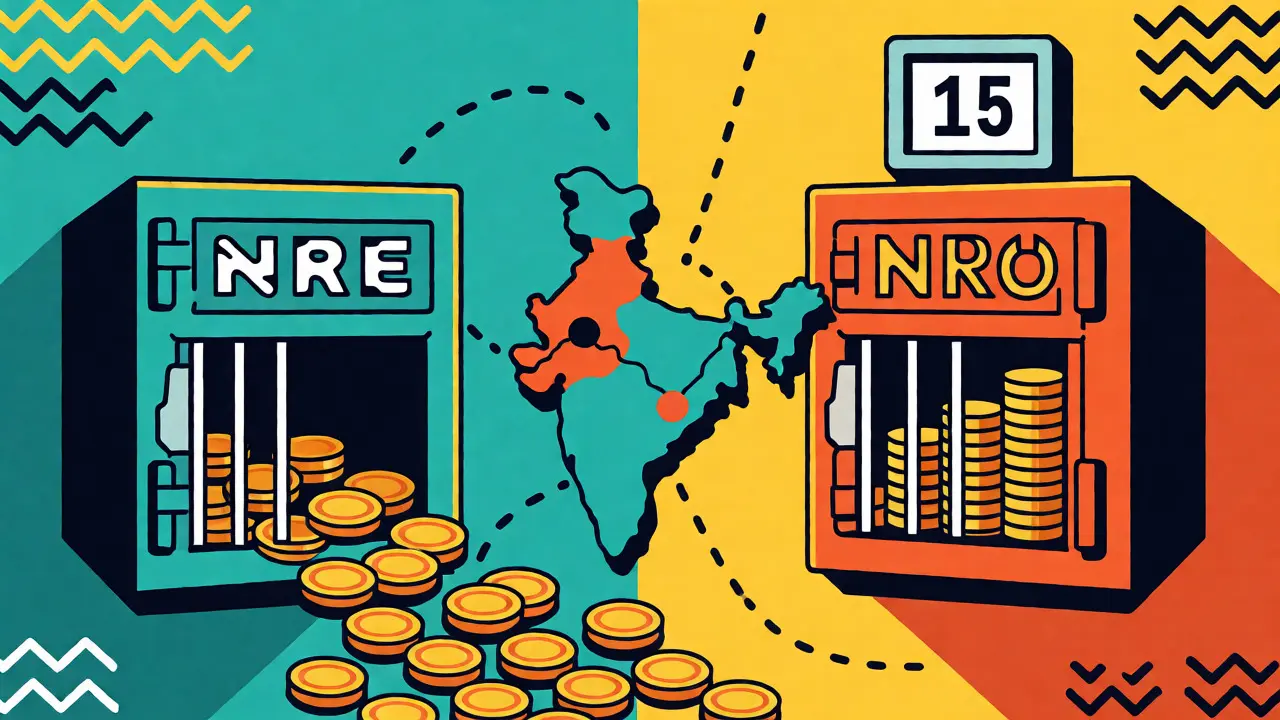
Choosing the Right Bank Account: NRE vs. NRO vs. FCNR
Your banking setup is the backbone of compliant investing. You typically need two accounts:
- NRE (Non-Resident External) Account: This holds foreign currency converted to INR. Interest earned here is tax-free in India. Funds are fully repatriable. Use this for purchasing property where you want maximum flexibility later.
- NRO (Non-Resident Ordinary) Account: This manages income earned within India (rent, dividends, pension). Interest here is taxable. Repatriation is limited to $1 million per year after paying applicable taxes.
Should you open an FCNR (Foreign Currency Non-Resident) account? It allows you to keep funds in USD, GBP, or EUR without converting to INR immediately. It protects against currency fluctuation but offers lower interest rates compared to NRE deposits. For long-term property holding, NRE is usually preferred due to higher yields and ease of transaction.
Taxation: The Double Whammy Trap
Taxes are where most NRIs get burned. You must consider three layers:
1. Tax Deducted at Source (TDS)
When you sell a property, the buyer is legally required to deduct TDS before paying you. For NRIs, the rate is often higher than for residents. As of recent updates, the basic TDS rate for NRIs selling property exceeding ₹50 lakhs can be up to 20% plus surcharges and cess, depending on the gain type. Residents might pay only 1%, but NRIs rarely get this benefit unless they obtain a Lower Deduction Certificate from the Income Tax Department.
2. Capital Gains Tax
This depends on how long you held the property:
- Short-Term Capital Gains (STCG): Held for less than 24 months. Added to your total income and taxed at your slab rate.
- Long-Term Capital Gains (LTCG): Held for more than 24 months. Taxed at a flat 20% with indexation benefits. Indexation adjusts the purchase price for inflation, significantly reducing your taxable profit.
3. Rental Income
Rent received in India is taxable. You can claim deductions for municipal taxes, standard deduction (30%), and interest on home loans. If you don’t file returns in India, you risk penalties even if your total income is below the exemption limit, because TDS has already been cut.
Double Taxation Avoidance Agreement (DTAA): Most countries (UK, USA, Canada, Australia) have DTAA treaties with India. This means you won’t pay tax twice on the same income. You pay tax in India, then claim a credit in your home country. Keep your Form 16A (TDS certificate) safe-it’s your proof of payment abroad.
Repatriation Process: Step-by-Step
Selling is easy; moving the money is technical. Here is the workflow for selling an NRI-owned property:
- Sale Deed Registration: Ensure the deed clearly mentions your status as an NRI and the mode of payment.
- Obtain PAN Card: Mandatory for all property transactions in India.
- Pay Capital Gains Tax: File advance tax estimates. Do not wait until the deadline.
- Get CA Certification: Hire a Chartered Accountant to prepare a certificate stating that the capital gains tax has been paid or provided for. This is crucial for the bank.
- Submit Documents to Bank: Provide the sale deed, PAN, passport, visa, and CA certificate to your authorized dealer bank.
- Form 15CA/CB: Your CA will file these forms online with the Income Tax Department. Form 15CB is the certificate; Form 15CA is the declaration. Without these, the bank cannot process the outward remittance.
Pro Tip: Start the Form 15CA/CB process *before* you receive the final payment from the buyer. Delays here can stall your fund transfer by weeks.

Pitfalls to Avoid
Even seasoned investors make mistakes. Watch out for these:
- Buying from another NRI: If you buy from another NRI who used foreign funds, you can repatriate freely. But if they bought with local funds, your repatriation rights depend on *their* original source of funds, which is hard to prove. Always ask for their original payment receipts.
- Under-reporting Value: Paying part of the consideration in cash (black money) complicates repatriation. Only the amount shown in the bank transfer and registered deed is eligible for free repatriation.
- Ignoring Wealth Tax Changes: India abolished wealth tax, but you still need to declare foreign assets in your home country’s tax filings. In the US, FBAR and FATCA reporting are non-negotiable.
Final Checklist Before You Sign
Before handing over the deposit, run through this list:
- Is the seller providing clear title deeds?
- Have you confirmed the project has RERA registration (if under construction)?
- Do you have a valid PAN card?
- Are you paying via NRE/NRO account? Never use personal savings accounts of relatives.
- Have you consulted a CA regarding DTAA implications in your resident country?
Investing in Indian real estate as an NRI is rewarding, but it demands precision. The regulatory environment favors transparency. If you document every rupee’s journey from your foreign bank to the builder’s account and back, you’ll sleep well knowing your money is truly yours.
Can NRIs buy agricultural land in India?
No, NRIs are prohibited from purchasing agricultural land, plantation property, or farmhouses in India. They can only buy residential and commercial properties. Exceptions exist for inherited agricultural land, which can be held but not purchased anew.
What is the maximum amount an NRI can repatriate from India?
For funds held in NRO accounts or derived from local sources, the limit is USD 1 million per financial year. For funds originally brought in from abroad via NRE accounts, there is no upper limit on repatriation of principal and sale proceeds, provided proper documentation is maintained.
Do I need to pay tax in my home country on Indian rental income?
It depends on your country's tax laws and the Double Taxation Avoidance Agreement (DTAA) with India. Generally, you must report global income. You can claim a tax credit for taxes paid in India to avoid double taxation. Consult a local tax advisor in your resident country.
Can I use a Power of Attorney to buy property in India?
Yes, but it must be properly executed. The PoA should be notarized in your country of residence and attested by the Indian Embassy/Consulate. Some states may require additional registration steps. Banks often prefer physical presence for loan disbursement even if PoA is used for registration.
How does indexation benefit work for NRI property sales?
Indexation adjusts the cost of acquisition of the property based on the Consumer Price Index (CPI) inflation rates published by the government. This increases the purchase price for tax calculation purposes, thereby reducing the taxable capital gain. It applies only to Long-Term Capital Gains (held > 24 months).