
Post-Halving Strategies for Bitcoin Miners: Boost Efficiency, Capture Fees, and Hedge Treasury
 Mar, 14 2026
After the Bitcoin halving in April 2024, mining revenue dropped by half. What used to be 6.25 BTC per block became just 3.125 BTC. For many miners, that meant instant losses. No more padding the budget with block rewards. No more easy profits. If you weren’t ready, you got crushed. But not everyone failed. The ones who survived didn’t just wait for Bitcoin to go up-they restructured everything. They upgraded hardware, chased transaction fees like a hunter chasing prey, and turned their bitcoin holdings into a strategic asset, not just a payout. This isn’t about luck anymore. It’s about systems.
Efficiency Isn’t Optional-It’s Survival
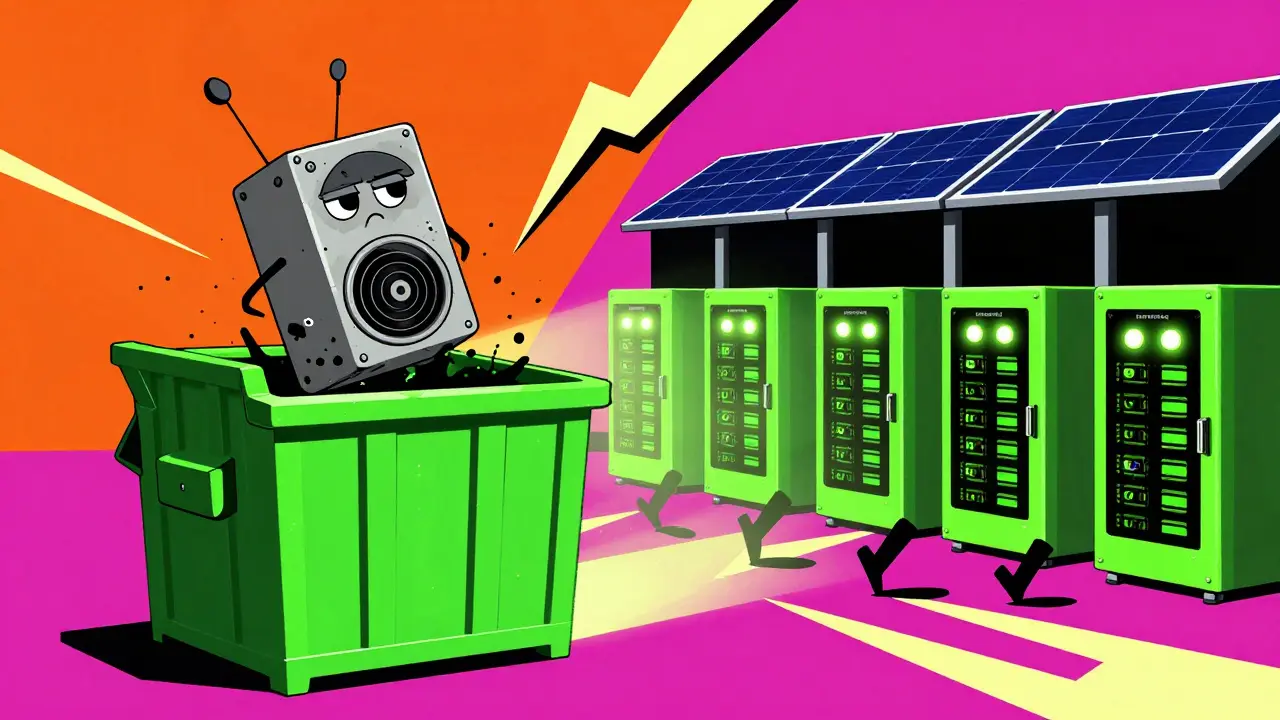
The cheapest way to mine Bitcoin now isn’t by running more machines. It’s by running smarter ones. Older ASIC miners, the kind that dominated in 2020, are now dead weight. They sip electricity like a thirsty tourist at a five-star hotel. Newer models, like the Bitmain Antminer S21 or MicroBT WhatsMiner M56, deliver over 100 terahashes per second while using less than 20 joules per terahash. That’s a 40% drop in energy use compared to last-gen gear. For a 10-megawatt farm, that saves $1.2 million a year in electricity alone. But hardware isn’t the whole story. Where you plug in matters just as much. Miners in France, Germany, and California are shutting down. Electricity costs there hit 15-25 cents per kWh. Meanwhile, in Kazakhstan, Siberia, and Texas, rates are under 4 cents. BigBlock Datacenter moved 80% of its rigs from Europe to Central Asia. They didn’t just relocate-they renegotiated power contracts. By committing to 5-year, 100-megawatt agreements, they locked in rates lower than most residential customers pay. That’s how you turn a loss into a profit. And then there’s firmware. Most miners don’t realize their machines can be tuned. Adjusting voltage, clock speed, and fan curves can squeeze out another 5-8% efficiency. Some operations use AI-driven monitoring tools that auto-optimize settings based on real-time power prices and ambient temperature. It’s not sci-fi. It’s standard for top-tier miners now.Transaction Fees Are the New Block Reward
Before the halving, transaction fees made up less than 5% of miner income. Now? They’re 20-30%. And they’re rising. Why? Because Bitcoin is getting busier. Layer-2 solutions like Lightning Network handle small payments, but the main chain is seeing more high-value transfers-institutional buys, large ETF trades, cross-border settlements. These transactions pay big fees. Miners who pay attention to the mempool (the queue of unconfirmed transactions) are stacking up fee-rich blocks. They use tools that prioritize transactions with the highest fee-per-byte. During peak congestion, fees spike to 50 satoshis per byte or more. That’s $15-$20 per transaction. One block with 2,000 such transactions nets over $30,000 in fees. That’s more than half the block subsidy at today’s price. The smart miners didn’t just wait for fees to rise. They built infrastructure to capture them. Some set up dedicated fee-optimized nodes. Others partnered with wallet providers and exchanges to route high-value transactions through their pools. The result? A steady, predictable income stream that doesn’t depend on Bitcoin’s price.
Your Bitcoin Isn’t Just a Reward-It’s a Treasury
The biggest shift since 2024? Miners stopped selling their Bitcoin right away. They became investors. Look back at 2020. Many miners sold every coin they mined as soon as it hit their wallet. They needed cash to pay bills. But after the 2024 halving, the survivors did the opposite. They held. Why? Because they studied history. After the 2016 halving, Bitcoin went from $650 to $20,000 in 14 months. After 2020, it hit $65,000. The pattern is clear: the biggest price surges happen 6-18 months after a halving. Now, top mining firms like Marathon Digital and Riot Platforms are building treasury reserves. They sell only 10-20% of daily output. The rest sits in cold storage. Some use structured sales-selling 25% at $50K, 25% at $60K, 50% at $75K-to lock in profits without timing the market. Others use options contracts to hedge downside risk while keeping upside open. This isn’t speculation. It’s corporate finance. These companies now have balance sheets with Bitcoin as a primary asset. Their cost per coin is $12K. If Bitcoin hits $60K, their treasury gains $48K per coin in unrealized value. That’s not just profit. That’s leverage.Consolidation Is Real-And It’s Accelerating
The 2024 halving didn’t just change how miners operate. It changed who survives. Over 800,000 individual miners shut down. Many were hobbyists with old rigs in their garages. Others were small farms with high-cost power. They couldn’t compete with the big players who had access to capital, cheap energy, and bulk hardware deals. Core Scientific filed for bankruptcy-not because they were shady, but because they over-leveraged. They borrowed at 25% interest to buy ASICs. When the halving hit and Bitcoin dipped, they couldn’t cover interest. Their equipment became worthless collateral. That’s the danger of debt in this game. Meanwhile, the top 10 mining operators now control over 65% of Bitcoin’s hashrate. That’s up from 40% in 2023. The market is bifurcating: one side has deep pockets, efficient tech, and strategic treasury management. The other side? Gone. The survivors aren’t just holding on. They’re buying up the wreckage. Auctions of seized mining rigs from bankrupt firms are now common. A single S19 Pro rig that cost $5,000 new now sells for $800 on the secondary market. Big miners buy them, upgrade the firmware, and plug them into their low-cost farms. It’s not glamorous. But it’s profitable.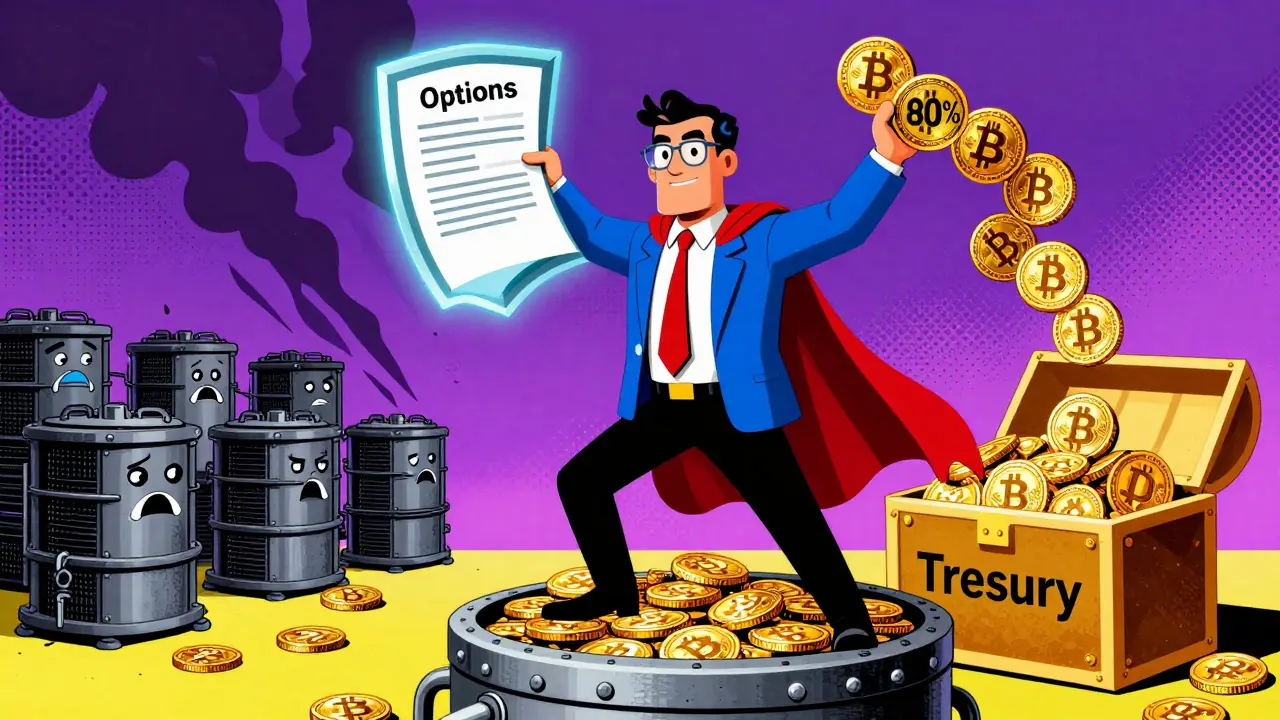
What Happens If Bitcoin Stalls?
Here’s the scary part: if Bitcoin’s price doesn’t rise after the halving, the next 12 months could be brutal. Luxor’s research team estimates that 3-7% of the network’s hashrate could go offline if Bitcoin stays flat. If it drops 30%, that jumps to 16%. That’s 10 million BTC in potential mining capacity vanishing overnight. But here’s the twist: the network might not collapse. Why? Because the remaining miners are too efficient to quit. They’ve cut costs so low that even at $30K per Bitcoin, they still break even. The weak ones are already gone. The survivors? They’re built to last. The real threat isn’t price-it’s complacency. Miners who think "I’ll just wait for the next bull run" are already behind. The winners are the ones who built systems that work in bear markets. Systems that don’t need Bitcoin to go up to stay alive.Three Rules for Surviving the Next Halving
If you’re still mining, here’s what you need to do now:- Upgrade your ASICs-If your hardware is older than 2022, it’s a money pit. Replace it with models under 20J/TH. Even if you lease them, do it.
- Lock in cheap power-Negotiate long-term contracts. Move to regions with under 4 cents/kWh. If you can’t relocate, install solar or co-locate with renewable energy plants.
- Hold your Bitcoin-Sell no more than 20% of daily output. Let the rest grow as an asset. Use options or structured sales to hedge, not panic.