
PPF vs ELSS: The Best Way to Save Tax Under Section 80C in India
 Apr, 11 2026
You've reached the end of the financial year, and your tax liability is staring you in the face. If you are still using the Old Tax Regime, you probably know that Section 80C is the most popular way to lower your taxable income. But here is the problem: not all 80C investments are created equal. You can park your money in a safe, government-backed vault or bet on the stock market for higher growth. This is essentially the battle between the Public Provident Fund (PPF) and the Equity Linked Savings Scheme (ELSS).
Quick Summary: Which One Should You Pick?
- Pick PPF if: You have a low risk appetite, need guaranteed returns, and are saving for a goal that is 15 years away (like retirement).
- Pick ELSS if: You can handle market volatility, want the potential for 12-15% returns, and prefer a shorter lock-in period of 3 years.
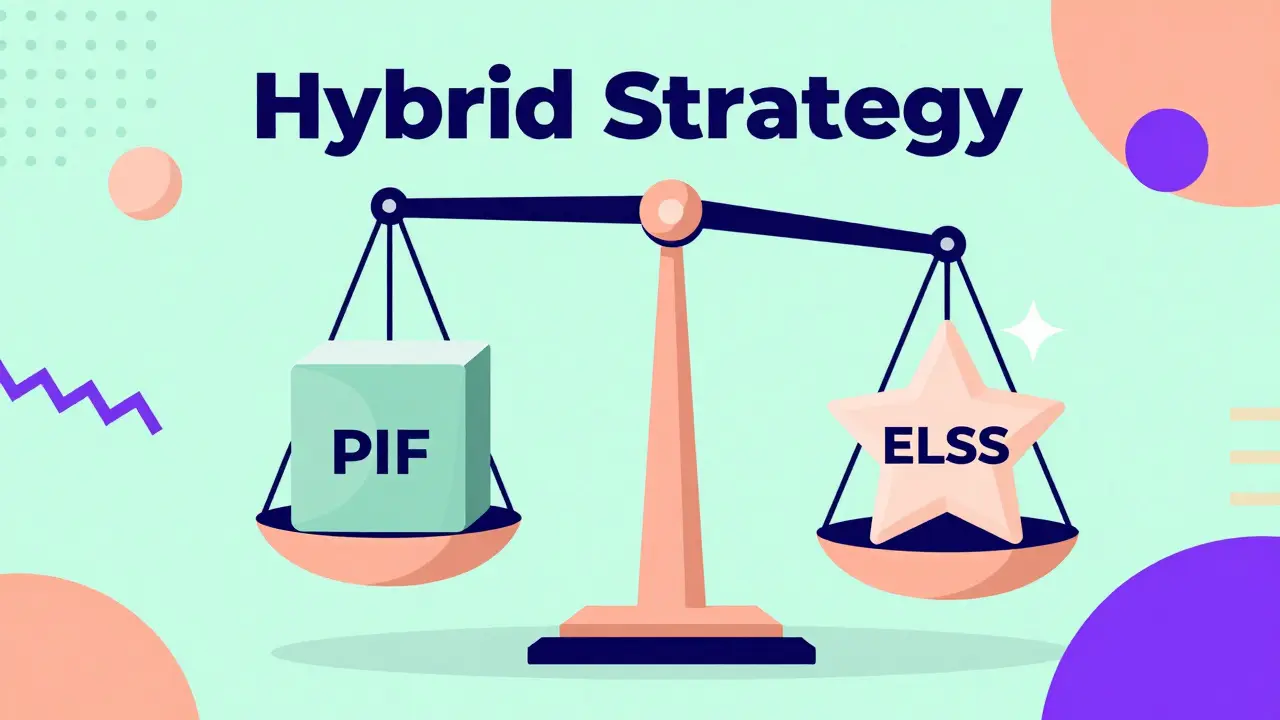
- The Hybrid Strategy: Use PPF for your "safe bucket" and ELSS for your "growth bucket" to balance risk and reward.
Understanding the Public Provident Fund (PPF)
The PPF is a long-term government-backed savings scheme that offers a fixed rate of interest and complete tax exemption on the investment, interest earned, and maturity amount. It is often called the "EEE" (Exempt-Exempt-Exempt) investment because the government doesn't touch a single rupee of your gains.
Think of PPF as the ultimate safety net. Since the Government of India manages it, your principal is 100% secure. You can invest anywhere from ₹500 to ₹1.5 lakh per year. The interest rate is reviewed quarterly by the government, usually hovering around 7.1% to 7.6% in recent years. However, the biggest catch is the lock-in. Your money is tied up for 15 years. While there are partial withdrawal rules after the 7th year, it is not a liquid asset.
Decoding the Equity Linked Savings Scheme (ELSS)
If PPF is a steady walk, ELSS is a sprint. ELSS is a type of mutual fund that invests primarily in equities (stocks) while providing tax benefits under Section 80C. Unlike PPF, ELSS doesn't give you a guaranteed return. Your money goes into the stock market via a fund manager who picks companies to grow your wealth.
The magic of ELSS lies in its potential for wealth creation. Historically, diversified equity funds in India have delivered returns ranging from 12% to 18% over long periods, though this can swing wildly in a bad year. The most attractive part? The lock-in period is only 3 years. This is the shortest lock-in among all 80C options, making it a favorite for people who don't want their money frozen for a decade.
Head-to-Head: Comparing the Core Attributes
When you put these two side-by-side, the difference in philosophy is clear. PPF is about preservation; ELSS is about appreciation.
| Feature | PPF (Public Provident Fund) | ELSS (Equity Linked Savings Scheme) |
|---|---|---|
| Expected Returns | Fixed (approx. 7.1% - 7.6%) | Market-Linked (Variable, often 12%+) |
| Risk Level | Zero/Negligible | Moderate to High |
| Lock-in Period | 15 Years | 3 Years |
| Tax Treatment | EEE (Tax-free maturity) | Taxed as Capital Gains (LTCG) |
| Investment Limit | Max ₹1.5 Lakh/year | No upper limit (but 80C benefit maxes at ₹1.5L) |

The Tax Trap: Not All "Tax Free" is Truly Free
Here is where most people get confused. PPF is truly tax-free. When you withdraw your money after 15 years, the entire corpus is yours. But ELSS is different. While the initial investment is tax-deductible, the profit you make is subject to Long Term Capital Gains (LTCG) tax.
Currently, if your equity gains exceed ₹1.25 lakh in a financial year, the amount above that is taxed at 12.5%. For a small investor, this might not matter much, but if you are building a massive portfolio, the tax on ELSS gains will eat into your final profit. Despite this, the higher growth rate of stocks usually outweighs the tax hit when compared to the lower fixed returns of PPF.
Which One Fits Your Life Stage?
Your choice depends entirely on your current age, income stability, and what you are saving for. Imagine two different people: Rahul and Priya.
Rahul is 25, just started his first job, and has a high risk tolerance. He doesn't have any immediate dependents. For Rahul, ELSS is a no-brainer. He has time to ride out the market crashes, and the 3-year lock-in allows him to pivot his strategy as his life changes. He is leveraging the power of compounding in the equity market during his most aggressive earning years.
Priya is 45 and is planning for her children's higher education and her own retirement. She cannot afford to lose her principal amount in a market crash. For Priya, PPF is the better choice. It provides a guaranteed sum that will be ready exactly when she needs it, regardless of whether the Nifty 50 is booming or crashing.
The Secret Weapon: The Diversified Approach
Why choose one when you can have both? Smart investors don't put all their eggs in one basket. If you have the full ₹1.5 lakh limit to fill, consider splitting it. You could put ₹75,000 in PPF for a guaranteed base and ₹75,000 in ELSS for the growth kicker.
This approach protects you from two extremes: the inflation risk of PPF (where returns might barely beat inflation) and the market risk of ELSS (where your portfolio could drop 20% in a month). By diversifying, you ensure that you are saving taxes while building a balanced portfolio that can handle any economic weather.
Common Pitfalls to Avoid
One big mistake people make with PPF is treating it like a savings account. If you dump ₹1.5 lakh in April, you earn interest on that full amount for the whole year. If you wait until March, you lose out on nearly a year's worth of interest. Always fund your PPF account before the 5th of April to maximize your gains.
With ELSS, the biggest trap is panic selling. Because the lock-in is only 3 years, some investors get scared when they see a red screen and try to exit as soon as the lock-in ends. Remember, equity is a long-term game. If you invest in an ELSS fund, plan to keep that money there for at least 5-7 years, even if the legal lock-in is only 3.
Can I withdraw money from PPF before 15 years?
Yes, but with restrictions. You can take a loan against your PPF balance from the 3rd year to the 6th year. Partial withdrawals are allowed from the 7th year onwards for specific reasons like medical emergencies, higher education of children, or buying a house. You cannot simply withdraw the entire amount whenever you want.
Is ELSS better than other mutual funds for tax saving?
ELSS is the only type of mutual fund that offers a tax deduction under Section 80C. Other mutual funds (like Index Funds or Debt Funds) do not provide any tax break on the investment amount. However, they might have different lock-in periods or tax structures on the returns.
What happens if I invest more than ₹1.5 lakh in PPF?
The government has a strict cap on PPF deposits. If you deposit more than ₹1.5 lakh in a financial year, the excess amount will not earn any interest. Furthermore, you cannot claim tax deductions on any amount exceeding the ₹1.5 lakh limit.
Which is more liquid: PPF or ELSS?
ELSS is significantly more liquid. It has a mandatory 3-year lock-in period, after which you can sell your units and get your money back. PPF has a 15-year maturity period, making it a much more rigid investment.
Do I still get 80C benefits in the New Tax Regime?
No. The New Tax Regime removes almost all deductions, including Section 80C. If you switch to the New Tax Regime, investing in PPF or ELSS will not lower your taxable income. You would be investing for the returns alone, not for the tax break.
Next Steps for Your Portfolio
If you are confused about where to start, follow this simple decision tree: If you have zero savings and a high-stress job, start with a PPF account to build a foundation of safety. Once you have a safety net, start a Monthly SIP (Systematic Investment Plan) in an ELSS fund to beat inflation. If you are already an experienced investor, check your current asset allocation. If you are too heavy on equity, use PPF to bring balance to your portfolio and lock in some guaranteed gains for the future.