
Retirement Corpus Calculator for India: How Much Do You Need to Retire?
 Feb, 25 2026
Imagine waking up at 60 with no salary, no work, and no safety net. Your kids are grown, your home is paid off, but your savings are running out faster than you expected. This isn’t a horror story - it’s the reality for too many Indians who never calculated how much they actually need to retire. The truth? retirement corpus isn’t about how much you save - it’s about how long it lasts.
Why Most Indians Underestimate Their Retirement Needs
People in India often think retiring on ₹1 crore is enough. But that number is outdated. In 2026, with inflation running at 5.8% annually and healthcare costs rising faster than wages, ₹1 crore won’t last 15 years - let alone 25. A 60-year-old retiree today needs to plan for at least 30 years of life after work. Life expectancy in India has climbed to 71.3 years, and many are living into their 80s. If you retire at 60, you’re looking at decades of expenses with no income.Here’s the hard part: most people only think about monthly expenses - rent, groceries, electricity. They forget medical bills. A single hospital stay for a heart procedure can cost ₹5-8 lakh. Chronic conditions like diabetes or arthritis? Those add up to ₹15,000-₹30,000 a month in medicines and checkups. And that’s just for one person.
How to Calculate Your Real Retirement Corpus
Forget online calculators that ask for your current salary and spit out a number. Those tools are broken. They assume inflation stays at 4%, healthcare stays flat, and you’ll live exactly 20 years after retirement. Real life doesn’t work that way.Here’s a better way:
- Estimate your monthly expenses today - including travel, hobbies, and emergencies.
- Adjust for inflation. Use 6% per year, not 4%. That’s what India’s food, fuel, and medical costs have averaged over the last decade.
- Decide how many years you’ll live after retirement. If you’re 45 now, plan for 35 years. If you’re 55, plan for 25.
- Multiply your inflated monthly cost by 12, then by the number of years.
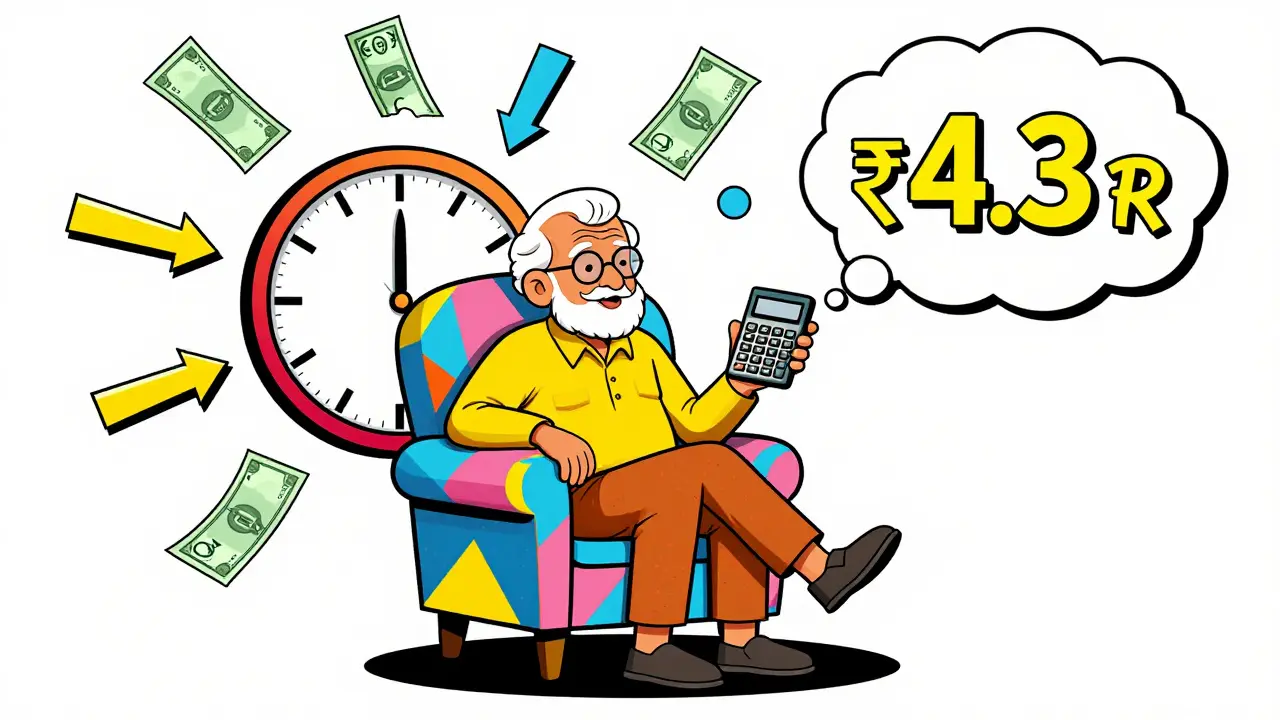
Let’s say you spend ₹50,000 a month today. At 6% inflation over 15 years, that becomes ₹1,20,000 a month when you retire. Over 25 years? You’ll need ₹3.6 crore just for living costs. Add ₹15 lakh for medical emergencies, ₹10 lakh for travel, and ₹5 lakh for home repairs - and you’re at ₹4.3 crore.
That’s not a guess. That’s math.
Where Most People Go Wrong
The biggest mistake? Relying on fixed deposits. A ₹5 crore FD at 6.5% interest gives you ₹3.25 lakh a year - or ₹27,000 a month. That’s less than half of what you’ll need if your expenses inflate to ₹60,000/month. You’ll burn through your principal fast.Another trap: thinking your house is your retirement plan. Selling it at 70 sounds smart - until you realize you’ll need a place to live. Renting in cities like Bengaluru or Pune now costs ₹25,000-₹40,000 a month. If you don’t own outright, you’re adding rent to your expenses.
And don’t count on your kids. A 2025 survey by the National Council for Applied Economic Research found that 68% of retired Indians in urban areas receive some financial help from children. But 52% of those children said they couldn’t keep helping beyond 5 years. Relying on family isn’t a strategy - it’s a risk.

What Actually Works: A Real Retirement Strategy
You need income that grows with inflation. That means mixing assets:- Fixed Income: Senior Citizen Savings Scheme (SCSS), Post Office Monthly Income Scheme (POMIS). These give 7.4-8.2% returns, tax-free up to ₹50,000/year. They’re safe, but don’t grow.
- Equity Exposure: Index funds or balanced advantage funds. Even 20% in equity can boost returns over time. A ₹1 crore portfolio with 20% in Nifty 50 has historically grown 10-12% annually over 15-year periods.
- Real Estate: One rental property in a Tier-2 city can generate ₹15,000-₹25,000/month after maintenance. But only if you’re ready to manage it.
- Annuities: Immediate annuity plans from LIC or private insurers. You pay a lump sum, get monthly payouts for life. But inflation erodes the value. Only use this as a floor, not the whole plan.
Example: A 58-year-old with ₹6 crore could split it like this:
- ₹2 crore in SCSS + POMIS → ₹1.5 lakh/month fixed income
- ₹2 crore in balanced mutual funds → ₹1.2 lakh/month average (varies)
- ₹1 crore in rental property → ₹1 lakh/month
- ₹1 crore in annuity → ₹70,000/month guaranteed
Total: ₹4.4 lakh/month - enough to cover ₹1.2 lakh expenses, with ₹3.2 lakh left to grow, handle emergencies, or leave as legacy.
When to Start - And How Much to Save Monthly
If you’re 30, you need ₹1.5 crore by 60. That’s ₹6,500/month invested at 10% annual return. If you’re 45? You need ₹3.2 crore. That’s ₹28,000/month. If you’re 55? You need ₹4.5 crore. That’s ₹75,000/month - impossible for most.Time isn’t your friend. The later you start, the harder it gets. A 2024 study by the Reserve Bank of India found that 73% of Indians over 55 have less than ₹50 lakh in retirement savings. Half of them still work part-time.

What to Avoid
- Gold jewelry as retirement savings - it doesn’t pay you anything.
- Buying property for resale - markets don’t always rise, and liquidity is slow.
- Over-investing in ULIPs or endowment plans - they eat up 30% of your premium in fees.
- Ignoring taxes - long-term capital gains on equity are 10% over ₹1 lakh. Plan for it.
Final Reality Check
You don’t need to be rich to retire well. You just need to be prepared. A ₹5 crore corpus sounds huge - but in today’s India, it’s the bare minimum for a dignified, independent retirement. Anything less means trading freedom for financial stress.Start today. Calculate your real needs. Adjust for inflation. Diversify. And never assume someone else will take care of you. Your future self will thank you.
How much retirement corpus do I need if I live in a Tier-2 city like Jaipur or Indore?
In Tier-2 cities, monthly expenses are 30-40% lower than in metros. If you spend ₹40,000/month today, plan for ₹90,000/month after 15 years of 6% inflation. Over 25 years, you’ll need ₹2.7 crore. Add ₹10 lakh for medical emergencies and ₹5 lakh for travel - total ₹3 crore is realistic. But don’t assume housing costs will drop. Rent still rises, and owning outright is key.
Can I retire on ₹1 crore if I live frugally?
Only if you’re willing to live on ₹4,000-₹5,000/month after inflation. At 6% inflation, ₹1 crore lasts 12-14 years if you withdraw ₹70,000/month. But medical costs alone can wipe out ₹20-30 lakh in 5 years. Frugality won’t save you if you get sick. ₹1 crore is a starting point for rural areas - not a plan for urban India.
Should I use my PF and PPF for retirement?
PF and PPF are great - but not enough. PF gives you a lump sum at retirement. PPF gives you 7.1% tax-free returns. But if you’ve been saving ₹15,000/month for 30 years, you’ll have ₹1.8-2 crore. That sounds good - until you factor in inflation. That money will buy you only ₹60,000/month in today’s terms. Use them as a base, not the whole plan.
Is investing in real estate a good retirement strategy?
Yes - if you already own it. Buying property to rent out at 55 is risky. Construction delays, tenant issues, and falling rental yields make it stressful. But if you own a home in a good location, renting out a room or a second property can add ₹15,000-₹25,000/month. Don’t buy for retirement - use it to supplement income you already have.
What if I retire early at 55 instead of 60?
You need 20-30% more. Five extra years means more inflation, more medical costs, and longer time without income. If you need ₹4 crore at 60, you’ll need ₹5.2 crore at 55. That means saving 40% more each month before 55. Early retirement is possible - but only if you’ve planned for it aggressively.