
Retirement Planning for Women in India: Unique Considerations and Strategies
 Jan, 4 2026
Women in India live longer than men - on average, about 7 years longer. But while they’re living longer, many aren’t saving enough to make those extra years comfortable. By 2030, over 40% of Indian women over 60 will have no regular income. That’s not just a statistic. That’s your mother, your sister, your aunt - maybe even you.
Why Retirement Planning Is Different for Women in India
Retirement isn’t one-size-fits-all, especially for women in India. The gaps start early. Many women take breaks from work to care for children or aging parents. Some never work outside the home at all. Even when they do, they often earn less than men. A 2023 NITI Aayog report found that women’s median annual income in India is just 38% of men’s. That directly impacts how much they can save.
Then there’s the social side. Women are more likely to outlive their spouses. If a husband passes away, his pension or savings may not automatically transfer. In many cases, widows are left with nothing - no formal record of joint assets, no legal claim, no understanding of how to access bank accounts or insurance policies.
And here’s the quiet truth: financial literacy is still low among older Indian women. Many were never taught how to budget, invest, or even open a bank account without a male guardian. Even today, only 35% of women in India have a bank account in their own name, according to the World Bank’s Global Findex 2024.
Key Challenges Women Face
- Income gaps: Lower lifetime earnings mean less to save. Many women rely on family support, which isn’t reliable in old age.
- Unpaid care work: Women spend nearly 6 times more time on unpaid domestic work than men. That time could’ve been spent earning, learning, or saving.
- Lack of formal assets: Property is often registered in the husband’s name. Even when women contribute to buying a home, they have no legal standing.
- Longevity risk: Living longer means more years to fund. A woman retiring at 60 could need savings to last 25-30 years - longer than most retirement plans account for.
- Healthcare costs: Women are more likely to need long-term care, especially after menopause. Chronic conditions like osteoporosis and arthritis become common, and out-of-pocket medical spending in India is among the highest in the world.
Strategies That Actually Work
There’s no magic formula, but there are proven steps that women in India are using right now to build financial security.
Start Early - Even If It’s Just ₹500 a Month
Compound interest doesn’t care how much you start with - it cares how early you start. A woman who saves ₹500 every month from age 25, earning 8% annually, will have over ₹12 lakh by 60. If she waits until 35, she’ll have less than half - ₹6.4 lakh - even if she doubles her monthly savings to ₹1,000.
That’s the power of time. You don’t need to be rich. You just need to be consistent.
Use Government Schemes - They’re Built for You
India has several targeted retirement programs. Most women don’t know about them - or think they’re too complicated.
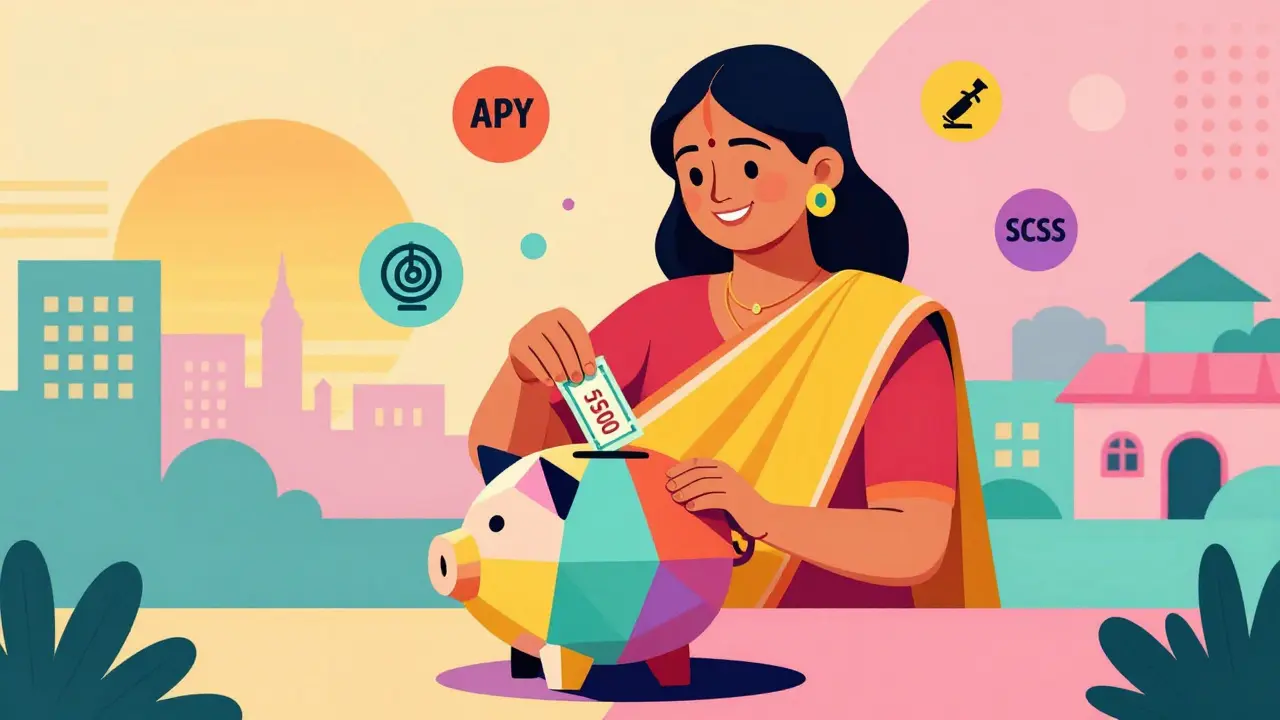
- Atal Pension Yojana (APY): Guaranteed monthly pension between ₹1,000 and ₹5,000 after 60. You pay monthly based on your desired pension. The government matches 50% of your contribution (up to ₹1,000/year) if you’re not a taxpayer. Open it at any bank or post office.
- Pradhan Mantri Vaya Vandana Yojana (PMVVY): A reverse mortgage scheme for seniors. If you own a home, you can get monthly payments by pledging it. Payments continue for life, and your family gets the property back after you pass.
- Senior Citizen Savings Scheme (SCSS): Available at post offices and banks. Offers 8.2% interest (as of 2025), paid quarterly. You can invest up to ₹15 lakh. Only for those 60+, but you can open it at 55 if you’ve retired.
These aren’t flashy investments. But they’re safe, backed by the government, and designed for people who don’t want to risk their life savings.
Build Your Own Emergency Fund - Separate From Family
Too many women rely on sons or daughters for support in old age. That’s not a plan. It’s hope.
Start by saving ₹10,000-₹20,000 in a separate account - even if it takes two years. This is your safety net. Use it only for medical emergencies, home repairs, or sudden care needs. Keep it in a savings account or liquid mutual fund. Don’t tie it to joint accounts. Make sure you’re the only one who can access it.
Claim Your Share of Family Assets
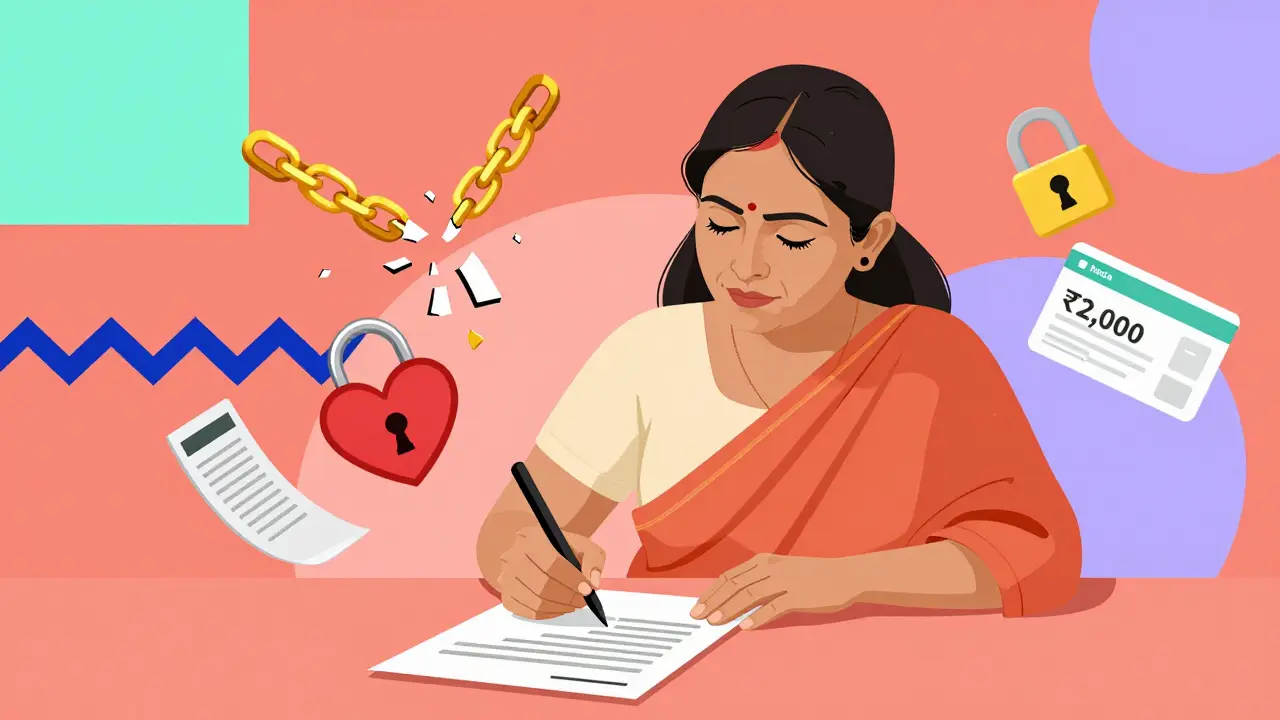
If you’ve contributed to buying a house, a car, or even a business - get your name on the papers. If you’re not already listed as a co-owner, talk to your spouse now. Get a legal document signed. Even if you don’t plan to use it, having your name on the title means you’re not at the mercy of someone else’s decisions.
And if your husband has a pension or life insurance - make sure you’re the primary beneficiary. Ask for the policy documents. Know where they’re stored. Don’t assume you’ll be told.
Invest in Health Before You Need It
Medical bills are the #1 reason women run out of money in retirement. A simple ₹5,000/year health insurance policy at age 45 can save you ₹5-10 lakh later.
Look for policies that cover pre-existing conditions after a waiting period. Avoid policies with high co-pays. The best ones for women are those that include maternity, menopause-related care, and long-term nursing support.
Don’t wait until you’re 55 to buy insurance. Premiums jump after 50. By 60, many companies won’t even offer coverage.
What to Avoid
There are traps - many of them disguised as good advice.
- Don’t rely on gold. Gold is emotional, not financial. It doesn’t pay interest. It’s hard to sell quickly. And its value doesn’t keep up with inflation.
- Don’t give all your savings to your children. It’s not a gift if you’re counting on it to survive.
- Don’t assume your husband’s plan is yours. He may have a pension, but if you’re not named, you get nothing.
- Don’t ignore your credit score. Even if you don’t take loans, your score affects insurance rates and rental agreements in old age.
Real-Life Examples
Meena, 52, from Jaipur, never worked outside the home. Her husband passed away at 58. She didn’t know where his pension papers were. She had ₹2 lakh in a joint account - but couldn’t withdraw it without legal documents. It took her 11 months to access the money. Today, she’s enrolled in APY and gets ₹2,000 a month. She’s not rich - but she’s not begging.
Rashmi, 48, is a school teacher. She started saving ₹1,500 a month in SCSS at 40. She added ₹1,000 a month to a mutual fund. At 60, she’ll have ₹18 lakh in savings - plus a pension. She owns her home in her name. She doesn’t need anyone.
These aren’t success stories. They’re survival stories. And they’re possible for anyone who starts now.
Where to Get Help
You don’t need a financial advisor with a suit and tie. Start with:
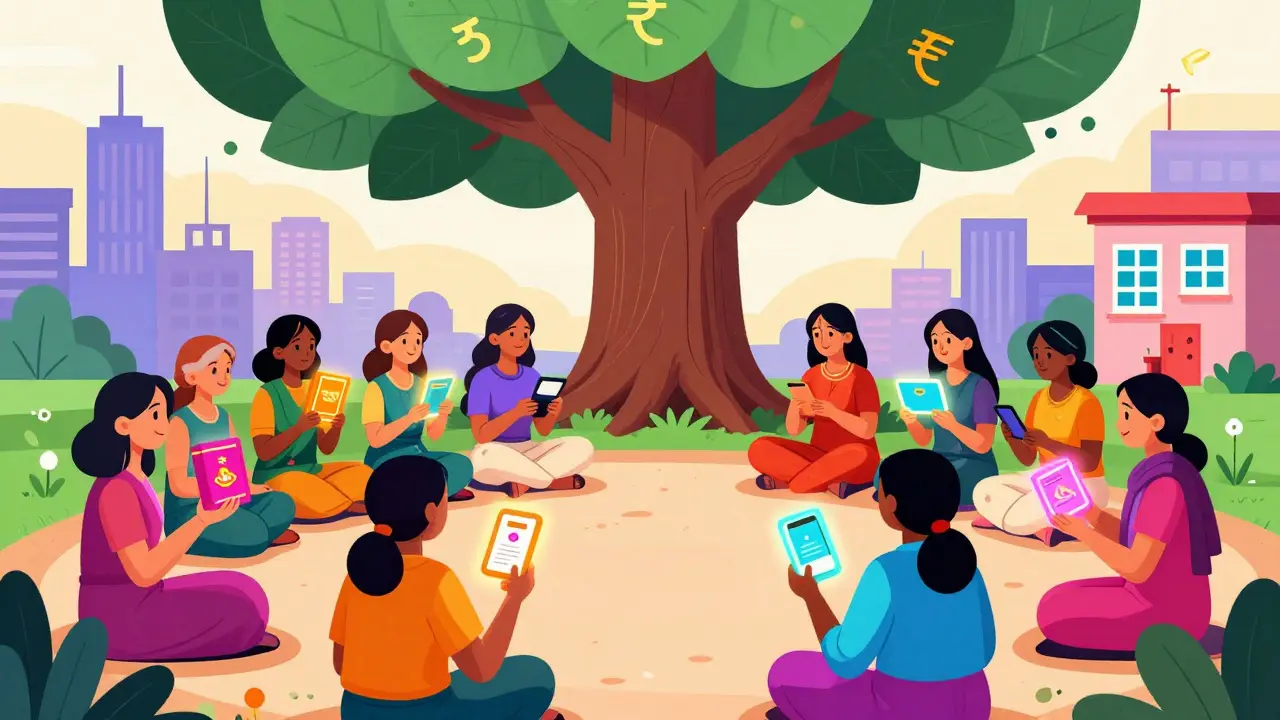
- Your local post office - they handle APY and SCSS
- Bank branches with women’s banking desks - many now offer free financial counseling
- NGOs like SEWA (Self-Employed Women’s Association) - they run retirement workshops in 15 states
- Government helplines: Dial 1800-180-1111 (National Pension System helpline)
Ask for a woman counselor. Most places have them now.
Start Today - Not Tomorrow
You don’t need to be perfect. You don’t need to save ₹50,000 a month. You just need to start.
Open a small savings account. Put ₹500 in it this week. Sign up for APY. Ask your bank for a retirement checklist. Talk to your family about your assets.
Retirement isn’t about having a lot. It’s about having control. And control starts with a single step - taken now.
Can a woman without a job retire in India?
Yes. Even if you’ve never worked outside the home, you can still build retirement security. Government schemes like Atal Pension Yojana (APY) let you contribute as little as ₹42 a month to get ₹1,000 monthly after 60. You can also open a Senior Citizen Savings Scheme (SCSS) if you’re 55 or older. The key is starting early and using public programs designed for non-working women.
How much money do Indian women need to retire comfortably?
There’s no fixed number, but a realistic target is ₹25-30 lakh in savings by age 60, assuming you live in a tier-2 or tier-3 city. This covers basic needs, healthcare, and inflation. In metros, aim for ₹40-50 lakh. The goal isn’t luxury - it’s independence. That means no borrowing from family, no selling your home, and no going without medicine.
Is pension enough for women in India?
No. Only 10% of Indian women receive a formal pension - mostly government employees. Most rely on family support or small savings. A ₹2,000 monthly pension from APY won’t cover rent, medicine, and food in most cities. That’s why you need savings on top of any pension. Think of pension as a base, not a full income.
What happens to a woman’s savings if her husband dies?
If the savings are in a joint account, she can usually access them. But if they’re only in his name - and she’s not the nominee - she may face legal delays or even lose access. That’s why it’s critical to be named as a beneficiary on all accounts, insurance policies, and investments. Keep copies of documents. Know where they are. Don’t wait for tragedy to find out.
Should women invest in mutual funds for retirement?
Yes - but only if you’re comfortable with some risk. Balanced or hybrid mutual funds (60% debt, 40% equity) are ideal for women in their 40s and 50s. They grow faster than fixed deposits but are safer than pure stocks. Start with ₹1,000 a month through SIPs. You don’t need to time the market. Just start and stay consistent. Use apps like Groww or Zerodha - they have simple interfaces and free guidance.
Can a widow claim her husband’s provident fund?
Yes. A widow is a legal nominee and can claim her husband’s EPF (Employees’ Provident Fund) balance. She needs to submit Form 10C, a death certificate, and proof of identity. If she wasn’t named as a nominee, she can still claim as a legal heir - but the process takes longer. Always update your nominee details while your spouse is alive.