
Rollup-as-a-Service: How to Spin Up Your Own Layer 2 Chain
 Oct, 6 2026
Building your own blockchain used to be a nightmare. You needed a dedicated DevOps team, months of engineering time, and deep pockets just to keep the lights on. But in 2026, things have changed. If you're an application developer looking for speed and low costs without sharing resources with thousands of other users, Rollup-as-a-Service (RaaS) is your shortcut. It lets you launch a custom Layer 2 (L2) or Layer 3 (L3) rollup chain in minutes, not months.
Think of RaaS like renting a fully furnished apartment instead of building a house from scratch. The provider handles the plumbing, electricity, and security (the infrastructure), while you decide how to decorate and who gets to live there (your application logic). This article breaks down exactly how this model works, which providers are leading the charge, and what you need to know before spinning up your own chain.
What Exactly Is Rollup-as-a-Service?
At its core, RaaS is a managed infrastructure model. Instead of building and maintaining the complex machinery that keeps a blockchain running-sequencers, data availability layers, bridges, and RPC endpoints-you delegate those tasks to specialized providers. Companies like Caldera, Conduit, and Lumoz offer platforms where you specify your chain's parameters, and they handle the heavy lifting.
Why does this matter? Traditional Layer 1 blockchains like Ethereum get congested. Every transaction competes for space. A rollup solves this by executing transactions off-chain and then posting compressed data or proofs back to the main chain (the settlement layer). This drastically reduces fees and increases speed. RaaS takes it a step further by making these rollups easy to deploy as standalone services tailored to specific applications.
The Core Architecture: How It Works Under the Hood
You don't need to be a cryptographer to use RaaS, but understanding the basic flow helps you make better decisions. Here’s the lifecycle of a transaction in a RaaS-enabled rollup:
- Execution Off-Chain: Your users interact with your app. Transactions are processed on your custom rollup chain, not directly on Ethereum. This is where the speed comes from.
- Batching: The rollup aggregates hundreds or thousands of these transactions into a single batch.
- Data Availability & Proofs: The provider submits this batch to the settlement layer (usually Ethereum). Depending on the type of rollup, they either post a validity proof (ZK) or rely on fraud-proof windows (Optimistic).
- Settlement: Ethereum verifies the data, ensuring security and finality.
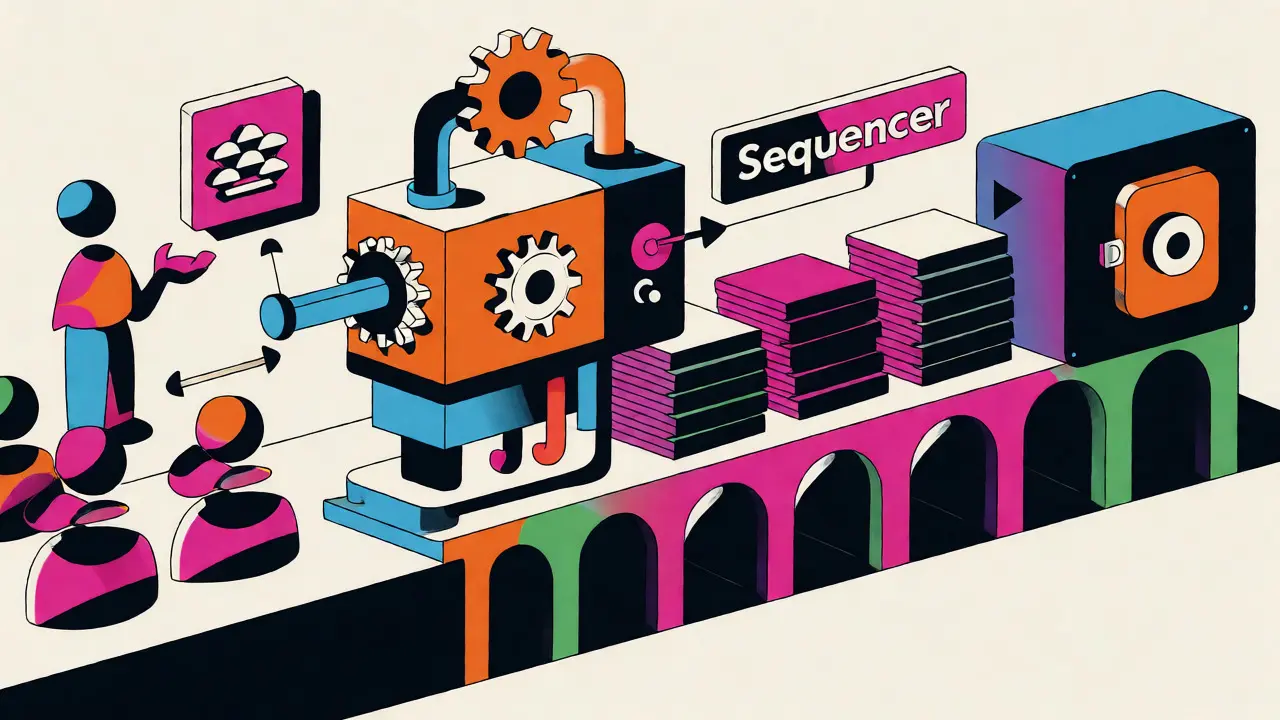
RaaS providers standardize this architecture. They manage the sequencer (which orders transactions), the prover (if using ZK tech), and the bridge (which moves assets between your chain and Ethereum). You retain control over critical business logic, such as gas tokens and fee structures, while they ensure the network stays online and secure.
Top RaaS Providers in 2026
The market has matured significantly since the early days of app-chains. Several providers now offer robust, production-grade solutions. Here’s a look at the key players:
| Provider | Key Frameworks Supported | Unique Feature | Best For |
|---|---|---|---|
| Caldera | Arbitrum Orbit, Optimism Bedrock, zkSync Stack | Metalayer interoperability network; dynamic programmable infrastructure | Projects needing cross-chain composability and high customization |
| Conduit | OP Stack, Arbitrum Orbit | One-click deployment in ~15 mins; OP Succinct integration for fast finality | Startups prioritizing rapid time-to-market and ease of use |
| Lumoz | ZK-centric stacks | Focus on cost reduction via advanced batching and ZK proofs | Applications requiring low-cost, high-throughput ZK rollups |
| Instanodes | L2/L3 Rollups | Contractual uptime SLAs; 24/7 monitoring and enterprise support | Institutional clients needing guaranteed reliability |
Step-by-Step: Spinning Up Your Custom Layer 2
So, how do you actually go from idea to live chain? While each provider has a slightly different interface, the general workflow remains consistent across the industry.
1. Choose Your Framework
This is your first major decision. Do you want an Optimistic Rollup (like those built on the OP Stack or Arbitrum Nitro) or a ZK Rollup (using zkSync’s ZK Stack or Polygon CDK)?
- Optimistic: Easier to integrate with existing Ethereum tools. Security relies on a challenge period (fraud proofs).
- ZK: Higher security guarantees with cryptographic proofs. Faster finality but historically more complex to build.
2. Select Settlement and Data Availability Layers
Most rollups settle to Ethereum for maximum security. However, some providers allow you to settle to other chains like Polygon or even another L2. You also need to choose a Data Availability (DA) layer. Ethereum’s blob storage is the standard, but alternatives exist if you’re optimizing for extreme cost savings.
3. Configure Chain Parameters
This is where you define your economy:
- Gas Token: Will users pay in ETH, USDC, or your native token?
- Fee Structure: Fixed fees, dynamic pricing, or subsidized transactions?
- Access Control: Is the chain public, permissioned, or whitelisted?
4. Deploy and Integrate
Once configured, you trigger the deployment. Providers like Conduit claim this can take as little as 15 minutes. After deployment, you receive your RPC endpoints, block explorer URL, and bridge contracts. You then point your frontend application to these new endpoints. That’s it. Your chain is live.

Pros and Cons: When Should You Use RaaS?
RaaS isn’t a silver bullet. It solves specific problems but introduces trade-offs.
The Wins
- Speed to Market: Launching in hours rather than months allows you to test product-market fit quickly.
- Dedicated Throughput: No competing with unrelated apps for block space. Your performance is predictable.
- Customization: You control the gas token and fee logic, enabling unique economic models.
- No DevOps Headaches: The provider handles node maintenance, upgrades, and incident response.
The Trade-offs
- Centralization Risks: You are relying on the provider’s sequencer. If they go down, your chain halts. Look for providers with clear decentralization roadmaps.
- Cost: Managed services aren’t free. You’ll pay monthly fees plus potentially higher operational costs compared to self-hosting, though this is often offset by hiring fewer engineers.
- Ecosystem Fragmentation: Each custom chain needs its own liquidity and user base. Bridging assets can still feel clunky compared to using a shared L2 like Base or Arbitrum One.
Future Outlook: Where Is RaaS Heading?
The trend is moving toward greater interoperability and hybrid architectures. We are seeing the rise of "Metalayers"-networks that connect multiple rollups, allowing them to communicate seamlessly without going back to Ethereum every time. Additionally, the line between optimistic and ZK rollups is blurring. Tools like OP Succinct, supported by Conduit, add ZK proofs to optimistic systems, combining the best of both worlds: easy compatibility and fast finality.
By late 2026, we expect RaaS to become the default for any serious dApp that requires scale. The era of one-size-fits-all L2s is ending. The future is modular, customizable, and service-driven.
Is Rollup-as-a-Service cheaper than deploying on a shared Layer 2?
Not necessarily for small projects. Shared L2s like Arbitrum or Base benefit from massive economies of scale. However, for high-volume applications, RaaS can be cheaper because you avoid congestion-based fee spikes and can optimize your own gas policy. Plus, you save significant money on engineering salaries by not maintaining your own infrastructure.
Do I lose security by using a RaaS provider?
No, the underlying security still derives from the settlement layer (e.g., Ethereum). However, you introduce trust assumptions regarding the sequencer. If the provider acts maliciously or goes offline, your chain may pause. Most reputable providers mitigate this through multi-signature controls and transparent operations.
Can I migrate my existing smart contracts to a RaaS chain?
Yes, most RaaS solutions are EVM-compatible. If your contracts work on Ethereum, they will likely work on an OP Stack or Arbitrum-based rollup without changes. For non-EVM chains (like Solana-based rollups), you might need to rewrite logic.
How long does it take to launch a chain?
With platforms like Conduit, you can deploy a testnet or mainnet chain in under 15 minutes. More complex configurations involving custom DA layers or ZK proving systems might take a few days for setup and testing, but it is still vastly faster than traditional infrastructure builds.
What happens if the RaaS provider shuts down?
This is a valid concern. Since the state root is posted to Ethereum, the data is safe. However, you would need to find a new operator to run the sequencer and nodes. Some providers offer export tools or open-source their stack to facilitate migration, so check the contract terms carefully.