
Section 80C for Homebuyers in India: Combining Principal, Stamp Duty, and Registration
 Jun, 29 2026
Buying a home in India is expensive. Between the down payment, legal fees, and the actual property cost, your wallet takes a serious hit. But there is one silver lining that many first-time buyers miss or misunderstand: Section 80C of the Income Tax Act. This section allows you to claim deductions up to ₹1.5 lakh per financial year on specific investments and expenses. For homebuyers, this isn't just about investing in mutual funds; it's about how you structure your home purchase payments to maximize these benefits.
The confusion usually starts with what exactly counts. Can you deduct the entire loan amount? What about the stamp duty you paid to the state government? Does the registration fee at the sub-registrar’s office count toward your limit? The short answer is yes, but with strict conditions regarding timing and documentation. Getting this wrong means leaving money on the table during tax filing season.
What Exactly Qualifies Under Section 80C for Homes?
To claim a deduction under Section 80C for a residential property, the expense must fall into two specific buckets: the repayment of the principal component of your home loan and the payment of stamp duty and registration charges. It is crucial to understand that interest payments on the home loan do not go here; they are claimed separately under Section 24(b).
Here is the breakdown of eligible components:
- Principal Repayment: The portion of your EMI (Equated Monthly Installment) that goes toward reducing the original loan amount.
- Stamp Duty: The tax paid to the state government on the property transaction.
- Registration Fees: The fee paid to register the property deed in your name.
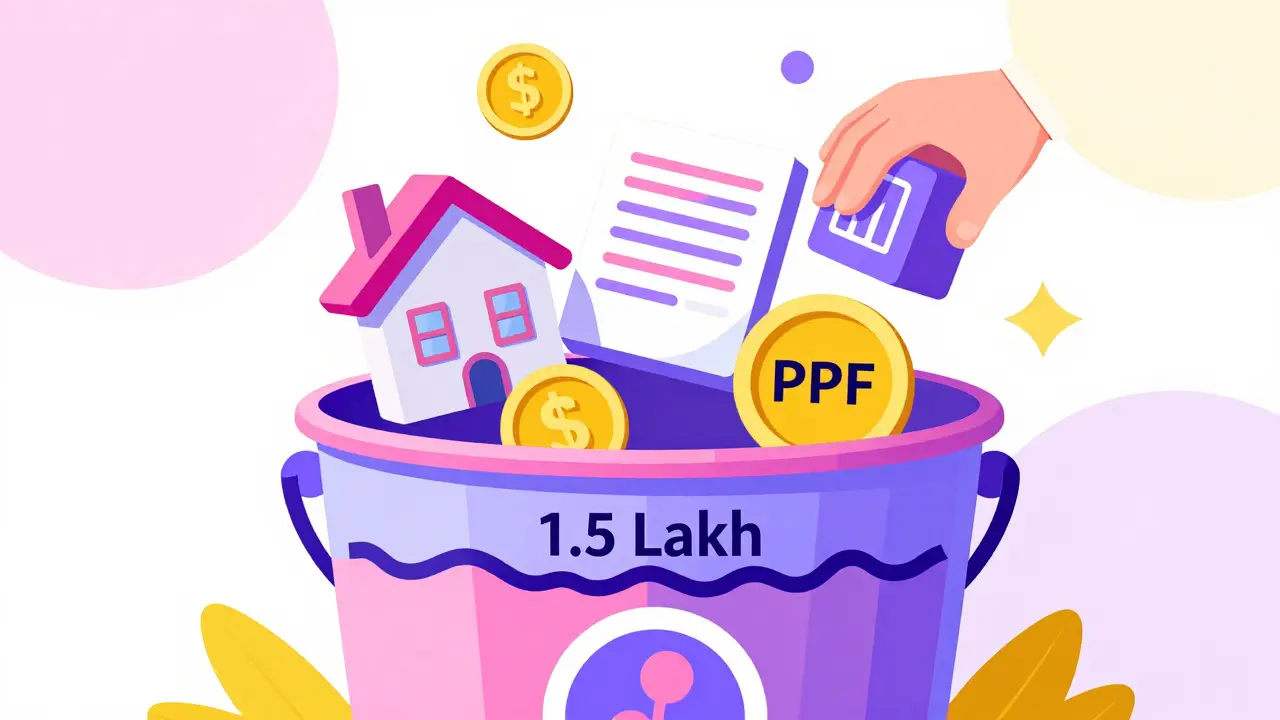
These three items share the same pot. The total deduction you can claim from all sources-including Public Provident Fund (PPF), Life Insurance Premiums, Equity Linked Savings Schemes (ELSS), and National Pension System (NPS)-cannot exceed ₹1.5 lakh in a single financial year. If you have already maxed out your 80C limit with other investments, paying extra for your home principal won't give you additional tax relief unless you reduce those other investments.
The Critical One-Year Rule You Cannot Ignore
This is where most people make mistakes. The Income Tax Department has a strict timeline for claiming stamp duty and registration charges. You can only claim these costs if you pay them within one year from the end of the financial year in which you acquired the property.
Let’s look at a concrete example. Suppose you bought an apartment in Mumbai in June 2024. The financial year ends on March 31, 2025. You have until March 31, 2026, to pay the stamp duty and registration fees and claim them under Section 80C. If you delay the registration process and pay these fees in April 2026, you lose the tax benefit entirely. The clock does not start ticking from the date of purchase, but from the end of the financial year when the purchase happened.
For principal repayments, the rule is slightly different but equally important. You can claim the principal repaid in the current financial year. However, if you prepay the loan or pay a lump sum toward the principal, ensure the bank provides a proper certificate showing the exact amount paid toward the principal versus interest. Banks issue Form 16B or similar statements annually, which you should keep handy.

Combining Principal, Stamp Duty, and Registration: A Practical Strategy
Since all these expenses compete for the same ₹1.5 lakh limit, strategic planning is essential. Imagine you are a salaried employee who has already invested ₹50,000 in PPF and paid ₹30,000 in life insurance premiums. You have ₹70,000 remaining in your Section 80C limit.
In the year you buy the house, you might pay ₹1 lakh in stamp duty and registration fees. Your home loan principal repayment for that year is ₹1.2 lakh. Technically, your total eligible amount is ₹2.2 lakh. However, you can only claim ₹1.5 lakh. You would use the remaining ₹70,000 of your limit to cover part of the stamp duty/principal mix. The excess amount cannot be carried forward to the next year. This is a lost opportunity if not planned correctly.
To optimize this, consider shifting some flexible investments. If you plan to buy a home soon, you might pause contributions to ELSS or PPF temporarily, ensuring that your home-related expenses fill the ₹1.5 lakh bucket completely. Remember, stamp duty and registration are one-time costs, while principal repayment happens every year. Prioritize the one-time costs in the year of acquisition because they expire quickly.
| Expense Type | Section | Maximum Deduction | Key Condition |
|---|---|---|---|
| Principal Repayment | Section 80C | ₹1.5 Lakh (shared limit) | Must be self-occupied or let-out property |
| Stamp Duty & Registration | Section 80C | ₹1.5 Lakh (shared limit) | Must be paid within 1 year of FY end of acquisition |
| Home Loan Interest | Section 24(b) | ₹2 Lakh (self-occupied) | Separate limit from 80C |
| Pre-construction Interest | Section 24(b) | ₹2 Lakh per year for 5 years | Property must be completed within 5 years |
Documentation Required for Claiming the Deduction
The Income Tax Department requires proof for every rupee you claim. Without the right documents, your return could be flagged for scrutiny. Here is what you need to gather:
- Property Registration Deed: This proves the date of acquisition and the value of the property.
- Receipts for Stamp Duty and Registration: Official receipts from the state treasury or online payment portals showing the exact amount paid.
- Bank Certificate: An annual statement from your lender detailing the breakup of EMI into principal and interest. This is usually available on the bank’s net banking portal.
- Form 16B: Issued by the builder or seller if TDS was deducted at source during the transaction.
If you are buying under construction, the timeline gets tricky. You can only claim Section 80C benefits once the property is registered in your name. Payments made as "advance" or "booking amount" before registration do not qualify for 80C. They may qualify for other benefits later, but not the principal/stamp duty deduction until the title transfers.
Common Pitfalls to Avoid
Many taxpayers assume that any payment related to the house qualifies. This is incorrect. Maintenance deposits, club membership fees, interior decoration costs, and furniture purchases are not eligible for Section 80C. Only the core legal and financing costs count.
Another common error is double-counting. If you claim the stamp duty under Section 80C, you cannot also include it in the cost of acquisition for calculating Capital Gains Tax later. Wait, actually, you can include it in the cost of acquisition for capital gains calculation. These are separate calculations. However, you cannot claim the same expense under two different tax sections simultaneously. Ensure your CA checks this overlap.
Also, be aware of the "let-out" vs. "self-occupied" distinction. While Section 80C applies to both, the rules for interest deduction change. If you rent out the property, the full interest is deductible against rental income, but the principal repayment still falls under the ₹1.5 lakh cap of Section 80C.
How to File This in Your ITR
When filling out your Income Tax Return (ITR), navigate to the "Schedule HA" (House Property) and "Chapter VIA" (Deductions). Enter the principal repayment amount in the designated field for Section 80C. The stamp duty and registration fees are added to this same line item. The software will automatically aggregate this with your other 80C investments (like PPF or ELSS) to ensure the total does not exceed ₹1.5 lakh.
If you are using ITR-1 (Sahaj), note that it only covers salary income and one house property. If you have multiple properties or complex deductions, you may need to use ITR-2. Always verify that the total declared in Schedule 80C matches the sum of all your investment proofs.
Can I claim stamp duty and registration fees if I bought the house five years ago?
No. You can only claim stamp duty and registration fees if they were paid within one year from the end of the financial year in which the property was acquired. Since five years have passed, this window has closed. You can, however, continue to claim the principal repayment of your home loan under Section 80C each year.
Does the ₹1.5 lakh limit apply per person or per household?
The limit applies per individual taxpayer. If you and your spouse both work and jointly own the property, you can each claim up to ₹1.5 lakh under Section 80C, provided you file separate returns. This effectively doubles the potential deduction for the household.
Can I claim Section 80C benefits for a plot of land?
Generally, no. Section 80C benefits for home loans are specifically for residential buildings. Buying a vacant plot of land does not qualify for principal repayment or stamp duty deductions under this section unless you construct a house on it immediately and meet specific criteria, which is rare and complex. Consult a CA for such niche cases.
What if my total 80C investments exceed ₹1.5 lakh?
You can only deduct up to ₹1.5 lakh. Any amount above this limit is not deductible under Section 80C. For example, if you paid ₹1 lakh in home principal and ₹60,000 in PPF, you can only claim ₹1.5 lakh total. The remaining ₹10,000 offers no tax benefit under this section.
Is there a difference in benefits for affordable housing vs. luxury homes?
Under Section 80C, the limit is the same regardless of the property value. However, affordable housing often comes with additional state-level subsidies or lower stamp duties, which indirectly saves money. Also, new regulations sometimes offer enhanced interest deductions for affordable homes under Section 80EEA, which is separate from 80C.