
Section 80CCD(1B) in India: How to Claim an Extra ₹50,000 Deduction for NPS Contributions
 Dec, 4 2025
Every year, millions of Indians file their income tax returns and miss out on a simple way to save up to ₹15,000 in taxes - just by contributing an extra ₹50,000 to the National Pension System (NPS). This isn’t a rumor. It’s Section 80CCD(1B), a powerful tax break that most people don’t know about - or worse, they think it’s already included in their 80C limit.
What Section 80CCD(1B) Actually Lets You Claim
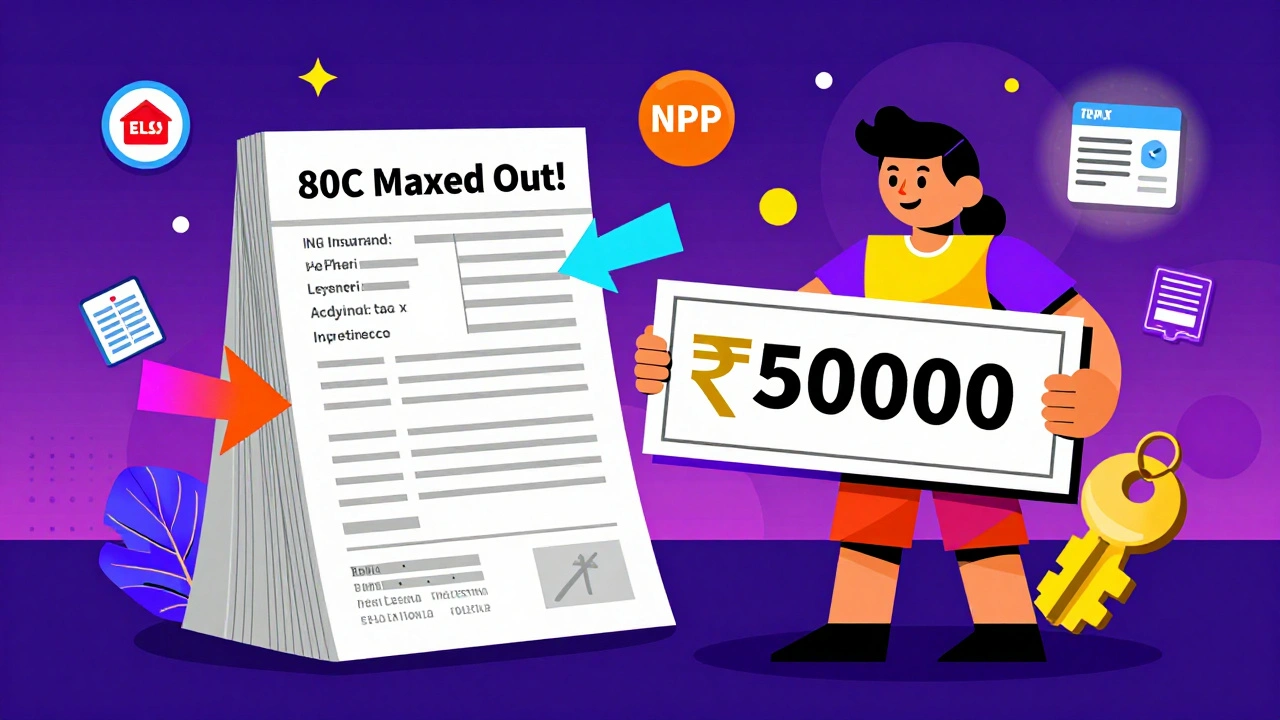
Section 80CCD(1B) gives you an additional ₹50,000 deduction on top of the ₹1.5 lakh limit under Section 80C. That’s not a trick. It’s a separate bucket. If you’ve already maxed out your 80C investments - like PPF, ELSS, life insurance, or home loan principal - you can still claim another ₹50,000 off your taxable income by putting money into NPS.
This means your total tax-saving potential jumps from ₹1.5 lakh to ₹2 lakh. For someone in the 30% tax bracket, that’s ₹15,000 back in your pocket. For the 20% bracket? ₹10,000. It’s free money from the government if you’re willing to lock in a small part of your savings for retirement.
How NPS Works with Section 80CCD(1B)
NPS is a government-backed retirement scheme managed by the Pension Fund Regulatory and Development Authority (PFRDA). You open an account - either Tier I (mandatory lock-in) or Tier II (flexible withdrawals). Only contributions to Tier I qualify for 80CCD(1B).
You can contribute as a salaried employee, self-employed person, or even as a government worker. The key is: the money must go into your NPS Tier I account. You can do this through your employer’s payroll (if they offer it), or directly via the NPS website or your bank’s NPS portal.
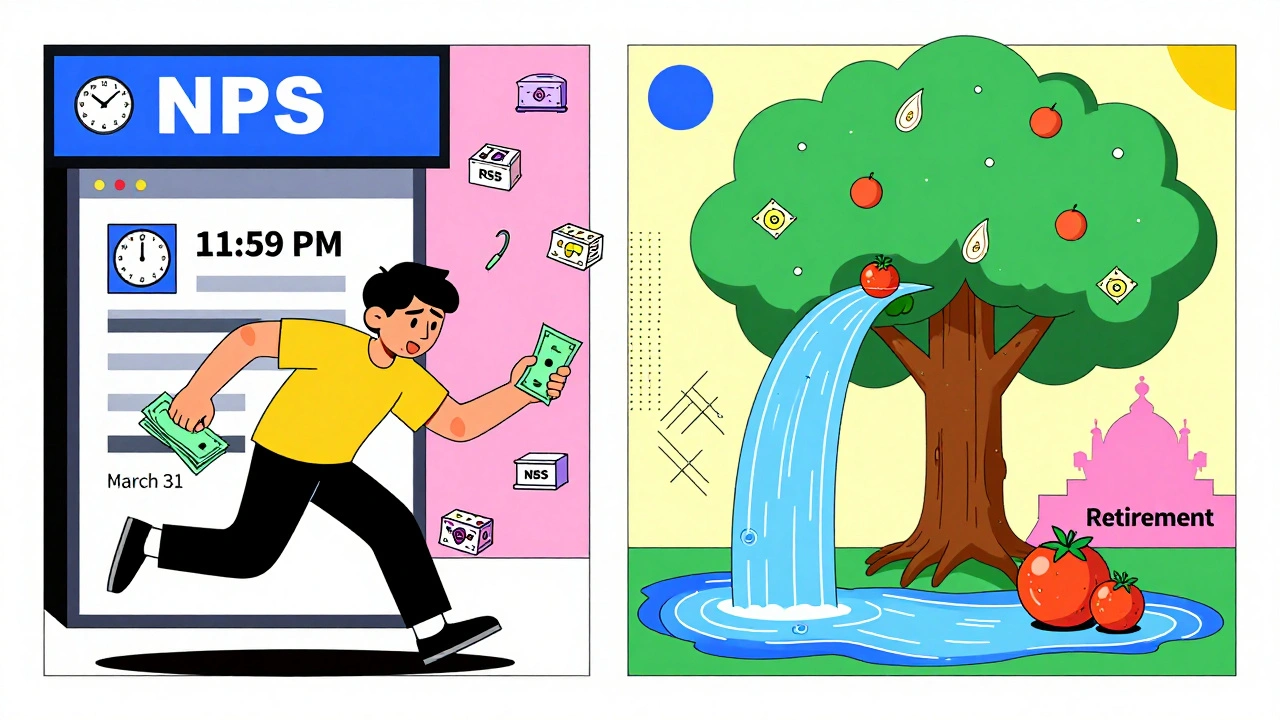
Here’s the catch: you can’t just deposit ₹50,000 anytime. The contribution must be made between April 1 and March 31 of the financial year. If you wait until March 30, you might still make it - but don’t risk it. Banks and NPS portals get overloaded in the last week.
How It Fits With Other Deductions
Many people get confused because there are multiple sections that cover NPS:
- Section 80CCD(1): Lets you claim up to ₹50,000 for your own NPS contributions - but this is part of the ₹1.5 lakh 80C limit.
- Section 80CCD(2): If your employer contributes to your NPS, you can claim that amount too - up to 10% of your salary (basic + DA). This is separate from both 80C and 80CCD(1B).
- Section 80CCD(1B): This is the extra ₹50,000 you get on top of everything else. No overlap. No reduction. Just pure deduction.
So here’s what the math looks like for a salaried person:
- ₹1.5 lakh under 80C (PPF, ELSS, insurance, etc.)
- ₹50,000 under 80CCD(1B) (your own NPS contribution)
- ₹1.2 lakh under 80CCD(2) (employer’s NPS contribution)
Total deduction: ₹3.2 lakh. That’s not theoretical. People are doing this every year.
Who Should Use Section 80CCD(1B)
This isn’t for everyone. It’s for people who:
- Are already maxing out their 80C limit
- Want to save for retirement in a low-cost, transparent system
- Are in the 20% or 30% tax bracket
- Don’t mind locking money until age 60
If you’re under 30 and just starting to invest, you might not need this yet. But if you’re 35+, and you’ve got your emergency fund, insurance, and mutual funds in place - this is the next logical step.
One common mistake: people think NPS is risky because it invests in equities. Yes, it does - but only up to 50% for young investors. The rest goes into government bonds and corporate debt. Over 20+ years, the average return has been 8-10%. That’s better than PPF and far more tax-efficient.
How to Start or Increase Your NPS Contribution
It’s easier than opening a bank account.
- Go to nps.org.in and click on "Open NPS Account".
- Choose "Individual" and select "Tier I".
- Fill in your PAN, Aadhaar, and bank details.
- Verify your identity using OTP.
- Once your PRAN (Permanent Retirement Account Number) is generated, you can start contributing.
If you’re salaried, ask your HR to enable NPS deduction from your salary. Most companies now offer it. If they don’t, you can still contribute directly - and claim the deduction when filing your ITR.
Set up a monthly auto-debit for ₹4,167 (₹50,000 ÷ 12). That way, you never forget. And you avoid the March rush.
What Happens When You Retire?
You can’t withdraw the full amount at 60. By law, you must use at least 40% of your corpus to buy an annuity (a monthly pension). The remaining 60% is tax-free if you take it as a lump sum.
Here’s the kicker: the annuity payments you get later are taxable as income - but you’ll likely be in a lower tax bracket then. So you’re deferring tax to when you need less of it.
If you retire early or pass away before 60, your nominee gets the full corpus tax-free.
Common Myths About Section 80CCD(1B)
Let’s clear up the noise:
- Myth: NPS is only for government employees.
Truth: Anyone can open an NPS account - private sector, freelancers, homemakers. - Myth: You lose your money if you don’t use it.
Truth: Your money stays invested. You can change your fund manager or asset allocation anytime. - Myth: The ₹50,000 limit is shared with 80C.
Truth: It’s completely separate. You can do ₹1.5 lakh in 80C + ₹50,000 in 80CCD(1B) - no cap on total. - Myth: Only direct contributions count.
Truth: Employer contributions (80CCD(2)) don’t eat into your 80CCD(1B) limit. They’re separate.

What If You Miss the Deadline?
If you didn’t contribute by March 31, you can’t claim the deduction for that year. There’s no carry-forward. No extension. No loopholes.
But here’s what you can do: mark your calendar for next April 1. Set a reminder six months ahead. Use a budgeting app like Walnut or ETMoney to track your NPS contributions alongside your other investments.
Pro tip: If you’re filing ITR in July and realize you forgot, you can still file a revised return before December 31 of the same year - but only if you’ve already made the contribution. You can’t make the payment after March 31 and claim it retroactively.
Alternatives to NPS for Extra Deduction
Is NPS the only way to get that extra ₹50,000 deduction? Yes. There’s no other section in the Income Tax Act that gives you a standalone ₹50,000 deduction outside 80C.
Some people look at health insurance (80D), education loans (80E), or home loan interest (24) - but those are either capped, conditional, or not available to everyone. NPS is the only universal, high-value, post-80C deduction available to all taxpayers.
And unlike ELSS (which has a 3-year lock-in), NPS locks your money until retirement - but that’s exactly why it works. It forces discipline. You’re not just saving for tax. You’re building a real retirement fund.
Real-Life Example
Meet Priya, 38, a marketing manager in Bengaluru. Her annual income is ₹18 lakh. She already invests ₹1.5 lakh in ELSS, PPF, and life insurance. She pays ₹12,000/year in health insurance (80D). She doesn’t have a home loan.
In January 2025, she contributes ₹50,000 to her NPS Tier I account. Her total deductions now:
- ₹1.5 lakh (80C)
- ₹50,000 (80CCD(1B))
- ₹12,000 (80D)
Total taxable income drops from ₹18 lakh to ₹15.88 lakh. Her tax liability falls from ₹3,34,000 to ₹2,89,000. She saves ₹45,000 - and has ₹50,000 growing in a low-cost pension fund.
She didn’t change her lifestyle. She just moved ₹4,167/month from her savings account into NPS. That’s less than her daily coffee budget.
Final Checklist: Are You Using Section 80CCD(1B)?
Before you file your ITR this year, ask yourself:
- Have I maxed out my ₹1.5 lakh under Section 80C?
- Have I contributed any amount to NPS Tier I this financial year?
- Is that contribution at least ₹50,000?
- Do I have the contribution receipt or PRAN statement?
- Did I make the payment before March 31?
If you answered yes to all five - you’re already saving thousands. If not, you’re leaving money on the table.
Section 80CCD(1B) isn’t a hidden loophole. It’s a public policy tool designed to encourage retirement savings. The government wants you to plan ahead. And if you’re reading this, you’re already ahead of 90% of taxpayers who don’t even know it exists.
Can I claim Section 80CCD(1B) if I’m self-employed?
Yes. Self-employed individuals can claim the full ₹50,000 deduction under Section 80CCD(1B) by contributing to their own NPS Tier I account. There’s no requirement to be salaried. You just need to make the contribution before March 31 and keep your transaction receipt.
Is the ₹50,000 limit per person or per family?
It’s per individual. Only the person who contributes to NPS can claim the deduction. Spouses or children cannot claim it on your behalf. If your spouse also contributes ₹50,000 to their own NPS, they can claim the deduction separately.
Can I claim both 80CCD(1B) and employer’s NPS contribution?
Yes. Your employer’s contribution (up to 10% of your salary) is covered under Section 80CCD(2), which is completely separate from your own ₹50,000 deduction under 80CCD(1B). You can claim both in the same year.
What if I contribute more than ₹50,000 to NPS?
You can contribute more - say ₹1 lakh - but only ₹50,000 will count under Section 80CCD(1B). Any amount above that doesn’t get extra tax benefit. However, the entire amount still grows tax-free in NPS and will be partially tax-free at withdrawal.
Can I claim 80CCD(1B) if I’m retired and not earning income?
No. You can only claim tax deductions if you have taxable income. If you’re retired and have no income, contributing to NPS won’t give you any tax benefit. But you can still contribute if you want to grow your retirement corpus - just without the deduction.