
Secure Signing UX: How Human-Readable Transactions Prevent Crypto Losses
 Jan, 24 2026
Imagine clicking "Approve" on a crypto transaction without knowing what you’re actually allowing. You think you’re sending 0.5 ETH to a friend. But you’re really giving a smart contract unlimited access to all your tokens. By the time you realize it, your wallet is empty. This isn’t a rare mistake-it’s happening every day. And it’s not because users are careless. It’s because most crypto wallets still show transactions in a language only developers understand.
Why Your Wallet Is Still Speaking Hex
Most crypto wallets today still display raw blockchain data: hexadecimal addresses, gas fees in Gwei, and function calls likeapprove(address,uint256). To a regular person, this looks like random letters and numbers. Even experienced users get confused. A 2023 study by Purrweb found that only 42% of users could correctly identify what a transaction was doing when shown raw data. The rest either guessed, ignored it, or clicked through out of frustration.
This isn’t just inconvenient-it’s dangerous. Alchemy’s 2023 Web3 guide calls this "information asymmetry": the gap between what the system shows and what the user understands. That gap is where losses happen. In 2021, the Poly Network hack stole $2.8 million because users approved transactions that looked harmless but granted full control over their assets. In January 2024, 47 people lost $28,500 after a phishing site showed a simple "Approve USDT" button-hiding the fact that they were granting unlimited spending rights.
What Human-Readable Signing Actually Looks Like
Human-readable transaction signing flips the script. Instead of hex codes, you see plain English. Here’s what it changes:- Before:
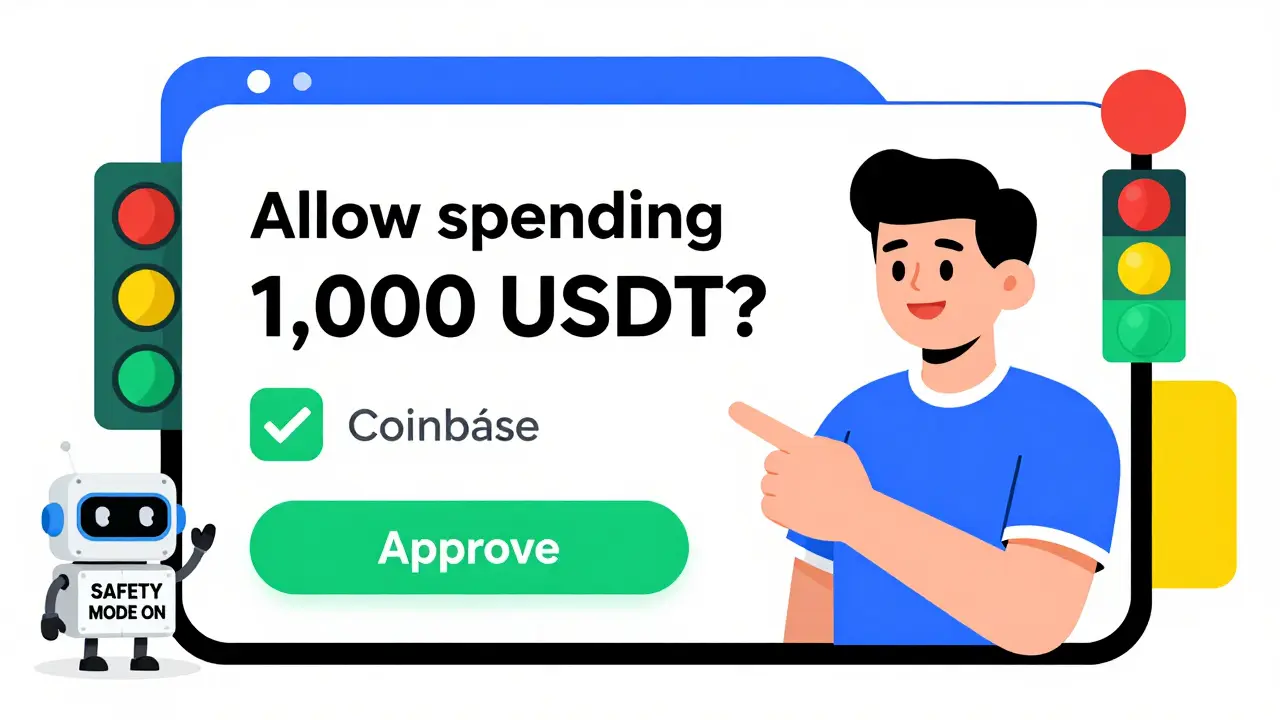
approve(0x7a250d5630B4cF539739dF2C5dAcb4c659F2488D, 1000000000000000000000) - After: "Allow this app to spend up to 1,000 USDT from your wallet for trading."
- Before: "Gas fee: 25 Gwei"
- After: "Network cost: $0.85"
- Before: Address:
0x8a7e...3b4f - After: "Sending to: Coinbase (verified exchange)"
Color, Clarity, and Control: The Design Principles Behind Safer Signings
It’s not just about changing words. It’s about how you present them. Leading wallets now use visual cues that work even when you’re rushing:- Green = Safe (verified exchange, familiar recipient)
- Yellow = Caution (new app, limited allowance)
- Red = High risk (unknown contract, unlimited access)
Real Wins and Real Risks
There are success stories. One Reddit user, u/SecureHodler, said Trust Wallet’s warning flagged a scam address before they approved a transaction. They saved $3,200. MetaMask’s 2024 "transaction guardrails" automatically block interactions with flagged contracts. Users report fewer mistakes and more confidence. But it’s not perfect. Some power users complain. Coincover’s 2023 survey found 12% of advanced traders want an "advanced mode"-they need to see exact parameters for complex DeFi swaps. Oversimplifying can hide risks. In 2022, Wombat Exchange lost $1.1 million because a simplified description made a malicious contract look like a normal approval. The danger isn’t just in what’s shown-it’s in what’s left out.Why This Matters More Than Ever
The crypto wallet market is exploding. It was worth $3.2 billion in 2023 and could hit $18.7 billion by 2030. But adoption isn’t just about technology-it’s about trust. Spacekayak’s research shows wallets with human-readable signing see a 52% increase in user trust. Non-technical users are 3.2x more likely to stick with wallets that explain what’s happening. Regulators are catching up. The EU’s MiCA framework, effective June 2024, requires financial platforms to provide "clear and comprehensible information." That means wallets showing hex codes could soon be non-compliant. Meanwhile, 67 Fortune 100 companies now use blockchain internally-and they all demand human-readable interfaces for employees who aren’t coders.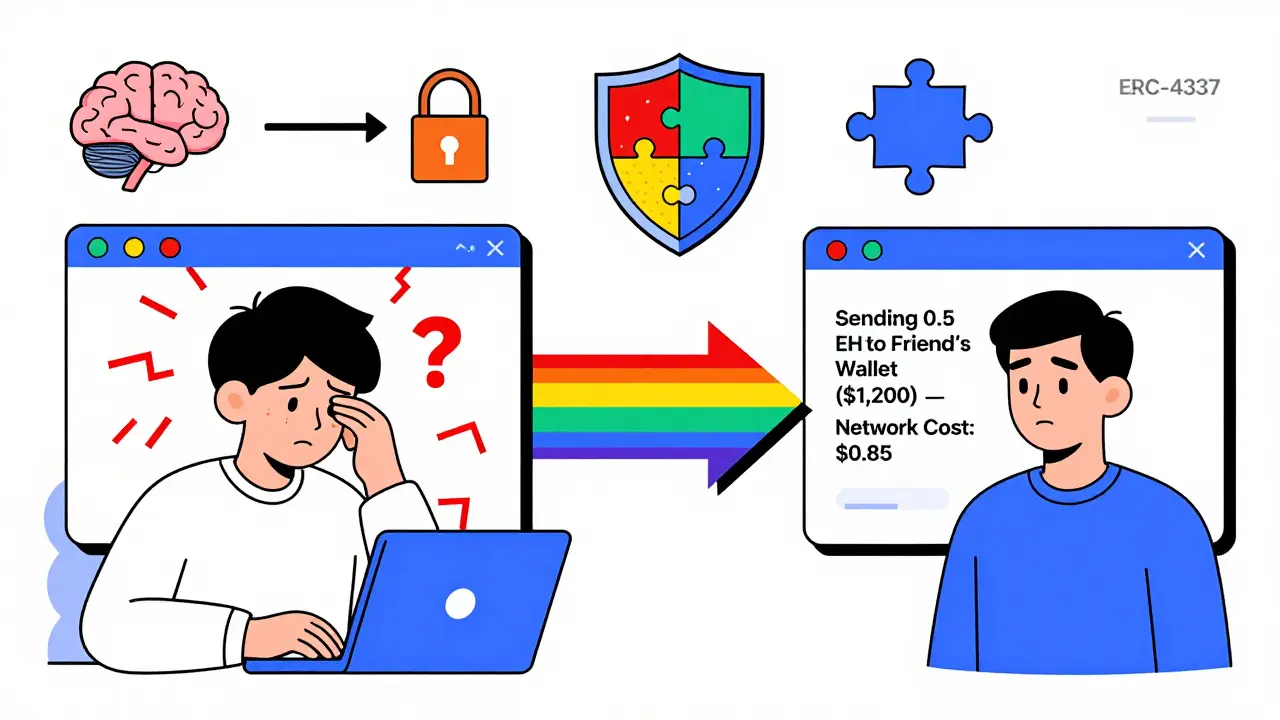
What’s Next: AI, Threshold Signatures, and Standardization
The next wave is even smarter. AI-powered risk engines, like the one Coinbase tested in late 2023, can predict malicious intent with 92% accuracy by analyzing transaction patterns. Threshold cryptography lets multiple devices verify a transaction before it’s signed-removing the single point of failure that hackers target. Ethereum’s ERC-4337 account abstraction is gaining steam. Adoption jumped from 12% to 38% of new wallets in just six months. This lets wallets handle signing logic behind the scenes, so users never see a raw transaction at all. And there’s a push for standardization. EIP-5792, currently in draft, aims to create a universal format for transaction descriptions. Imagine if every wallet showed the same plain-language summary for the same contract. That’s the goal.What You Should Do Today
If you use a crypto wallet:- Check if your wallet shows plain-language explanations. If not, switch to one that does-MetaMask, Trust Wallet, or Coinbase Wallet are good starting points.
- Never approve a transaction without reading the summary. Even if it says "Approve USDT," look for the amount and the recipient.
- Turn on any security alerts. Most wallets now let you block high-risk contracts or require double confirmation.
- For advanced users: use the "Show Details" option to verify contract addresses before approving complex DeFi actions.
Frequently Asked Questions
What exactly is a human-readable transaction in crypto?
A human-readable transaction translates raw blockchain data-like hex addresses and smart contract function calls-into simple, plain-language descriptions. Instead of seeing "approve(0x..., 1000000000000000000000)," you see "Allow this app to spend up to 1,000 USDT from your wallet." It tells you exactly what you’re approving, in terms you understand.
Why do some wallets still show hex codes?
Many older or simpler wallets were built for developers and haven’t updated their interfaces. Others avoid human-readable displays because they’re harder to implement-they require integrating price APIs, threat databases, and smart contract parsers. But as user demand grows and regulations tighten, wallets that don’t adapt are losing users.
Can human-readable signing make me 100% safe?
No. It reduces mistakes, but it doesn’t eliminate risk. Scammers can still create fake apps or trick you into approving something that looks harmless. Always verify the app you’re connecting to, check the recipient address, and never approve transactions from links in emails or DMs. Human-readable signing is a shield-not a force field.
Do I need to be technical to use wallets with human-readable signing?
No. These wallets are designed for people who don’t know what a smart contract is. The interface hides complexity by default. If you want to dig deeper, most offer an "Advanced" toggle to see the raw data-but you don’t have to use it.
How do I know if my wallet has good transaction clarity?
Try this: sign a simple transaction, like sending ETH to a friend. Does it say "Sending 0.3 ETH ($912) to 0x..." or does it say "Sending 0.3 ETH ($912) to your friend’s wallet"? Does it warn you if the recipient is flagged? Does it show the network cost in dollars? If yes, you’re using a wallet with strong UX. If it shows only hex and numbers, it’s time to switch.