
Sequence of Returns Risk in India: Protecting Your Retirement Income
 Jun, 10 2026
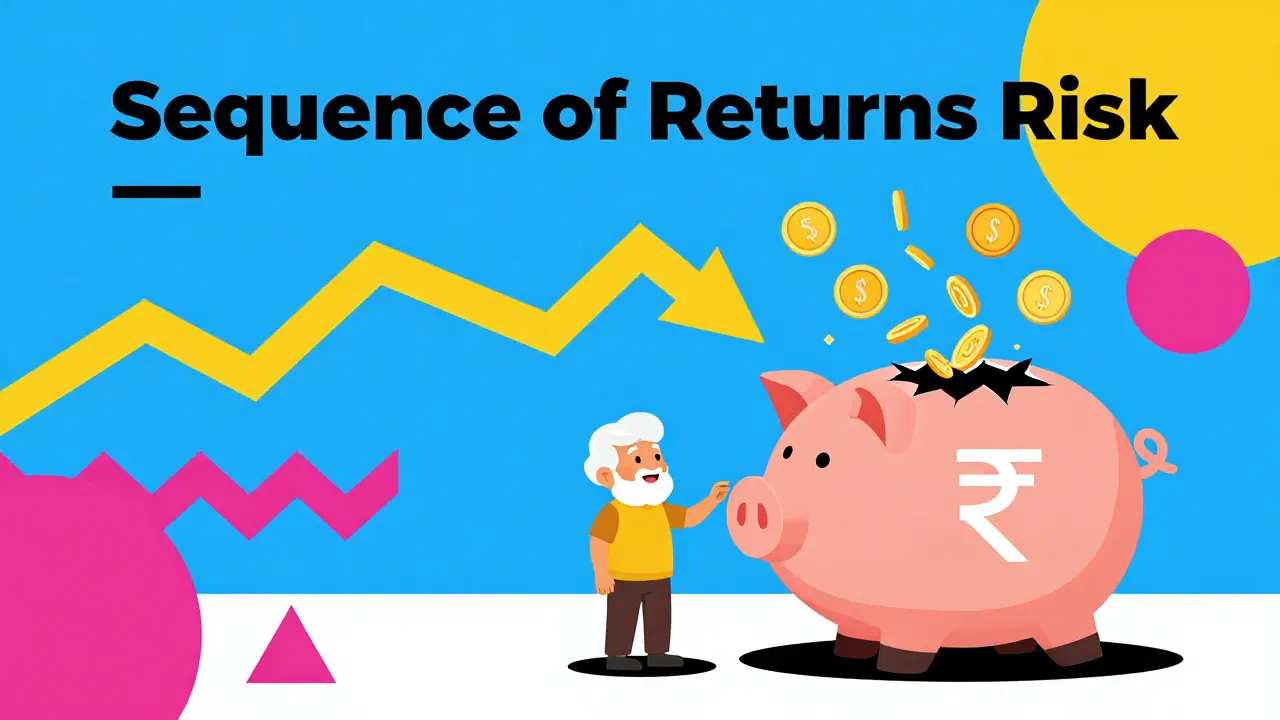
Imagine you retire in January 2024 with a well-funded portfolio. You start withdrawing money to pay your bills. Then, the market crashes. By the time you check your balance in December, you’re down significantly-not just because the market fell, but because you sold assets at their lowest points to cover living expenses. This isn’t bad luck. It’s sequence of returns risk, and it is one of the most dangerous, yet misunderstood, threats to Indian retirees.
In India, where inflation often hovers around 6% and life expectancy is rising, your retirement corpus needs to last 25 to 30 years. A poor sequence of returns can erode that corpus by decades before you even realize what happened. The good news? You can mitigate this risk with specific structural changes to how you withdraw money.
What Exactly Is Sequence of Returns Risk?
Sequence of Returns Risk is the danger that the order in which investment returns occur impacts the longevity of your portfolio, specifically when withdrawals are made during market downturns. It is distinct from general market volatility. If you do not touch your money, a market drop followed by a recovery leaves you whole. But if you withdraw cash during the drop, you sell units at depressed prices. When the market recovers, you have fewer units left to grow. The math works against you permanently.
To visualize this, consider two scenarios for an Indian investor with ₹1 crore invested:
- Scenario A (Good Sequence): Year 1 return is +10%. You withdraw ₹6 lakh. Year 2 return is -10%. Your remaining balance grows on a larger base.
- Scenario B (Bad Sequence): Year 1 return is -10%. You still need to withdraw ₹6 lakh. You sell more units to get that cash. Year 2 return is +10%. You recover, but on a smaller base.
Over 20 years, Scenario B can leave you with 20-30% less wealth than Scenario A, even though the average annual return was identical. In the context of Indian Retirement Planning, where medical emergencies or family support obligations might force early, large withdrawals, this risk is acute.
Why Indian Markets Make This Riskier
Many Indian investors assume that because the Nifty 50 has delivered double-digit returns over the last decade, they are safe. However, past performance does not dictate future sequence. Indian equities are known for high volatility. Between 2008 and 2009, or during the pandemic crash in March 2020, portfolios dropped 30-40% in months. If you were drawing income then, the damage was done instantly.
Furthermore, India lacks a robust, low-cost annuity market compared to Western nations. Most Indians rely on Self-Withdrawal Plans (SWP) from mutual funds or fixed deposits. Unlike a pension plan that guarantees income regardless of market conditions, an SWP exposes you directly to sequence risk. If your equity-heavy fund drops, your withdrawal amount either depletes your capital faster or forces you to cut spending.
The Core Problem: Withdrawal Rates vs. Market Cycles
The biggest mistake Indian retirees make is setting a fixed withdrawal rate without considering the current market cycle. Withdrawing 4% annually sounds safe based on US studies like the Trinity Study. But in India, with higher inflation and different asset class correlations, 4% might be too aggressive if the market enters a bear phase immediately after you retire.
You need to understand the interaction between three variables:
- Withdrawal Rate: How much percent of your initial corpus you take out each year.
- Asset Allocation: The mix of Equity, Debt, and Gold in your portfolio.
- Market Timing: Whether you retire in a bull market peak or a bear market trough.
If you retire with 70% equity right before a correction, your sequence risk is maximum. If you retire with 70% debt, your risk is lower, but so is your inflation protection. Finding the balance is key.
Strategies to Mitigate Sequence of Returns Risk
You cannot control the market, but you can control your exposure. Here are practical strategies tailored for the Indian financial ecosystem.
1. The Cash Buffer Strategy
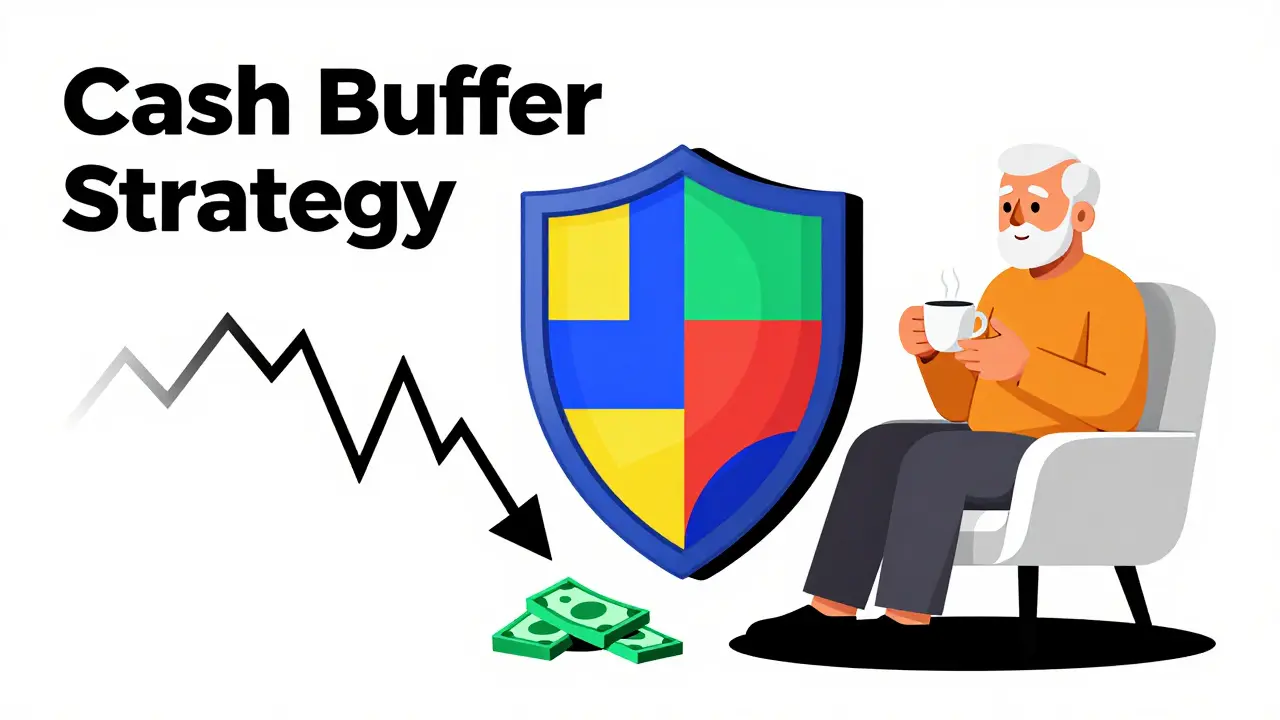
Maintain 12 to 24 months of living expenses in a liquid instrument, such as a Liquid Mutual Fund or an Arrears Savings Account. Do not pull this money from your equity or long-term debt funds. When the market crashes, you continue to withdraw from this cash buffer. You let your equity investments sit and recover without being forced to sell at a loss. Once the market stabilizes or rallies, you replenish the cash buffer from your equity gains.
2. Dynamic Withdrawal Rules
Instead of a fixed ₹50,000 monthly withdrawal, adopt a variable rule. For example, if your portfolio value drops by more than 15% from its peak, reduce your withdrawal by 10% for the next year. This small sacrifice preserves capital during downturns. Conversely, if the market surges, you can increase withdrawals slightly. This flexibility aligns your spending with reality, preventing corpus erosion.
3. Asset Allocation Shift Before Retirement
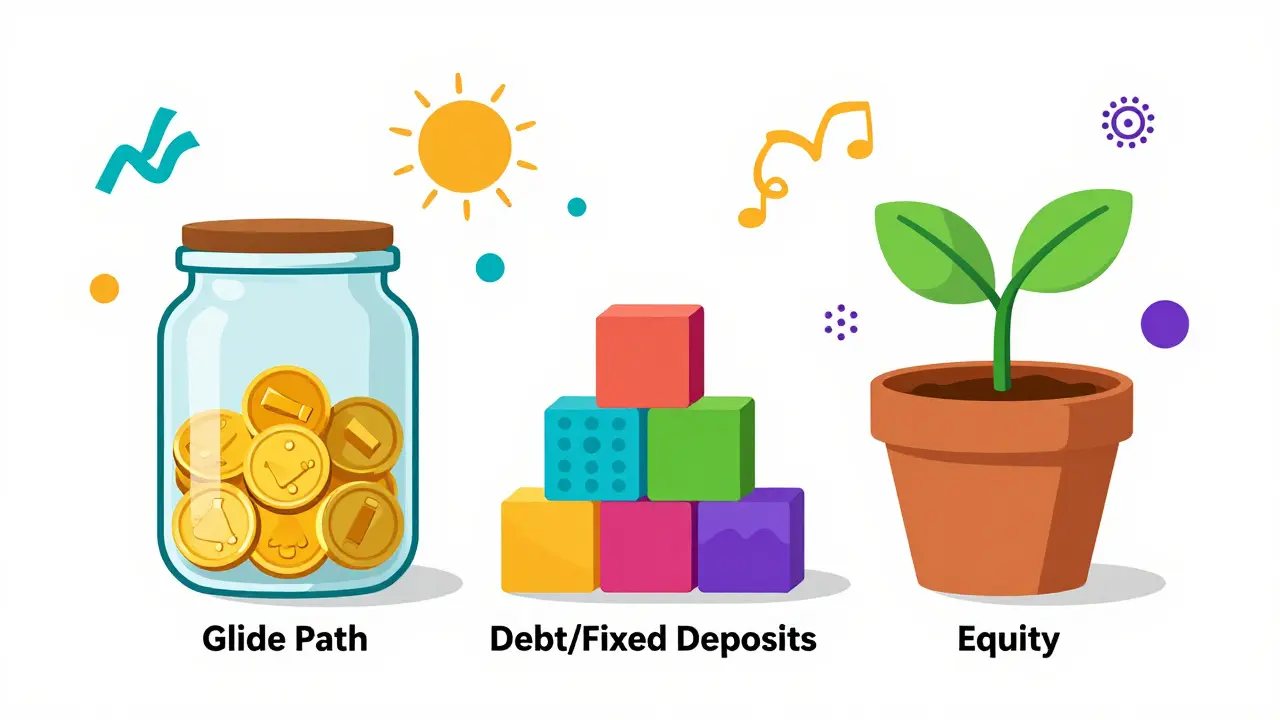
Start shifting your portfolio from growth-oriented equity to income-stable debt 3 to 5 years before you actually retire. This is called the "glide path." If you are retiring in 2026, begin moving 10% of your equity into Corporate Bond Funds or Gilt Funds each year. By the time you stop working, your portfolio should be less volatile. A common safe allocation for early retirement in India is 40% Equity, 50% Debt, and 10% Gold.
4. Use Annuities for Essential Expenses
Consider using a portion of your corpus (e.g., 20-30%) to buy a traditional annuity from an insurance company. This covers your essential costs like food, rent, and medicine. The rest of the corpus remains invested for discretionary spending. Since the annuity payment is fixed, you eliminate sequence risk for your survival needs. The remaining invested portion can take more risk since it’s not needed for basic survival.
Comparison of Mitigation Strategies
| Strategy | Risk Reduction Level | Complexity | Best For |
|---|---|---|---|
| Cash Buffer (1-2 Years) | High | Low | Investors who want simplicity and peace of mind |
| Dynamic Withdrawals | Medium-High | Medium | Disciplined investors willing to adjust lifestyle |
| Glide Path (Debt Shift) | Medium | Low | Pre-retirees starting 5+ years early |
| Hybrid Annuity | Very High (for essentials) | High | Risk-averse seniors needing guaranteed income |
Tax Implications in India
When managing sequence risk, tax efficiency matters. Selling equity mutual funds held for more than one year attracts Long-Term Capital Gains (LTCG) tax of 12.5% (above ₹1.25 lakh exemption). Selling debt funds held for more than three years attracts indexation benefits. If you use a cash buffer, ensure it is in a tax-efficient instrument. Liquid funds offer tax arbitrage if held short-term, but savings accounts are simpler. Remember, forcing a sale in a down year might mean selling at a loss, which creates no tax liability but also no tax credit unless you have other gains to offset. Plan your withdrawals to harvest losses strategically if possible.
Common Mistakes to Avoid
First, avoid keeping too much in Fixed Deposits (FDs) solely for safety. While FDs protect principal, they often fail to beat inflation in India. Over 20 years, inflation eats away the real value of your corpus. You need some equity exposure, just managed wisely.
Second, do not ignore Gold. In the Indian context, Gold acts as a hedge against currency depreciation and global uncertainty. During equity market crashes, Gold often holds value or rises, providing a diversification benefit that reduces overall portfolio volatility.
Third, never withdraw from your highest-growth assets first. Many people dip into their equity funds for monthly expenses while leaving their debt funds untouched. This is backward. Withdraw from debt/cash first, letting equities compound. This simple change can add years to your portfolio's lifespan.
Next Steps for Indian Retirees
If you are within five years of retirement, audit your current asset allocation. Calculate your monthly essential expenses. Build a cash buffer equal to 12 months of these expenses. Review your withdrawal strategy: is it fixed or flexible? If fixed, consider adding a clause that allows reduction during market downturns. Finally, consult a fee-only financial planner to run Monte Carlo simulations on your specific portfolio. These simulations model thousands of potential market sequences to show you the probability of your corpus lasting 30 years. Knowledge is your best defense against sequence of returns risk.
What is the safest withdrawal rate for Indian retirees?
There is no single "safe" rate, but most experts suggest starting with 3-4% of your initial corpus, adjusted for inflation annually. However, this depends heavily on your asset allocation. If you have a high equity share, 3% might be safer to account for volatility. If you have a balanced portfolio, 4% may be sustainable. Always stress-test this rate against historical Indian market downturns.
How does inflation affect sequence of returns risk?
Inflation increases the nominal amount you need to withdraw each year. If you must withdraw more money during a market crash due to rising prices, the sequence risk is amplified. You are selling more units at lower prices. This is why maintaining a cash buffer and having a dynamic withdrawal strategy is crucial in high-inflation environments like India.
Should I keep my retirement money in Fixed Deposits?
Keeping all money in FDs eliminates sequence risk but introduces inflation risk. Over 20-30 years, inflation will likely erode the purchasing power of your corpus. A better approach is a hybrid model: keep 1-2 years of expenses in FDs/Liquid Funds for safety, and invest the remainder in a diversified mix of Equity and Debt Mutual Funds to outpace inflation.
What is a Monte Carlo simulation in retirement planning?
A Monte Carlo simulation is a statistical technique that uses random sampling to model thousands of possible market scenarios. It helps estimate the probability that your retirement portfolio will last your entire lifetime under various market conditions, including bad sequences of returns. It provides a percentage chance of success rather than a guaranteed outcome.
Can I reverse sequence of returns risk once it happens?
You cannot reverse the mathematical impact of selling low, but you can mitigate further damage. If you have already experienced a significant drawdown, reduce your withdrawal rate immediately. Stop selling equity units. Rely on your cash buffer. Allow the market to recover naturally. Cutting expenses now can save your portfolio from permanent impairment.