
Smart Contract Risks: How to Evaluate Audit Reports and Admin Key Controls
 Dec, 14 2025
Smart contracts are supposed to be trustless. That’s the whole point. But if you’ve ever looked at a DeFi project’s audit report and thought, “Wait, is this actually safe?”-you’re not alone. In 2023 alone, over $1.3 billion was lost to smart contract exploits. And more than half of those weren’t caused by complex code bugs. They happened because someone forgot to lock the admin key.
What You’re Really Looking At in an Audit Report
Most people think an audit report is a green light. It’s not. It’s a snapshot. A moment in time. The code was checked on a specific date, and then the project moved on. That’s why 68% of exploited contracts had passed audits before. The vulnerability wasn’t there when the audit happened. It was added later. A real audit report should have four core parts: a system overview, a list of findings with severity levels, proof-of-concept code for each issue, and the project’s response. If any of those are missing, walk away. The severity labels matter more than you think. Critical means funds can be stolen outright. High means partial loss or system freeze. Medium is a nuisance. Low is a code style issue. But here’s the trap: some audit firms inflate severity. They call a minor bug “Critical” to make their report look more thorough. ChainSecurity, one of the most respected firms, labeled only 2.3% of findings as Critical in 2023. Others had 15-20%. That’s not better auditing. That’s marketing. Look for line numbers. If the report says, “There’s a reentrancy bug,” but doesn’t show you the exact line of code, it’s useless. Dr. Dominik Schiener from IOTA says 32% of low-quality audits leave this out. Without code references, you can’t verify anything. You’re trusting someone’s word. And check the fixes. A good report doesn’t just list problems-it shows you what changed. Before and after code. If the project says they fixed a High-severity issue but the report doesn’t show the patch, that’s a red flag. On Reddit’s r/ethfinance, users tracked 47 exploits. In 78% of them, the audit report didn’t include before/after code. That’s not an accident. That’s negligence.Admin Keys Are the Weakest Link
You can have the most secure code in the world. If one person can pause the contract, drain funds, or upgrade the logic, you’re still vulnerable. Admin keys are the backdoor. And 47% of major DeFi hacks in 2022 came from compromised admin controls. Here’s what to look for in the audit report:- Is there a multi-signature requirement? A single wallet with full control is a disaster waiting to happen. Best practice: at least 3-5 signers, with no single person having full power.
- Is there a timelock? Critical changes-like upgrading the contract or changing the admin list-should require a 48-hour delay. This gives the community time to react if something looks wrong. If the audit says “no timelock,” that’s a High-severity issue.
- Was the admin key ever renounced? Many teams keep admin rights after launch. That’s a huge risk. If the project ever says, “We’ll remove admin access once we’re stable,” but never actually does it, you’re trusting them forever. That’s not decentralized. That’s just a centralized system with a blockchain sticker on it.
How Auditors Actually Work (And Why It Matters)
Not all audits are created equal. Some are automated scans. Others are deep, manual reviews. The difference? 58% more vulnerabilities found when you combine both. Top firms like ChainSecurity and OpenZeppelin spend 60-70% of their time reading code line by line. They’re not just running tools-they’re thinking like attackers. What happens if someone sends 0 ETH? What if the timestamp is manipulated? What if the owner calls this function twice in one block? Automated tools like Slither and Aderyn catch the easy stuff: reentrancy, overflow, uninitialized variables. But they miss logic flaws. Like a token contract that lets anyone mint new tokens if they call a function with a specific parameter. That’s not a bug in the code. It’s a bug in the design. Only a human will catch that. And here’s something few people talk about: dual review. ChainSecurity uses two auditors to check every finding. One finds it. The other confirms. That cuts false negatives by 40%. If the audit firm doesn’t mention this process, they’re probably just one person running a script.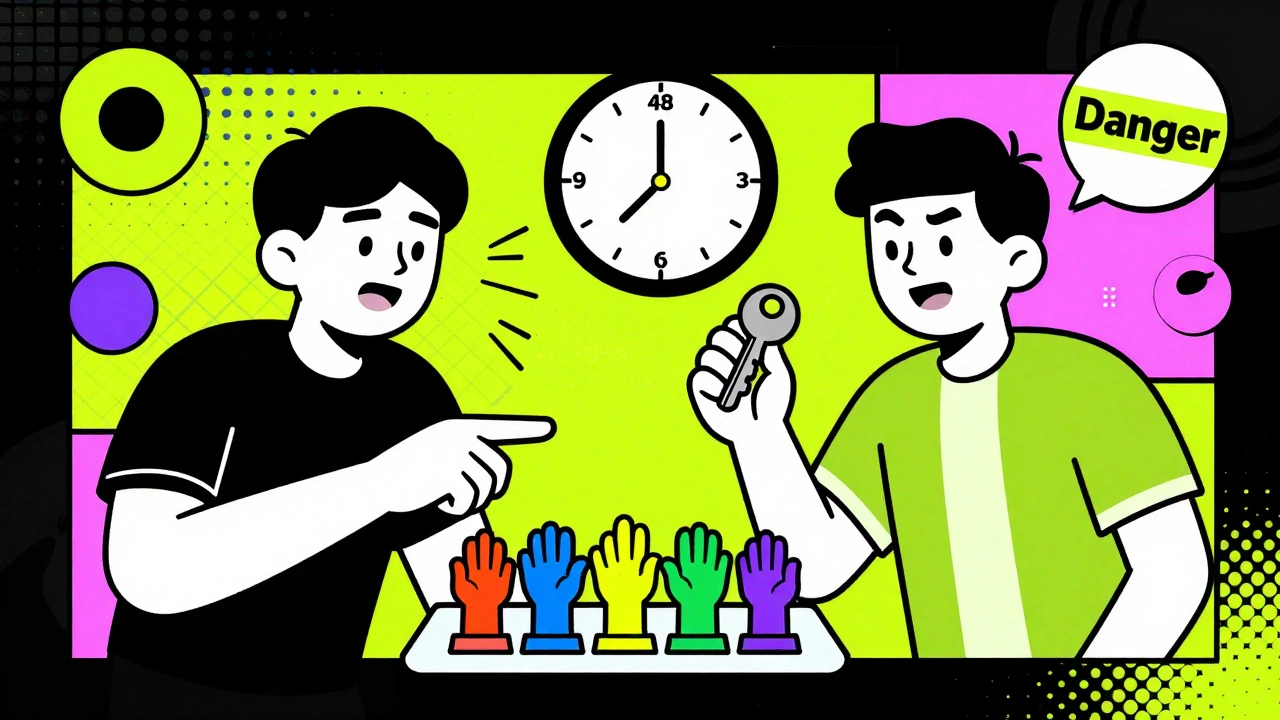
Who to Trust (And Who to Avoid)
There are five big names in the space: ChainSecurity, CertiK, OpenZeppelin, Quantstamp, and Cyfrin. Each has strengths.- ChainSecurity: Best for technical depth. They use formal verification-mathematical proofs that the code behaves as intended. 85% of their audits include this. They’re slow, expensive, but the most reliable.
- CertiK: Offers post-audit monitoring with their Skynet platform. If the contract gets hacked after deployment, they’ll alert you. Their audits are faster, but some users complain about aggressive sales tactics.
- OpenZeppelin: They built the most used secure contract templates. Their audits are expensive ($20K-$75K) but thorough. Their checklist of 37 requirements is the industry gold standard.
- Quantstamp: Fast and cheap. They automate 70% of the process. But they miss 15% more critical issues than others. Good for simple tokens, not DeFi protocols.
- Cyfrin: Uses the “Tincho” methodology-checking that the code does exactly what the docs say. They found 43% more logic errors than standard audits.
How to Evaluate an Audit Report (Even If You’re Not a Developer)
You don’t need to read Solidity to spot red flags. Here’s a 6-step checklist anyone can use:- Check the code freeze date. Was the audit done before the last code change? If the project updated the contract after the audit, the report is worthless. 43% of exploits happened because of this.
- Find the Critical and High findings. Are they all marked “Fixed”? Is there before/after code? If not, skip it.
- Look for admin key controls. Multi-sig? Timelock? Renounced? If any of these are missing, treat the project as high risk.
- Verify the auditor’s background. Do they have 3+ years of Ethereum experience? Check their LinkedIn. Look for past audits on Etherscan.
- Check if they used dual review. If the report doesn’t say so, assume they didn’t.
- Search for the project name + “exploit” on Google. Has this team been hacked before? Did they pay back users? That tells you more than any audit.
The Bigger Picture: Why Audits Are Failing
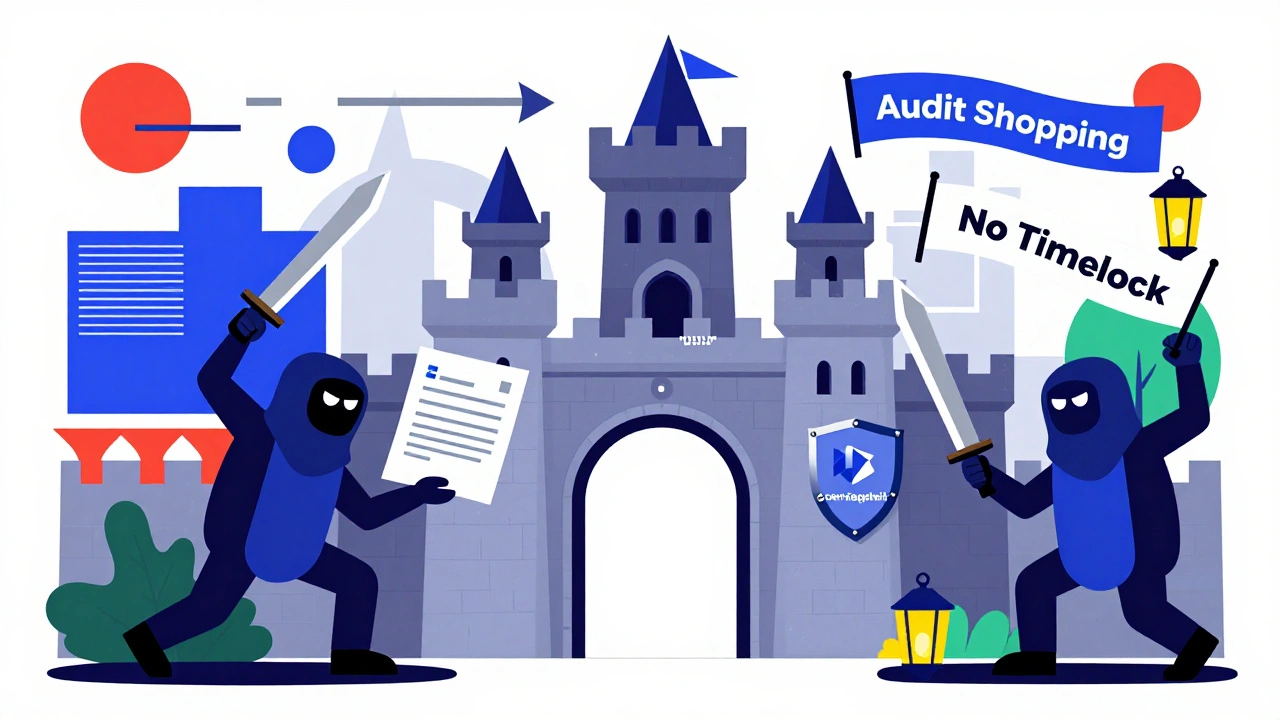
The audit industry is growing fast-from $15 million in 2020 to $112 million in 2023. But growth isn’t always good. More firms mean more competition. More competition means more “audit shopping.” Project teams go to 5 different auditors until one gives them a clean report. That’s not security. That’s fraud. Chainalysis found 22% more audit shopping in 2023 than 2022. And 18% of 2023’s biggest exploits came from projects that had multiple clean audits. Regulators are catching on. The SEC now requires audit documentation for DeFi projects seeking compliance. The EU’s MiCA rules will soon force all Euro-denominated smart contracts to have independent security reviews. The future? Two tiers: cheap automated audits for simple tokens, and deep manual reviews for high-value protocols. By 2025, admin key controls will be a mandatory part of every audit. The Smart Contract Audit Standard (SCAS), launched in early 2023, already requires it.Final Rule: Trust No One, Verify Everything
An audit report is not a guarantee. It’s a starting point. The most secure projects don’t rely on audits. They rely on transparency. They publish their code. They let anyone test it. They remove admin keys. They use multi-sig. They wait 48 hours before changing anything. If a project hides their audit report, or only shares the summary, or skips the fixes section-don’t invest. Don’t interact. Don’t even click. Smart contracts aren’t magic. They’re code. And code can be broken. The only thing that keeps them safe is vigilance. You have to ask the hard questions. You have to look past the marketing. You have to see what’s not there. Because in crypto, the biggest risk isn’t the hacker. It’s the illusion of safety.What’s the difference between a Critical and High severity finding in a smart contract audit?
A Critical finding means funds can be stolen entirely-like a backdoor that lets anyone drain the contract. A High finding means partial loss or system failure-like being able to freeze withdrawals or mint extra tokens. Critical = total loss. High = major disruption.
Can a smart contract be secure even if it has unresolved audit findings?
Only if the unresolved findings are Low severity and don’t impact funds or core functions. But if any Critical or High issues remain unfixed, the contract is not safe to use. Unresolved findings mean the risk is still active.
Why do some audit reports not show before/after code for fixes?
It’s often a sign of a low-quality audit. Showing before/after code proves the fix actually worked. If it’s missing, the project may be hiding that they didn’t fix anything-or that the fix is incomplete. In 78% of exploited projects, this was missing.
Is a multi-signature wallet always better than a single admin key?
Yes, for production systems. A single key is a single point of failure. If that wallet is hacked or lost, the whole contract is compromised. Multi-sig requires multiple approvals, making it much harder to exploit. Minimum 3-5 signers is the industry standard.
How can I tell if an audit firm is reputable?
Check their public track record. Look at GitHub for past audits. See if they’ve missed known exploits. Read reviews from users on Reddit and Hacker News. Reputable firms like ChainSecurity and OpenZeppelin publish detailed reports and admit limitations. Avoid firms that promise 100% security or refuse to show full reports.
Do audits cover off-chain components like oracles or frontends?
No. Audits only cover on-chain smart contract code. Off-chain systems-like price oracles, API connections, or website interfaces-are not included. Many hacks happen through these external points. Always assume the off-chain part is vulnerable unless proven otherwise.
What should I do if a project refuses to share its full audit report?
Do not interact with the contract. A refusal to share the full report is a major red flag. Legitimate projects are transparent. If they’re hiding details, they’re likely hiding risks. Walk away.
Are audits required by law?
Not yet everywhere, but regulations are changing. The SEC requires audit documentation for DeFi projects seeking compliance in the U.S. The EU’s MiCA regulation will require independent security reviews for all Euro-denominated smart contracts starting in 2025. Audits are becoming mandatory for legal operation.