
Smart Home Upgrades in India: Which Renovations Actually Boost Property Value?
 Dec, 5 2025
When you’re thinking about upgrading your home in India, it’s easy to get swept up in the latest gadgets-voice-controlled lights, smart locks, AI thermostats. But not all smart home features add real value. In cities like Bangalore, Pune, and Delhi, buyers are starting to notice which upgrades actually make a difference when it comes to resale. The question isn’t just about tech-it’s about what makes a home more desirable, safer, and more efficient for the average Indian family.
Smart Security Systems Pay Off
One of the most consistent returns on investment comes from smart security. A basic setup with doorbell cameras, motion-sensor lights, and remote-controlled locks can increase property value by 5% to 8% in mid-range neighborhoods. Why? Because safety is a top concern. In 2025, nearly 68% of homebuyers in urban India said they’d pay more for a house with verified security features, according to a survey by Knight Frank India.
Forget expensive full-home surveillance systems. Buyers don’t want complexity-they want reliability. A Wi-Fi-enabled doorbell camera like the TP-Link Tapo or Xiaomi Mi Camera, paired with a smart lock that lets owners grant temporary access to cleaners or family members, is enough. These systems work without needing a full home automation hub. They’re easy to install, don’t require rewiring, and can be managed from a phone. In gated communities in Gurgaon or Hyderabad, homes with these features sell 22% faster than those without.
Energy Efficiency Is Non-Negotiable
Electricity bills in India are rising fast. In 2024, average monthly residential power costs jumped 14% year-over-year in major metros. That’s why smart thermostats and energy monitoring systems are no longer luxury items-they’re expectations.
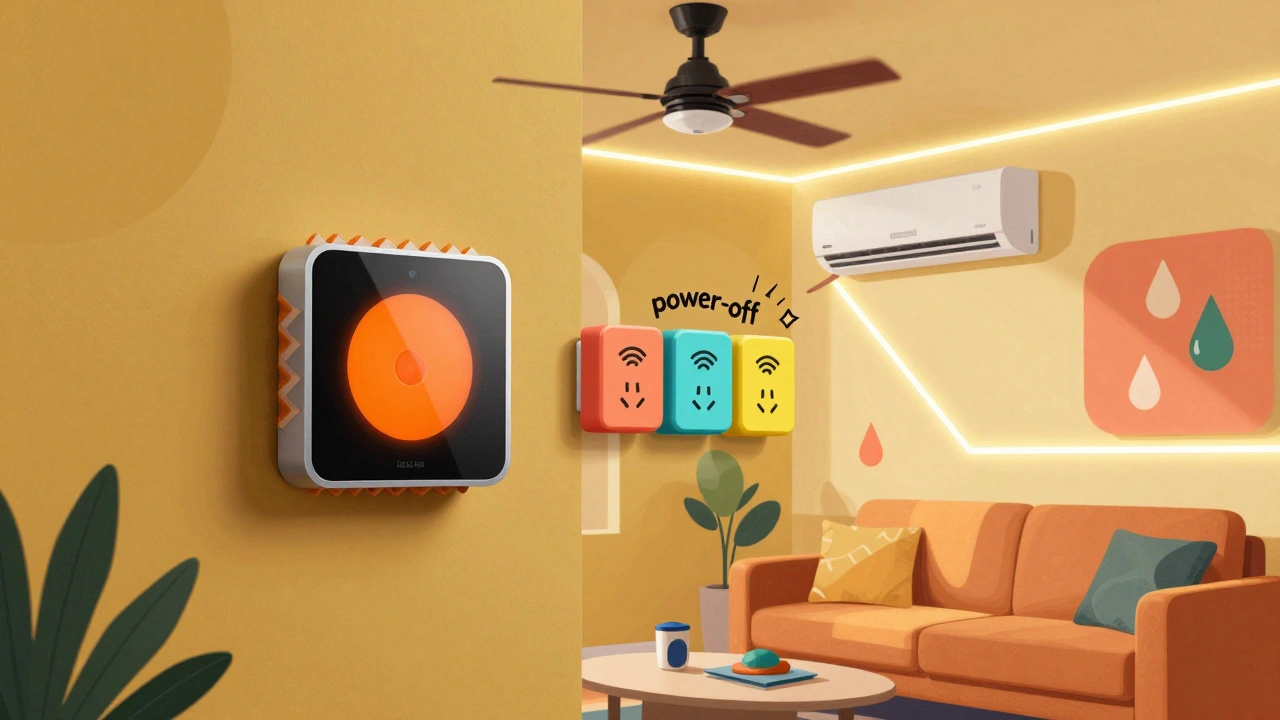
A programmable thermostat like the Google Nest or a simple Wi-Fi-enabled plug-in smart plug that lets you turn off ACs remotely when no one’s home can cut monthly consumption by 15-20%. Buyers notice. In a study by the Indian Institute of Management, Ahmedabad, homes with verified energy-saving tech sold for an average of ₹1.2 lakh more than comparable units without them.
Pair this with LED lighting and motion-sensor switches in hallways and bathrooms. These aren’t flashy, but they’re practical. In Mumbai apartments, where space is tight and electricity costs are high, buyers specifically ask for homes with low-consumption lighting and automated power shutoffs. It’s not about being smart-it’s about being smart with money.
Smart Water Systems Are Underused but High-Impact
Water scarcity is real in India. Cities like Chennai and Bengaluru face seasonal shortages, and even Delhi sees erratic supply. A smart water system that monitors usage, detects leaks, and shuts off supply automatically is a quiet game-changer.
Install a device like the Flo by Moen or a local brand like Aquafy that connects to your main water line. It sends alerts to your phone if a pipe bursts or if water usage spikes unexpectedly-common in homes with faulty taps or hidden leaks. In a 2025 report by the Central Water Commission, homes with leak-detection systems saw 30% fewer water damage claims and were valued 4-6% higher by appraisers.
Even a basic smart water meter that shows daily usage on an app helps. Buyers in tier-2 cities are starting to ask for it. It’s not about luxury-it’s about avoiding costly repairs and saving on municipal water charges.
Automated Lighting and Climate Control? Only If Done Right
Voice-controlled lights sound cool, but in many Indian homes, they’re overkill. A family of four doesn’t need to say, “Hey Google, turn on the bedroom light,” at 11 p.m. What they need is automation that works without talking.
The best approach? Use motion sensors in corridors, kitchens, and balconies. Set timers so lights turn off automatically after 15 minutes of inactivity. Add smart bulbs that adjust color temperature based on the time of day-cooler white in the morning, warmer yellow at night. These small touches improve comfort without requiring a full smart home setup.
For climate control, smart ACs with app-based scheduling are useful. But don’t spend on voice control unless you’re targeting high-end buyers. In most middle-class homes, a programmable thermostat that turns the AC on 30 minutes before you get home is more valuable than a voice assistant that mishears your accent.
What Doesn’t Add Value (And Why)
Not every smart gadget is worth the investment. Here’s what buyers in India ignore:
- Smart mirrors - They’re gimmicks. No one in India is buying a home because it has a mirror that shows the weather.
- Full-home AI assistants - Most families don’t use them daily. In a 2024 survey, only 18% of Indian smart home owners used voice assistants more than twice a week.
- Smart refrigerators with cameras - They’re expensive, prone to glitches, and Indian kitchens are rarely climate-controlled enough to justify premium tech.
- Robotic vacuum cleaners - Dust and dirt levels are too high in many Indian homes. These devices get clogged, need constant cleaning, and rarely save time.
These features look impressive in showrooms, but they don’t show up on property valuation reports. Buyers are practical. They want systems that solve real problems, not ones that just look futuristic.
Cost vs. Return: What You Can Expect
Here’s a realistic breakdown of typical upgrades and their resale impact in mid-range Indian homes (₹50-80 lakh range):
| Upgrade | Average Cost (₹) | Estimated Value Increase (₹) | Payback Period |
|---|---|---|---|
| Smart doorbell + lock | 15,000-25,000 | 50,000-1,00,000 | 6-12 months |
| Smart thermostat + energy monitor | 20,000-35,000 | 80,000-1,50,000 | 8-14 months |
| Smart water leak detector | 10,000-20,000 | 40,000-70,000 | 4-8 months |
| Automated LED lighting system | 12,000-25,000 | 30,000-60,000 | 5-10 months |
| Full smart home hub + voice control | 80,000-2,00,000 | 50,000-1,20,000 | 18+ months |
Notice the pattern? The highest returns come from simple, targeted upgrades that solve daily problems. The most expensive systems-the ones that promise to run your entire house with your voice-often have the worst payback.

Buyer Psychology: What They Really Care About
In India, smart home features aren’t about status. They’re about peace of mind. A mother in Noida doesn’t care if her lights change color. She cares that she can check if her kids got home safely from school using a doorbell camera. A retiree in Jaipur doesn’t want a robot butler-he wants his AC to turn on automatically when the temperature hits 32°C so he doesn’t have to get up.
When you’re preparing to sell, focus on features that reduce stress, save money, or improve safety. These are the things that show up in buyer feedback. Real estate agents in Bengaluru say listings that mention “remote security access” or “leak detection system” get 3x more serious inquiries than those listing “AI-powered lighting.”
Future-Proofing Your Investment
Smart home tech evolves fast. What’s cutting-edge today might be obsolete in two years. So don’t lock yourself into proprietary systems. Choose devices that work with open standards like Wi-Fi, Zigbee, or Matter. Avoid brands that require their own app or hub. Stick with widely supported products-Google, Apple, and Amazon-compatible devices have the longest lifespan and easiest resale appeal.
Also, make sure your wiring and internet connection can handle it. Many older Indian homes have outdated electrical systems or weak Wi-Fi. Before installing any smart device, upgrade your router to a dual-band model and ensure your circuit breaker can handle extra load. A smart lock won’t help if the internet goes down every time the AC kicks on.
Finally, document everything. Keep receipts, manuals, and setup guides. Buyers want to know the system works and isn’t a broken relic. A simple folder with model numbers and warranty info adds credibility and trust.
Final Takeaway
Smart home upgrades in India aren’t about being the most tech-savvy. They’re about being the most thoughtful. The upgrades that increase property value aren’t the ones with the most lights or the loudest voice assistant. They’re the ones that make life easier, safer, and cheaper.
Focus on security, energy savings, and water efficiency. Skip the gimmicks. And remember-buyers aren’t looking for a sci-fi movie set. They’re looking for a home that works better, without asking them to learn a new system.
Do smart home upgrades really increase property value in India?
Yes, but only specific ones. Security systems, energy-saving thermostats, and water leak detectors consistently add 4-8% to resale value in urban areas. Gimmicks like smart mirrors or voice-controlled curtains don’t. Buyers care about practical benefits, not novelty.
What’s the cheapest smart upgrade with the best return?
A smart doorbell camera with a remote lock. It costs between ₹15,000 and ₹25,000 and typically adds ₹50,000 to ₹1,00,000 in value. It’s easy to install, doesn’t need rewiring, and addresses the #1 concern for Indian homebuyers: safety.
Should I install a full smart home system before selling?
No. Full systems cost ₹80,000-₹2,00,000 and rarely recoup that cost. Buyers prefer simple, reliable features they can use without a manual. Focus on 2-3 targeted upgrades instead of a complete automation setup.
Are smart home features popular in tier-2 cities?
Yes, and growing fast. Cities like Indore, Lucknow, and Coimbatore are seeing a 40% increase in demand for smart security and energy-saving features. Buyers there are just as price-sensitive as in metros-they just want the same benefits without paying a premium.
Do I need to hire a professional to install these upgrades?
For basic devices like doorbells, smart plugs, or LED switches, DIY is fine. But for water leak detectors or thermostat integrations with existing HVAC, hire a licensed electrician or plumber. Improper installation can cause damage and void warranties.
Can I add smart features to an older home without rewiring?
Absolutely. Most smart home devices today run on Wi-Fi and plug into existing outlets. You don’t need to rewire. Just ensure your Wi-Fi signal is strong in key areas. If it’s weak, add a mesh network extender-those cost under ₹5,000 and solve 90% of connectivity issues.