
Stablecoin Off-Ramps: How to Convert Crypto to Fiat in 2026
 Jun, 6 2026
You hold USDC, a popular dollar-pegged cryptocurrency designed to maintain a 1:1 value with the US dollar. It sits in your digital wallet, ready for global transfers. But eventually, you need to pay rent, buy groceries, or send money to a relative who doesn't use crypto. That moment-when on-chain assets must become spendable government currency-is where most people get stuck. This process is called an off-ramp, and it is the critical bridge between decentralized finance (DeFi) and traditional banking. Without a reliable off-ramp, your stablecoins are just numbers on a screen. With one, they become real purchasing power.
What Is a Stablecoin Off-Ramp?
An off-ramp is a financial service that converts digital tokens like Tether (USDT), another major stablecoin issued by Tether Limited, widely used for trading and liquidity, or USD Coin (USDC) back into fiat currency, such as government-issued money like USD, EUR, or GBP that is not backed by a physical commodity. Think of it as the reverse of buying crypto. When you buy, you send dollars to get tokens (on-ramp). When you sell, you send tokens to get dollars (off-ramp).
In 2026, these services have evolved from niche exchange features into sophisticated infrastructure. They handle everything from Know Your Customer (KYC), a mandatory identity verification process required by financial regulations to prevent fraud and money laundering, checks to complex foreign exchange conversions. The goal is simple: move value from a blockchain network to your local bank account, debit card, or mobile wallet with minimal friction and cost.
The Three Main Ways to Cash Out
Not all off-ramps work the same way. Depending on your location, urgency, and amount, you will likely encounter one of three primary channels:
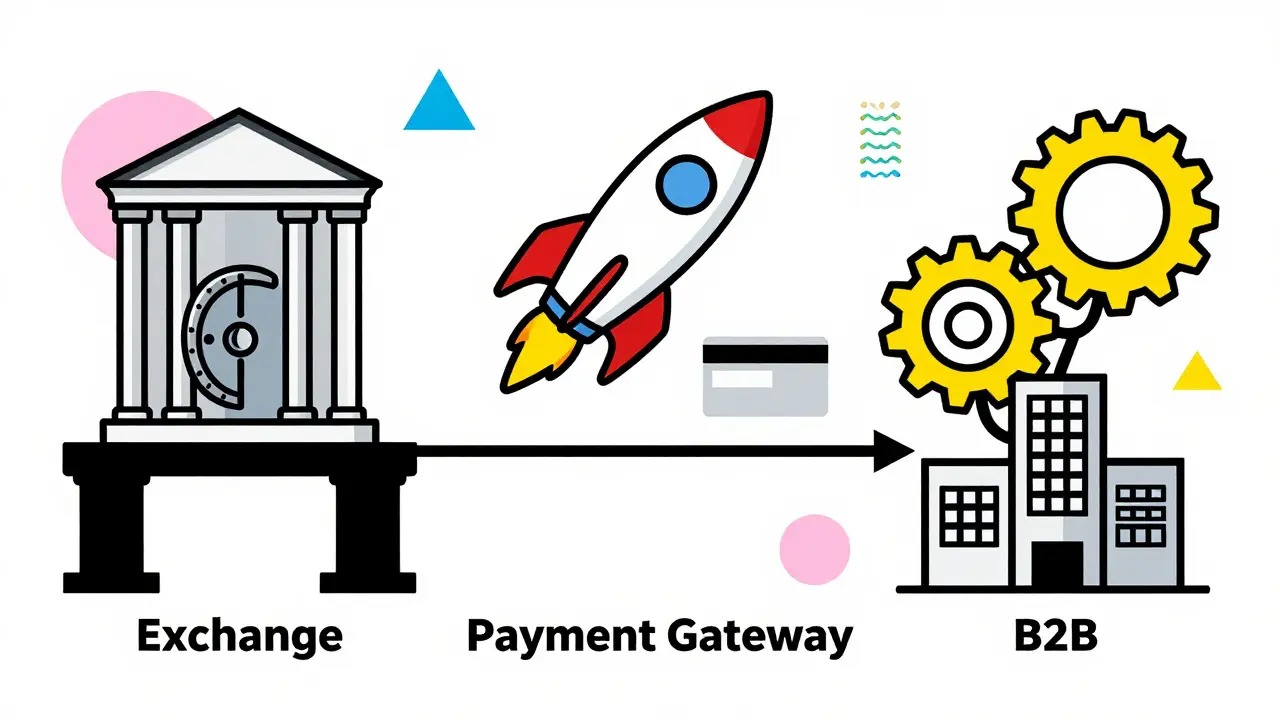
- Centralized Exchanges (CEX): Platforms like Coinbase, a major regulated cryptocurrency exchange headquartered in San Francisco, known for high compliance standards,, Kraken, a global cryptocurrency exchange founded in 2011, recognized for strong security and diverse fiat pairs,, or Binance, the world's largest crypto exchange by volume, offering extensive trading pairs but facing varying regulatory restrictions globally, allow you to trade your stablecoin for fiat and withdraw it via wire transfer or ACH. These are best for large amounts but often require strict identity verification.
- Embedded Payment Gateways: Services like MoonPay, a financial technology company providing instant crypto payment processing solutions for businesses and consumers, or Ramp Network, a developer-focused platform enabling seamless integration of crypto on/off-ramp functionality into apps, integrate directly into wallets or apps. You click "sell," enter your details, and receive funds on a card or bank account. This is faster but usually carries higher fees.
- B2B Banking-as-a-Service (BaaS): For businesses, platforms like Modern Treasury, a payment infrastructure provider connecting fintechs and enterprises to global banking rails, or OpenPayd, a regulatory technology firm specializing in compliant crypto-to-fiat conversion APIs, automate the entire flow. A company receives USDC for an invoice, and the system automatically converts it to euros and deposits it into their operating account.
Banking Rails: Where the Money Actually Goes
Converting the token is only half the battle. The second half is moving the resulting fiat through traditional banking systems. The speed and cost depend entirely on the payment rail, referring to the underlying network infrastructure used to transfer funds between banks, such as ACH, SWIFT, or SEPA. used.
| Method | Typical Speed | Cost Estimate | Best For |
|---|---|---|---|
| ACH Transfer, a electronic network for batch processing financial transactions in the United States | 1-3 Business Days | $0 - $5 | Large domestic US withdrawals |
| SEPA Transfer, the Single Euro Payments Area scheme allowing euro transfers across Europe within two business days | 1-2 Business Days | €0 - €10 | European bank accounts |
| SWIFT Wire, the global messaging network used by banks to securely send international payments | 2-5 Business Days | $20 - $50+ | International cross-border transfers |
| Instant Card Payout, a service pushing funds directly to a Visa/Mastercard debit card within minutes | Minutes | 1% - 3% | Urgent small withdrawals |
| Mobile Money, a system enabling users to deposit, withdraw, and transfer funds using a mobile phone, common in Africa and Asia | Near Instant | Variable | Emerging markets (e.g., M-Pesa) |
If you are in the US, ACH is your friend. It’s cheap and reliable, though not instant. In Europe, SEPA is the standard. For urgent needs, card payouts are available through providers like Bitpanda, an Austrian digital asset investment platform offering trading, staking, and fiat conversion services, or eToro, a social trading and multi-asset brokerage platform allowing users to trade stocks, crypto, and forex,, but expect to pay a premium for that speed.
Choosing the Right Provider in 2026
The market has matured significantly. In 2023, options were limited. Today, you have dozens of choices. However, each serves a different purpose. Here is how to decide:
For Retail Users: If you want simplicity, stick with major exchanges like Coinbase or Kraken. They offer deep liquidity, meaning you can sell large amounts without affecting the price. The downside? Fees can be high, and customer support may be slow. If you prefer a smoother user experience inside a non-custodial wallet, look at embedded providers like MoonPay or Transak. They charge more per transaction but save you time navigating complex exchange interfaces.
For Businesses: Do not use retail exchanges for corporate treasury management. Instead, integrate with B2B infrastructure like Modern Treasury or OpenPayd. These platforms provide APIs that connect your accounting software directly to banking rails. They handle the KYC/AML screening, convert the stablecoins, and settle the fiat into your operating account. This reduces manual work and improves audit trails.
For Emerging Markets: Traditional banking penetration is low in many regions, but mobile money is ubiquitous. Providers like Blockradar, a fintech infrastructure company facilitating crypto-to-fiat settlements in emerging economies, specialize in this space. They enable users in Africa or Southeast Asia to convert USDC directly to local mobile wallets, bypassing the need for a formal bank account entirely.
Fees, Spreads, and Hidden Costs
Always read the fine print. Off-ramp costs come in two forms: explicit fees and implicit spreads.
Explicit Fees: Some platforms charge a flat fee (e.g., $5 per withdrawal). Others charge a percentage (e.g., 1%). In 2026, competition has driven some providers to offer zero-fee promotions for specific stablecoins like USDC on certain corridors. Take advantage of these when available.
Implicit Spreads: This is where most users lose money. If the market rate for USDC is $1.00, but the off-ramp buys it from you at $0.995, that 0.5% difference is the spread. It is rarely advertised clearly. Enterprise providers often negotiate basis-point pricing (e.g., 10 bps), which is much lower than retail percentages. Always compare the final amount you receive, not just the stated fee.

Compliance and Security Risks
Off-ramps are heavily regulated because they touch both crypto and fiat systems. You will always need to complete KYC. This involves submitting a government ID and sometimes proof of address. Failure to do so means your funds will be frozen.
Security is also paramount. Never share your private keys with an off-ramp provider. Legitimate services never ask for them. They only need your public wallet address to receive the stablecoins. Additionally, be aware of Anti-Money Laundering (AML), laws designed to prevent criminals from disguising illegally obtained funds as legitimate income, checks. If you suddenly try to off-ramp a massive sum after years of inactivity, the system may flag the transaction for review. Plan ahead if you expect large movements.
Future Trends: Programmable Off-Ramps
The next evolution is automation. Thanks to technologies like Chainlink, a decentralized oracle network providing real-world data and API connectivity to smart contracts,, smart contracts can now trigger off-ramps automatically. Imagine a payroll system that pays employees in USDC, then automatically converts their portion to local fiat and deposits it into their bank accounts every Friday. No manual intervention needed. This programmability is making stablecoins viable for everyday commerce, not just speculation.
How long does it take to withdraw fiat from a stablecoin?
It depends on the method. Instant card payouts can take minutes. ACH or SEPA bank transfers typically take 1-3 business days. International SWIFT wires may take up to 5 days. Always check the provider's estimated settlement time before initiating the transaction.
Is it safe to use centralized exchanges for off-ramping?
Yes, reputable exchanges like Coinbase and Kraken are highly secure and regulated. However, remember that you are trusting them with your funds during the conversion process. Use two-factor authentication (2FA) and ensure the exchange holds proper licenses in your jurisdiction.
Can I off-ramp stablecoins without a bank account?
In many cases, yes. You can withdraw to a prepaid debit card, a mobile money wallet (like M-Pesa in Kenya), or even receive cash at select partner locations in some countries. Embedded providers often support card payouts even if you don't have a traditional checking account.
What is the cheapest way to convert USDC to USD?
For US residents, using an ACH transfer via a major exchange like Coinbase or Kraken is usually the cheapest, often costing less than $5 or even free depending on current promotions. Avoid card withdrawals for large amounts due to higher percentage fees.
Do I need to pay taxes on stablecoin off-ramps?
Tax laws vary by country. In many jurisdictions, simply holding a stablecoin is not taxable, but converting it to fiat or spending it may trigger a taxable event if there was any gain or loss compared to your acquisition cost. Always consult a local tax professional for advice specific to your situation.