
Stablecoin vs Cryptocurrency: When to Use Each
 Aug, 30 2026
Imagine you just sold some Bitcoin for a nice profit. You want to keep that money in the crypto ecosystem but don't want it crashing 20% overnight while you sleep. So, what do you hold? Most traders hit "sell" and buy USDT. But wait-isn't USDT also a cryptocurrency? Yes, technically. But treating it like Bitcoin is a mistake that can cost you real money or leave your funds exposed to risks you didn't anticipate.
The confusion between stablecoins and general-purpose cryptocurrencies trips up even experienced users. They both live on blockchains, use similar wallets, and look alike in your portfolio app. Yet, their economic roles are worlds apart. One is designed to be boring-predictably boring-while the other thrives on chaos. Understanding when to deploy each isn't just about trading; it's about managing risk, optimizing cash flow, and actually using digital money instead of just holding it.
The Core Difference: Predictability vs. Potential
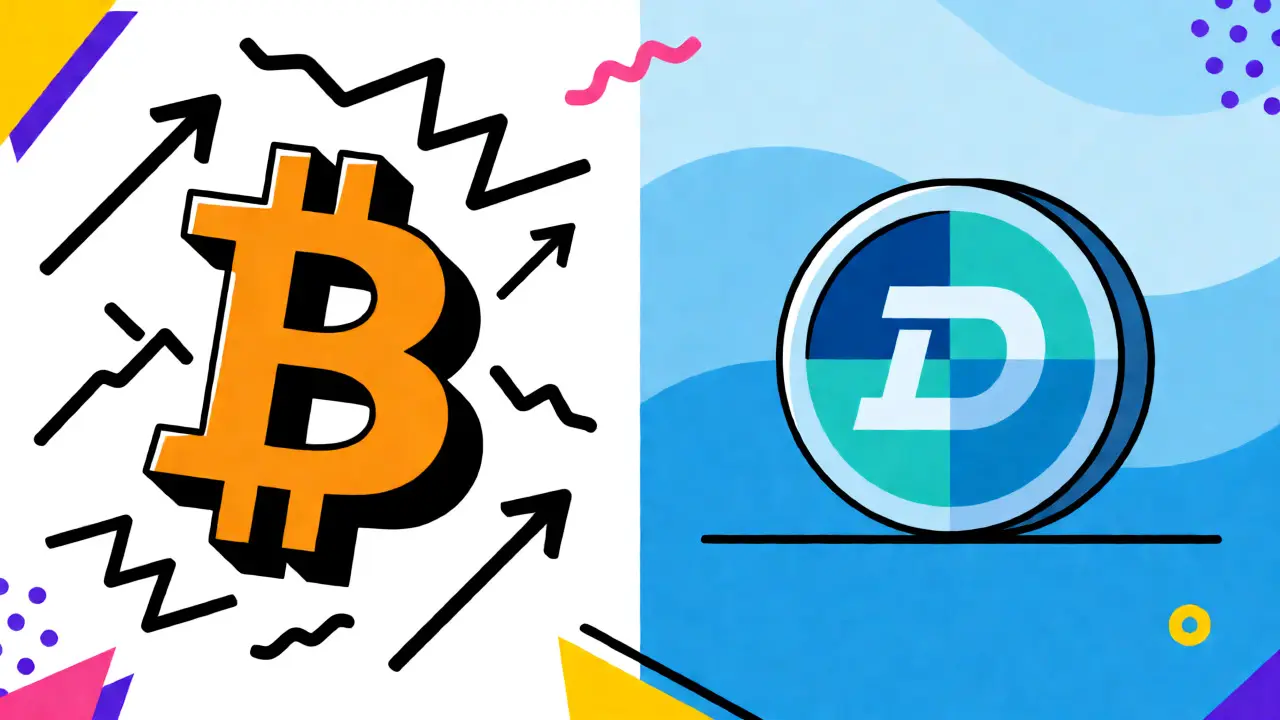
Let’s strip away the jargon. A cryptocurrency like Bitcoin or Ether is an asset with no fixed price anchor. Its value swings based on supply, demand, hype, and macroeconomic news. In 2024 alone, major coins saw monthly volatility ranging from ±10% to 50%. If you need to pay rent next week, you cannot rely on Bitcoin. The purchasing power might vanish before the transaction clears.
Stablecoins, on the other hand, are engineered specifically to kill volatility. They peg their value to a reference asset, usually the US dollar (USD) or Euro (EUR). Whether it’s USDC, DAI, or USDT, the goal is simple: 1 token should always equal $1.00. This makes them function less like speculative stocks and more like digital cash. By August 2024, the market cap of fiat-pegged stablecoins hit roughly $161 billion, proving that people aren't just gambling-they’re using these tokens for actual utility.
Think of it this way: Bitcoin is gold bars locked in a vault. Their value goes up over time, but you can’t easily buy coffee with a fraction of a bar without worrying about the spot price changing mid-sip. Stablecoins are dollar bills. They don’t appreciate in value, but they work perfectly for transactions today.
When to Reach for Stablecoins
If your priority is stability, speed, or settlement, stablecoins are your best tool. Here is where they shine in the real world:
- Trading Pauses: When the market gets choppy, moving into USDT or USDC lets you stay "in the game" without exposure to price drops. You avoid the hassle of withdrawing to a bank account, which can take days and incur fees.
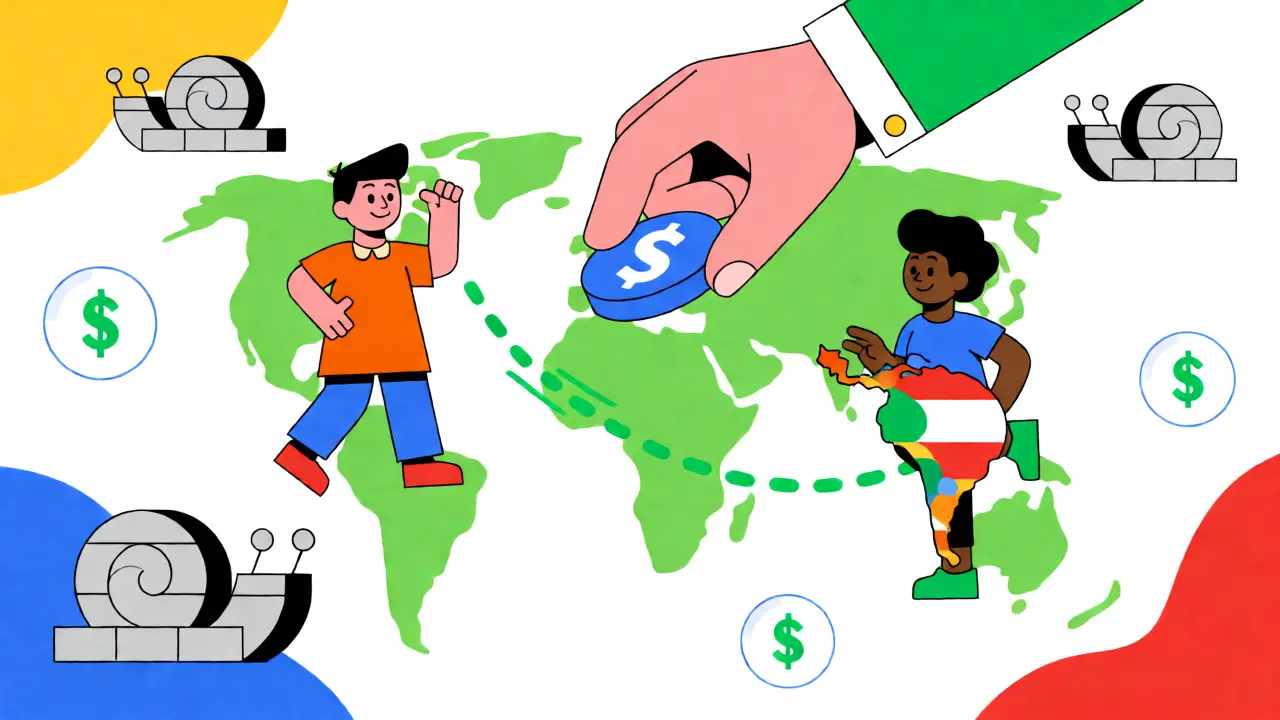
- Cross-Border Payments: Sending $500 to a freelancer in Argentina via traditional banks might cost $30-$50 in fees and take three days. Sending USDC over Ethereum or Solana costs cents and settles in seconds. For remittances, this is a game-changer.
- DeFi Yield Farming: Many decentralized finance protocols offer yields on stablecoins. Earning 5-8% APY on USDC feels safer than earning it on a volatile token that could drop 20% in value, wiping out your gains.
- Inflation Hedging: If you live in a country with high inflation, holding local currency erodes your wealth. Holding USDC gives you USD exposure without needing a foreign bank account, bypassing some capital controls.
Businesses love stablecoins for invoicing and payroll. A company paying staff in multiple countries doesn't want to manage ten different fiat currencies. Paying everyone in USDC simplifies accounting and reduces exchange rate risk during the payment window.
When Volatile Crypto Wins
So, why bother with Bitcoin or Ether if they’re so unpredictable? Because volatility is the price of admission for potential upside. If you’re investing for the long term-think five years or more-stablecoins will likely underperform. They barely beat inflation, whereas top-tier cryptocurrencies have historically delivered massive returns, albeit with stomach-churning drawdowns.
Use volatile cryptocurrencies when:
- You Seek Capital Appreciation: You believe in the technology or network effect of a project. Bitcoin is often viewed as "digital gold," a hedge against fiat debasement. Ether powers the Ethereum network, and its value rises with network usage.
- You Participate in Governance: Tokens like UNI or AAVE give you voting rights in decentralized protocols. You aren't just holding an asset; you’re holding influence. This value isn't tied to a dollar peg but to the protocol's success.
- You Need Network Utility: To send ETH, you need ETH for gas. To stake SOL, you need SOL. These tokens are required to interact with their respective blockchains, making them essential infrastructure assets rather than just stores of value.
Remember, the same feature that makes crypto risky-volatility-is what makes it attractive to investors. If prices never moved, there would be no profit opportunity for early adopters.
Comparing Risk Profiles
Not all risks are created equal. With Bitcoin, your main risk is market price fluctuation. With stablecoins, your main risk is counterparty and structural failure.
| Feature | Stablecoins (e.g., USDC) | Volatile Crypto (e.g., BTC) |
|---|---|---|
| Price Stability | High (±1%) | Low (±10-50% monthly) |
| Primary Use Case | Payments, Trading, Savings | Investment, Speculation, Store of Value |
| Main Risk | Issuer insolvency, De-pegging | Market crash, Regulatory bans |
| Backing | Fiat reserves, Collateral | Network security, Scarcity |
| Transaction Speed | Seconds (depending on chain) | Minutes to Hours |
With stablecoins, you trust the issuer. If Tether Limited holds enough cash to back every USDT, you’re safe. If they don’t, you face a "run on the bank." Remember TerraUSD? It wasn't backed by cash but by algorithms and another token. When confidence broke, it collapsed to zero. Always check if a stablecoin is fully collateralized and audited.
With Bitcoin, you trust the math and the miners. There’s no CEO to sue if the price drops. The risk is purely external-market sentiment or government regulation-but the internal structure is robust.

Practical Strategy: How to Mix Both
You don’t have to choose one side. Smart portfolios use both. During bull markets, you might hold 70% in volatile assets to capture growth. As the market overheats, you rotate profits into stablecoins to lock in gains without exiting the blockchain ecosystem entirely.
For daily spending, keep a small amount of stablecoins in a hot wallet. For long-term savings, keep Bitcoin or Ether in cold storage. This hybrid approach lets you leverage the speed of crypto rails while protecting your principal from wild swings.
Also, consider the chain. Sending USDT on Ethereum can cost $5-$10 in gas fees. Sending it on Tron or Solana costs pennies. If you’re making frequent small payments, choose a low-cost network. If you’re moving millions, Ethereum’s security might outweigh the fee difference.
Regulatory and Future Outlook
Regulators are watching closely. The IMF notes that stablecoins act like shadow banks. New rules in Europe (MiCA) and the US require issuers to hold segregated reserves and provide regular audits. This is good news for users-it means fewer surprises. Expect more regulated, bank-backed stablecoins to emerge, potentially replacing some private ones.
Meanwhile, volatile cryptos are being treated more like commodities. Tax laws are clarifying how to report gains, making it easier to plan trades. Over the next decade, analysts predict stablecoin markets could grow to nearly $1 trillion, powering everything from machine-to-machine payments to global settlements. Volatile assets will remain the engine of innovation, funding new networks and applications.
Is a stablecoin considered a cryptocurrency?
Yes, stablecoins are a subset of cryptocurrencies. They run on blockchain networks and use cryptographic security. However, unlike Bitcoin or Ether, their primary design goal is price stability rather than decentralization or appreciation. They are distinct because of their economic function, not their underlying technology.
What happens if a stablecoin loses its peg?
If a stablecoin de-pegs, its value deviates from $1.00. In severe cases, like TerraUSD in 2022, it can collapse to near zero. For well-collateralized coins like USDC, temporary dips to $0.98 or $0.99 can occur during market stress but usually recover quickly. Always diversify across issuers to mitigate this risk.
Can I earn interest on stablecoins?
Yes, many platforms offer yield on stablecoins through lending or liquidity provision. Rates typically range from 3% to 10% APY, depending on market conditions and platform risk. This is often higher than traditional savings accounts but comes with smart contract and counterparty risks.
Which stablecoin is safest?
USDC is often cited as highly transparent due to regular attestations by reputable accounting firms. USDT has the largest market share but has faced scrutiny over reserve composition. DAI is decentralized but relies on crypto collateral. "Safest" depends on your trust in centralized vs. decentralized models, but transparency is key.
Do stablecoins go up in value?
Generally, no. Stablecoins are designed to maintain a constant value relative to their peg (usually USD). They do not appreciate like Bitcoin. Their return comes from interest earned on them, not from price increases.