
Superfluid vs Sablier: The Ultimate Guide to Web3 Streaming Payments
 Aug, 8 2026
Imagine getting paid every single second of the day instead of waiting for a monthly paycheck. That is exactly what streaming payments in Web3 allow you to do. It sounds like science fiction, but it is happening right now on blockchains like Ethereum and Polygon. Two major protocols, Superfluid and Sablier, are leading this charge. They let money flow continuously, calculated per second, rather than moving in big, clunky lump sums.
If you are building a DAO, running a crypto startup, or just want to understand how onchain finance is evolving, you need to know which tool fits your needs. One isn't strictly better than the other; they solve different problems. Let's break down how they work, where they differ, and which one you should pick for your specific use case.
What Are Streaming Payments?
Traditional payments are discrete events. You send $100 on Friday. The recipient gets nothing until then. In Web3, streaming payments turn money into a continuous flow. Think of it like Netflix or Spotify. You don't download the whole movie at once; you stream it as you watch it. Similarly, with token streaming, funds accrue to the recipient's balance every second.
This model changes everything about cash flow. Recipients can withdraw their earned tokens whenever they want, even if it has only been five minutes since the stream started. Senders retain control because they can stop the stream instantly with a single transaction. This reduces risk for both parties. If an employee quits mid-month, the sender stops the stream immediately, saving the cost of unused days. If the sender runs out of funds, the stream pauses automatically.
The math behind this is simple. Both protocols use a formula that looks something like this:
Balance(t) = Initial Balance + (Flow Rate × Time Elapsed)
This means no complex accounting is needed. The blockchain calculates the real-time balance based on the current timestamp. You don't need to trust a bank statement; you can verify the exact amount owed by looking at the smart contract.
Superfluid: The Money Streaming Protocol
Superfluid is a protocol designed for real-time, onchain cashflows using a unique token wrapping mechanism. It was launched to enable programmable money for salaries, rewards, subscriptions, and automated investing.
Superfluid operates differently from traditional transfers. It requires users to wrap standard ERC-20 tokens (like USDC or DAI) into "Super Tokens" (e.g., USDCx or DAIx). This wrapping happens at a 1:1 ratio. Once wrapped, these tokens gain new capabilities. They can be streamed, used in DeFi while still being streamed, and managed through agreements like the Constant Flow Agreement (CFA).
How Superfluid Works
The core feature of Superfluid is the Constant Flow Agreement (CFA). When you open a stream, you set a flow rate-for example, 0.000001 tokens per second. The system updates balances in real time without needing a transaction for each payment interval.
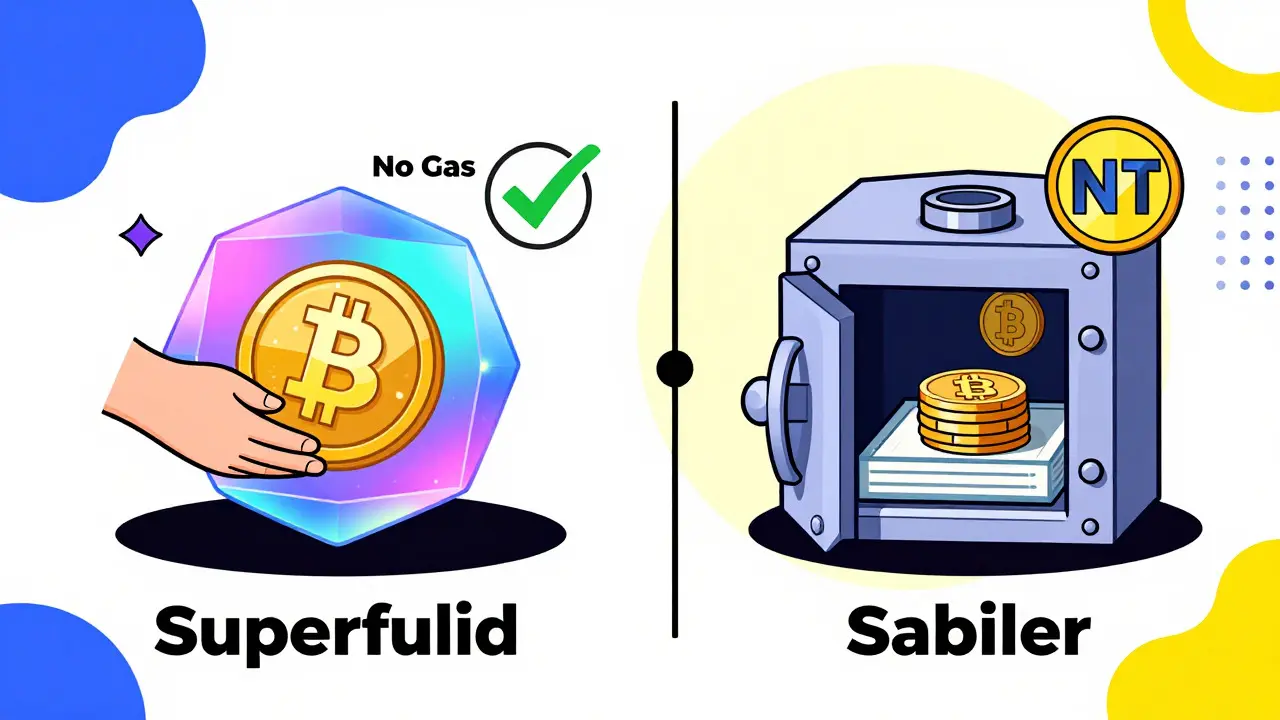
- No Gas for Recipients: This is a huge advantage. Recipients see their balance grow automatically. They don't need to pay gas fees to "claim" their money. They can spend or transfer their accrued balance immediately.
- Capital Efficiency: You don't need to lock up all the funds upfront. You just need enough in your wallet to cover the ongoing stream plus a small buffer. This frees up capital for other uses.
- Liquidation Risk: Because funds aren't fully locked, there is a risk. If your balance drops too low, a liquidator can close your streams to protect the recipients. This adds a layer of complexity but keeps the system efficient.
As of mid-2026, Superfluid supports over 11 EVM chains, including Ethereum, Polygon, Arbitrum, Optimism, Base, and BNB Chain. It is heavily integrated into DAO tools and grant platforms like Gitcoin.
Sablier: Secure Vesting and Payouts
Sablier is a token streaming protocol originally built for Ethereum, focusing on secure vesting, grants, and payroll with isolated stream accounts.
Sablier has evolved significantly since its launch in 2019. Its latest version, Sablier v2, introduces two main modes: Lockup and Flow. Unlike Superfluid, Sablier does not require token wrapping. You can stream any standard ERC-20 token directly.
Lockup vs. Flow Modes
Lockup Mode is the classic approach. You deposit the full amount of the stream upfront into a smart contract. The contract then releases tokens linearly to the recipient over time. This is perfect for vesting schedules or grants where you want to guarantee the funds are secured and cannot be moved elsewhere.
Flow Mode offers more flexibility. You don't have to deposit the full amount at once. You can top up the balance over time. If you underfund, the stream tracks the debt, but it isolates each stream so one missed payment doesn't crash your entire payroll system.
- Gas for Withdrawals: Recipients must actively withdraw their accrued tokens. This means they pay gas fees every time they claim money. In Sablier v2, there is also a small protocol fee (around $0.99) per withdrawal.
- NFT Representation: Sablier streams can be represented as NFTs. This allows vesting positions to be traded or collateralized, adding a new layer of utility for investors.
- No Liquidation Risk: Since Lockup mode pre-funds the stream, there is no risk of the stream being closed due to insolvency. The money is there, locked and safe.
Sablier supports 24+ chains, including Solana, making it highly versatile for cross-chain projects.
Head-to-Head Comparison
| Feature | Superfluid | Sablier v2 |
|---|---|---|
| Token Wrapping Required | Yes (Super Tokens) | No (Native ERC-20) |
| Upfront Deposit | No (Balance Pool) | Yes (Lockup) / Partial (Flow) |
| Recipient Gas Fees | None (Real-time balance) | Yes (Per withdrawal) |
| Protocol Fees | None (Gas only) | ~$0.99 per withdrawal |
| Liquidation Risk | Yes (Buffer system) | No (Isolated streams) |
| NFT Support | No | Yes (Stream as NFT) |
| Best For | Payroll, Subscriptions, DCA | Vesting, Grants, One-off Payouts |
Which One Should You Choose?
The decision comes down to your specific goals. Are you prioritizing user experience and capital efficiency, or security and simplicity?
Choose Superfluid if:
- You are paying employees or contractors regularly. The lack of gas fees for recipients makes daily or weekly withdrawals painless.
- You want to build subscription models or recurring revenue streams.
- You need high capital efficiency and don't want to lock up large amounts of treasury funds.
- Your team is comfortable managing buffer levels to avoid liquidation.
Choose Sablier if:
- You are distributing tokens for vesting schedules. The pre-funded Lockup mode guarantees the tokens are reserved.
- You are issuing grants or scholarships where the recipient might only withdraw once or twice.
- You want to represent streams as NFTs for trading or collateralization.
- You prefer a simpler mental model where funds are explicitly locked and released.
Implementation Tips
Getting started with either protocol is straightforward if you have a Web3 wallet like MetaMask. For Superfluid, you will need to switch to a supported chain like Polygon, wrap your tokens, and create a stream via their app or SDK. For Sablier, you simply select your token, set the start and end times, and deposit the funds.
For developers, both protocols offer robust SDKs. Superfluid's SDK allows for complex composability, enabling you to build custom dApps that integrate streaming payments seamlessly. Sablier's subgraphs make it easy to index stream data for dashboards and analytics.
Remember to test on testnets first. Understand the gas costs on your chosen chain. On L2s like Arbitrum or Optimism, gas fees are negligible, making frequent withdrawals viable. On Ethereum mainnet, consider batching withdrawals or using longer intervals to save costs.
Frequently Asked Questions
What is the difference between Superfluid and Sablier?
Superfluid focuses on capital efficiency and real-time balances without requiring upfront deposits, but it involves token wrapping and potential liquidation risks. Sablier emphasizes security and simplicity with pre-funded streams (Lockup) or flexible flows, supporting native ERC-20 tokens and NFT representations, but recipients pay gas and fees to withdraw.
Do I need to wrap tokens to use Superfluid?
Yes. Superfluid requires you to wrap standard ERC-20 tokens into Super Tokens (e.g., USDC to USDCx) at a 1:1 ratio before streaming. This enables the real-time balance calculation and composability features.
Can I cancel a streaming payment early?
Yes. Both Superfluid and Sablier allow senders to stop or adjust streams at any time with a single transaction. Any unaccrued funds are returned to the sender immediately.
Are there fees for receiving streamed tokens?
With Superfluid, recipients pay no gas fees to receive tokens because balances update in real time. With Sablier, recipients must pay gas fees and a small protocol fee (approx. $0.99) each time they withdraw their accrued tokens.
Which chains support Superfluid and Sablier?
Superfluid supports over 11 EVM chains including Ethereum, Polygon, Arbitrum, and Base. Sablier supports 24+ chains including Ethereum, Polygon, BNB Chain, Avalanche, and Solana.
Is there a risk of losing funds with streaming payments?
Smart contract risks always exist, but both protocols are well-established. Superfluid has a liquidation risk if the sender's buffer is insufficient, which can close streams. Sablier's Lockup mode eliminates this risk by pre-funding the stream. Always audit contracts and start with small amounts.