
Supply Chain Risks in Crypto Hardware and Firmware: Protecting Your Keys
 Jun, 11 2026
Imagine buying a brand-new hardware wallet to protect your life savings. You unbox it, set up your recovery phrase, and transfer your funds. Everything looks perfect. But what if that device was tampered with before you even opened the box? What if the firmware inside is already compromised, silently watching your every move?
This isn't science fiction. It’s a growing reality in the world of cryptocurrency hardware wallets, which are physical devices designed to store private keys offline for enhanced security. As institutional adoption accelerates and regulatory pressures mount, these devices have become high-value targets for sophisticated threat actors. The risk doesn’t come from hackers breaking into your computer; it comes from the supply chain itself.
The Silent Threat: Firmware Compromise
Most people think about software viruses. They install antivirus, update their OS, and feel safe. But firmware is low-level software embedded directly into hardware components, operating below the main operating system. If this layer is compromised, traditional security tools see nothing. A reboot won’t fix it. A patch might not reach it. The malicious code persists because it lives in the silicon or the boot process.
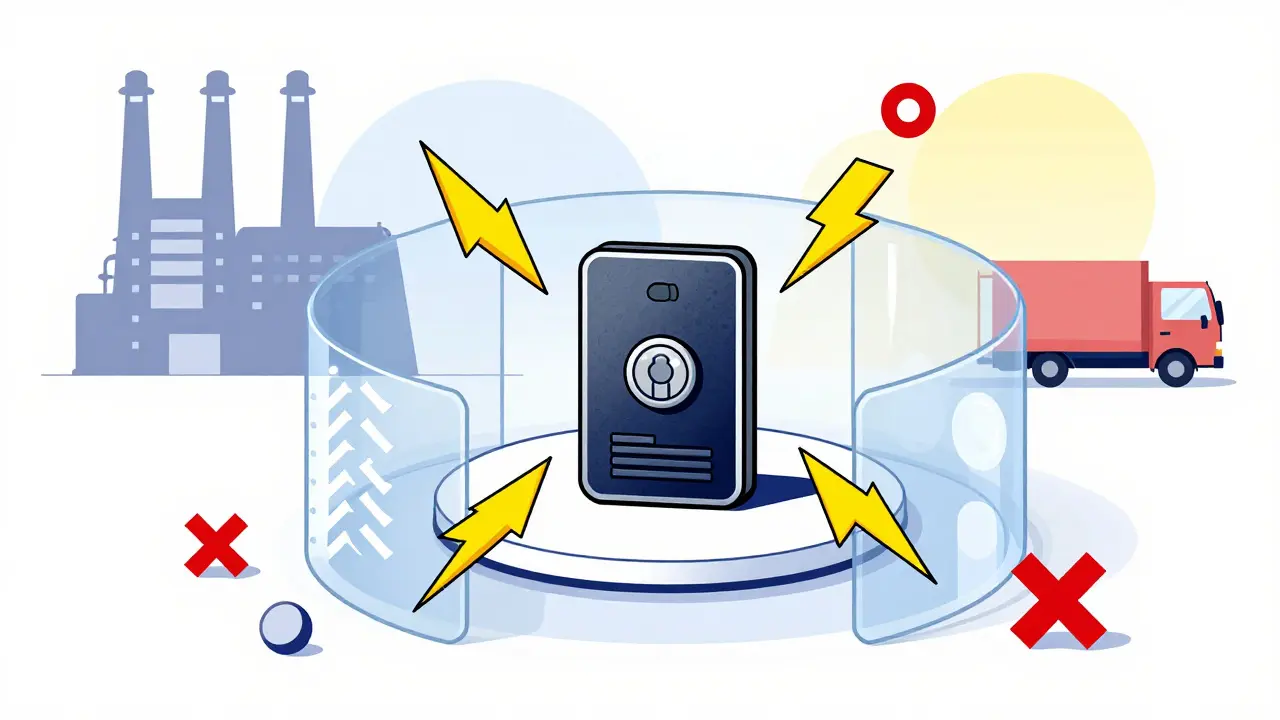
Consider the case of Trezor Safe 3 and 5, which were found to rely on a customized microcontroller (TRZ32F429) susceptible to voltage glitching attacks. Researchers from Ledger, a leading hardware wallet manufacturer, identified that attackers could manipulate the device's firmware by interrupting power flow. This allows them to bypass security checks and potentially extract private keys. The scary part? This vulnerability exists in the hardware design itself, making it difficult to patch without replacing the physical chip.
Then there’s the infamous 2023 breach involving Ledger Connect Kit. Malicious code was injected into an npm module used by developers. While this wasn’t a direct hardware compromise, it resulted in $600,000 in losses and highlighted how fragile the entire ecosystem is. If the software bridge between your phone and your hardware wallet is poisoned, your cold storage isn’t as cold as you think.
Counterfeit Hardware: The Gray Market Danger
You don’t always need to hack the manufacturer to get your hands dirty. Sometimes, you just buy a fake. Counterfeit hardware is a massive problem, especially during chip shortages. When legitimate channels dry up, buyers turn to gray market resellers, secondary marketplaces, and unfamiliar vendors. Pressure to source hardware quickly often means skipping provenance checks.
Counterfeit devices aren’t just broken versions of real ones. They’re often modified. A rogue router or switch might ship with hardcoded credentials or undocumented remote access capabilities. In the crypto world, a counterfeit hardware wallet might have its mnemonic phrase pre-generated by the scammer. You think you’re creating a new seed phrase, but the attacker already has a copy. Every transaction you make is visible to them.
Relabeling older hardware to pass as newer models is surprisingly easy. Without detailed physical inspection or cryptographic attestation from the manufacturer, a relabeled device becomes indistinguishable from authentic products in normal procurement workflows. This is particularly dangerous for smaller organizations and individual investors who lack the resources to verify hardware integrity at a component level.
| Attack Vector | Method | Detection Difficulty | Potential Impact |
|---|---|---|---|
| Firmware Tampering | Malicious code implanted before deployment | High (requires deep forensic analysis) | Total loss of funds, persistent backdoor |
| Counterfeit Devices | Substitution with rogue equivalents | Medium (visual inspection may fail) | Seed phrase theft, data exfiltration |
| Voltage Glitching | Physical manipulation of power supply | Very High (requires specialized equipment) | Bypass security checks, key extraction |
| Supply Chain Interception | Physical access to shipments | Low (if packaging is inspected) | Hardware modification, tracking implants |

Why Now? The Perfect Storm
Several factors are converging to make supply chain attacks more attractive than ever. First, the AI boom has driven up demand for GPUs and other chips, creating shortages. Shortages create desperation, and desperation leads to poor procurement decisions. Second, regulatory pushes for segregated crypto custody mean institutions are moving billions into self-custody solutions. These large pools of capital are irresistible targets.
Nation-states are also getting involved. According to HP Wolf Security research, 63% of respondents believe the next major nation-state attack will involve poisoning hardware supply chains. Why? Because it provides stealthy footholds below the operating system. Once inside, attackers can remain undetected for years, logging data and passing traffic without triggering software-based security tools.
The Clop ransomware incident in 2025 exposed 3.5 million users via software supply chain breaches. While this wasn’t strictly hardware, it underscored the urgency. If software bridges can be compromised, why wouldn’t attackers target the hardware endpoints themselves?
Regulatory Responses and Compliance
Governments are waking up to this threat. In 2021, US Executive Order 14028 accelerated software supply chain security requirements for government procurement, explicitly including firmware. The European Union introduced the Network and Information Systems (NIS2) directive and the Cyber Resilience Act, extending cybersecurity requirements to every stage of the supply chain, including hardware.
For defense contractors, NDAA Section 889 restricts the use of certain foreign-manufactured technology. CMMC (Cybersecurity Maturity Model Certification) requirements increasingly govern how contractors manage technology supply chains. Counterfeit hardware from prohibited manufacturers could create compliance exposure on top of security risks. The message is clear: systems cannot be secured when components cannot be trusted.
How to Protect Yourself: Practical Mitigation Strategies
So, what can you do? You can’t inspect every chip under a microscope. But you can implement layers of defense that make supply chain attacks much harder to pull off.
- Buy Directly from Manufacturers: Avoid third-party sellers, auction sites, and gray market resellers. Purchase only from official websites or authorized retailers. Check seals, packaging quality, and serial numbers against the manufacturer’s database if possible.
- Verify Firmware Signatures: Ensure your device supports mandatory cryptographic signing for all vendor software. Before updating firmware, verify the digital signature. Most reputable wallets like Ledger and Trezor provide tools to check update authenticity.
- Use Platform Certificate Technology: Some advanced devices allow you to verify hardware and firmware integrity after delivery. Look for features that enable remote management using digital certificates and public-key cryptography.
- Implement Zero Trust: Don’t assume your hardware is safe just because it’s offline. Treat every connection as hostile. Use multi-factor authentication for any associated accounts and monitor for unusual activity.
- Regular Audits and Updates: Perform regular security audits. Keep your device firmware updated, but only through verified channels. If a device seems slow, acts strangely, or shows unexpected behavior, stop using it immediately.
- Supplier Risk Assessment: For businesses, assess your suppliers’ security measures. Do they have strict physical security for manufacturing processes? Do they share threat intelligence? Regularly evaluate third-party vendors.
One critical step often overlooked is verifying the mnemonic phrase generation process. Scammers have been known to pre-generate seed phrases on compromised devices. Always generate your seed phrase on the device itself, never on a computer or smartphone. Write it down physically and store it securely. Never digitize it.
The Future of Hardware Security
The landscape is evolving. We’re seeing a shift towards more transparent manufacturing processes and open-source firmware verification. Companies are investing in better anti-tamper mechanisms and hardware root of trust implementations. However, the cat-and-mouse game continues.
As quantum computing advances, current encryption standards may become vulnerable. This adds another layer of complexity to hardware security. Devices must not only resist today’s attacks but also be future-proofed against tomorrow’s threats. This requires ongoing investment in R&D and a commitment to security-by-design principles.
Remember, security is not a product; it’s a process. No single device or feature can guarantee safety. It’s about combining good hardware with good habits. Stay informed, stay skeptical, and always verify.
What is a firmware supply chain attack?
A firmware supply chain attack occurs when malicious code is implanted into the low-level software of a hardware device before it reaches the end user. Unlike software viruses, this malware operates below the operating system, making it difficult to detect with standard antivirus tools. It can persist through reboots and updates, providing attackers with long-term access.
How can I tell if my hardware wallet is counterfeit?
Signs include purchasing from unofficial sources, poor packaging quality, missing seals, or discrepancies in serial numbers. More subtly, if the device prompts you to enter a seed phrase instead of generating one, or if it behaves erratically, it may be compromised. Always buy directly from manufacturers and verify firmware signatures upon setup.
Is voltage glitching a real threat to my crypto wallet?
Yes, for certain devices. Voltage glitching involves manipulating the power supply to cause errors in the microcontroller, potentially allowing attackers to bypass security checks. While this requires physical access and specialized equipment, it highlights the importance of choosing devices with robust hardware security modules (HSMs) and anti-tamper designs.
Why are supply chain attacks increasing now?
Increased adoption of self-custody crypto solutions, global chip shortages driving gray market activity, and higher value targets due to institutional investment have made supply chain attacks more lucrative. Additionally, nation-states are recognizing the strategic advantage of compromising infrastructure at the hardware level.
What should I do if I suspect my device was compromised?
Immediately stop using the device. Transfer any remaining funds to a new, verified hardware wallet using a clean computer. Change passwords for any associated accounts and enable multi-factor authentication. Report the incident to the manufacturer and relevant authorities. Assume the old seed phrase is compromised and never reuse it.