
EPF Interest Rate: What You Need to Know About Your Retirement Savings
When you hear EPF interest rate, the annual return your Employee Provident Fund contributions earn. It's the number that decides how much extra money grows in your retirement account each year. For millions of Indian workers, this rate isn’t just a number on a statement—it’s the difference between retiring with comfort or scraping by. The Employee Provident Fund, a government-backed savings scheme for salaried employees in India. Also known as EPF, it’s mandatory for most formal sector workers and helps build long-term financial security. Every month, both you and your employer put in 12% of your basic salary into this fund. That money sits there, earning interest, and compounds over years until you retire or leave a job.
The EPF interest rate, set annually by the Central Board of Trustees under the Ministry of Labour. It’s usually announced in April, based on the fund’s earnings from government bonds and other safe investments. In 2023–24, it was 8.15%. Last year, it was 8.1%. Before that, it dipped to 8.1% in 2022–23 after falling from 8.5% in 2020–21. These small changes matter because if you’ve been contributing ₹5,000 a month for 15 years, a 0.5% drop could mean ₹30,000 less in your final payout. That’s not just a number—it’s a vacation, a medical emergency fund, or your child’s education.
Not everyone realizes that the EPF interest rate, isn’t tied to market swings like stocks or mutual funds. It’s stable, predictable, and backed by the government. That’s why it’s a go-to for people who want safe growth without risk. But it also means you won’t see big jumps during bull markets. If you’re young and saving for retirement, you might want to pair EPF with other investments like mutual funds. If you’re closer to retirement, EPF is your bedrock.
What about those who change jobs? Your EPF account stays active. You can transfer it online without losing interest. Even if you’re unemployed for a while, the money keeps earning. And if you retire early or move abroad, you can withdraw it—though there are rules around when and how much.
You’ll find posts here that break down real salary figures, compare EPF with other savings tools, and explain how changes in government policy affect your pocket. Some look at how much a ₹25,000 monthly salary grows over 20 years with today’s rate. Others show what happens if the rate drops again next year. There are also guides on how to check your EPF balance, file claims, or avoid common mistakes when transferring accounts.
Right now, the EPF interest rate is one of the most reliable returns you can get without touching the stock market. But it’s also under pressure. With inflation rising and bond yields shifting, the government may need to adjust it again soon. That’s why knowing how it works—and how it’s changed over the last five years—isn’t just useful. It’s essential. Below, you’ll find real data, real stories, and real advice from people who’ve lived it. No fluff. Just what you need to protect your future.
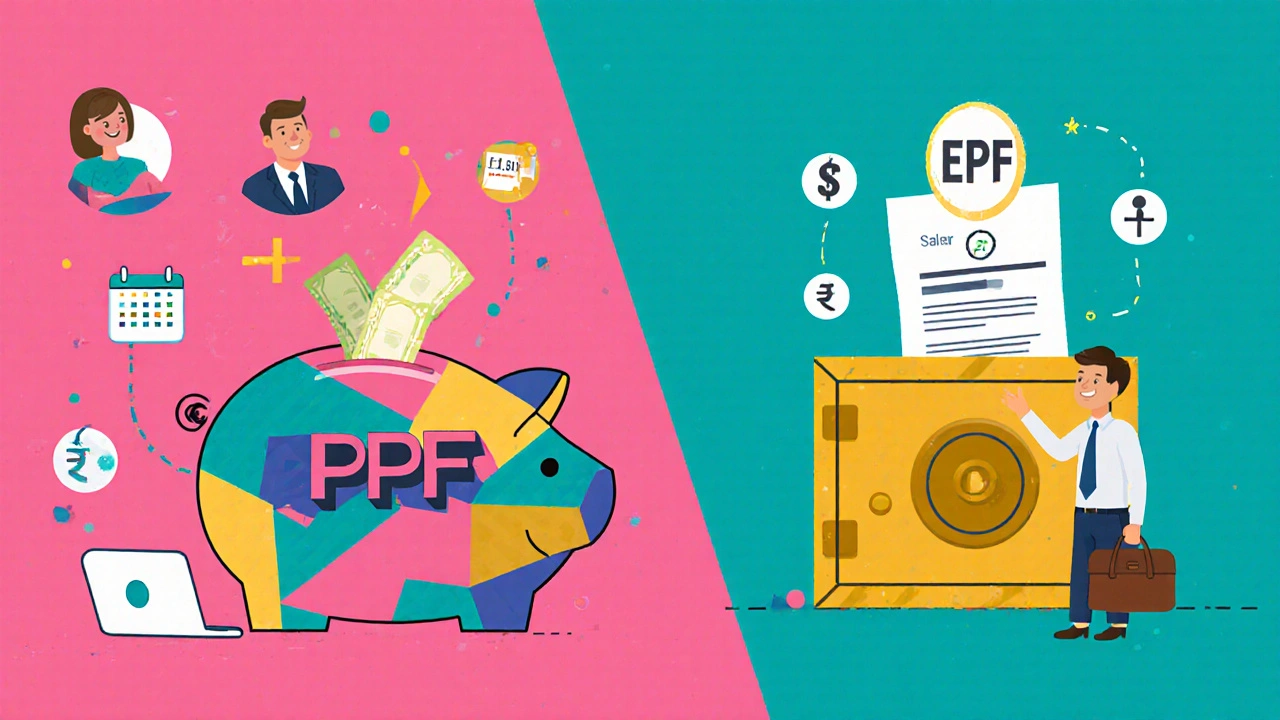
PPF vs EPF for Retirement in India: Which Gives Better Returns, Safety, and Access?
Compare PPF and EPF for retirement in India-returns, risk, and access. Learn which one suits you better and how to use both for maximum tax-free growth.
Categories
- Cryptocurrency
- Careers & Education
- Home & Living
- Technology
- Home & Lifestyle
- hire domestic help in Mumbai
- hire drivers in mumbai
- Personal Finance
- hire pet care in mumbai
- Travel & Transportation