
Health Insurance Tax Benefit in India: How It Works and What You Can Claim
When you buy health insurance in India, you’re not just protecting your family—you’re also unlocking a health insurance tax benefit under Section 80D of the Income Tax Act. This isn’t just a small discount. It’s a legal way to cut your taxable income by up to ₹75,000 a year if you cover yourself, your spouse, kids, and parents. Many people pay premiums without knowing they can claim this, and that’s money left on the table.
Section 80D, a provision under India’s Income Tax Act that allows deductions for health insurance premiums and preventive health checkups. It’s not just about buying a policy—it’s about how much you can legally reduce your tax bill. This rule applies to individuals and Hindu Undivided Families (HUFs), and it covers both self-funded and family plans. Also known as health insurance deduction, it’s one of the most underused tax-saving tools in India. You can claim up to ₹25,000 for your own family, and if your parents are senior citizens (60+), you get an extra ₹50,000. That’s ₹75,000 total. If you’re under 60 and your parents are too, you still get ₹25,000 each—₹50,000 total. The rules change slightly based on age, but the savings don’t.
Preventive health checkups, annual medical tests covered under Section 80D, up to ₹5,000 per person. This is a separate limit from your insurance premium. You can spend ₹5,000 on blood pressure, diabetes, or cancer screenings for yourself or your family—and still claim it. Many people forget this part. They pay for checkups but don’t link them to tax savings. This isn’t a vague benefit—it’s a fixed amount you can use every year, no matter what policy you have. And you don’t need to be sick to use it. Even if your family is healthy, a yearly checkup counts. You can even split it across multiple people: ₹2,500 for your spouse, ₹2,500 for your dad. It adds up.
Health insurance premium, the amount you pay annually to keep your medical coverage active and eligible for tax deduction. It must be paid through non-cash modes—bank transfer, card, or digital wallet. Cash payments don’t qualify. This trips up a lot of people. If you pay your insurer in cash, even if it’s ₹20,000, you lose the deduction. Always keep a digital record. Your bank statement or UPI receipt is your proof. Policies from any IRDAI-approved insurer count. You don’t need to pick a specific company. The benefit is the same whether you buy from Star, HDFC Ergo, or a public sector insurer.
Section 80D doesn’t cover everything. Hospital bills, medicines, or doctor visits aren’t deductible. Only the premium and checkups. But that’s enough. If you’re paying ₹2,000 a month for health insurance, that’s ₹24,000 a year. Add ₹5,000 for checkups? You’re already at ₹29,000. That’s nearly ₹4,500 back in your pocket if you’re in the 30% tax bracket. And if you cover your parents? You’re saving even more.
This isn’t a one-time thing. You claim it every year. It’s not tied to your job. If you’re self-employed, you still get it. If you’re retired and paying for your own policy, you still get it. The benefit doesn’t disappear when you stop working. It’s a personal right, not a company perk.
Below, you’ll find detailed breakdowns of how others have used Section 80D to save thousands. From families covering elderly parents to young professionals stacking checkups with basic plans—you’ll see real examples of what works, what doesn’t, and how to avoid the common mistakes that cost people their savings.
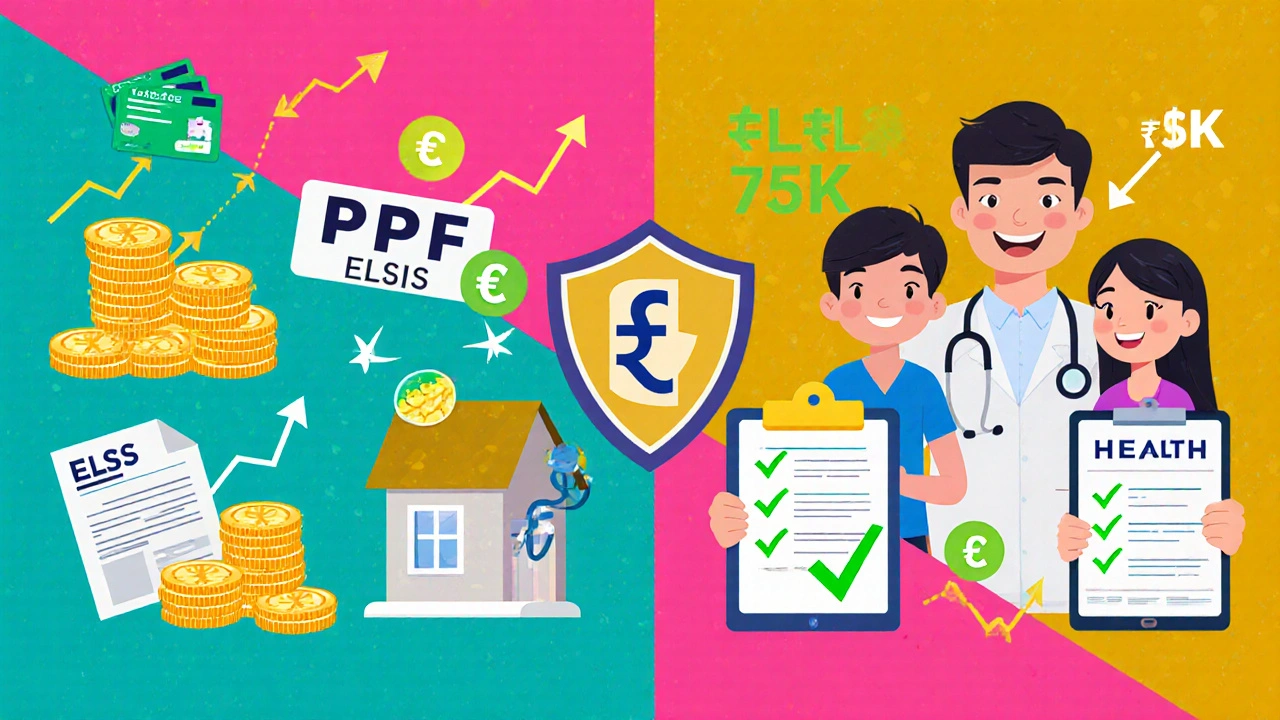
Section 80C vs 80D in India: Know the Difference Between Investment and Health Insurance Deductions
Understand the difference between Section 80C and Section 80D in India to maximize your tax savings. Learn how investment deductions and health insurance premiums can reduce your taxable income by up to ₹2.25 lakh annually.
Categories
- Cryptocurrency
- Careers & Education
- Home & Living
- Technology
- Home & Lifestyle
- hire domestic help in Mumbai
- hire drivers in mumbai
- hire pet care in mumbai
- Personal Finance
- Travel & Transportation