
Home Loan Tax Savings in India: How to Cut Your Tax Bill Legally
When you take out a home loan tax savings, the tax benefits you get on your home loan principal and interest payments under Indian income tax laws. Also known as tax deductions on home loans, it’s one of the most powerful ways to reduce your yearly tax bill without changing your lifestyle. Many people don’t realize they can claim up to ₹1.5 lakh in deductions just by owning a home—and that’s before even counting the interest benefit.
The real magic happens through two sections of the Income Tax Act: Section 80C, a deduction limit for investments and expenses like home loan principal repayment, and Section 24(b), the rule that lets you deduct up to ₹2 lakh per year on home loan interest. Together, they can knock off ₹3.5 lakh from your taxable income. If you’re in the 30% tax bracket, that’s over ₹1 lakh saved in taxes annually. You don’t need to be rich to use this—just have a home loan and know where to look.
Most people focus only on the principal repayment under Section 80C, but they miss how interest deductions stack up. Even if your EMI is ₹50,000, the interest portion in the first few years might be ₹35,000 or more—and that’s fully deductible. You can also claim these benefits even if the house isn’t ready yet, as long as you’ve started paying interest. And if you’re buying a second home, you still get the interest deduction—just not the principal one under Section 80C.
There’s a catch: you need to be the owner and the one paying the loan. If your spouse is the co-applicant and pays the EMI, they can claim the deduction too—splitting the benefit between both of you. Joint loans aren’t just for affordability; they’re for tax efficiency. And if you rent out the property, you can claim even more—no limit on interest deduction, and you can offset rental income with losses.
What you won’t find in bank brochures: you can claim these benefits for under-construction homes, for loans taken from friends or relatives (if documented), and even for renovations if you have proper bills. The key is keeping records—bank statements, loan agreements, and payment receipts. No need for fancy software. A simple Excel sheet with dates and amounts works fine.
Some think home loan tax savings are only for big earners. But even if you earn ₹8 lakh a year, saving ₹30,000–₹50,000 in taxes means you’re effectively paying less for your home. That’s not a perk—it’s a financial tool. And unlike mutual funds or insurance plans, this deduction doesn’t lock your money away. You own the house, and the tax break comes on top.
Below, you’ll find clear, no-fluff guides on how to maximize these savings, what documents to keep, how joint loans work, and why some people miss out on thousands just because they didn’t know the rules. These aren’t theoretical tips—they’re real strategies used by Mumbai households to cut their tax bills every year.
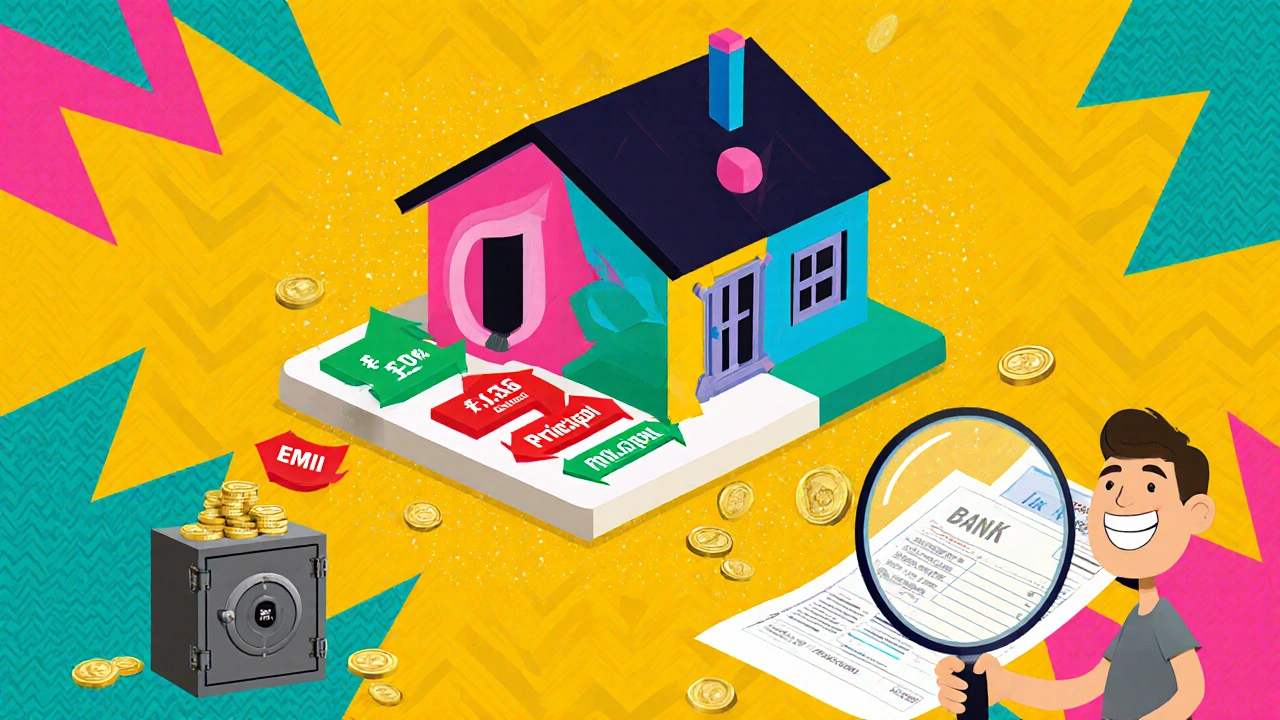
Home Loan Principal Repayment and Section 80C Tax Benefits in India
Learn how home loan principal repayment qualifies for up to ₹1.5 lakh tax deduction under Section 80C in India. Know what counts, what doesn't, and how to maximize your savings.
Categories
- Cryptocurrency
- Careers & Education
- Home & Living
- Technology
- Home & Lifestyle
- hire domestic help in Mumbai
- hire drivers in mumbai
- Personal Finance
- hire pet care in mumbai
- Travel & Transportation