
Mutual Fund KYC Process in India: What You Need to Know
When you want to invest in mutual funds, a pooled investment vehicle that lets you buy shares in a portfolio of stocks, bonds, or other assets. Also known as unit trusts, mutual funds in India require you to complete a one-time KYC process, a regulatory check to verify your identity and address before you can trade. This is mandated by SEBI, the Securities and Exchange Board of India, which oversees all capital markets. Without KYC, you can’t buy, sell, or even switch funds—even if you have the money ready.
The KYC process isn’t just paperwork. It’s your entry pass to the entire mutual fund ecosystem. Once done, it’s valid across all fund houses—no need to repeat it for AMC, HDFC, SBI, or Axis. You’ll need basic documents: a photo ID (like Aadhaar or passport), proof of address (electricity bill or rental agreement), and a PAN card. Many people think they need to visit an office, but today you can do it online in under 10 minutes through platforms like CAMS or Karvy. Just upload your documents, do a video verification, and you’re done. Some agents still push physical forms, but that’s outdated. If you’re investing through Zerodha, Groww, or Paytm Money, they handle it for you automatically.
What trips people up? Missing or blurry documents. A faded Aadhaar print, an expired passport, or a bank statement without your name and address will get rejected. Also, if your name on PAN doesn’t match your bank account or Aadhaar, you’ll get stuck. Fix that first. And don’t ignore the KYC status check—some people complete it but never confirm it’s active. Log into your fund house portal or use the CVL KYC website to verify. If it says "Registered," you’re good. If it says "Pending," follow up. No one will remind you.
There’s no fee for KYC. Ever. If someone asks you to pay ₹500 or ₹1,000 to "complete" your KYC, it’s a scam. The process is free and regulated. Even if you’ve invested before 2012, you still need to update it—SEBI made it mandatory for all investors in 2019. Your old records don’t count anymore.
And if you’re a non-resident? The rules change slightly. You’ll need your passport, visa, and overseas address proof. But the core idea stays the same: prove who you are, where you live, and that you’re not a risk to the system. Once cleared, you can invest in any mutual fund scheme—equity, debt, hybrid, or index—without another hurdle.
The mutual fund KYC process is simple, but it’s the one thing that can stop you cold if you skip it. It’s not a formality—it’s the foundation of every investment you’ll ever make in India. Get it right the first time, and you’ll never look back. Below, you’ll find real guides that break down how to complete it, what documents to use, and how to fix common mistakes that delay your investments.
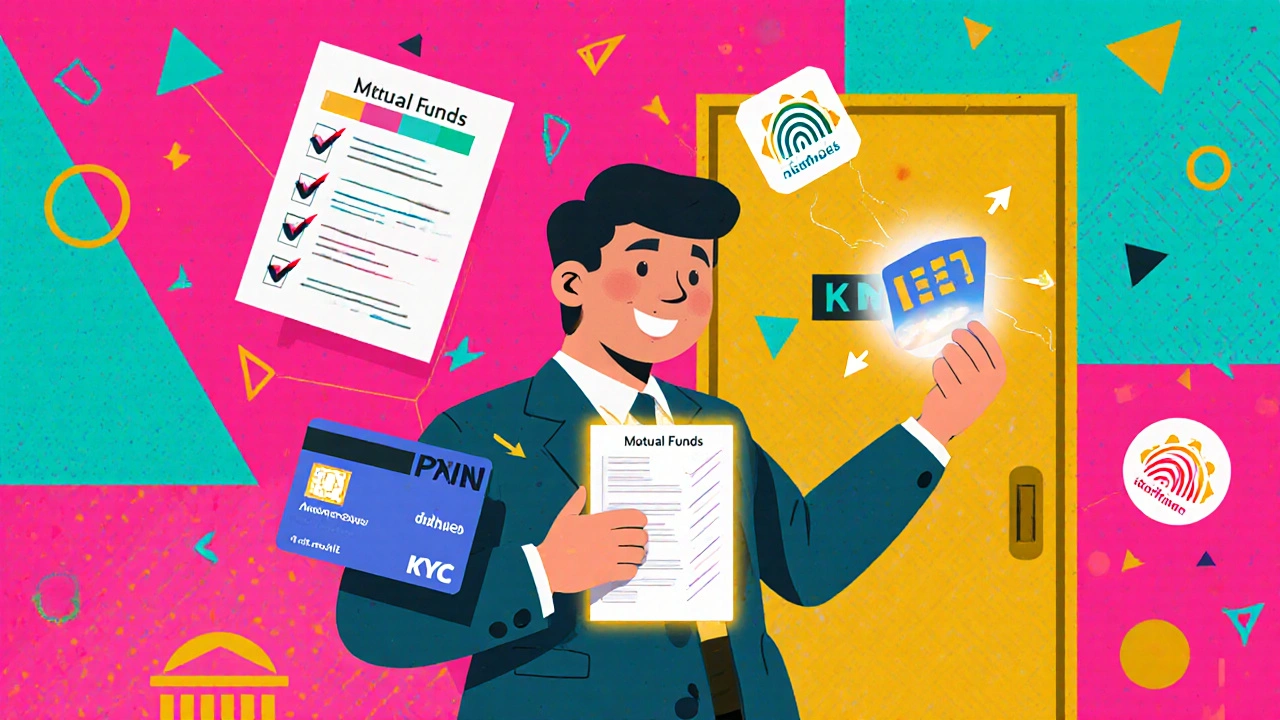
How to Use KYC, PAN, and Aadhaar for Investing in Mutual Funds in India
Learn how to use KYC, PAN, and Aadhaar to invest in mutual funds in India. Step-by-step guide for beginners on completing digital KYC, linking documents, and avoiding common mistakes.
Categories
- Cryptocurrency
- Careers & Education
- Home & Living
- Technology
- Home & Lifestyle
- hire domestic help in Mumbai
- hire drivers in mumbai
- Personal Finance
- hire pet care in mumbai
- Travel & Transportation