
PPF Withdrawal Rules: How to Access Your Money Without Penalties
When you invest in a Public Provident Fund (PPF), a long-term savings scheme backed by the Indian government that offers tax benefits and fixed returns. Also known as government-backed savings account, it’s designed to help you build wealth over 15 years—but life doesn’t wait, and neither should your access to your own money. Knowing the PPF withdrawal rules isn’t just about legality—it’s about using your savings wisely when you need them most.
PPF isn’t a locked box. You can withdraw money before maturity, but only under specific conditions. After completing 5 full financial years, you’re allowed one partial withdrawal per year. The amount you can take out? Up to 50% of the balance at the end of the fourth year or the end of the previous year, whichever is lower. This rule applies every year after year 5, but you can’t withdraw more than once in a single year. If you need cash urgently, you can also apply for a loan between the third and sixth year, but you’ll pay interest and repay it within 36 months. Miss the repayment window? Your account gets frozen until you clear the dues.
At the end of 15 years, you can withdraw the full amount tax-free. But here’s the catch: you don’t have to close the account. You can extend it in blocks of 5 years—either with or without fresh deposits. If you extend without deposits, you can still make withdrawals once a year, up to 60% of the balance at the start of each extension period. This flexibility makes PPF more than just a savings tool—it becomes a steady income stream in retirement. Many people don’t realize that even after maturity, your money keeps earning interest, and you can keep it growing while pulling out what you need.
What about emergencies? The rules allow withdrawals for serious medical treatment of yourself or your dependents, or for higher education expenses. You’ll need to submit proof—hospital bills, admission letters, fee receipts—but the process is straightforward if you plan ahead. No one wants to dig through paperwork during a crisis, so keeping copies of all relevant documents saved digitally is a smart move.
And what happens if you forget to deposit every year? Your account becomes inactive. You can revive it by paying a penalty of ₹500 per year you missed, plus the minimum deposit of ₹500 for each inactive year. But if you leave it dormant for too long, you lose the interest earned during that gap. It’s not a penalty you can ignore.
These rules aren’t arbitrary—they’re designed to encourage discipline while allowing room for real-life needs. Whether you’re planning for your child’s college fees, a medical emergency, or just want to use some of your hard-earned savings, understanding the PPF withdrawal rules means you won’t lose money to avoidable mistakes. Below, you’ll find real-world examples, common pitfalls, and step-by-step guides on how to navigate withdrawals, loans, and extensions without losing out on interest or facing penalties.
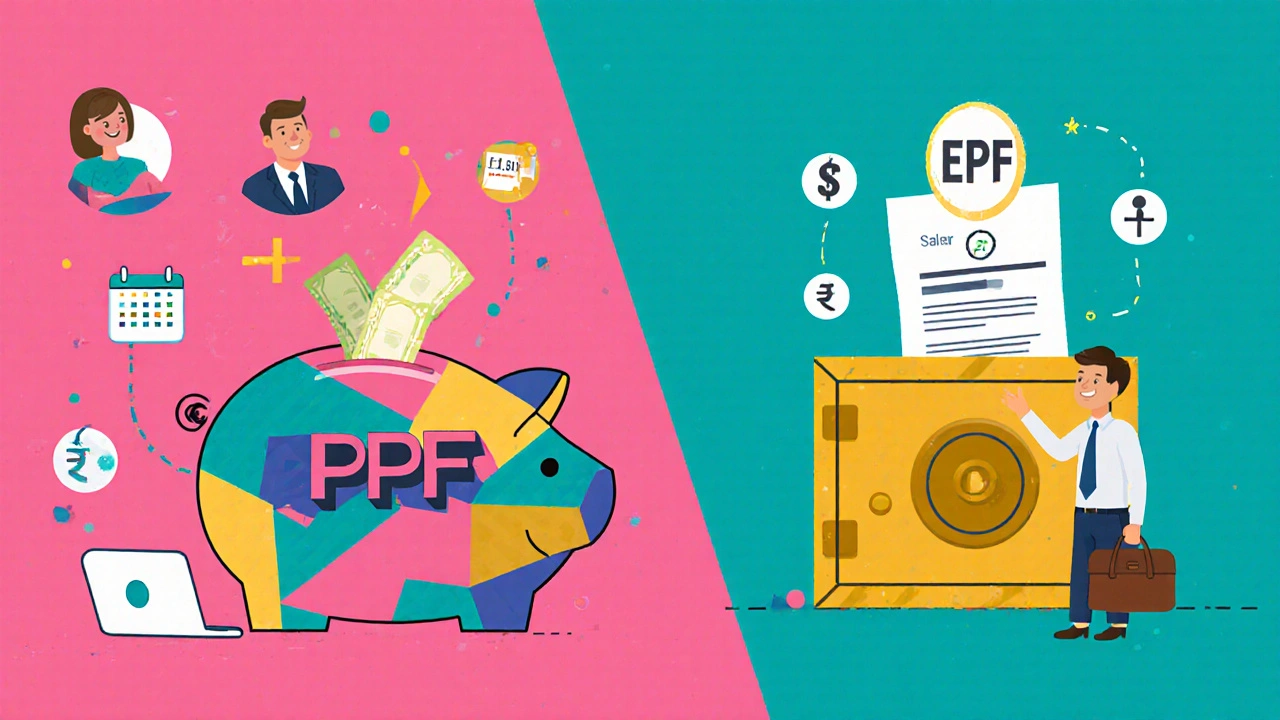
PPF vs EPF for Retirement in India: Which Gives Better Returns, Safety, and Access?
Compare PPF and EPF for retirement in India-returns, risk, and access. Learn which one suits you better and how to use both for maximum tax-free growth.
Categories
- Cryptocurrency
- Careers & Education
- Home & Living
- Technology
- Home & Lifestyle
- hire domestic help in Mumbai
- hire drivers in mumbai
- Personal Finance
- hire pet care in mumbai
- Travel & Transportation