
Tax Deduction India: How Section 80C, Home Loans, and Investments Save You Money
When it comes to tax deduction India, a legal way to reduce your taxable income under the Income Tax Act, often through investments and expenses like home loan repayments. Also known as income tax saving, it’s not about hiding money—it’s about using rules built into the system to keep more of what you earn. The biggest player here is Section 80C, a provision in India’s Income Tax Act that lets you claim up to ₹1.5 lakh in deductions per year. This isn’t a loophole—it’s a designed benefit for people who save, invest, or pay for key life expenses like education or housing.
Section 80C covers more than just mutual funds or insurance. If you’re paying back the principal on your home loan, a common way Indians build wealth while cutting taxes. Also known as mortgage repayment, the principal portion of your EMI qualifies directly under this section—up to the full ₹1.5 lakh limit. You can also use it for PPF, EPF, ELSS, tuition fees, and even five-year fixed deposits. The trick? You can’t stack everything on one item. You need to spread it out. For example, if you put ₹1 lakh into PPF and pay ₹50,000 in school fees, you’ve used your full deduction. No extra money saved? Then you’re missing out.
What most people don’t realize is that tax saving investments India, like ELSS or NSC, aren’t just about reducing tax—they’re about building long-term wealth. These aren’t side hustles; they’re core financial tools. The returns on ELSS funds, for instance, often beat fixed deposits, and they lock your money in for just three years. Meanwhile, PPF gives you tax-free growth over 15 years. Both count under Section 80C. So when you hear "tax deduction," think "smart money move," not "paperwork chore."
You’ll also find that tax deductions in India don’t stop at Section 80C. There’s Section 80D for health insurance, Section 24 for home loan interest, and even deductions for donations. But if you’re starting from scratch, Section 80C is where you get the most bang for your buck. It’s the foundation. Everything else builds on it.
There’s no magic formula. You don’t need a chartered accountant to figure this out. Just track what you pay each year—your EMI principal, your PPF deposits, your child’s tuition—and match it to the rules. If you’re spending ₹1.8 lakh on eligible items but only claiming ₹1.5 lakh, you’re already doing better than 80% of taxpayers. The real question isn’t whether you qualify—it’s whether you’re using all the space you’re entitled to.
Below, you’ll find clear, no-fluff guides on exactly how home loan principal repayment cuts your tax bill, how SSY and PPF stack up under Section 80C, and what most people get wrong when they try to maximize savings. No theory. No jargon. Just what works in India right now.
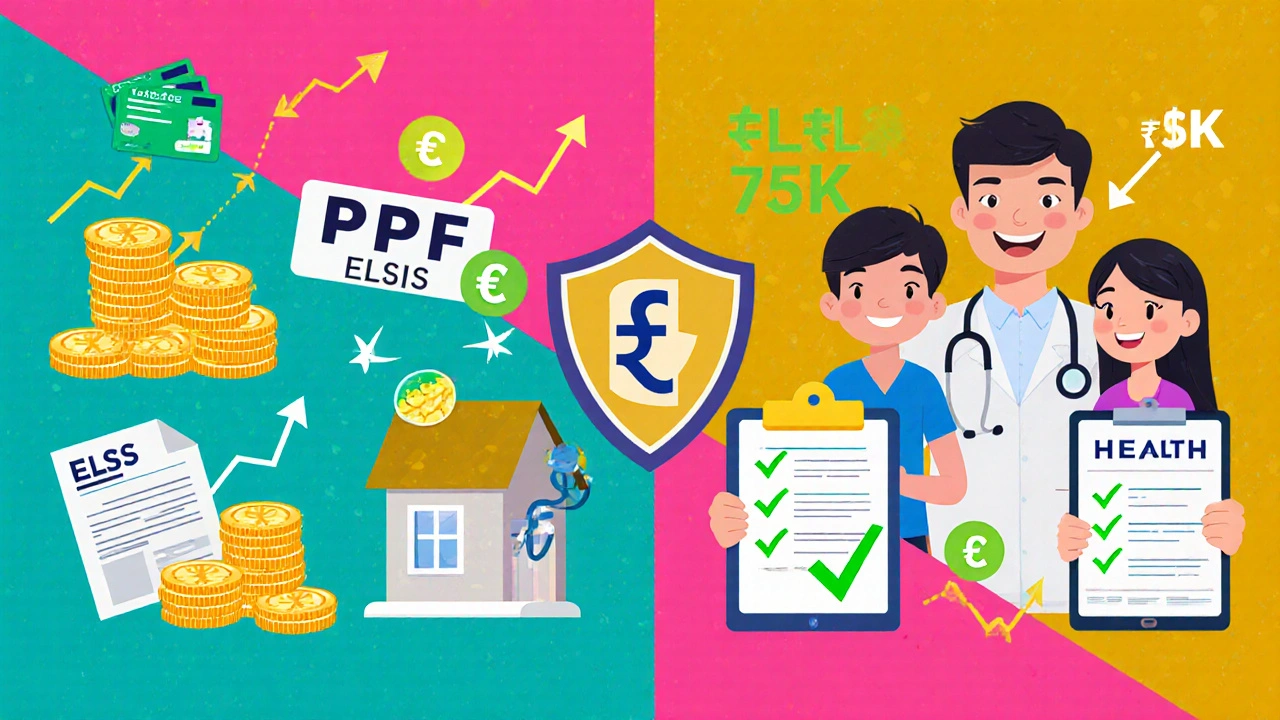
Section 80C vs 80D in India: Know the Difference Between Investment and Health Insurance Deductions
Understand the difference between Section 80C and Section 80D in India to maximize your tax savings. Learn how investment deductions and health insurance premiums can reduce your taxable income by up to ₹2.25 lakh annually.
Categories
- Cryptocurrency
- Careers & Education
- Home & Living
- Technology
- Home & Lifestyle
- hire domestic help in Mumbai
- hire drivers in mumbai
- hire pet care in mumbai
- Personal Finance
- Travel & Transportation