
Telco and IoT on Blockchain: How Enterprise Pilots Are Reshaping Telecom
 Jan, 25 2026
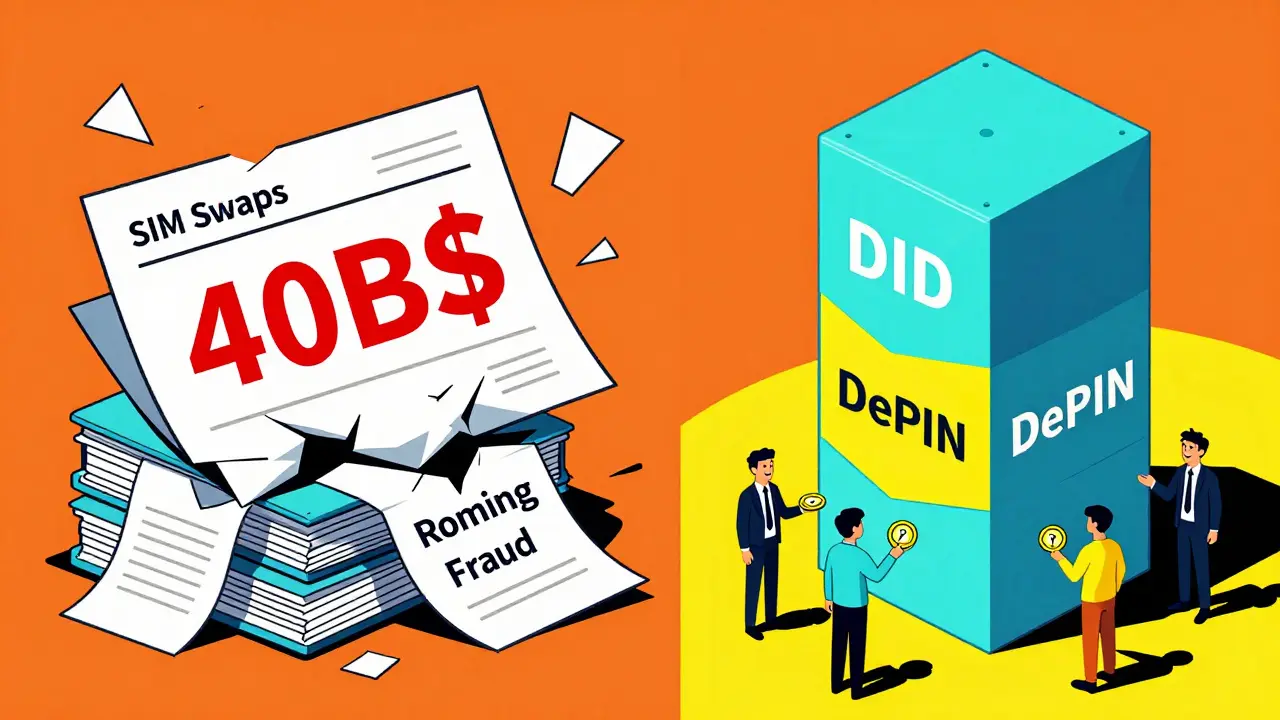
By early 2026, the telecom industry isn’t just upgrading its networks-it’s rebuilding them from the ground up. The old model of centralized control, manual authentication, and vulnerable data storage is crumbling under the weight of 40 billion IoT devices and $40 billion in annual fraud. Enter blockchain: not as a buzzword, but as the backbone of a new kind of telecom infrastructure. Companies like Deutsche Telekom, Vodafone, and Telefónica aren’t testing this anymore. They’re running live systems that process billions of transactions monthly, slashing fraud, and creating new revenue streams. This isn’t the future. It’s happening right now.
Why Blockchain? The Problem with Today’s Telco Systems
Think about how your phone connects when you travel abroad. A few years ago, it took days to verify your identity across carriers. Now, it’s instant. That’s because blockchain replaced manual checks with automated, tamper-proof authentication. But that’s just one slice of the problem. Traditional telecom networks rely on centralized databases. One breach, one insider threat, and millions of records are exposed. In 2025, attacks on telecom infrastructure jumped 74% year-over-year. IoT devices-smart meters, industrial sensors, connected cars-are especially vulnerable. Most were never designed with security in mind. And with over 16 billion IoT devices in 2023 growing to 40 billion by 2030, the attack surface is exploding. Fraud isn’t just a technical issue. It’s a financial one. The industry loses $40 billion a year to identity theft, fake SIM swaps, and roaming scams. Manual verification processes cost time and money. Billing errors pile up. Customers get frustrated. And legacy OSS/BSS systems? They weren’t built for this scale. Blockchain fixes this by removing central points of failure and replacing them with distributed, cryptographically secure ledgers.How It Works: Three Core Architectures
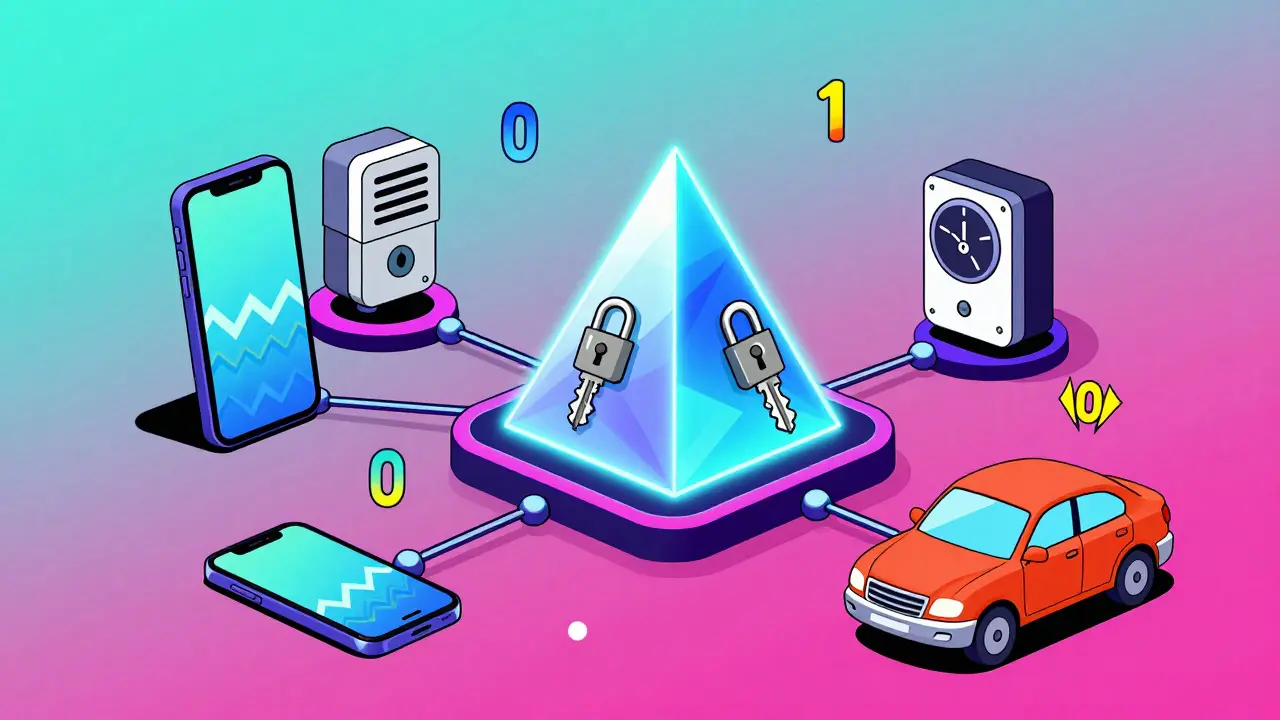
Blockchain in telecom isn’t one thing. It’s three tightly connected systems working together. Decentralized Identity (DID) lets every device or user own their own digital identity. No more sharing your phone number or SIM details with a call center. Instead, zero-knowledge proofs prove you’re who you say you are-without revealing anything else. Deutsche Telekom cut roaming fraud by 99% using this method. Your phone doesn’t send your data to a server. It proves access to a private key. No data leak. No middleman. Decentralized Storage replaces cloud databases with peer-to-peer networks. Instead of storing customer data in one vulnerable location, encrypted fragments are spread across thousands of nodes. GDPR compliance becomes easier because users control who sees what. If a hacker breaks into one node, they get nothing. Dock Labs’ platform, used by 169 million users, handles this at scale. Tokenized Infrastructure (DePIN) turns network capacity into a market. Think of it like Airbnb for bandwidth. Homeowners with Wi-Fi routers or 5G small cells can rent out spare capacity. Carriers pay them in tokens. World Mobile’s AirNode network has 100,000 nodes across 17 countries. Users get cheaper plans. Carriers save on infrastructure costs. And the whole thing runs on smart contracts-no human approval needed.Real Results: Numbers That Matter
Numbers don’t lie. Here’s what’s working:- Authentication time dropped from 90 seconds to under 1.2 seconds for roaming verification.
- Network efficiency improved by 25% through dynamic, blockchain-triggered resource allocation.
- Vodafone embedded blockchain into 5.6 billion SIM cards-every new activation is now cryptographically verified.
- Telefónica’s blockchain roaming system now handles 2.8 million daily transactions with 99.98% accuracy.
- Annual fraud losses are down $6-10 billion, based on GSMA and Telefónica’s joint pilot results.
Who’s Doing It Right-and Who’s Struggling
Not every pilot succeeds. The difference? Preparation. Successful deployments share three traits:- They start small-roaming authentication, not billing.
- They use permissioned blockchains (like Hyperledger Fabric), not public ones. Public chains are too slow for telecom needs.
- They integrate with existing systems through APIs, not rip-and-replace.
Skills, Costs, and the Talent Gap
This isn’t something you can outsource to a generic IT vendor. You need specialists. Building a blockchain telecom system requires:- Blockchain developers fluent in Solidity or Rust
- Experts in telecom protocols (SS7, Diameter)
- Security auditors trained in ETSI TS 103 619 standards
- Legal teams familiar with digital asset laws in 17+ countries
Regulation Is Catching Up
Governments aren’t sitting idle. The EU’s Digital Identity Wallet regulation, effective July 2025, now requires blockchain-based identity for cross-border roaming. The FCC in the U.S. created certification rules for any blockchain system handling subscriber data. Non-compliance isn’t an option anymore. The GSMA’s Blockchain Roaming Authentication Specification v2.3 is now adopted by 78% of top-tier operators. And by June 30, 2026, all major carriers must comply with the new Blockchain Roaming Settlement Standard v1.0. If you’re not ready, you’ll be locked out of international roaming partnerships.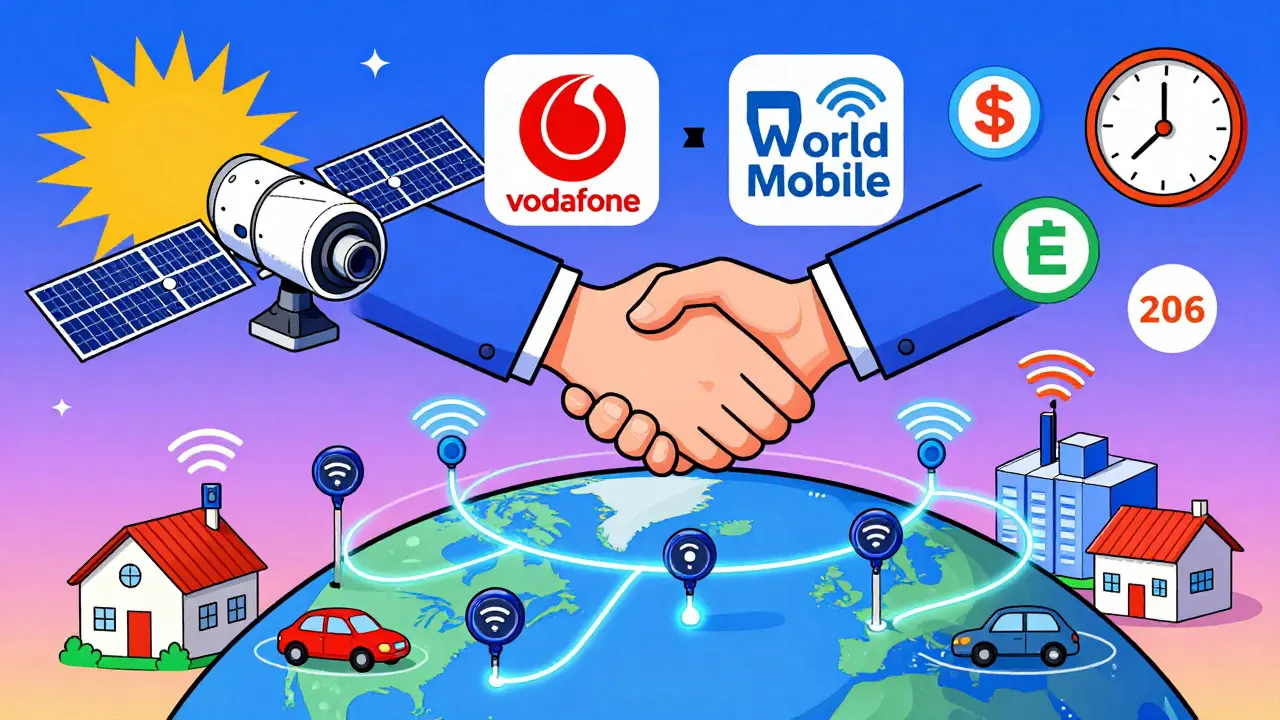
What’s Next? The Roadmap Through 2028
The next wave of innovation is already in motion:- 5G-Advanced + Blockchain: Network slicing for factories and hospitals will be secured by blockchain, ensuring no unauthorized device taps into critical slices.
- AI + Blockchain: AT&T’s trials show AI-driven fraud detection cuts false positives by 63% when paired with blockchain-verified device identities.
- Satellite IoT: Sateliot is launching five new LEO satellites in Q3 2026 to provide blockchain-secured 5G connectivity for remote sensors-no ground towers needed.
- Tokenized Markets: Helium’s model is spreading. Carriers pay $0.50/GB to use community Wi-Fi hotspots. Consumers earn $20/month for sharing bandwidth. It’s a win-win.
Frequently Asked Questions
Is blockchain secure enough for telecoms?
Yes-when implemented correctly. Enterprise blockchains use multi-signature wallets, distributed consensus, and quantum-resistant cryptography (per ETSI TS 103 619). Unlike centralized databases, there’s no single point of failure. Deutsche Telekom and Telefónica have reduced roaming fraud by 99% using this approach. Public blockchains like Bitcoin aren’t used; permissioned chains like Hyperledger Fabric are the standard.
Can small telecom providers use blockchain?
It’s harder, but possible. Smaller operators are joining industry consortia like the GSMA Blockchain for Roaming forum or the Enterprise Ethereum Alliance to share infrastructure and reduce costs. Some are leasing blockchain services from providers like Dock Labs or World Mobile instead of building their own. The key is starting with one use case-like secure SIM activation or roaming authentication-before scaling.
Why not use regular cloud security instead?
Cloud systems are still centralized. One breach, one insider, one misconfigured API, and everything’s exposed. Blockchain removes trust from individuals and systems and places it in code. It’s not just encryption-it’s verifiable, auditable, and immutable. For IoT devices that can’t run complex software, blockchain-based authentication is the only scalable solution. With 50 billion devices expected by 2030, cloud security won’t cut it.
Does blockchain slow down network performance?
Only if used incorrectly. Blockchain isn’t used for real-time tasks like voice call routing. It’s used for high-value, low-frequency actions: device onboarding, roaming authentication, billing reconciliation. On permissioned chains, transactions process in 1.2 seconds-faster than manual checks that used to take days. Throughput hits 2,500 transactions per second, which is more than enough for these use cases.
What’s the biggest mistake companies make?
Trying to replace everything at once. The biggest failures come from attempting to overhaul billing or customer service systems with blockchain. Start with identity and roaming. Prove value there. Then expand. Also, poor documentation and lack of telecom protocol expertise derail most projects. You need engineers who understand both blockchain and SS7/Diameter-not just coders.