
The Future of Scaling: Multi-Layer Architecture
 Mar, 4 2026
When you think about scaling a website or app, most people jump straight to microservices. But what if the real secret to scaling isn’t breaking things apart - but organizing them better? The truth is, multi-layer architecture is still the quiet powerhouse behind most of the apps you use every day - from banking apps to e-commerce platforms. And it’s not going anywhere. In fact, its future is brighter than ever.
Why Multi-Layer Architecture Still Works
Multi-layer architecture isn’t new. It’s been around since the early 2000s. But that doesn’t mean it’s outdated. It’s simple: separate your app into clear layers - presentation, logic, and data. Each layer does one job, and only one job. The user interface (presentation) talks to the business logic (application), which talks to the database (data). No shortcuts. No mixing. This might sound basic, but it’s powerful. Imagine your app gets a sudden spike in traffic. With a monolith, you have to spin up more copies of the whole thing - even if only the login page is getting hammered. With multi-layer architecture, you scale just the presentation layer. You add more web servers. You don’t touch the payment processing logic or the database. That’s efficiency. That’s control. Companies like Shopify and Stripe still use variations of this pattern. Why? Because it’s predictable. It’s easier to monitor. It’s easier to fix when something breaks.How Each Layer Scales Independently
Let’s break it down. A typical three-layer setup looks like this:- Presentation tier: Handles user requests - web pages, mobile apps, APIs. This is what users see.
- Application tier: Runs your business logic - calculations, rules, workflows, authentication. This is the brain.
- Data tier: Stores and retrieves data - databases, caches, file systems. This is the memory.
The Hidden Advantage: Maintainability
Scaling isn’t just about handling more users. It’s also about keeping your codebase sane. A messy, tangled codebase is the #1 reason apps slow down or break. Multi-layer architecture fixes that. Because each layer has a clear purpose, teams can work on them without stepping on each other’s toes. Frontend devs tweak the UI without touching payment logic. Backend devs optimize database queries without breaking the login flow. QA tests one layer at a time. Debugging becomes a matter of isolating the problem - not hunting through 50,000 lines of spaghetti code. And updates? Easier. If you want to switch from React to Svelte on the frontend? Go ahead. The logic and data layers don’t care. If you move from MySQL to PostgreSQL? Fine. As long as the API contracts stay the same, the app keeps running. No full rewrite. No downtime. Just a smooth swap.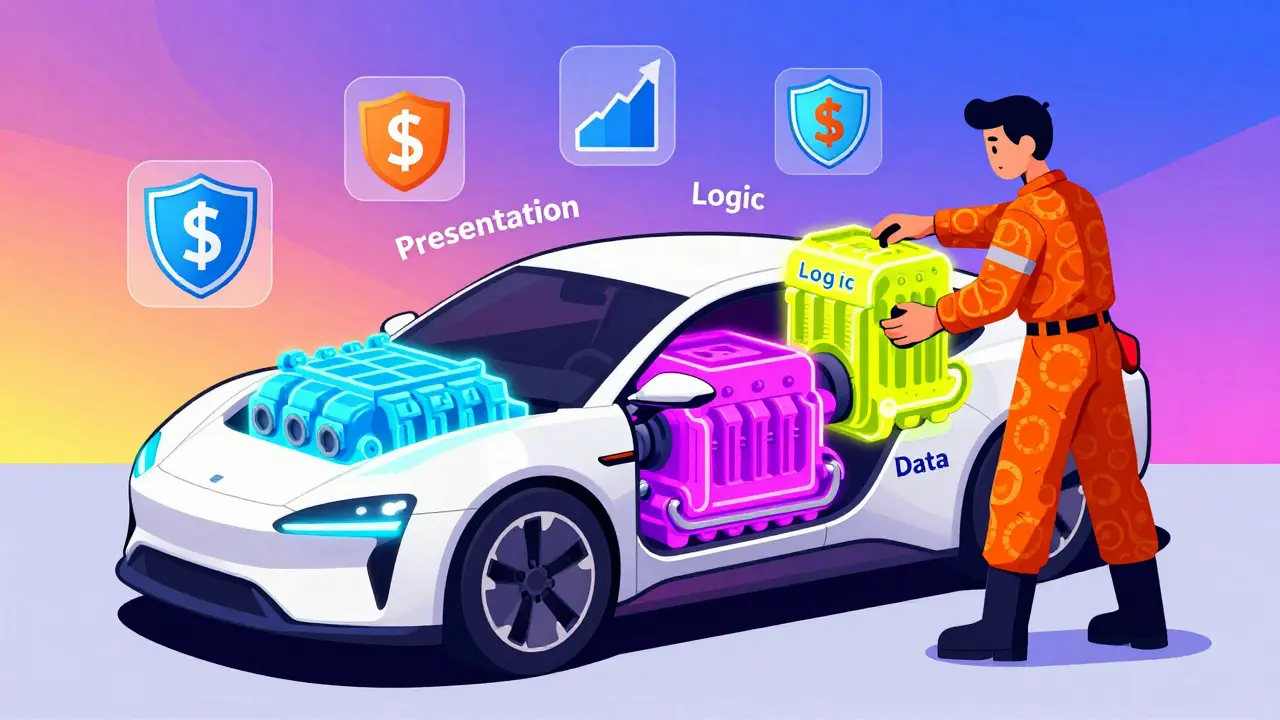
Security Built In
One of the most underrated benefits? Security. In a layered system, the database never talks directly to the internet. All requests go through the application layer first. That means you can put firewalls, rate limiting, input validation, and authentication checks right where they matter - between the public-facing UI and your sensitive data. SQL injection? Blocked at the application layer. Brute-force attacks? Stopped before they reach the login service. Data leaks? Harder to exploit because there’s no direct path from user input to database. This isn’t magic. It’s architecture. And it’s why banks, healthcare apps, and government services still rely on this model.When Multi-Layer Beats Microservices
Everyone talks about microservices these days. But they’re not always the answer. Microservices shine when you have 50+ engineers, dozens of teams, and apps that need to change daily. But most companies don’t work like that. Most apps have one team. One product owner. One deadline. Multi-layer architecture is perfect here. It gives you structure without the chaos of managing 10+ services, 10+ databases, 10+ deployment pipelines, and 10+ monitoring tools. You get the benefits of separation - without the overhead. Think of it this way: if your app is like a car, microservices are like replacing each bolt with a separate, independently manufactured part. Multi-layer is like having a well-designed engine - all parts work together, but each has a clear role. You can still upgrade the fuel system without rebuilding the whole car. For apps that aren’t hyper-distributed, layered architecture is faster to build, cheaper to run, and easier to maintain.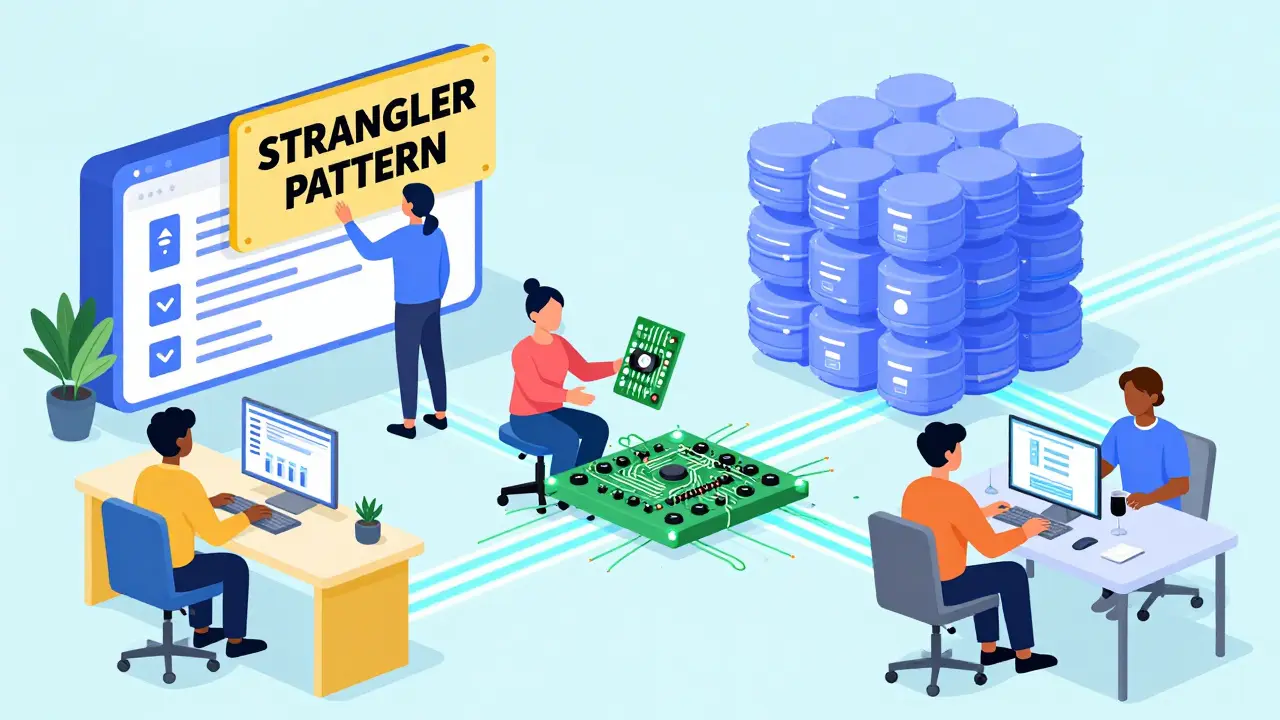
The Real Limitation: Bad Implementation
Here’s the catch: multi-layer architecture only works if you stick to the rules. Too many teams say they’re using layered architecture - but the presentation tier calls the database directly. Or the logic layer handles UI formatting. Or the data layer has business rules baked into SQL queries. That’s not layered. That’s a mess with labels. The difference between a working system and a broken one? Discipline. Clear API contracts. Strict boundaries. No exceptions. If your team can’t agree on what goes in each layer - or if they keep making shortcuts - then no architecture will save you. That’s not the fault of the pattern. It’s the fault of the process.What’s Next? Evolution, Not Replacement
The future of scaling isn’t about choosing between layers and microservices. It’s about using both wisely. Many companies start with a layered architecture. It’s fast. It’s simple. It works. As they grow, they identify parts of the app that need independent scaling - like user authentication, inventory management, or recommendation engines. Then, they extract those pieces into microservices. This is called the strangler pattern. You don’t rip out the old system. You slowly wrap new services around it, redirect traffic, and retire old code. Layered architecture becomes the stable foundation. Microservices become the growth engine. That’s the real future. Not one or the other. Both - together.What You Should Do Today
If you’re building or maintaining an app right now, here’s what matters:- Don’t overcomplicate it. Start with three layers. Keep them clean.
- Define clear interfaces between layers - APIs, data contracts, error formats.
- Use load balancers for the presentation tier. Scale horizontally when needed.
- Monitor each layer separately. Know which one is slowing you down.
- Don’t fear microservices - but don’t rush into them either. Let the need drive the change, not the trend.
Is multi-layer architecture the same as microservices?
No. Multi-layer architecture keeps the app as one process, split into logical layers - presentation, logic, and data. Microservices break the app into many independent, deployable services. Layered architecture scales by adding more copies of the whole app. Microservices scale by adding more instances of individual services. Layered is simpler and cheaper. Microservices offer more flexibility but add complexity.
Can I upgrade a single layer without restarting the whole app?
Yes - if the layers are properly separated. If the presentation tier runs on separate servers from the logic and data tiers, you can update the UI without touching the backend. The key is using clear APIs between layers. As long as those APIs don’t change, you can swap out components - like upgrading from Node.js to Go on the app server - without downtime.
Does multi-layer architecture work for mobile apps?
Absolutely. Mobile apps typically connect to a backend API - which is the application tier. The mobile app itself is the presentation tier. The database lives on the server. This is a textbook layered setup. Many apps like Uber, Airbnb, and Robinhood use this model. The mobile app doesn’t talk to the database. It talks to the API. That’s layered architecture in action.
Why do so many startups fail when they use microservices from day one?
Because they trade simplicity for scalability too early. Microservices require DevOps pipelines, service discovery, distributed tracing, and multiple databases. Most startups don’t have the team or budget for that. They end up spending weeks debugging network latency instead of building features. Layered architecture lets them ship fast, test easily, and fix bugs quickly - all while staying scalable enough for early growth.
Can I turn a layered app into microservices later?
Yes - and it’s one of the smartest moves. Many companies start with a clean layered architecture, then extract high-traffic or high-change components into microservices. For example, they might move authentication or payment processing into separate services later. This approach - called the strangler pattern - lets you evolve without rewriting everything. Layered architecture is a great foundation for future microservices.